







































Max Missel
Submitted by: Joel H. Rosenthal
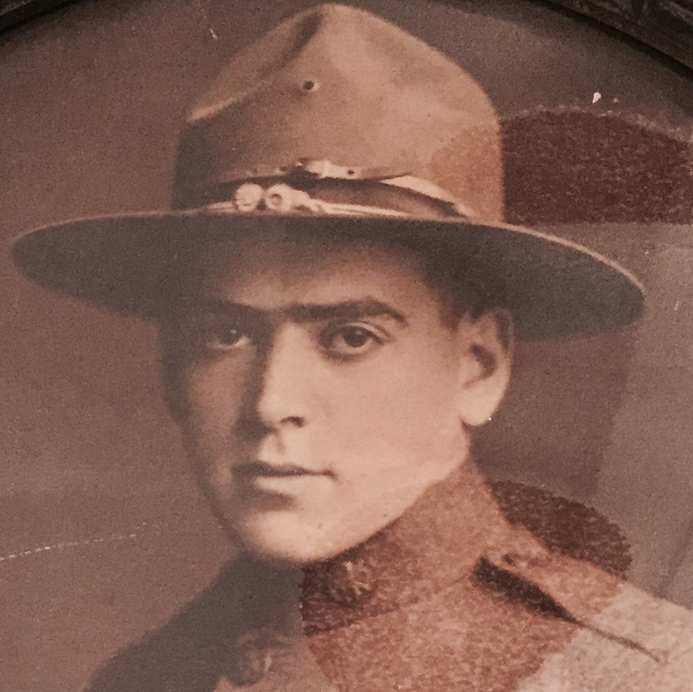 Max Missel served in World War 1 with the United States Army. The dates of service are: Known December 11,1917 - June 30, 1919.
Max Missel
405th Telegraph Battalion, U.S. Army Signal Corps
Enlisted: Los Angeles, CA. December 11, 1917
Reported: Camp Lewis, WA. December 15, 1917
Discharged: Presidio, San Francisco, CA . June 30, 1919
Max Missel was born October 18, 1895 in Kovno, Russia (now Kaunas, Lithuania).
Five-year old Max came to the United States with his mother Lipsa and his brother Harry in 1900 or 1901 (exact date not determined). They came to join Max’s older brothers John, Samuel, and Abraham who had already established themselves in Boston.
The youngest of five sons, Max arrived as a Yiddish-speaking boy. He and his family were part of the wave of Jewish emigration from Eastern Europe in the late 19th and early 20th centuries. They left to escape religious persecution and to find a better life.
By 1917, Max was a 22-year old telegraph operator working for Western Union in Boston. For reasons lost to history he moved to the west coast. By December of that year, he enlisted. Max was assigned to the 405th Telegraph Battalion, Signal Corps, Company D. The 405th trained at the newly-established Camp Lewis, near Tacoma, Washington.
 Hiram Edwin Piper
Submitted by: Richard Piper {son}
Hiram Edwin Piper served in World War 1 with the United States Army. The dates of service are: Known 1917-1919.
Hiram E. Piper entered the Army at Camp Dodge. He said he became a soldier when he was issued his hat and a broomstick to begin training. At first there was no rifle or uniform. Letters home told of his training and his concern for their sick cow at home on the farm.
He was a Sergeant by the time he was at Camp Pike, Arkansas in the winter of 1917-1918. Then he went to Camp Dix N.J. He said he remembered waking up in a huge gym filed with soldiers in cots and a startled nurse told him she thought he was going to die, but now that he was awake he would probably live. He asked why civilians were in the gym and she said he had the Spanish flu and had been unconscious. The civilians were family members trying to care for their sick sons because there were not enough doctors or nurses. Many soldiers had died and they were trying to help as many as they could.
My Grandpa Piper recovered and went to Paris France. He got off the troop train one foggy night to stretch his legs and peeked inside a white railroad car with a red cross on it. Inside he saw men without faces, arms or legs who were returning from the front lines. He said he deeply regretted being curious. By the time he reached his unit the war was ending and he saw no action.
Later in his 80's he would have morning coffee with his Army buddies in town. One had lost a leg when his unit was fighting in France while Grandpa was fighting the Spanish flu in New Jersey. He said he always enjoyed my letters to him when I was in the army in South Korea in the early 70's.
Oreste Alberighi
Submitted by: Diego Paganini {great-grandnephew}
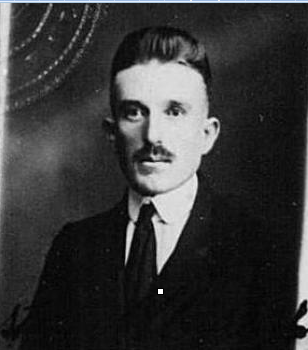 Oreste Alberighi served in World War 1 with the United States Army. The dates of service are: Known From July 26, 1918 to July 3, 1919.
Oreste Alberighi was born on Jan. 27, 1887 in Gradizza, a small hamlet of Copparo in Ferrara district in Italy. His father was Antonio and his mother unknown.
He was stout, with brown hair, grey eyes and he used to smoke pipe. From this habit he got the Italian nickname of « Pipa Calda », Hot Pipe.
He left Italy in April 1912 for New York – Stoneco (and then Beacon) to follow the paths of his stepsister Ernesta Novelli Manzolli that had left Italy the year before to settle in the US after her marriage and the birth of her second child.
Oreste Alberighi did his military service as private in Dutchess in 1917-1918. He was naturalized in Spartanburg SC – in June 8,1918.
After that, during WWI, he served overseas in France in the company B 51st Pioneer inf - Army serial number 3,181,515 from July 26, 1918 to July 3, 1919.
Charles Edward Dilkes
Submitted by: Georgia Dilkes Harris and Virginia Dilkes {daughters}
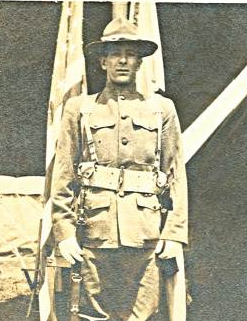 Charles Edward Dilkes served in World War 1 with the United States Army. The dates of service are: Known May 1, 1917 to September 25, 1919.
Charles Edward Dilkes
OUR FATHER, CHARLES EDWARD DILKES, kept a DAILY DIARY of his military service. His memoir, based on this diary, begins with the night of him leaving America. He wrote: "I wish you could share my anticipation with me when on August 6, 1917, at 6:30 p.m. all men were assembled with full field equipment and at 7:00 p.m. we marched through the huge iron gates...full of spirit and hope." Finally arriving in Hoboken, New Jersey, he boarded the transport Finland, dropped down the bay off Tomkinsville, New York, while the "throbbing of engines acquainted us with our departure from the shores of America." It did not take long for the situation to change. A few weeks later on August 20, 1917, his fleet was within the danger zone. "I was coming on deck when a big explosion occurred, shaking the ship...The Captain from the bridge shouted out, "Why the hell don't you shoot that submarine!...Immediately our fore gun blazed away sending forth its deadly shell..."
When the U.S. declared war on Germany in April 1917, our father’s patriotic spirit rose within him; he volunteered on the 1st of May. With an engineering background, he was assigned to Company F as a combat engineer in the 1st Division of the American Expeditionary Forces (AEF) and fought under the command of General John J. Pershing. He earned the rank of sergeant, and was consistently called upon to lead his men to build first aid stations, communication trenches, and stables; to repair roads and parapets of the trenches; and to prepare the terrain for battle. This work was often done while he and his men were under enemy fire, which often meant putting down the shovel and picking up the rifle. His recordings of daily and significant enemy encounters stand out not only as consistent with history, but offered great personal insight into the rigors of war. He did not complain. He did not shirk his duties EVER in War, in his work, or with his family.
Charles A. Buhl
Submitted by: Judith Rauh {granddaughter}
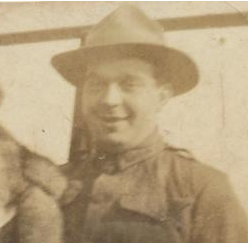 Charles A. Buhl served in World War 1 with the United States Army. The dates of service are: Known 8/23/1917-6/25/1919.
Remembering a Soldier
By Judy Rauh
On April 6, 2017, we marked the 100th anniversary of the United States entry into the Great War, World War I. Among the Bronx, New York men who joined the Army to fight in the war was Charles August Buhl, my grandfather.
Charles Buhl was the youngest of 13 children of Peter and Pauline Buhl. He was born on Jan. 13, 1892 in New York City. He enlisted in the Army on Aug. 23, 1917, at the Enlistment Recruitment Center on Governor’s Island, NY. He was sent to Fort Dix, NJ on Nov. 19, 1917 and joined the 303 Wagon Company.
He was promoted to Sergeant on Dec. 12, 1917. He served overseas in France from Sept. 8, 1918 to June 22, 1919. He was honorably discharged from the Army on June 25, 1919.
Raghunath N. Banawalkar
Submitted by: Tanveer Kalo
Raghunath N. Banawalkar served in World War 1 with the United States Army. The dates of service are: Known 2/25/1918-5/9/1919.
Private Raghunath N. Banawalkar was born on 12/28/1890 in Bombay, British India. In 12/10/1910, 20
years old Banawalkar arrived in New York, New York on the ship George Washington. On Banawalkar 's New York passenger list from this period, his Ethnicity was listed as Romanian.
He enlisted in the U.S Army on 2/25/1918. He trained at Camp Upton in Long Island, New York. Raghunath N. Banawalkar served with Battery F 306 Field Artillery until 4/18/1919. Banawalkar, then served with the sanitary detachment of the 305th infantry 77th division until his discharge.
He served overseas from 4/16/18 to 4/24/1919. Private Banawalkar left for France from New York with his unit on 4/16/1918 on the ship Cedric. He saw action at Baccarat, Vesle, Oise-Aisne, and Meuse-Argonne and was gassed on 10/15/1918.
Banawalkar rejoined his unit after recovering from his wound(s) in 12/14/1918.
He left with his unit for New York from Brest, France on 4/18/1919. He arrived in New York for Camp Mills on 4/24/1919 on the ship Aquitania and was honorably discharged on 5/9/1919 with the rank of private.
John Arthur Short
Submitted by: Tanveer Kalo
John Arthur Short served in World War 1 with the United States Army. The dates of service are: Known July 7, 1917- March 12, 1919.
John A. Short enlisted at Camp Syracuse on July 7, 1917 at the age of 21. He served with Company F 23rd Infantry 2nd Division.
Short was promoted to corporal on October 14, 1917 and sergeant on October 18, 1918. He served overseas from September 7, 1917 to February 28, 1919. He was slightly wounded on July 18, 1919 while overseas.
Short was honorably discharged on March 12, 1919.
Charles James Sistek
Submitted by: Mary Lynn Topel {grandniece}
Charles James Sistek served in World War 1 with the the United States Army . The dates of service are: Known Died in France September 1918.
Charles Sistek was my great uncle. His death at age 22 meant that I would never meet him. He was the only son of his parents and only brother to his four sisters.
Just six months after his death from pneumonia while serving in Battalion E of the 54th Army Coast Artillery Corps, his father was killed in a work-related rail yard accident.
I have tried in vain to locate his remains. The price this family and others have paid is beyond description.
Albert (Bob) Cornelius Peterson
Submitted by: Marjorie Winslow-Kulba
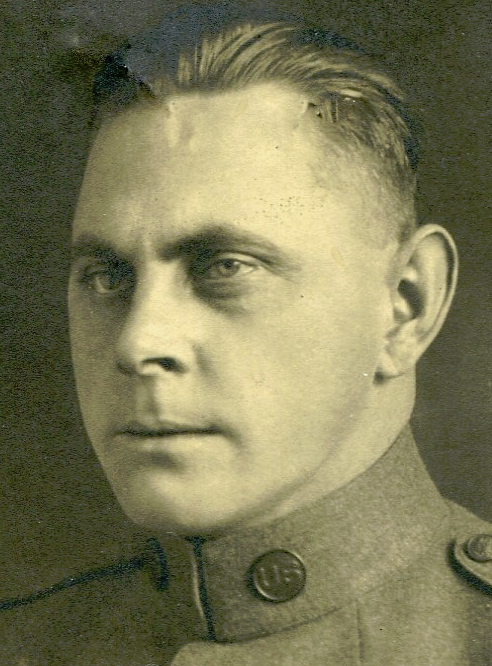 Albert (Bob) Cornelius Peterson served in World War 1 with the United States Army. The dates of service are: Known September 18, 1917-April 19, 1919 & February 2, 1921-February 1, 1924.
Albert (Bob) Cornelius Peterson was born May 3, 1892 in Muskegon, Michigan.
He enlisted in the Army and trained at Fort Custer, Battle Creek, Michigan. He served in the 528th Field Artillery, 85th Division, Battery A, during World War One. He achieved the rank of corporal. He saw action in Toul Sector, France from Nov. 1-Nov. 11, 1918.
He wrote a letter home, describing the last two hours before the armistice was signed. It was published in the "Muskegon Chronicle" on January 11, 1919. He wrote,