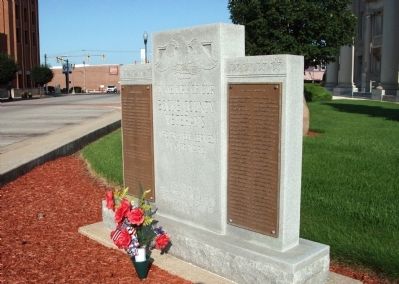
































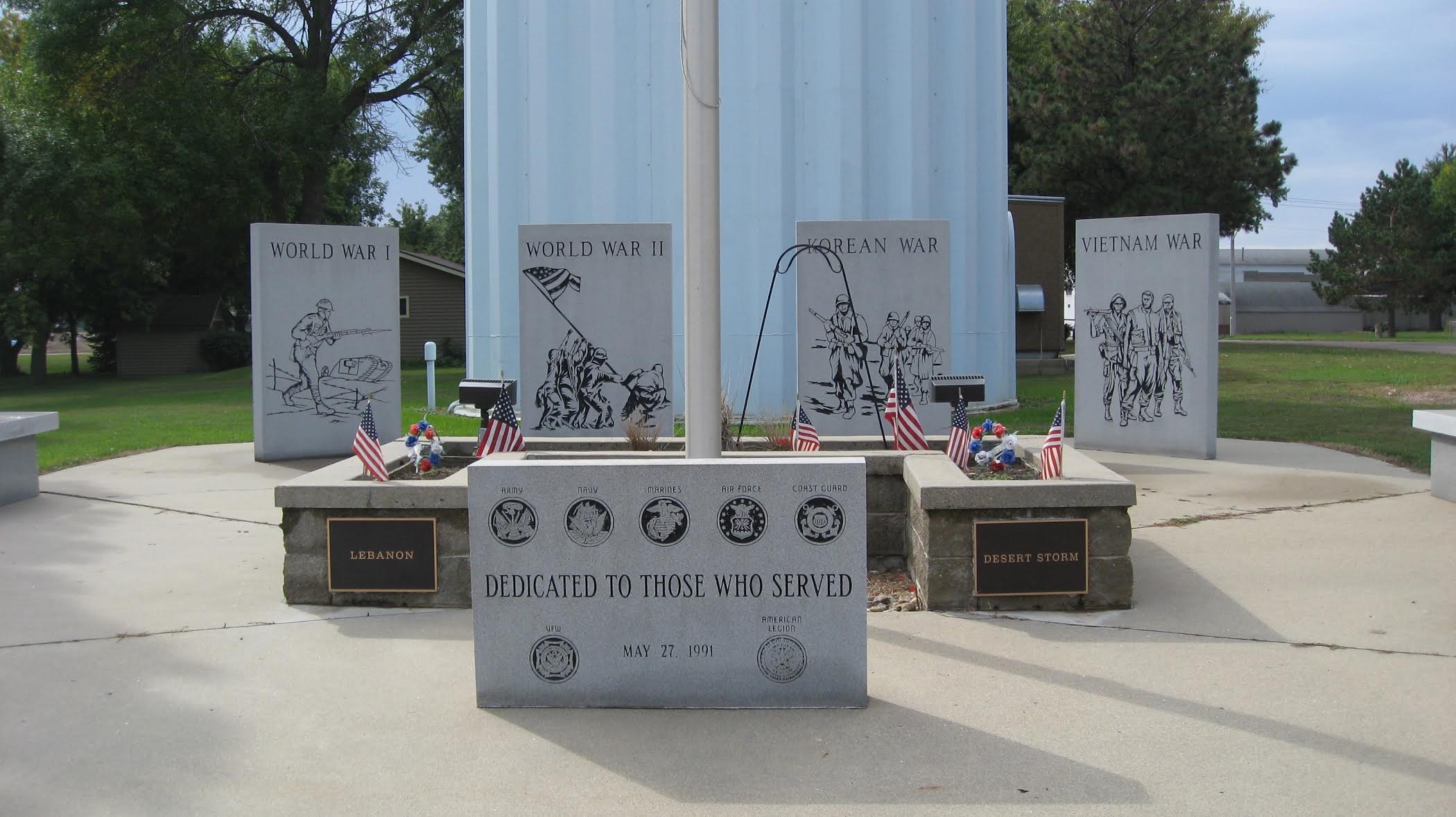
This memorial honors each branch of the Armed Forces as well as those who served in World War 1, World War 2, the Korean War, the Vietnam War, Lebanon, and Desert Storm.
Memorial
- Details
- Dedication Date: May 27, 1991
- Memorial Hunters Club Submission: Memorial Hunter: Robert Shay, PH3, USNR-R, 1964-70
- Details
- Memorial Hunters Club Submission: Robert Shay, PH3, USNR-R, 1964-70 and D&M Bolstad
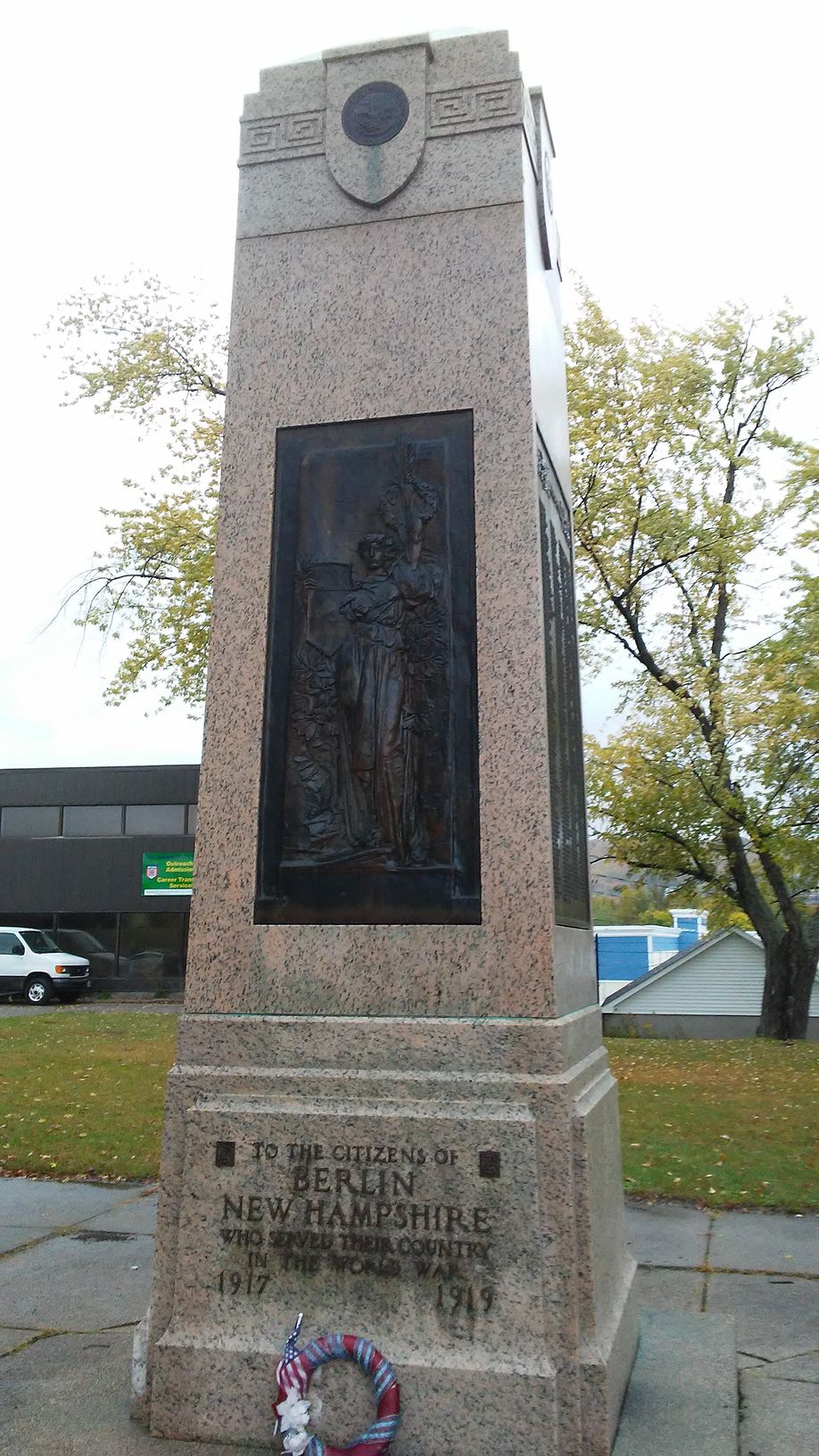
Creator: Raymond Averill Porter, noted Boston sculptor
Monument elements: Concrete base, Milford pink granite shaft and bronze relief panels.
Cost: Funded by the City of Berlin, NH in the amount of $6,720.
Original location name: Grand Trunk Railway station on Mount Forist Street in Depot Square.
On April 29th, 1919, Company L of the 26th Division assembled on last time at this location upon
returning from their service in France, after which they were Honorably Discharged, but not all of
those 1.040 men who left returned home. 34 men Made The Supreme Sacrifice in the service of
their country defending liberty. The names of those who’s served and those that sacrificed appear
here for all to see, remember and thank for what they did. When I see a perfect example of a
community War Memorial I think of the country song, All Gave Some And Some Gave All.
- Details
- Dedication Date: 1918
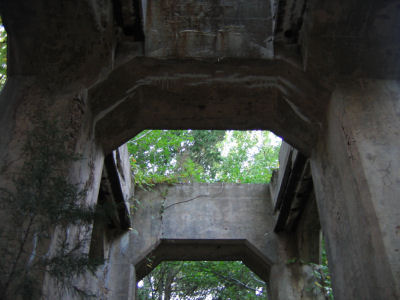
Bethlehem Loading Company, a World War I ammunitions plant located in Estell Manor, NJ, was constructed from April 3 - July 1, 1918. The site encompasses over 12,900 swampy acres. By November of that year, 56,000 155mm shells had been produced at the plant and delivered abroad to the war effort. The plant was guarded by 1,100 soldiers,
To provide housing for plant workers, a company town named Belcoville (short for Bethlehem Loading Company) was completed by August 1918 with a capacity of 400 families & 3,000 single employees. The village included a town hall, school, bank, bowling alley & retail stores.
The war ended on November 11, 1918, but the loading plant continued production into 1919. Today, the site is part of an Atlantic County Park and many concrete ruins & rail beds provide hints of its former activities.
See the 'Belcoville - Estell Manor' entry for more information on the company town of Belcoville.
Narrative adapted from Atlantic County, NJ official website.
Photos courtesy of:
Administration Buildings sign - Ventures to Anomaly
Ruins photos #1-3 - Ventures to Anomaly
Ruins photos #4-13 - John Rumaker, Jr.
- Details
- November 18, 1986
- Dedication Date: November 18, 1986
- Large boulder with rough-hewn finish; incised inscription with bronze rosettes
- Mural
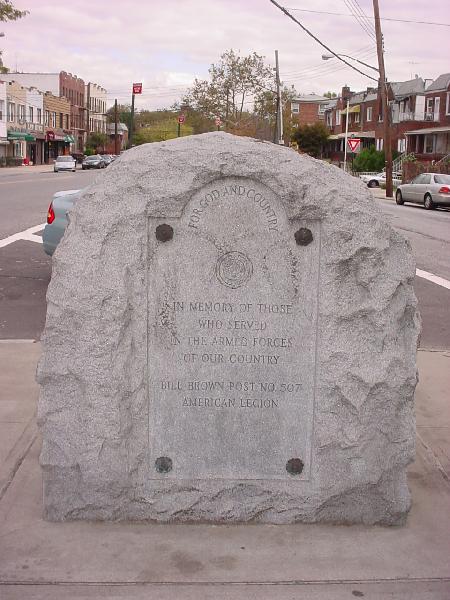
- FOR GOD AND COUNTRY / IN MEMORY OF THOSE / WHO SERVED / IN THE ARMED FORCES / OF OUR COUNTRY / BILL BROWN POST NO. 507 / AMERICAN LEGION /
- Details
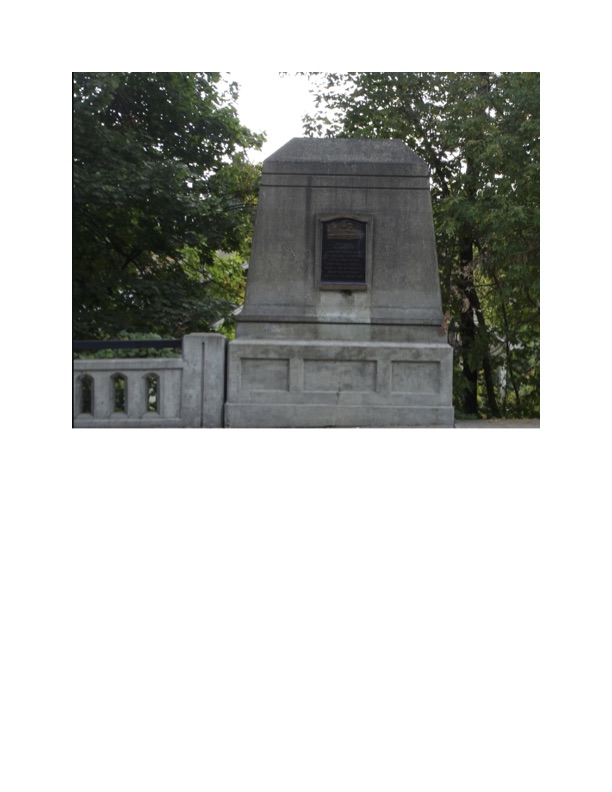
On the four bridge abutments are metal plaques honoring four branches of the military who participated in WWI. At the southeast are three infantrymen charging ahead, one down and one throwing a grenade. At the northwest, there are four biplanes amidst clouds. At the northeast are five artillery soldiers firing a cannon. At the southwest are two warships with smoke billowing from their stacks. These plaques were placed here in 1925 by the city as a tribute to Broome County citizens who served in WWI and in all other American wars.
- Details
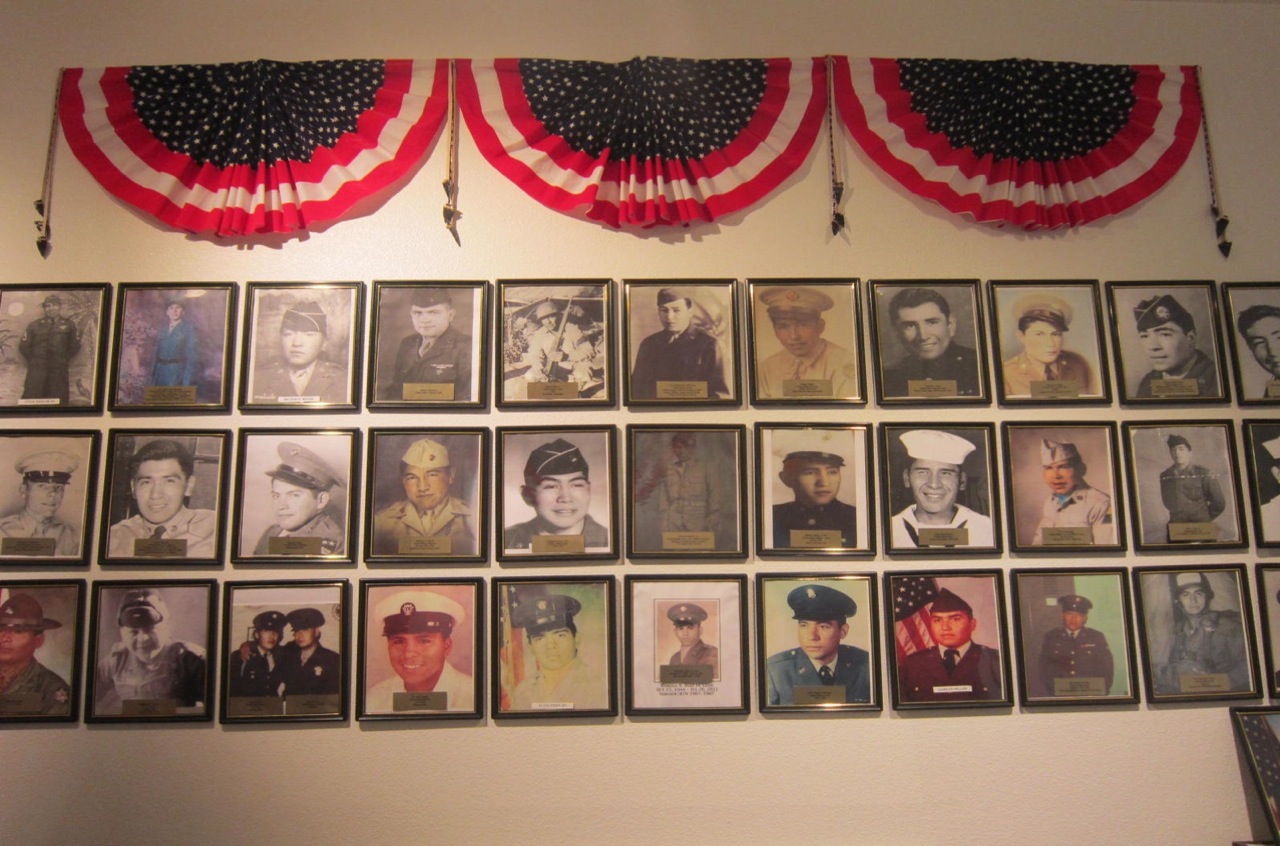
This veterans memorial wall is located inside of the Bishop Paiute Cultural Center. Family members have hung pictures of the veterans upon the wall, and each picture also bears a small tile with the veteran’s name and information about their military service.
- Details
- Memorial Hunters Club Submission: Robert Shay, PH3, USNR-R, 1964-70
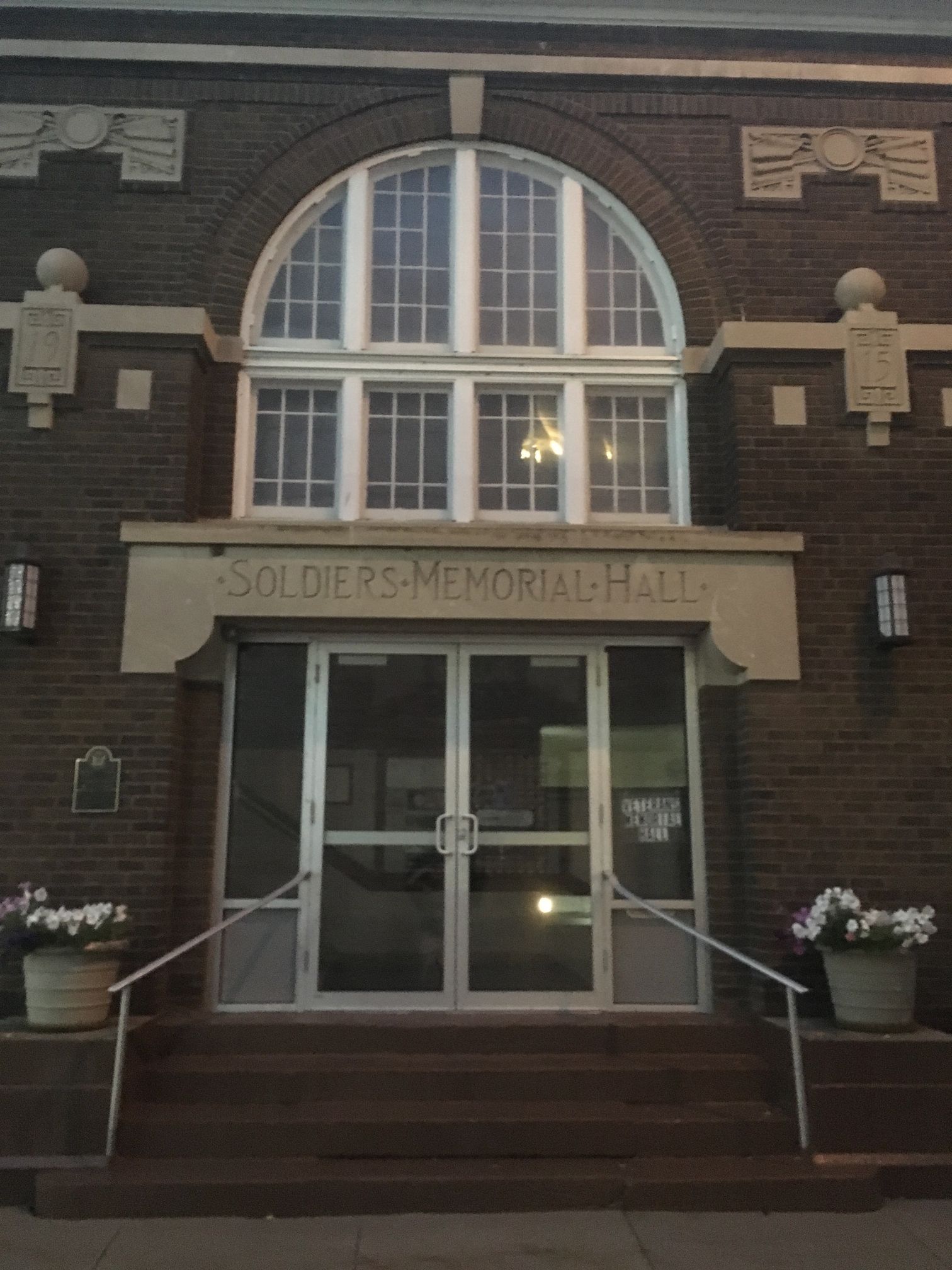
The Black Hawk County Soldiers Memorial, is a classical revival styled veterans hall, located in downtown Waterloo, Iowa. It was built
between 1915 and 1916 as The Great War was ragged across the Atlantic in Europe.
It was built by the young tradesmen who soon would be called upon to enlist in
the U.S. Military and join that fight for freedom and liberty. Americans saw this
as an opportunity to repay our debt to France for their assistance 141 years earlier
during our War for Independence.
It was built by The Grand Army of the Republic as a memorial to soldiers who died in
the American Civil War. It was listed on the National Register of Historic Places
in 1988 due to its architecture and importance in local history.
As there were fewer Civil War veterans the hall turned to Spanish War and World
War 1 and World War 2 veterans to carry on it’s mission as a gathering place for
all American military veterans.
Notation: These photos are not as clear as I would have liked, but the daylight was waining
and it was raining heavily. I could not take the time I normally do to make sure they were
perfectly clear. If the opportunity presents itself, I will retake these pictures.
- Details
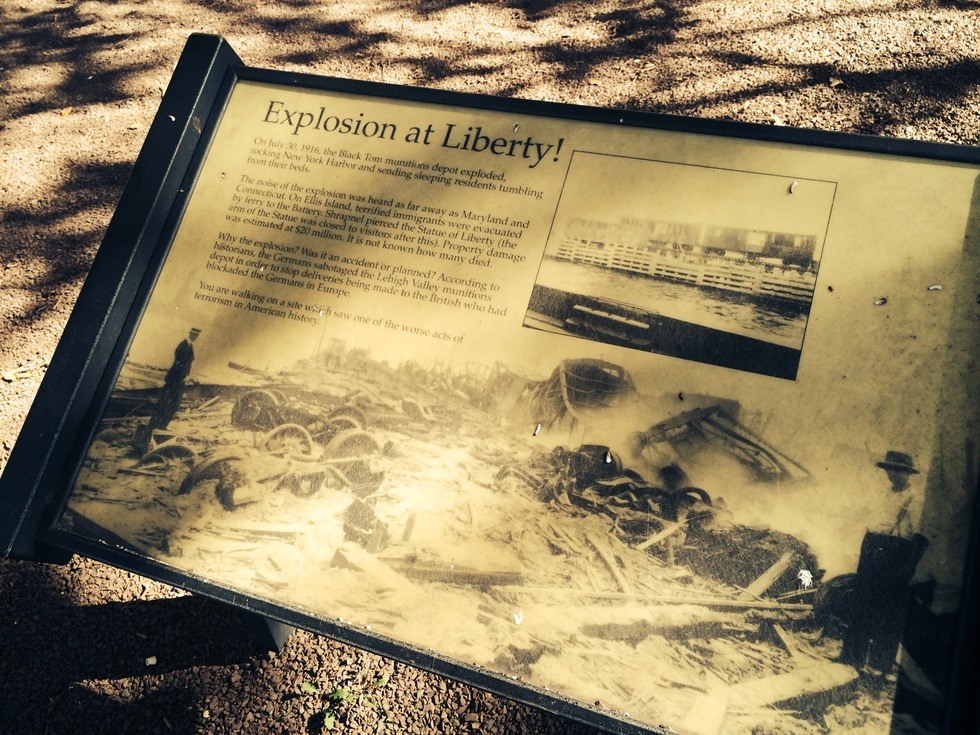
There are two memorials for the Black Tom explosion - one at Liberty State Park in NY Harbor; the other, a stained glass window at Our Lady of Czestochowa Church in Jersey City.
Black Tom was an island in New York Harbor, next to Liberty Island, that received its name from an early African American resident. By 1880, a railroad connected it to Jersey City & it began its use as a shipping depot. By 1916, its mile-long pier housed a depot and warehouses for the National Dock & Storage Company.
In 1914 Imperial Germany sent Count Johann von Bernstorff to be its new ambassador in Washington D.C. But von Bernstorff's staff of diplomats were not all as they seemed for these bureaucrats were a veritable army of undercover spies and saboteurs, arriving with millions of dollars to aid the German war effort by sabotage and illicit destruction.
Among their principal targets were the endless supplies of munitions that the neutral US was selling to Great Britain and France. In 1916, over 2,000,000 tons of explosives were in storage on Black Tom, ready to sail across the Atlantic. The island soon caught the attentions of von Bernstorff and his saboteurs.
On the night of July 30, 1916, Black Tom island disappeared. Just after 2 am, slow burning pencil bombs planted by the German agents ignited an explosion so colossal it registered 5.5 on the Richter scale. As glass windows shattered in Times Square and St.Patrick's Cathedral, the blast shook the Brooklyn Bridge and was felt as far away as Philadelphia and Maryland. The Statue of Liberty felt the full blast and was showered with shrapnel, exploding bullets and shells.
Federal investigations named two guards at Black Tom as the likely culprits; the guards turned out to be German agents Kurt Jahnke and Lothar Witzke, but both escaped. An explosion in 1917 at the Mare Island naval shipyard in Vallejo, CA was also attributed to them. When the US finally responded to German's secret war of attrition by declaring war in 1917, Jahnke and Witzke fled to Mexico.
Black Tom Island was reconstructed with landfill and is today the southeastern part of Jersey City's Liberty State Park. Today the park is a popular recreation area, with families taking advantage of the close up views of the Statue of Liberty. But in the corner of the picnic area is a simple plaque, often passed by, which reads, "You are walking on a site which saw one of the worst acts of terrorism in American history."
It is not known exactly how many people died or were injured in the explosion. Possibly, the congregation of Our Lady of Czestochowa were hit hard, which led to the commemorating of the attack with their stained glass window memorial.
The Lehigh Valley Railroad who owned Black Tom Island sought compensation against Germany, who settled on a payment of $50 million which was finally paid as recently as 1979.
The attack may be long forgotten and little known, but it has an ongoing repercussion. Structural damage caused by the explosion is the reason today's visitors to the Statue of Liberty are prohibited from going up into the torch. It has been closed to the public since that fiery evening.
Narrative adapted from Atlas Obscura website.
Photos courtesy of:
Memorials - Luke J. Spencer, Atlas Obscura
Vintage photos - NJ Department of Environmental Protection, Division of Parks & Forestry
- Details
- Dedication Date: September 28, 1921
- Ernest Moore Viquesney
- Single figure -- soldier
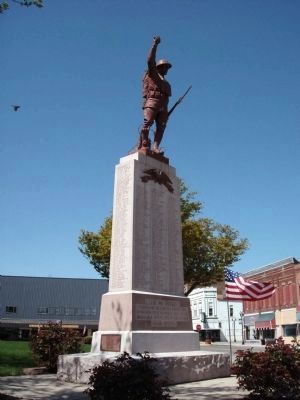
This monument includes the Blackford County World War I Honor Roll as well as one of sculptor E. M. Viquesney's "Spirit of the American Doughboy" sculptures.
- Details
- Memorial Hunters Club Submission: Aaron Lefkowitz & Zachary Andrews
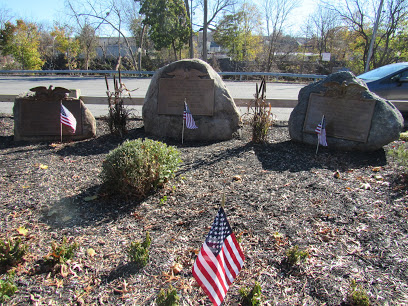
"This Tablet is Erected in Honor of the Men and Women of the Town of Blooming Grove who Served Their Country in the World War and in Memory of Those Who Gave Their Lives 1917-1919"
- Details
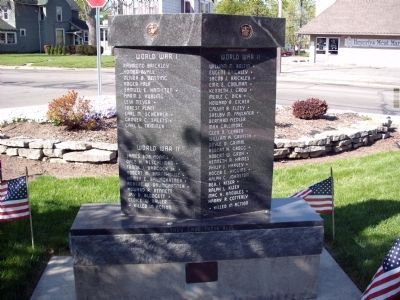
- Dedication Date: November 11, 1992
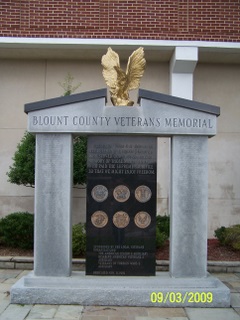
Erected by the American Legion & Auxiliary, Disabled American Veterans & Auxiliary, and the Veterans of Foreign Wars & Auxiliary.
- Details
- Memorial Hunters Club Submission: David Wold
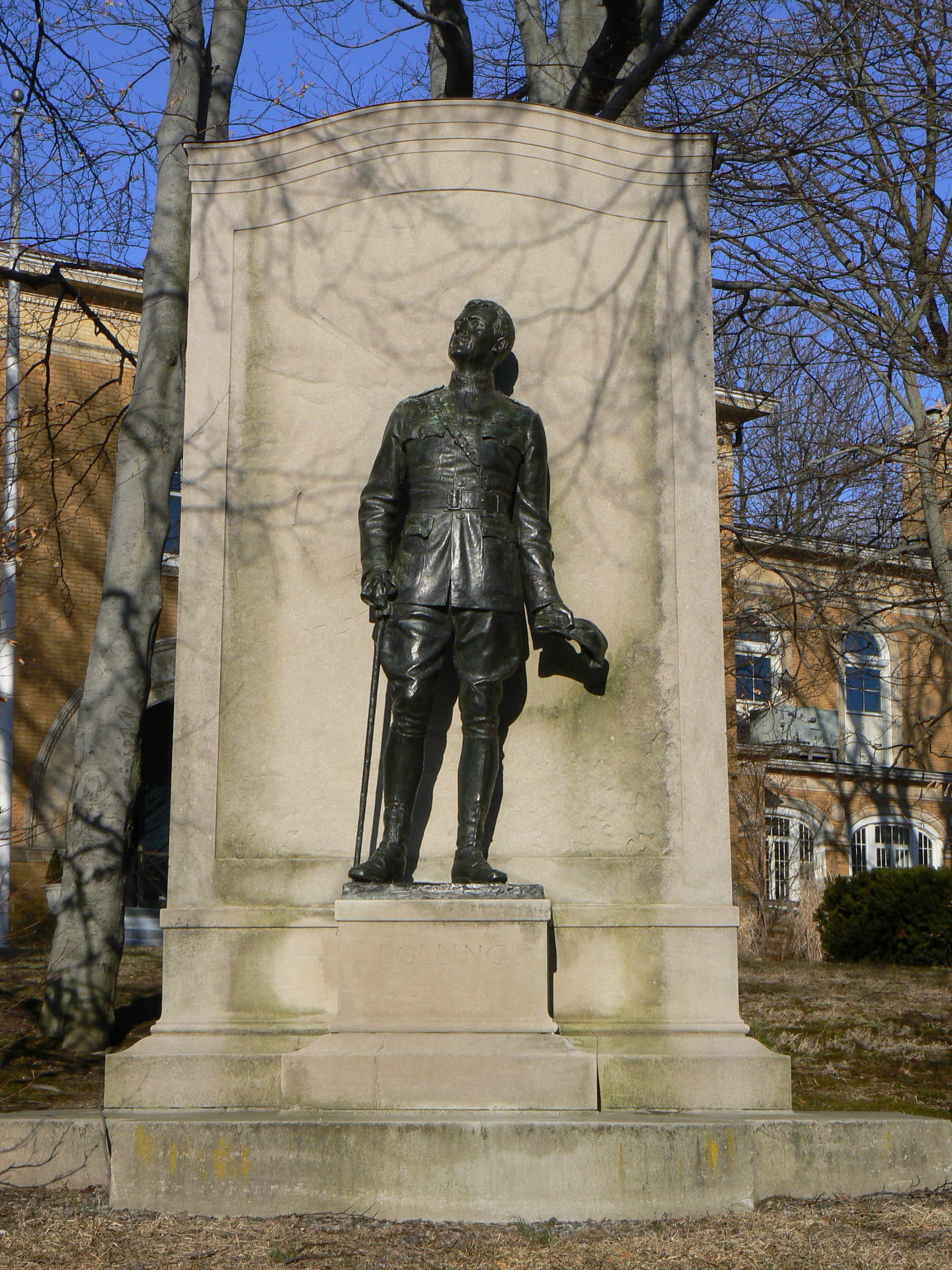
This is a bronze standing figure of Col. Raynal C. Bolling, an aviator in the American Expeditionary Force of World War I. The figure wears a WWI uniform and holds a cane in his right hand. Behind is a stele relief of two airplanes flying among clouds. Greenwich resident Bolling is credited with laying the foundation for the U.S. aerial warfare program in France, and died near Amiens on March 26, 1918. He was the first high ranking American officer to die in France. Bolling Air Force base near Washington, D.C. is named for the aviator. The sculptor of the Bolling monument, Edward Clark Potter, also created the lions outside the New York Public Library, the statue of General Henry Warner Slocum in Gettysburg and other monuments.
- Details
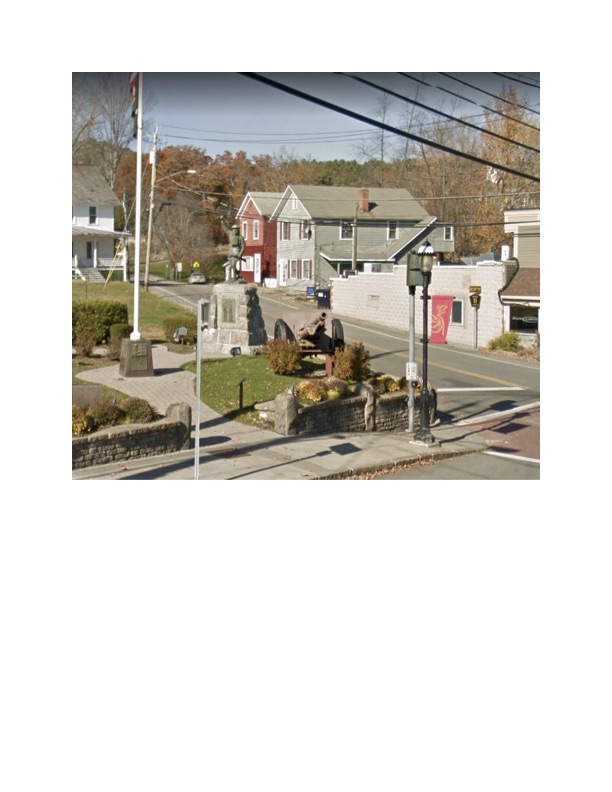
This bronze WWI doughboy is depicted as running with a rifle in his left hand, with his right hand raised. Beneath is a square base of granite blocks. It was sculpted by John Paulding and dedicated on July 4, 1921, honoring the three men of Bolton who died in service in WWI, and the total of 70 who served.
- Details
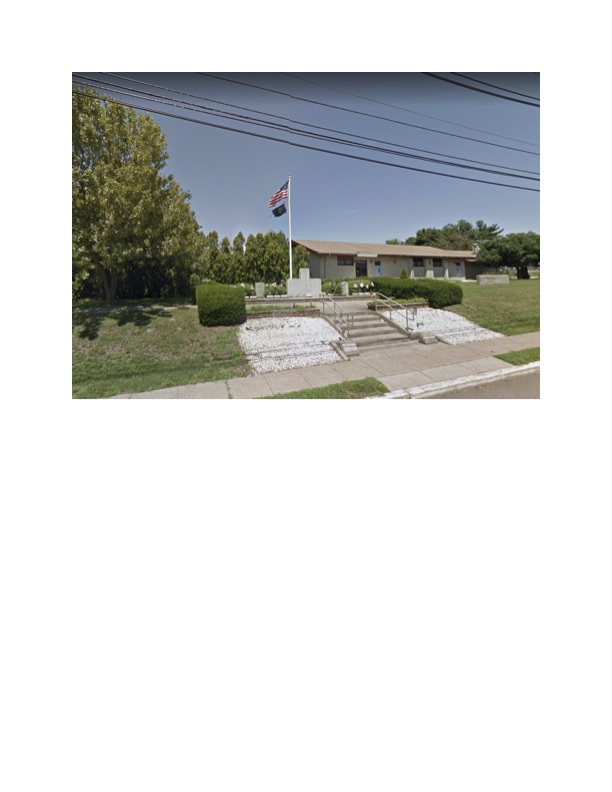
Here there are two monuments to the local veterans. The WWI Monument consists of a tall white stele flanked by two wings, all engraved with approximately 200 names of veterans. The Vietnam War Monument is a small upright slab, listing eight local citizens who served in the war.
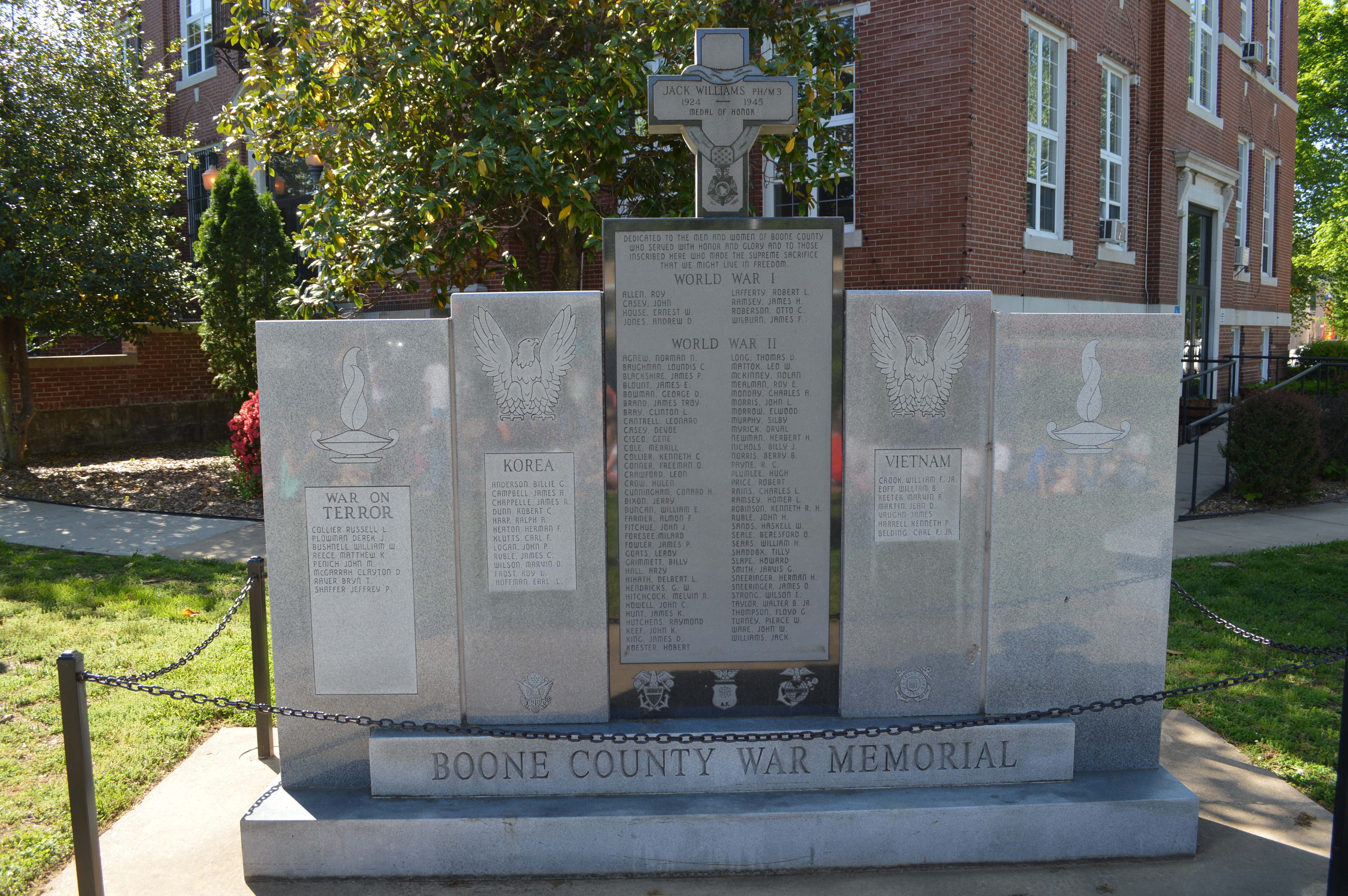
- Details
- Memorial Hunters Club Submission: Ernest Everett Blevins
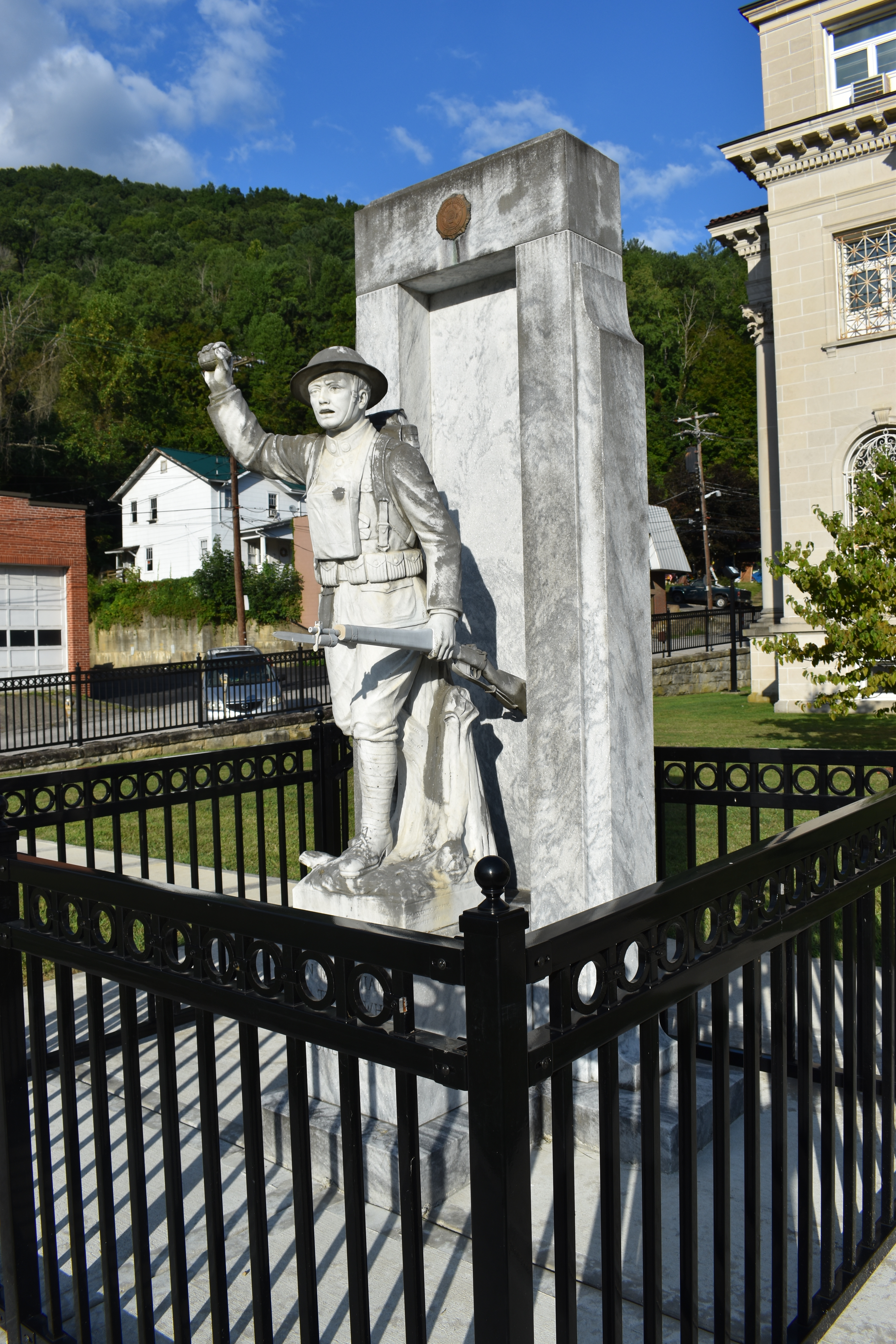
This monument is a stone version of a E. M. Viquesney Doughboy. The engraving on the base reads:
IN MEMORIAM
TO THOSE WHO
SERVED FROM
BOONE COUNTY
A plaque on the rear of the cenotaph has an inscription that reads:
IN HONOR OF
THE MEN OF BOONE COUNTY
WHO SERVED OUR COUNTRY IN
THE WORLD WAR.
THESE MADE THE SUPREME SACRIFICE:
(followed by a list of names)
This Doughboy was dedicated November 11, 1938. For many years, the monument was left to deteriorate, but sometime, perhaps in 2005 or 2006, the statue and cenotaph were cleaned, and the statue's broken rifle, which had been missing everything in front of the left hand, was restored.