






























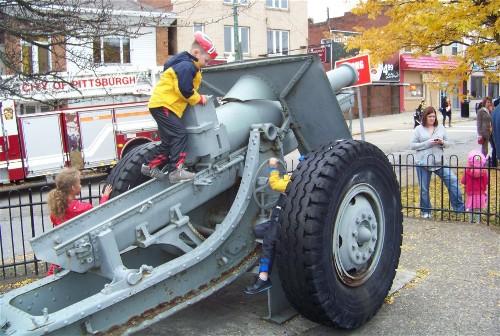
The present-day Cannon is actually the second rendition of the monument. The granite memorial itself is also a replacement. The original cannon was a surplus World War I American field artillery piece. It's official designation was 4.7 inch Gun M1906.The original howitzer, dedicated in 1934, stood for eight years, until another global conflict called it back into service. This time, the cannon was not headed for the front lines in Europe. It was, instead, heading to Jones and Laughlin Steel. The World War I artillery piece was donated by the American Legion to the J&L Mill in Hazelwood to be melted down during a scrap metal drive for World War II.It happened on October 13, 1942, when John Renner, a foreman at the J&L 16-inch roller, and George Winslow, superintendent of the mill's Hazelwood polishing plant and senior vice-commander of the Brookline Legion Post 540, held a small ceremony before the 4.7 inch cannon was again carted off to war, this time against the empire of Japan. The cannon was inscribed "To Japan via U.S. Armed Forces."After World War II, an Army surplus howitzer was obtained as a replacement for the original cannon. The current model 1917 Schneider 155mm Howitzer was installed and the park re-dedicated in 1946. The aging white marble Veteran's memorial was replaced with the present-day polished pink granite and bronze monument in 1992, after the conclusion of the first Persian Gulf War.
Memorial
- Details
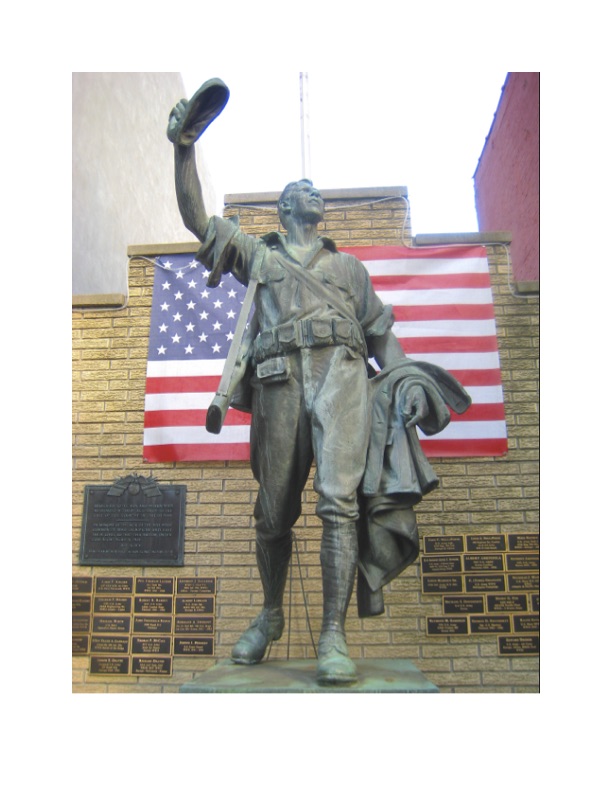
This memorial, which honors those local heroes from Red Hook who died while serving their country in World War I, was dedicated in 1921. Augustus Lukeman (1872–1935) was the sculptor commissioned by a war memorial committee, which solicited voluntary contributions totaling $10,000 from the citizens of the Third Assembly District for the sculpture. Arthur D. Pickering was the architect who designed the granite pedestal.
The derivation of the term doughboy remains in question. It was first used by the British in the late 18th and early 19th centuries to describe soldiers and sailors. In the United States the nickname was coined during the Mexican-American War (1846–1848), and was widely popularized during World War I (1914–1918) to refer to infantrymen. After the war, in which Americans saw combat in 1917-18, numerous communities commissioned doughboy statues to honor the local war heroes. The Red Hook Doughboy was one of nine such statues erected in New York City’s parks.
The sculptor Augustus Lukeman was born in Richmond, Virginia, in 1872, and studied art with the well-known American sculptors Launt Thompson and Daniel Chester French, and at the famous École des Beaux Arts in Paris, France. He had a prolific career, and was affiliated with many arts organizations, including the National Sculpture Society, National Academy of Design, and the Architectural League. In New York City, his works also include the Prospect Park World War I Memorial (1921) on which Pickering also collaborated, and the Straus Memorial (1915) on Manhattan’s Upper West Side.
Lukeman depicts the doughboy in an active pose, head held triumphantly upright, his hat held aloft, and a rifle slung over his shoulder. Over time the monument suffered from weathering and vandalism. The bronze honor roll tablet was stolen around 1971. In 1972, custody of the monument was transferred to the Veterans of Foreign Wars Post #5195, located at 321-325 Van Brunt Avenue in Brooklyn. At that time the bronze statue was cleaned, the pedestal recut, and a new honor roll fabricated.
- Details
- Dedication Date: 1937
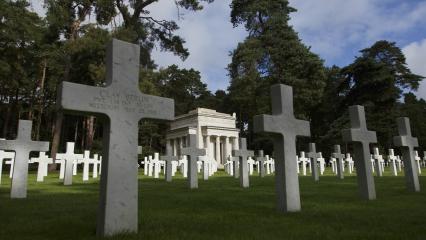
The 4.5 acre Brookwood American Cemetery and Memorial in England lies to the west of the large civilian cemetery built by the London Necropolis Co. and contains the graves of 468 of our military dead. Close by are military cemeteries and monuments of the British Commonwealth and other allied nations. Automobiles may drive through the commonwealth or civilian cemeteries to the American cemetery.
Within the American cemetery the headstones are arranged in four plots, grouped around the flagpole. The regular rows of white marble headstones on the smooth lawn are framed by masses of shrubs and evergreen trees which form a perfect setting for the chapel, a classic white stone building on the north-end of the cemetery. The interior of the chapel is of tan-hued stone. Small, stained glass windows light the altar and flags and the carved cross. On the walls within the chapel are inscribed the names of 564 of the missing.
- Details
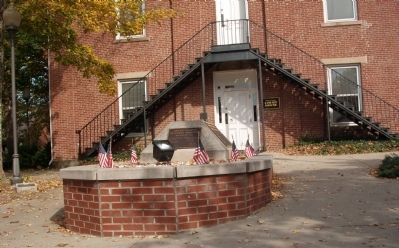
Installed in 1919, this stone stele has attached to it a commemorative plaque. lt was donated by the Albany Heights Patriotic league as a tribute to the men from the Albany Heights District who died in service in WWI.
- Details
- Dedication Date: 1925
- Bronze plaque: HONOR ROLL / CHARLES F.W. ALBRECHT JR. --- CHARLES M. HOERNING --- BERNARD RIPOLL / EDWARD M. ANDERSON --- WILLIAM R. HOLLER --- ARCHIBALD E. ROBBINS / CHARLES C. BAIRD --- JOHANNES A. JENSEN --- THOMAS R. ROBERTS / MORTIMER BENJAMIN --- GEORGE ELMER JOHNSON --- PAUL E. SALLAH / LOUIS J. BERGEN --- ALBERT A. JUSTIS --- ARTHUR A. SCHNORR / GEORGE B. BURLING, JR. --- HARRY LERCH, JR. --- FRANK L. SCHWEITHELM / ROBERT J. BURTIS --- LEWIS LICHTENSTEIN --- JOSEPH SHERIDAN / EDWARD CATER --- FRED LIPPERT --- FRED H. SHIRE / FREDERICK A. CLARK --- DANIEL C. MCCAULEY --- JOHN A. SMITH / HAROLD J. COKELEY --- FRANK J. MCCONNELL --- ARTHUR J. STRUCK / GEORGE M. COLEMAN / FRANK J. MENNINGER --- STEPHEN T. SULLIVAN / CHARLES F. COOK --- JOHN S. MERTZ --- FRED. W. SUNDERMIER / ALFRED NELSON DOW --- FRANK A. MEYER --- ADAM H. SUTTMEIER / JOSEPH DUNKEL --- FINLAY W. MILLAR --- JOHN TALLARIO / MARIO FERRARA --- CUTHBERT C. MURPHY --- DOMINICK TRAPASSO / CHARLES F. GAUS --- FRED WM. NEUMEYER --- CHARLES L. TRINKARD / DAVID E. GLADD --- GEORGE R. NICHOLSON --- JOHN F. VERMAELEN / ROBERT GRAY, JR. --- BERTRAM S. NOBLE --- CHARLES VOGT / EUGENE A. GRIFFITH --- LESTER W. OGILVIE --- LAWRENCE J. WHALEN / GEORGE B. HALL --- GEORGE F. PETTIT --- GEORGE A. WEBER / JOSEPH HARTEL, JR. --- LOUIS PINE --- WILLIAM A. WILLIAMS / WILLIAM F. HAUSMANN --- ANDREW J. PROVOST, JR. --- HARRY J. WITTMAN / JEROME HEINE --- FRED. E. REIF --- CHARLES WORTH / WILLIAM A. RIEHL --- PETER A. ZEIS /
- Joseph P. Pollia
- Memorial Hunters Club Submission: Gary Weitzel
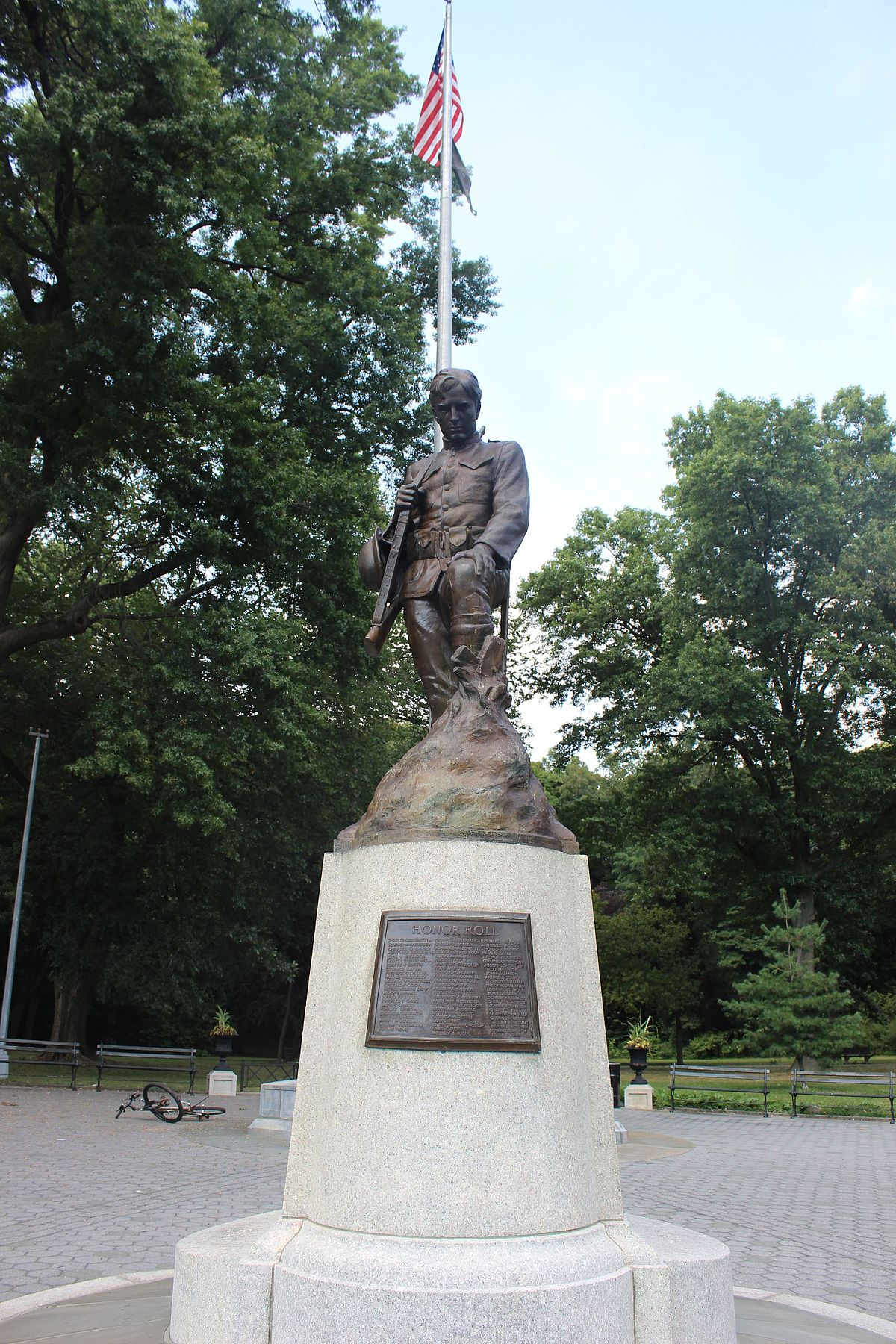
In 1923 plans were drawn up for a memorial at the Myrtle Avenue entrance to Forest Park’s main thoroughfare, signifying a new “Memorial Drive,” and 70 pine trees were planted to commemorate those from the neighboring community who died in combat during World War I. This monument, including a sculpture of a soldier, an ornamental flagstaff and bronze honor rolls, honors their valor and sacrifice. A gift of the Richmond Hill War Memorial Committee and the Gold Star Mothers Association of Richmond Hill, the monument was dedicated on November 10, 1925.
The sculpture by Joseph Pollia (1893-1954) represents a standard infantryman known as a “doughboy.” This name is commonly attributed to the rudimentary biscuits consumed by troops, though derivation of the term doughboy remains in question. It was first used by the British in the late 18th and early 19th centuries to describe soldiers and sailors. In the United States, the nickname was coined during the Mexican-American War (1846-1848), and was widely popularized during World War I (1914-1918) to refer to infantrymen. After the war, in which Americans saw combat in 1917-18, numerous communities commissioned doughboy statues to honor the local war heroes.
The Richmond Hill War Memorial is one of nine such doughboy statues erected in New York City’s parks. Pollia’s conception depicts a mournful soldier whose head is bowed in contemplation, his rifle and helmet slung over his right arm. Some observers have noted the resemblance of the subject to silent film star Francis X. Bushman, whom Pollia may have used as a model for the statue. The sculpture has also been referred to as My Buddy.
The monument was designed by William Van Alen (1882-1954), who is best known as the architect of Manhattan’s famed Chrysler Building. Italian-born sculptor Pollia was responsible for nearly two dozen public monuments, and also sculpted in 1936 the statue of General Sheridan in Christopher Park in Manhattan. Pollia sold a second cast of My Buddy to the Storm Lake Service Star Legion in Storm Lake, Iowa, and it was installed in that city’s Chautauqua Park in 1926.
The adjoining flagstaff, dedicated in 1926, includes a pedestal of granite with ornamental bronze elements including decorative waves, garlands and acanthus leaves, as well as ram’s heads. In 1987 the adjacent oval plaza was dedicated to Sergeant Joseph E. Schaefer (1918-1987), a resident of Richmond Hill who distinguished himself in World War II, and in 2001 the City restored the Richmond Hill War Memorial and flagstaff.
At the dedication ceremony in 1925, Queens Parks Commissioner Albert C. Benninger accepted the memorial on behalf of the City, and the sculpture was unveiled by Mrs. Mathilda Burling, President of the Richmond Hill Mothers Association. The proceedings were disrupted by a rain storm, and were transferred to a nearby auditorium. The chief speaker, United States Senator Royal S. Copeland used the occasion to comment on a proposed government takeover of the coal industry, and commented, “Someone has said that the purpose of government is to protect property…I believe that the people in general hold that the purpose of government should be to protect humanity.” Several generations later, the Richmond Hill War Memorial still stands as a tangible reminder of those who fought in defense of this principle.
- Details
- Memorial Hunters Club Submission: The Wanderer
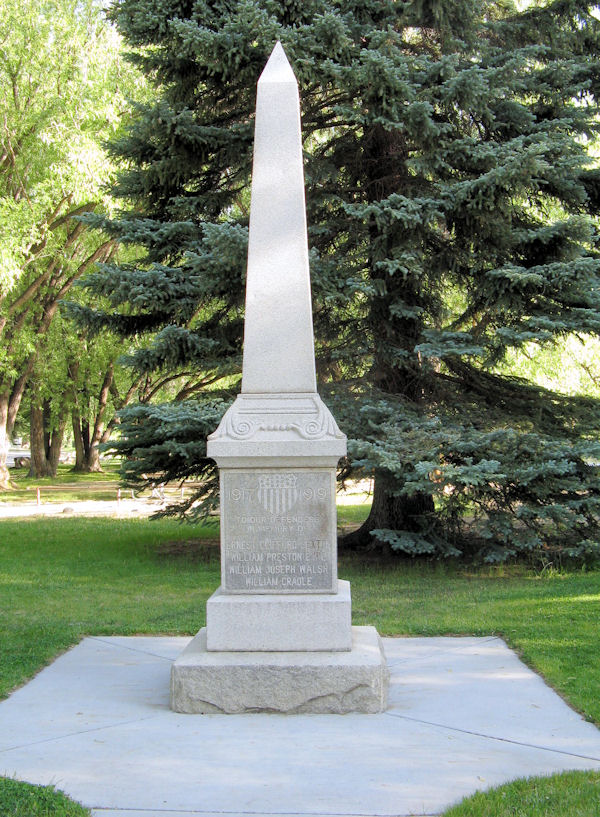
This small memorial is located in Mc Phelemy Park in Buena Vista, Colorado. The memorial consists of an obelisk with the names of the fallen engraved on the base.
- Details
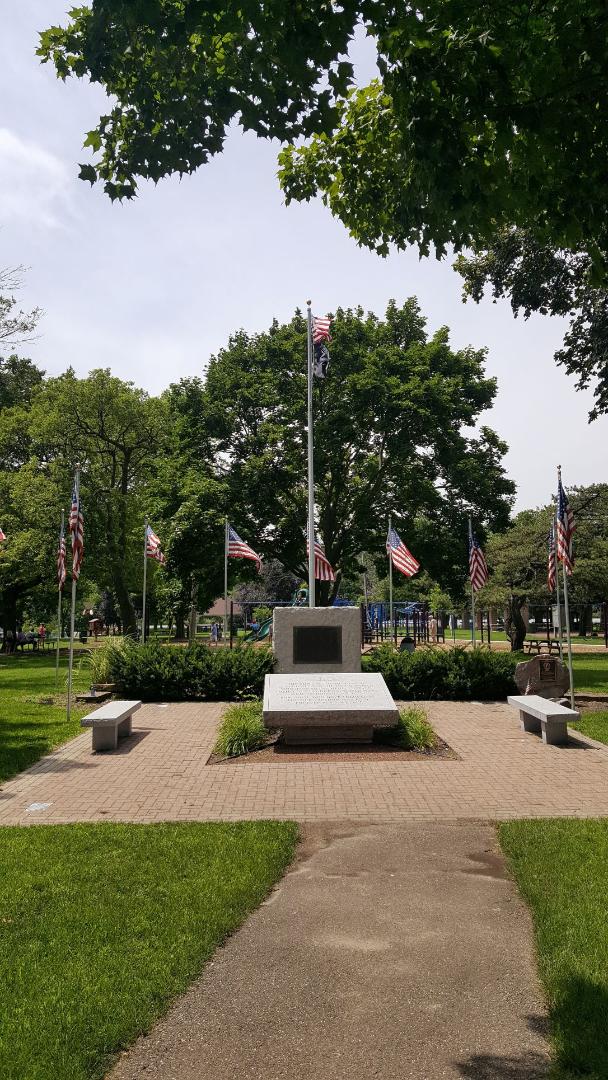
This monument is dedicated to all veterans who served their country faithfully in wars and other conflicts. There is a separate plaque for Burlington residents who served during World War I.
- Details
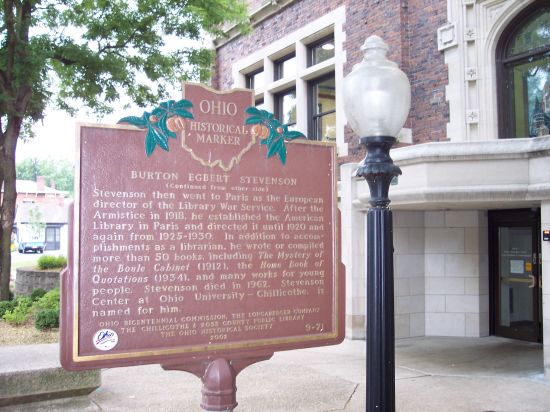
Born in Chillicothe in 1872, Burton Stevenson's life was devoted to the written word as a prolific author and anthologist, and as a librarian. Following stints as a journalist while a student at Princeton University and then at newspapers in Chillicothe, Stevenson became the librarian of the city's public library in 1899. He founded a library at Camp Sherman (an army training camp north of the city), which became a model for others nationally. Stevenson then went to Paris as the European director of the Library War Service. After the Armistice in 1918, he established the American Library in Paris and directed it until 1920 and again from 1925 - 1930.
- Details
- Width: 7'
- Other Measurements: Eagle H:1'2
- December 5, 1920
- Dedication Date: December 5, 1920
- American Legion
- Eagle on ball on triangular shaft on plinth; small tablet on ground with dedication date
- Piccirilli Brothers
- Single figure -- animal
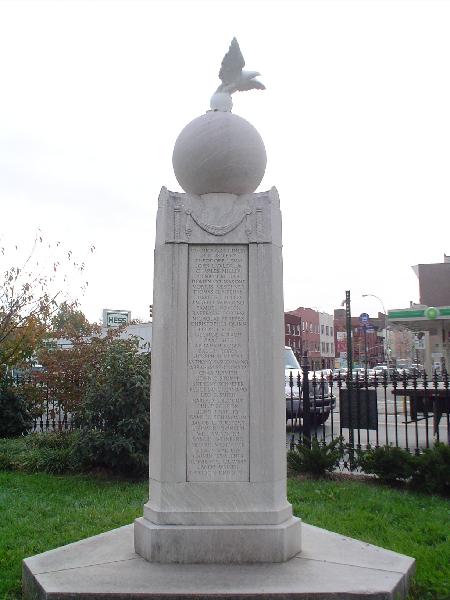
1) THIS MEMORIAL / RECORDS THE / PATRIOTISM / AND DEVOTION / OF THE MEN
OF / THE 13TH ASSEMBLY / DISTRICT WHO / SERVED THE / UNITED STATES/
IN THE WORLD / WAR / 1917-1918
2)/ [Honor Rolls]
3) Tablet:: ": DEC / 5 / 1920" [sealed box beneath tablet]
Architect: Presbrey, Leland Co.
- Details
- Other Measurements: Pedestal H:5' W:2'8
- November 20, 1921
- Dedication Date: November 20, 1921
- Bushwick-Ridgewood Citizens
- Doughboy figure with integral plinth, on pedestal, tablet set in ground at proper right
- Pietro Montana
- Single figure -- soldier
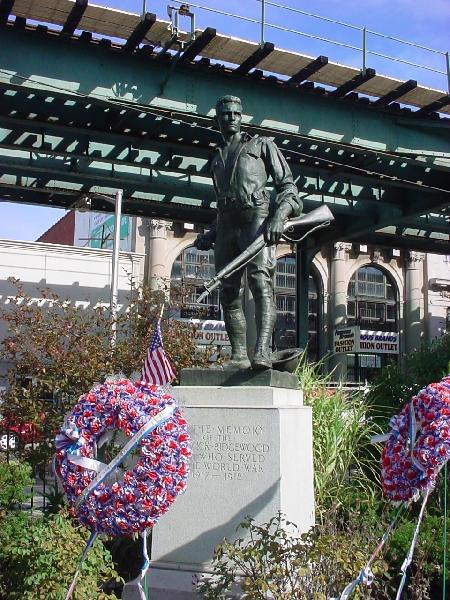
1) pedestal, front: "TO THE MEMORY / OF THE / BUSHWICK-RIDGEWOOD / BOYS WHO SERVED / IN THE WORLD WAR / 1917-1918"
2) tablet: "NOV. / 11 / 1920"
Architect: Giles Greene Pollard
- Details
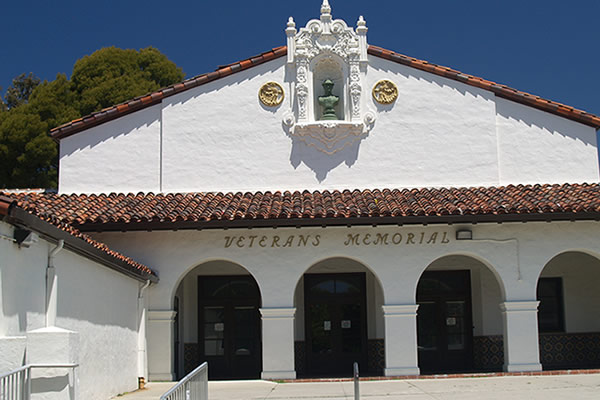
At the south entrance of the building is a concrete bust of a soldier, high on the wall of the building in an ornately decorated niche. The soldier wears a uniform and a helmet. It was placed here in 1931, when the building was constructed to honor the veterans of World War I.
- Details
- Dedication Date: November, 2011
- Photos courtesy of Lamar Veatch
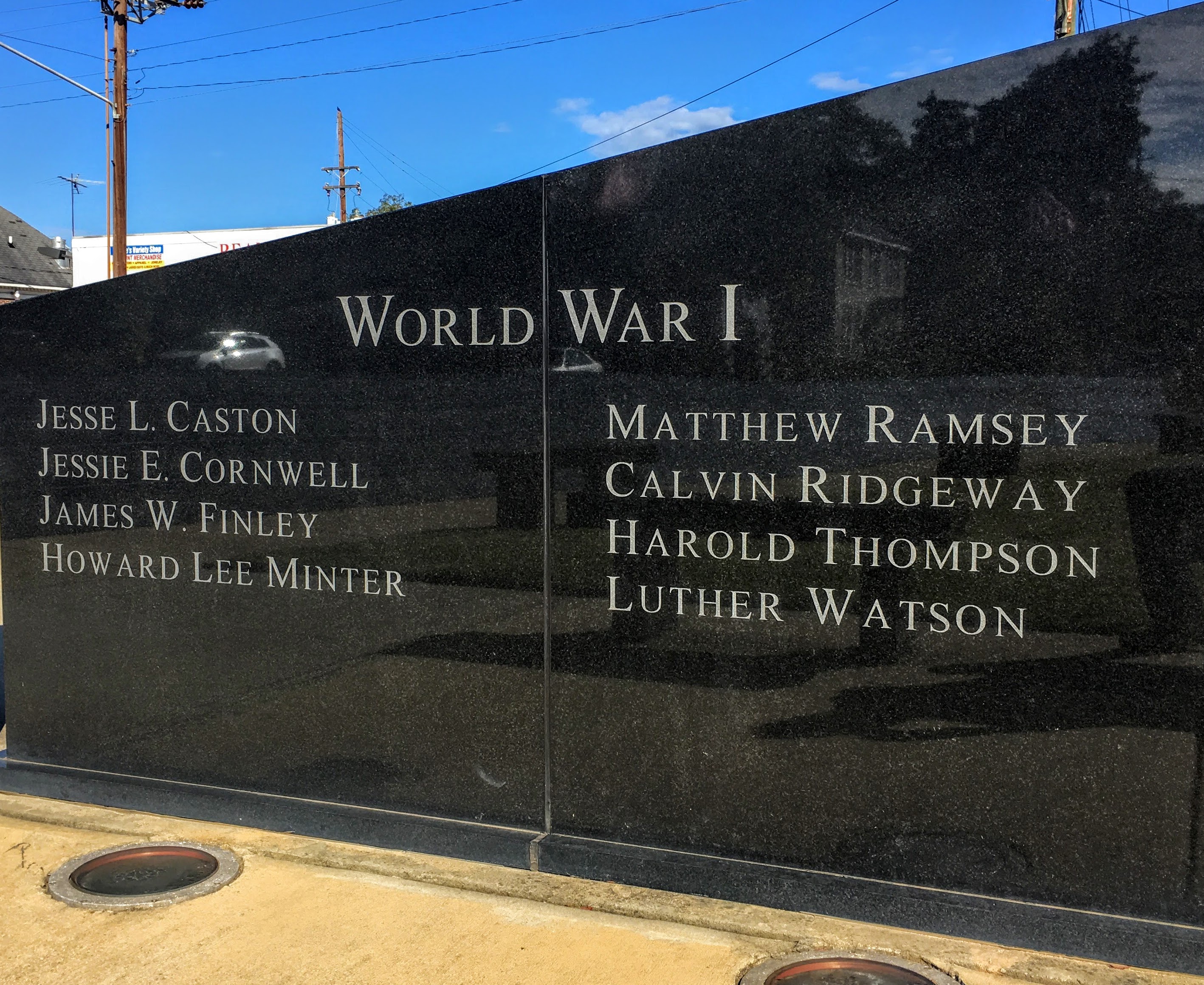
City memorial park consisting of inscribed black granite. Names of service members who died in service are inscribed on main tablets. Eight names from WW1 are listed here. Names and information of others that served are inscribed on adjacent tablets.
Inscription: “All Gave Some, Some Gave All….In This Hallowed Place We Remember The Sons and Daughters of Butts County Who Died So That Liberty Might Live”
- Details
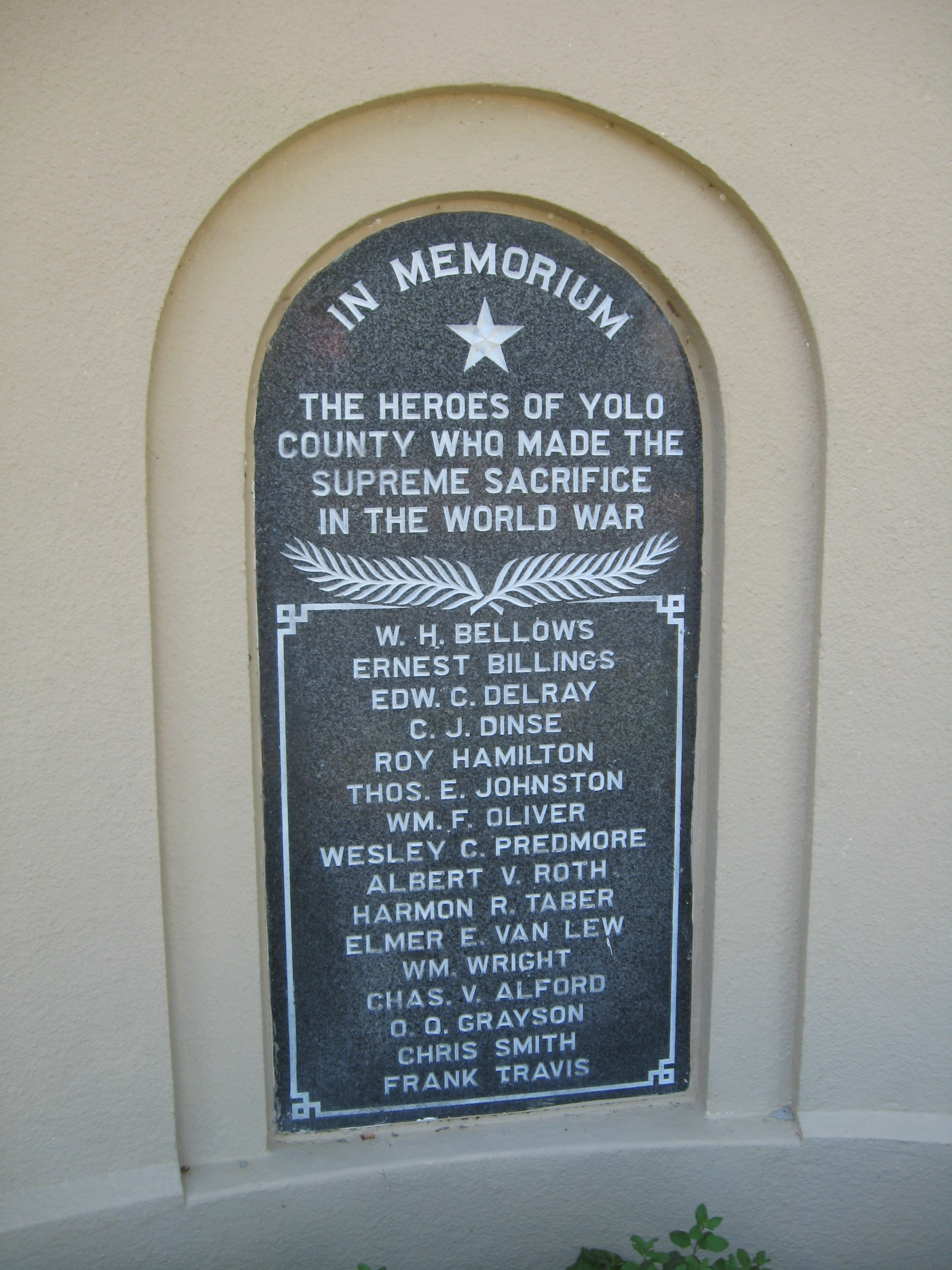
- Woodland’s only World War I memorial sits in public display as the entrance gate to the Fliers Club. the tablets that have hung on the gate since 1919, commemorating those from Yolo County who died in Europe during what was then called “the Great War, the war to end all wars.”
- Dedication Date: 1919
- Woodland Yolo Fliers Club
- Metal Tablet Inset against stone gate with red tile over top
- Christ Hegelan, Basil Williams, T. R. Chamberlain, Joe D. Holman, Otto Shonomay, Virgil Agard, Harry Bauer, Percy Eugene, F. J. Hermle, C. D. Hunt, Harry Johnson, Vernon Maxwell, Almer J. Norton, Lester Palm, Raymond Vaga, Chas D. Mains
- Woodland Yolo Fliers Club
- Plaque or tablet
- Details
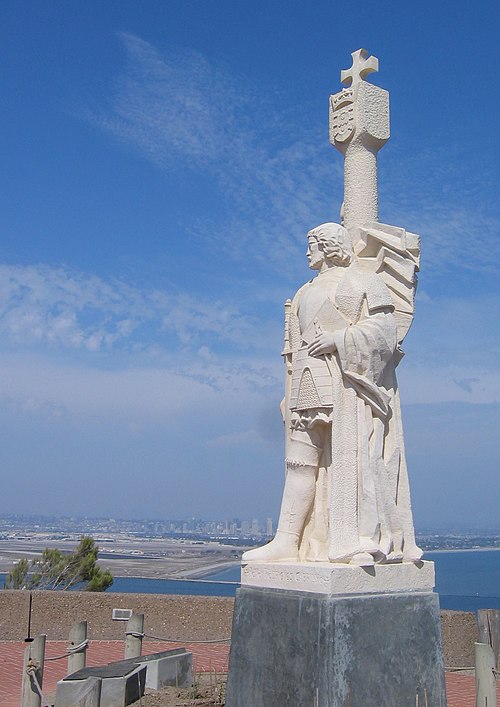
This park became a national monument in 1913 and the primary focus is on the explorations of Juan Rodríguez Cabrillo in 1542. It became important as a coastal defense site for WWI and WWII, and several remnants of defense facilities can be visited here. On the ocean side off Gatchell Road are two Panama mounts which held WWl vintage 155 mm guns that could track and shoot at a moving ship, or be turned toward Mexico in case the Japanese were to attack from that direction.
Also open are a base line station used in determining the range and position of the enemy for directing artillery fire, and a 60" search light installation, where the light rose out of a concrete bunker when needed. The Old Point Loma Lighthouse, built in 1854-55 and used for storage and as a radio tower during WWII, has been retored.
Fort Rosecrans was located here on Point Loma during WWI and WWII, and in November of 1999 a museum exhibit was opened to the public, portraying the stories of the soldiers stationed here. It is located in a small three-room building erected in 1916 as the Army Radio and Meteorological Station. Visitors can see film clips of the coastal defense guns being fired, personal memorabilia, a 16-inch shell, and displays explaining the operation of the guns. On site is a library collection of 2,000 volumes relating to the history of the site.
- Details
- Memorial Hunters Club Submission: thewanderer
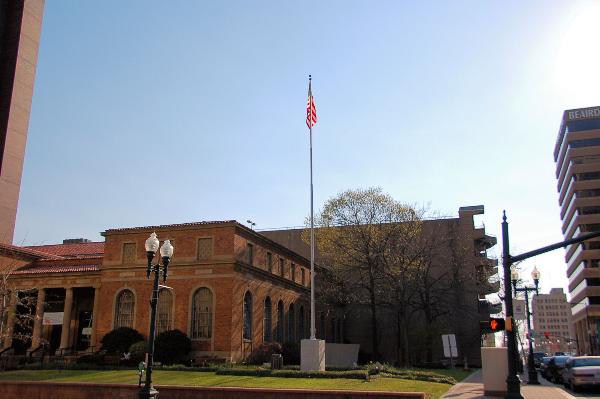
This memorial is located in downtown Shreveport, Louisiana in front of the Chamber of Commerce. It is dedicated to the soldiers from Shreveport who died during the Great War.
- Details
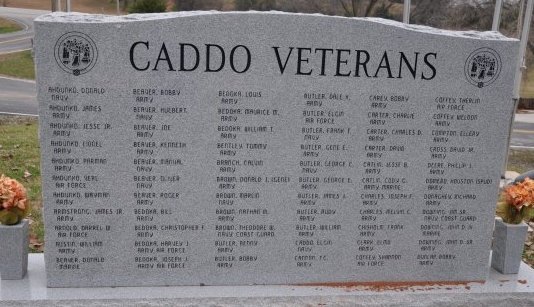
The Caddo Nation Veteran’s Memorial is located outside of the Caddo Heritage Museum. There is an inscription along the top of the grey granite memorial which reads: "Caddo Veterans." Below, the names of Caddo veterans are listed and the branch of the military in which they served.
- Details
- Dedication Date: November 11, 1921
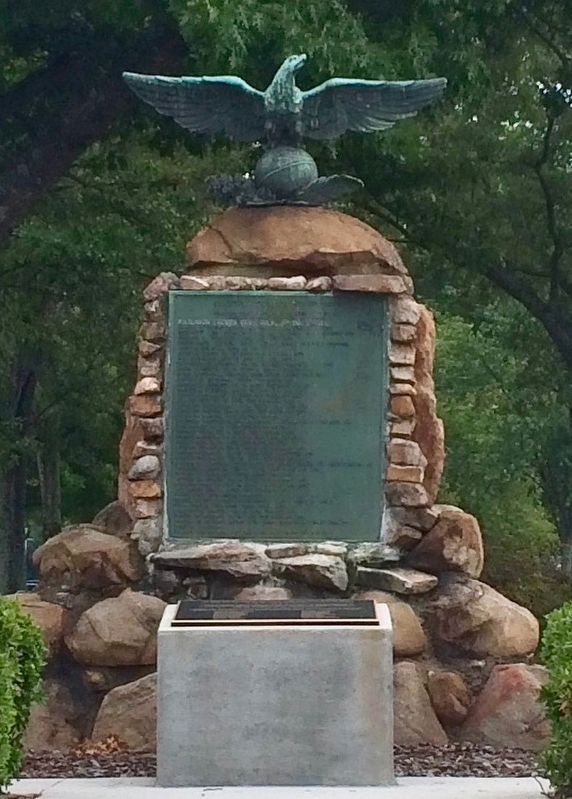
On a river rock base sits a bronze sculpture dedicated on Armistice Day 1921. The eagle was added 4 years later. The sculptor is unknown. On the south face is a plaque dedicated to the soldiers and sailors from Calhoun County who served in the Great War, and on the north face is an honor roll of the 41 names. The south face inscription reads: "This Tablet is Erected in Honor of the Soldiers and Sailors from Calhoun County Alabama who Served in the Great War 1917-1919". The north face inscription reads: "Better the shot, the blade, the bowl, than crucifixion of the soul." [from the Maryland state song "Maryland My Maryland" by James Ryder Randall]. Forty-one names are listed.
A lower plaque reads: "In 1921, Calhoun County memorialized its casualties of World War I
with this monument, unveiled on Armistice Day, as a proud testament to the bravery of these men.
Nearly a hundred years later, in 2014, military research conducted by The Anniston Star's editorial board discovered at least nineteen additional U.S. military personnel whose names, for reasons unknown, were not included on the original plaque. In 2016, the City of Anniston erected this memorial, providing these nineteen Calhoun County casualties of the Great War their deserved place of honor. Nineteen names are listed.
- Details
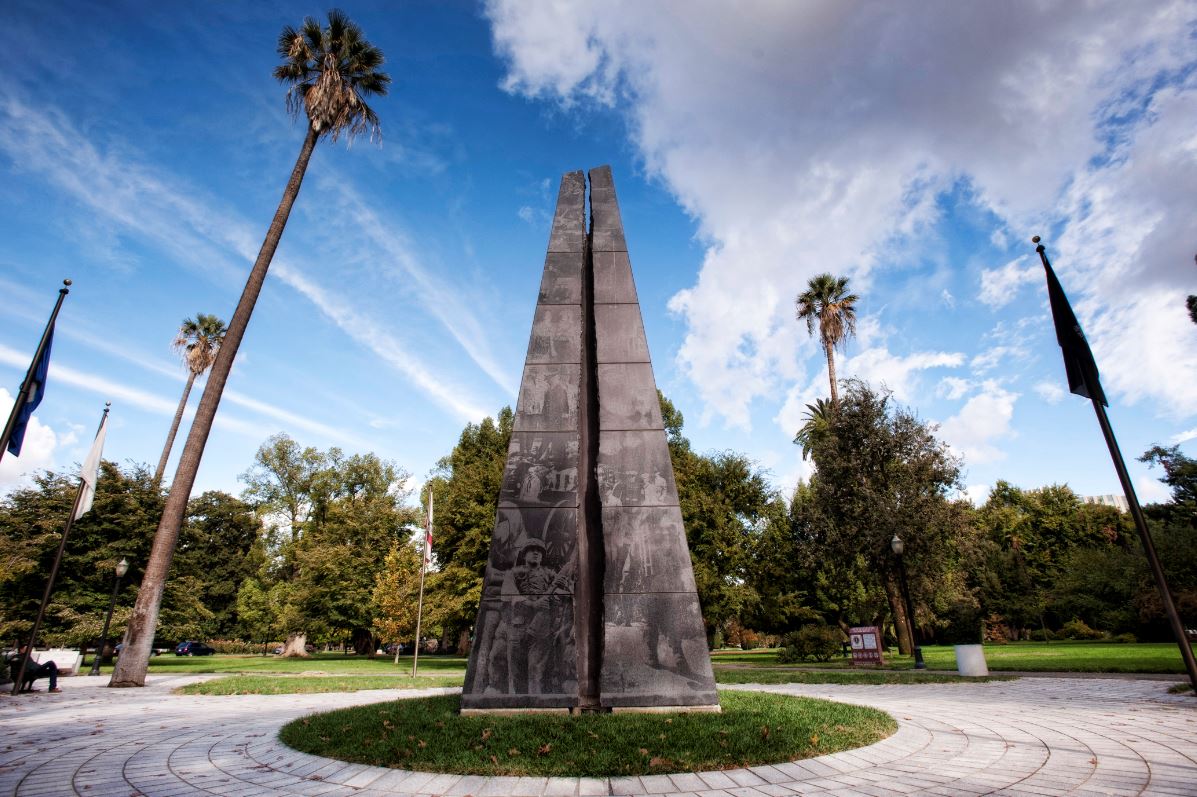
Dedicated on Veterans Day in 1992, this memorial honors the more than 5 million Californians who have served in the U.S. military since 1850. It was sponsored by the California Veterans Memorial Commission and consists of a small plaza in a grove of mature trees, bordered by a low curved natural berm along which benches have been placed. In the middle of the plaza is a sculptured granite obelisk representing a united force reaching upward to recognize the heroic determination of the state's veterans. It also represents the devastation of war, being decorated with a blend of smooth black surfaces and almost ghostly images of people in determined defense of their country. The obelisk is split into four sections, set on the four main compass points, to represent the limitless boundaries of their determination. The split itself represents the destructive nature of war and the potential fragmenting of our nation.
- Details
- Bench
The Calvin Wilson Code Talker Bridge is located on US-70 -- east of N4750 Co. Road.