































Memorial

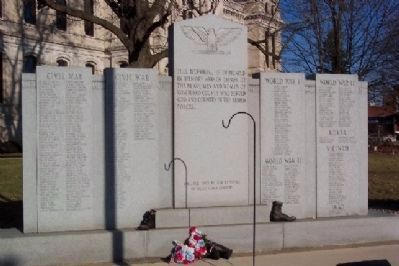
- Details
- Memorial Hunters Club Submission: The Wanderer
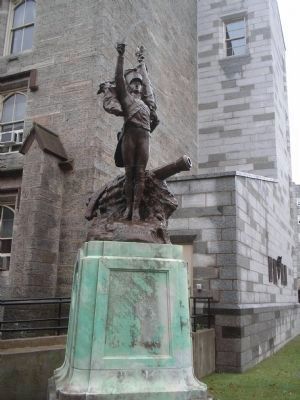
Erected in 1919, the inscription on this monument reads:
L'Ecole Polytechnique
de France
alcole – sceur
des Etas – Unis
d Amerique
entres dans la lutte
pour la liberte du monde
le 6 Avril 1917
[English Translation]
The Polytechnique school of France thanks the United States of America for entering into the fight for liberty of the world April 6 1917.
Additional background:
Previously it had graced old Diagonal Walk, before the near doubling of the size of the Corps of Cadets in the mid-sixties forced the movement onto The Plain of that esteemed walk. It now stands next to the 1st Division of Old Central Barracks, the only portion of that ancient structure to survive the expansion of Washington Hall and the addition of the MacArthur and Eisenhower wings of barracks necessitated by the larger Corps. It officially is known as The French Monument, but in an earlier day it was nicknamed “The Gold Tooth” because it was coated in gold leaf. Unfortunately, it was not immune to a midshipman’s prank that doused the statue in Navy blue paint prior to an Army-Navy football game many years ago. It, like the original in France, now boasts a blue-green patina. (Note since this publication the Statue has been painted)Many older graduates recall, as plebes, being required to cite the mistakes attributed to the sculptor of the statue: the cadet’s saber is curved but his scabbard is straight; the wind is blowing his coat tails in one direction and the flag in another; the cannon balls at the base are larger in diameter than the bore of the cannon behind the cadet; and, horror of horrors, the brave cadet has a button unbuttoned! And in combat, no less. And thereby hangs a tale.For the original statue of the staunch little French cadet, proudly holding his colors and bravely brandishing his saber, was created by Corneille Theunissen and dedicated in July 1914 to mark the centennial and commemorate the courage of the cadets of L’Ecole Polytechnique in France when they were mobilized to help defend Paris in 1814. The motto upon the statue reads, “Pour la Patrie, les sciences et la glorie” In the end, Paris fell, and Napoleon was forced to abdicate. Nevertheless, the 1814 statue stands proudly on the Court of Honor at L’Ecole Polytechnique. The cadets, however, again would play a role in the Revolution of July 1830 that deposed Charles X.In December 1830, no less a personage than the aged Marquis de Lafayette visited L’Ecole Polytechnique to present a letter of fraternal congratulations from the West Point cadets to the Twenty-ninth of July cadets “our brothers in arms and our co-partners in the defence of that sacred Liberty”. The French cadets sent an equally cordial and respectful reply. Sometime in 1918, the discovery of these letters in the papers of Marshall Bosquet, one of the French cadets who signed the 1830 letter, led to two independent actions.In May of 1918, the cadets of L’Ecole Polytechnique sent a letter of gratitude confirming the ties between France and the United States in the Great War. They also had a miniature of the 1814 statue created for presentation to the cadets of West Point. The Corps sent a warm letter back, citing the historic links between the two countries. Both letters were published in the Howitzer, along with a photograph of the statuette. The West Point cadets who answered the letter on behalf of the Corps, however, soon graduated a year early in June 1918 and were preparing to assist France in battle. The next two classes were combined into a mega class and graduated soon afterwards, on 1 November 1918 – just ten days before the Armistice. After a tour of the European battlefields, the younger class was recalled to West Point for additional academic training, graduating again on 11 June 1919.Also in 1918, Les Amis de l’Ecole Polytechnique (equivalent to our Association of Graduates) determined that they would raise funds to present a full-size casting of the statue to West Point. On 21 October 1919, after Douglas MacArthur had arrived as Superintendent (12 June 1919), France sent a military mission to help dedicate the statue at West Point. Among the delegation was Marshal Foch. The base is said to be of stone from Verdun, with relics from the Marne battlefield inside. When the Washington Hall mural was painted in the thirties, represented in the lower right corner is Joffre at the Marne. An earlier proposal depicted Foch at the Marne.The Class of 1920 that presided over the dedication of the statue had not yet reported to West Point when the letter of May 1918 and the miniature statue had been received. The installation of the full-sized statue evidently was considered a minor event in the great sweep of things and received only a mention, sans photo, in their 1920 Howitzer. No specific date, no mention of dignitaries in attendance – although much was made of the autumnal visits by King Albert and Crown Prince Leopold of Belgium and the Prince of Wales. Of course, these personages were able to grant amnesty to the Corps, and the statue was not. While King Albert was the first reigning monarch to have visited West Point, the Prince of Wales took the added step of joining the Corps of Cadets for dinner in the mess hall. After delivering a short address, he was honored with a Long Corps Yell.Looking deeper into the 1920 Howitzer, however, one finds another mention of the statue in the History of the Class of 1922. It is a facetious reference to upper classmen “crawling” the French cadet for not wearing a B-plate until a plebe informs them that the statue represents a “French soldier, Revolution of 1830, sir.” Of course, the plebe is wrong, but there is a reason (not an excuse) for his confusion. It was the letters regarding the Revolution of 1830 that prompted two separate groups to provide statues commemorating the 1814 defense of Paris to West Point. Fortunately, this 1922 class history does include a photograph of the installed statue, beneath a tree and facing the barracks, with The Plain, the flagpole, and Battle Monument in the background.
- Details
- Dedication Date: Nov. 11, 2012
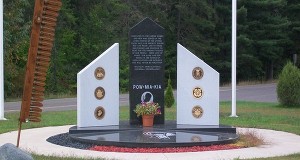
This memorial is dedicated to all Lac Courte Oreilles Band of Lake Superior Chippewa Veterans. It is located at the junction of County HWY E and Country HWY K. It is composed of three stones: two whitewashed concrete stones that stand on the left and right, and are inlaid with the seals of the branches of the military, and the middle stone that is made of black granite and bears an inscription which reads:
“Dedicated to the Ojibwe women and men who served in the armed forces of the United States, past and present, during war and peace, and to those who fought and continue to fight for the inherent rights of our people. Their love of family, our land, and our people is the source of their devotion and sacrifice. This will never be forgotten.”
“Miigwech Zhimaaganishag Ogichidaa Ogichidaakwe”
- Details
- Dedication Date: 1939
- Memorial Hunters Club Submission: thewanderer
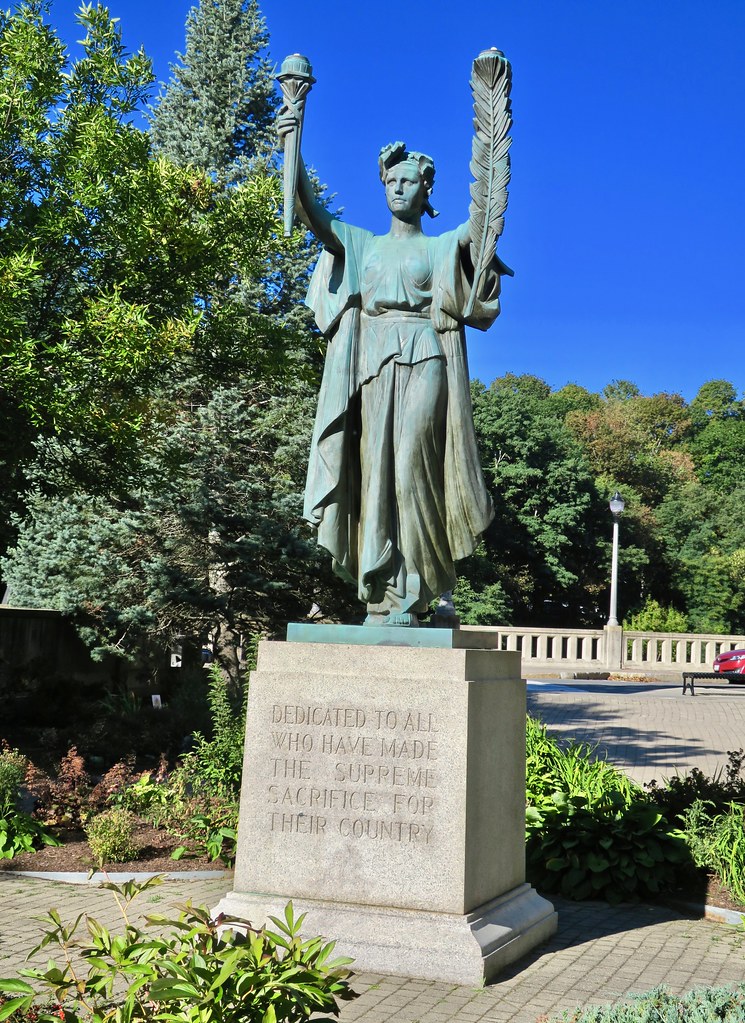
Sculpted by Charles E. Tefft and erected in 1939. This is a bronze statue of Lady Victory, holding aloft two lit torches. It is dedicated to the soldiers who fought in World War I.
- Details
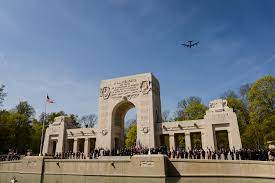
The Lafayette Escadrille Memorial commemorates the volunteer American pilots who gave their lives during World War I, under French colors, before the entry of the United States in the War. The Lafayette Escadrille became an active unit of the French Air Service on April 20, 1916, almost a full year before the U.S. Congress declared war on April 6, 1917.
More than 250 American pilots fought with the French Air Service before the United States joined the war, either in existing squadrons with French pilots, or as one of the 38 pilots who flew in the all-American Lafayette Escadrille squadron. The Memorial commemorates the courage and the sacrifice of all these American pilots who came to France before April 1917, collectively called the “Lafayette Flying Corps”.
The 68 members of the Lafayette Escadrille and the La Fayette Flying Corps who died in WWI, or after the war as a result of their wounds, are buried in the crypt located under the central arch of the Memorial. They lie in a broad semi-circle, each under a cenotaph bearing the pilot’s name and date of death. Their French commanders, Georges Thénault and Antonin Brocard, who died respectively in 1948 and 1950, wanted to be buried with their American comrades.
The monument is located in the Parc de Saint Cloud, in Marnes-la-Coquette, half-way between Paris and Versailles. The monument is composed of a central monumental arch, half the height of the Arc de Triomphe in Paris.
On the façade of the monument are the names of the 68 pilots of the Lafayette Escadrille and the Lafayette Flying Corps who died in World War I.
- Details
- Memorial Hunters Club Submission: thewanderer
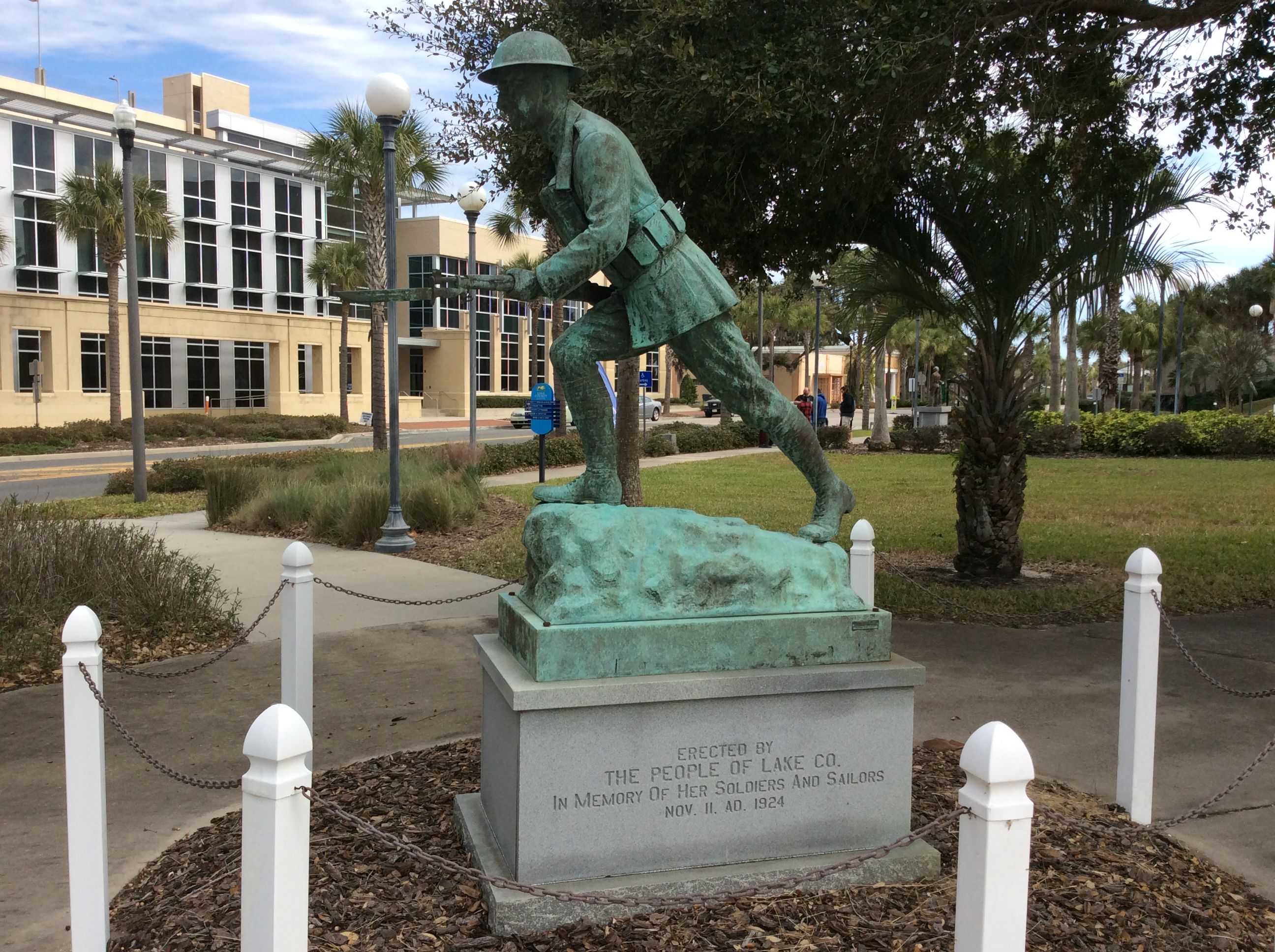
Memorial honoring the soldiers and sailors from Lake County who served in the First World War.
- Details
- Memorial Hunters Club Submission: thewanderer
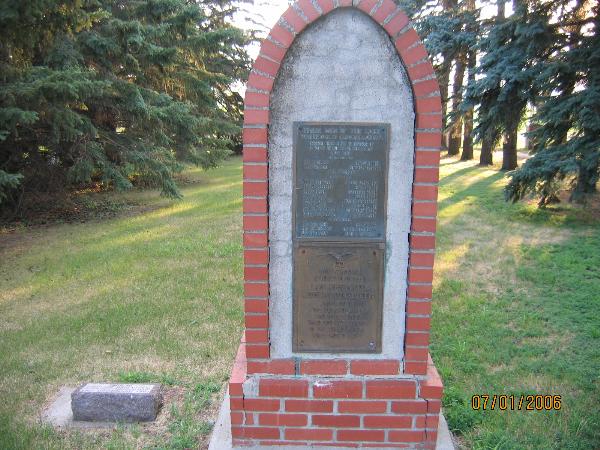
Lake Whitewood Lutheran Congregation put up this memorial for all the WW1 veterans from their congregation. The memorial is in the courtyard of the Church.
- Details
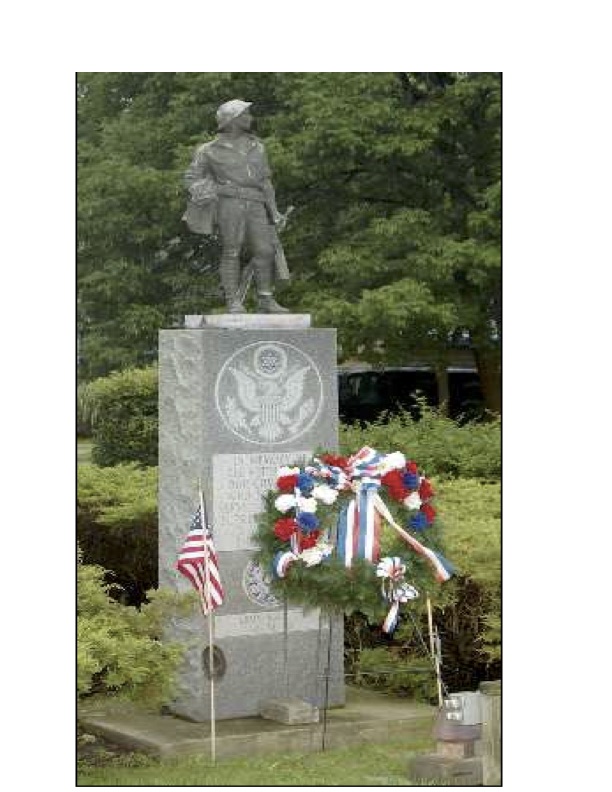
This life-size metal sculpture, painted black, is of a WWI infantryman at parade rest with his helmet pushed back. He holds his rifle's barrel in his left hand, and his knapsack hangs from it. Draped over his right arm is his uniform coat. It was sculpted by E.M. Viquesney and dedicated in 1937 or 1938 to honor the community's veterans who served honorably or died in service in WWI. Originally, it stood on a triangular mound of boulders. Following a truck accident, that base was replaced by a metal one.
- Details
- Dedication Date: 7/4/1919
- Single figure -- soldier
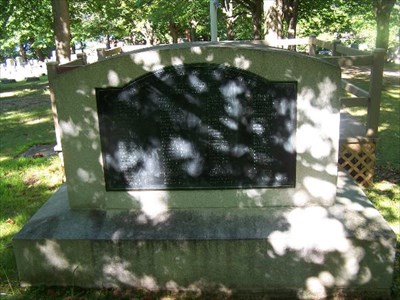
Lakeview Cemetery WWI Memorial - Quincy
This Stone and brass memorial commemorates the WWI soldiers from Quincy. There is a flagpole, but no flag.
The plaque reads:
In Honor of the Boys who wore a uniform in the great world war. Erected July 4, 1919
- Details
- Dedication Date: November 11, 2002
- Photos courtesy of Lamar Veatch
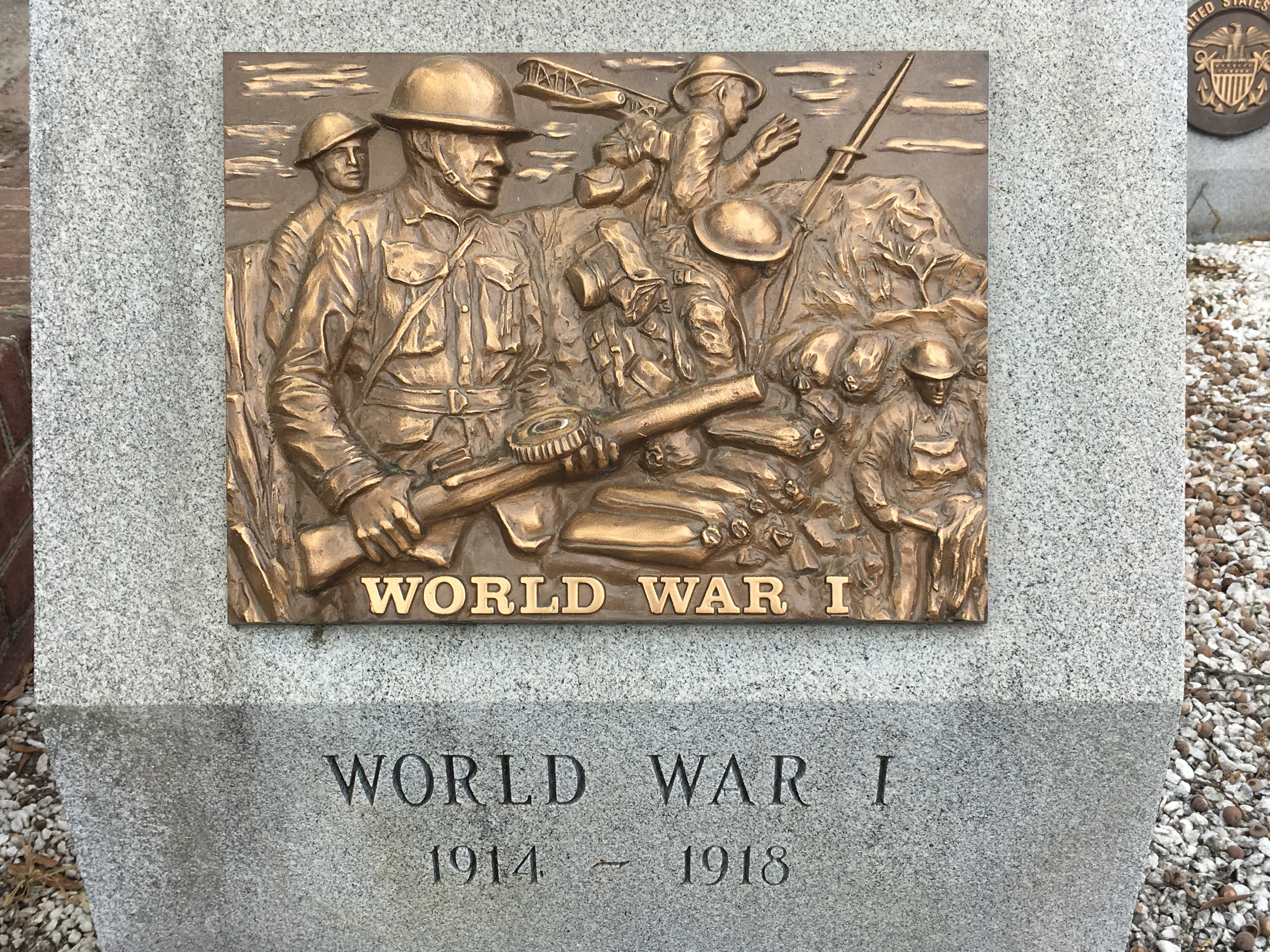
“Dedicated To All The Men and Women Who Served Our Country During The Major Wars of the 20th Century.” American Legion – Martin-Moore Post No. 25 – Dedicated Nov. 11, 2002 – in memory of Louis Lashley.
- Details
- Dedication Date: 1948
- Photos courtesy of Lamar Veatch
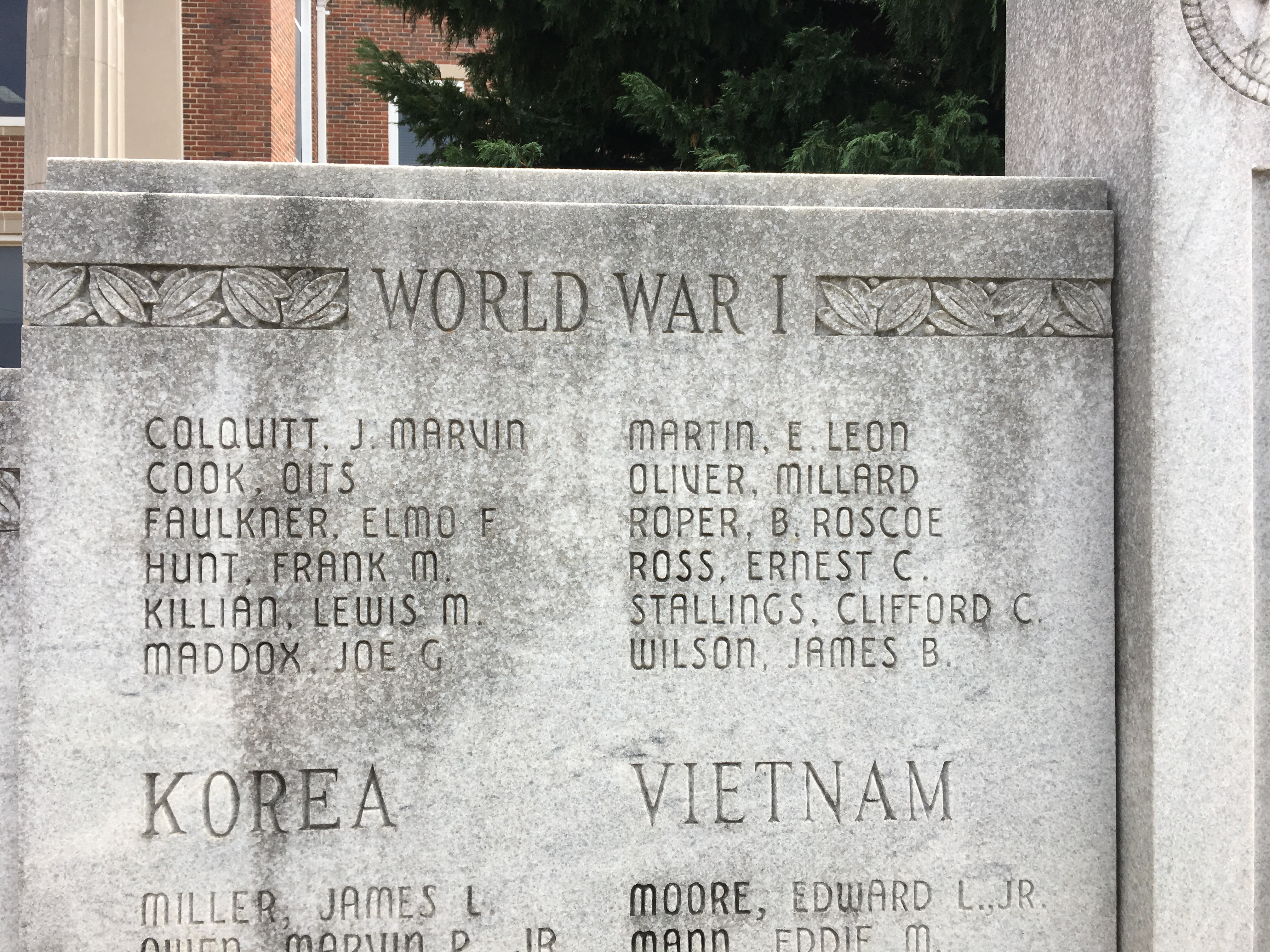
All Wars monument on the Lamar County Courthouse grounds.
“Dedicated to the Everlasting Memory of Those from Lamar County Who Gave Their Lives in the Service of Our Country.” For World War One, the monument contains twelve names.
- Details
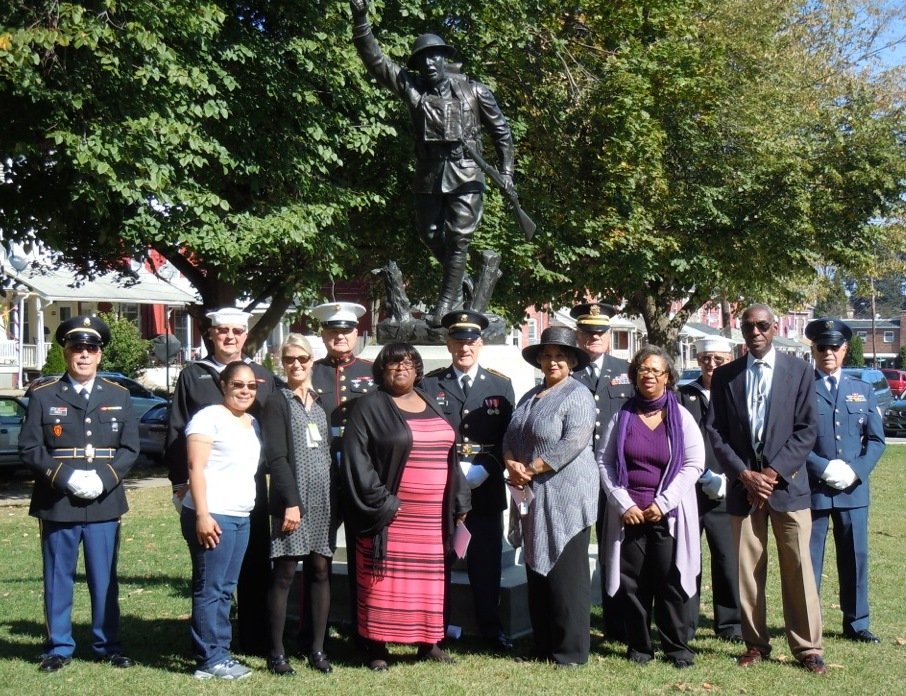
This E.M. Viquesney Spirit of the American Doughboy is dedicated to the men and women of the Seventh Ward of Lancaster who served in World War I.
The inscription reads:
Dedicated to
The men and women
of the Seventh Ward
Lancaster, PA.
who by their patriotism
courage and devotion
helped win
The World War
1914 - 1918
for humanity, liberty and righteousness
erected by the
Citizens of the Seventh Ward
The Doughboy was originally dedicated November 11, 1925 at East End Junior High, now known as Edward Hand Middle School, in a ceremony in which the Lancaster Gold Star Mothers, American Legion, Knights of Malta, and students of the Junior High, played prominent roles. It was unveiled by three Gold Star Mothers, and tribute was paid to the 482 men and women of the Seventh Ward who served during the war. It was purchased with funds raised by public subscriptions of residents of the Seventh Ward, and had been in Lancaster nearly a year while an appropriate site was selected. The Doughboy was moved to the Stahr Armory location in 1962. The doughboy's arms and rifle barrel have been cut off and replaced. By 1986 it had lost its right hand and grenade. They were restored. In 1992, vandals pushed the whole sculpture of its base and onto the grass. Currently, the statue appears to be in very good condition.
On June 12, 2013, The statue was moved back to its original Seventh Ward neighborhood location on South Ann Street after 51 years. The Armory was put up for sale and the City of Lancaster did not want the statue to be sold with the building and possibly lose this historic treasure. Because the statue had been in front of the Armory for 51 years, legally the City no longer owned the statue. The City's Public Art Manager contacted the Pennsylvania Department of Military and Veterans Affairs (the property owner) to negotiate the return of the statue to the City. A public meeting was held at Edward Hand Middle School to discuss moving the statue back to its original location in front of the school. All attendees were in favor of returning the statue to the school and the decision was subsequently approved by a School District of Lancaster School Board vote. The return to Hand Middle School was prompted by the South Ann Concerned Neighbors group. The new location was carefully selected because of its close proximity to the school, ample lighting, and two surveillance cameras mounted on the school that survey the area surrounding the statue. A rededication ceremony was held on October 15, 2013 at 1:30 pm.
- Details
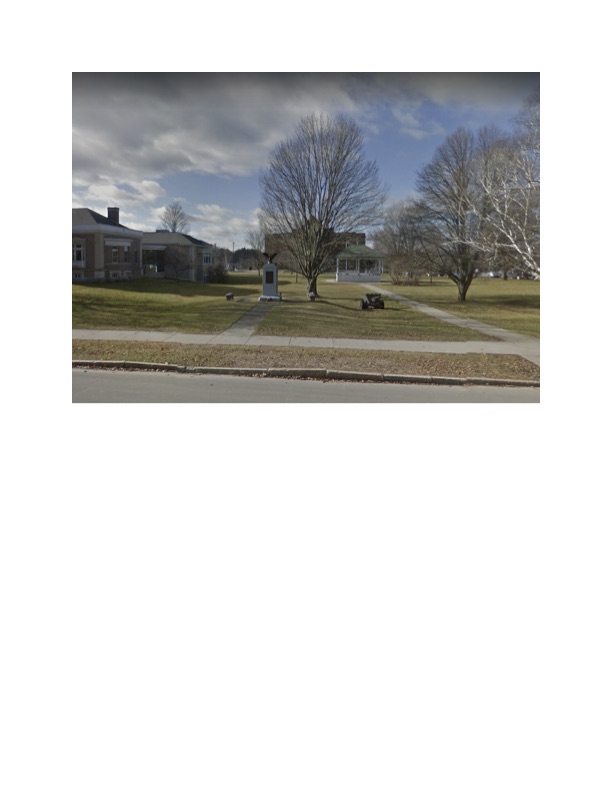
A bronze eagle with wings spread sits on a hemisphere, atop a tall granite base. It was cast by Gorham Silversmiths and originally dedicated on Memorial Day, 1951. It is a tribute to the men and women of Lancaster who served in WWI, WWII, and the Korean and Vietnam Wars.
- Details
- Memorial Hunters Club Submission: Memorial Hunter: Robert Shay, PH3, USNR-R, 1964-70
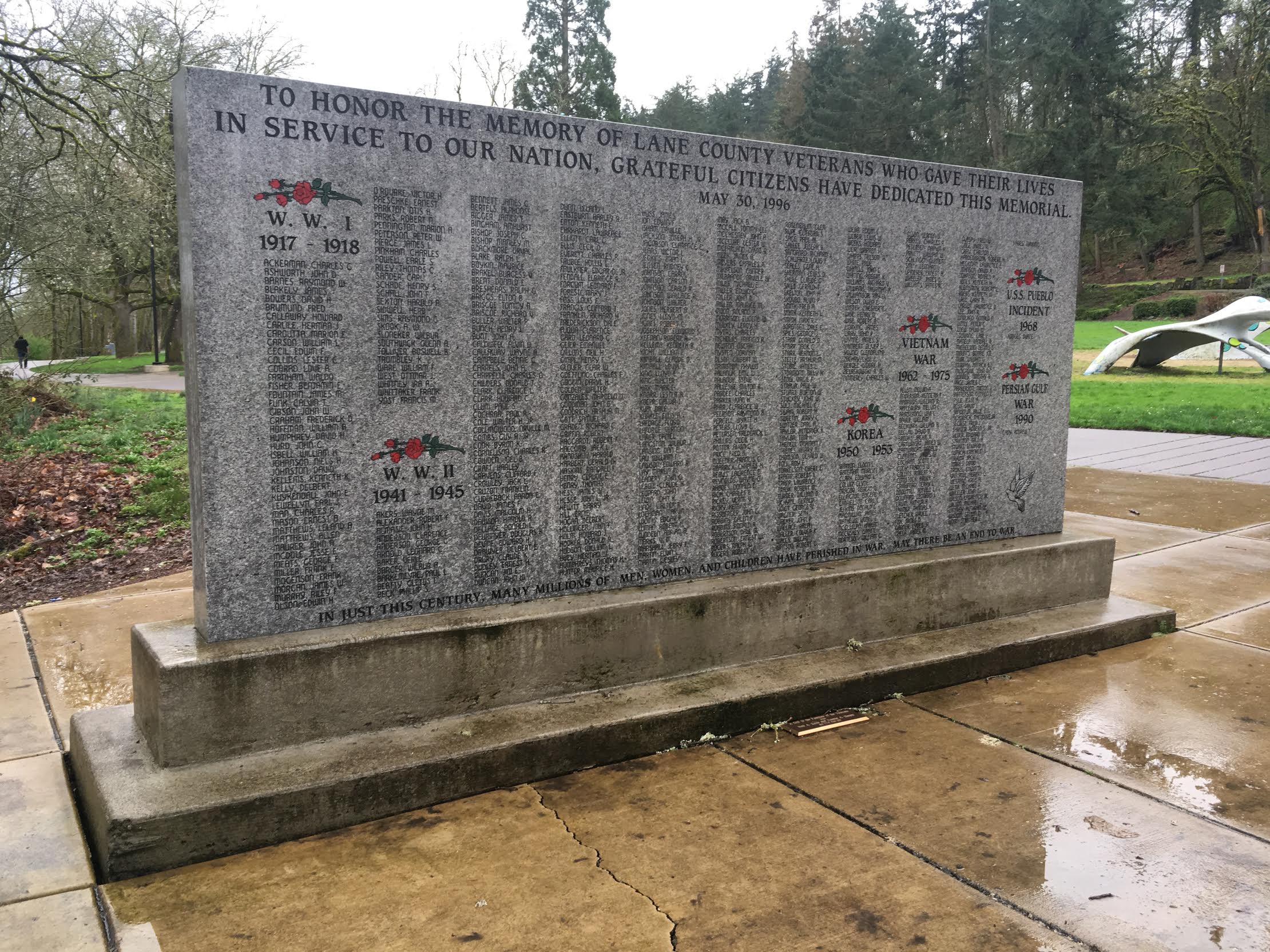
This memorial, located in Skinner Butte Park, honors citizens of Lane County who have given their lives in service from World War 1 to the present day. It features a bronze plaque dedicated as "A Gift To The Families Of The Veterans."
- Details
- Dedication Date: November 11, 2012
- Photos courtesy of Brooklyn Reese
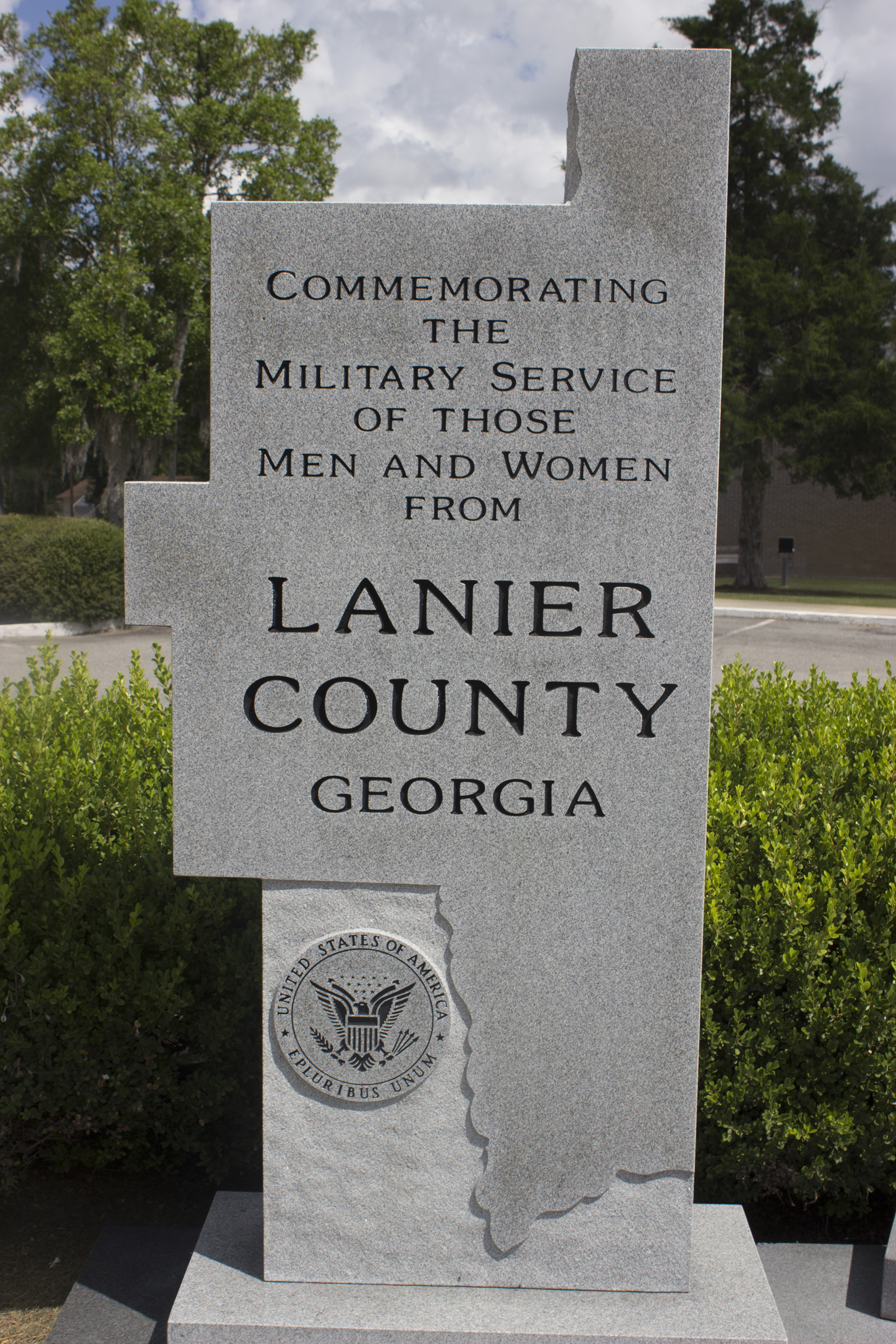
Description: Granite monuments, one in the shape of the county, commemorating the service of those from this area. (Lanier County took its territory from parts of Berrien, Clinch and Lowndes counties in 1920. It is named for poet Sidney Lanier.
Inscriptions: “Commemorating the military service of those men and women from Lanier County Georgia.” “Dedicated to those who served in the armed forces of the United States so that we might live in peace and freedom. World War I, World War II, Korea, Vietnam, Desert Storm.”
An image of KIA soldier from Lanier County - Robert Delmus (Buster) Williams is included in the gallery.
- Details
- Dedication Date: November 11, 1921
- Lansdowne School District, Borough of Lansdowne and American Legion Post 65
- Clarence Brazer
- Other

On the front of the monument the following is inscribed:
Our Honored Dead
Edmund Garretson Cook
Paul DeNegre
Edwin Eldon Graham Elder
Norman H. Leonard
Howard P. Melody
Edward Francis McShane
Joseph Ryan
Soccorso Tecce
Raymond William Watson
John W. Wiegel, Jr.
Edwin S. Williams
Albert Clinton Wunderlich On the rear of the monument the inscription reads:
To The Honor
Of The Men from Lansdowne
Who Entered The Great World War
1914-1918
This Monument is Dedicated
By Their Fellow Townsmen
In Token of Sorrow of Their Lives
Of Pride in Their Valor
And in the Full Assurance
That the Memory of their Heroism
In Life and Death
Will Inspire
The Future Youth of Lansdowne
With the Same
Courage and Devotion
- Details
- Dedication Date: May 30, 1923
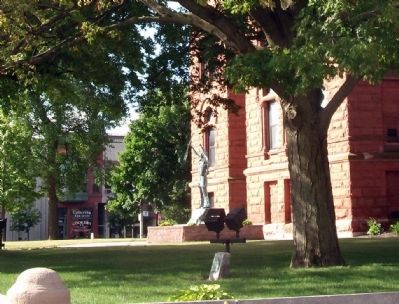
The tree was planted in 1923 in memory of those who served in World War I.