































Memorial

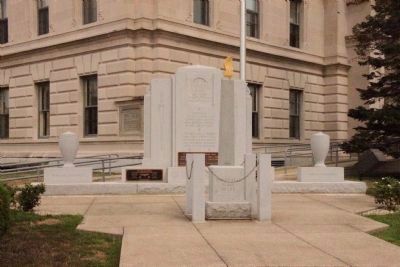
- Details
- 1922
- Giuseppe Moretti
- Memorial Hunters Club Submission: thewanderer
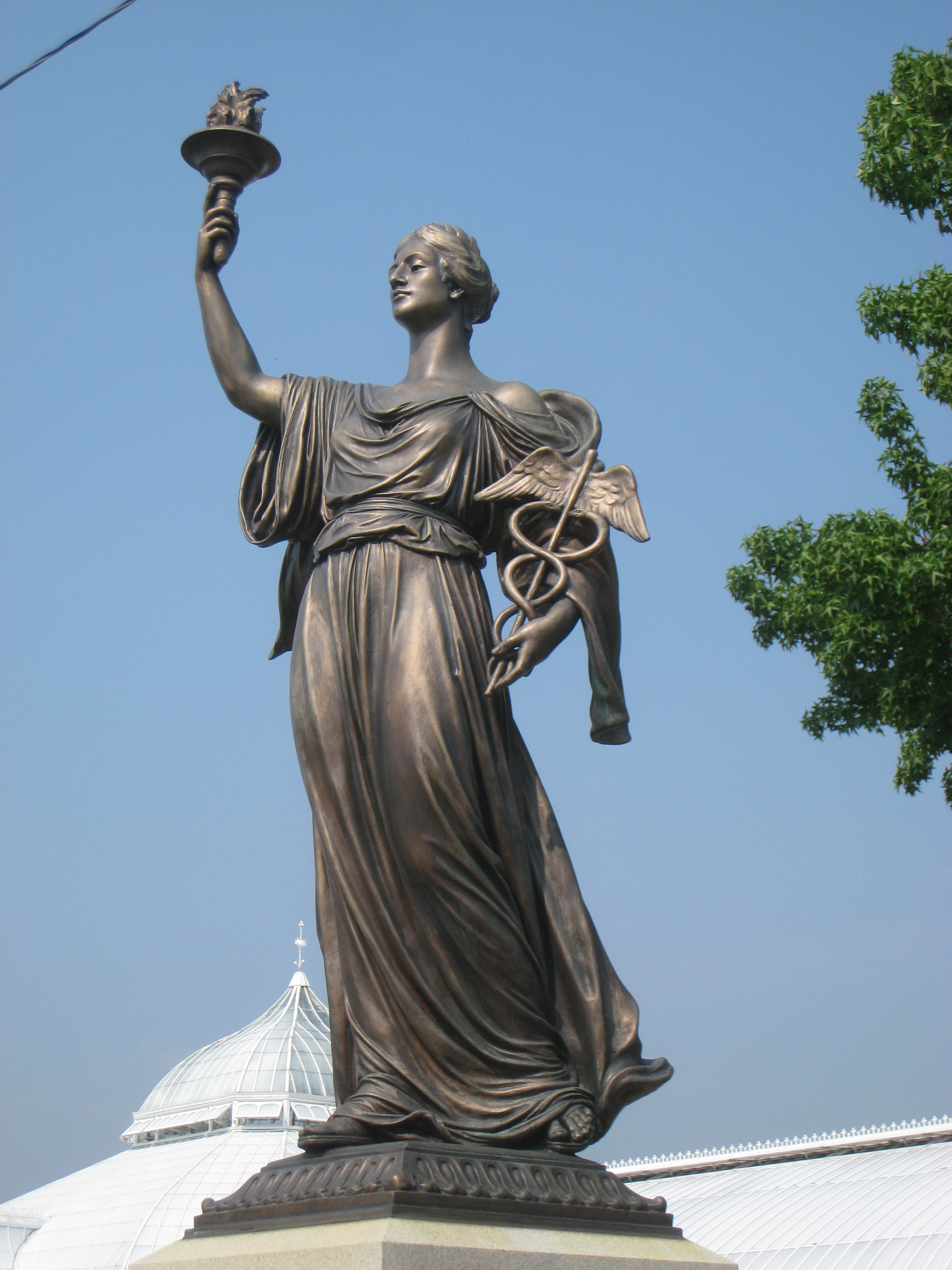
- Details
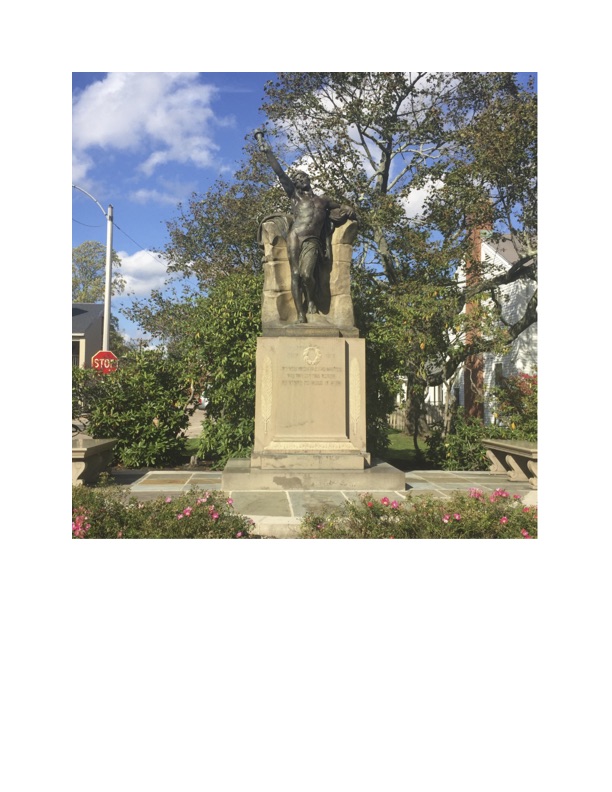
This 20 foot tall monument consists of a large nude male figure supporting himself against a curved stone wall, with raised right hand holding a battle torch. Draped across the wall and over the figure's left leg is a piece of cloth. It was sculpted by Daniel C. French and dedicated on November 8, 1925, in remembrance of the 25 Milton men who died in WWI.
- Details
- Memorial Hunters Club Submission: The Wanderer
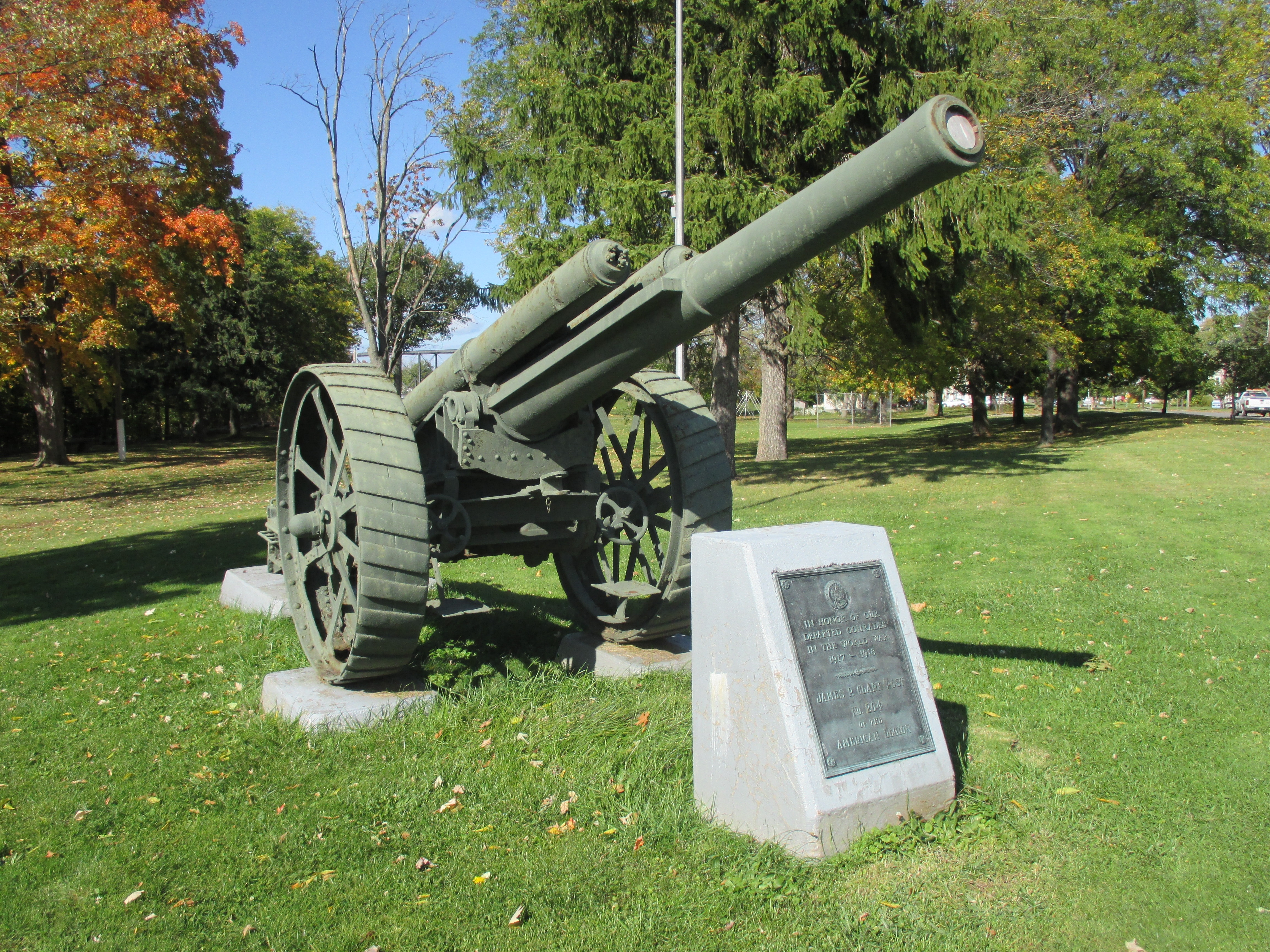
This memorial consists of an artillery piece and was erected by the James P. Clark Post No. 204 of the American Legion. The inscription reads:
In honor of our
departed comrades
in the World War
1917 - 1918
- Details
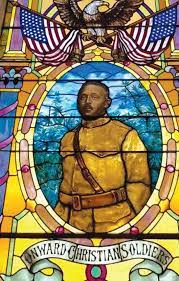
This stained glass window in the Shiloh Baptist Church honors Urbane Francis Bass (April 4, 1880 – October 6, 1918), an African-American doctor and first lieutenant in the U.S. Army, who was posthumously awarded the Distinguished Service Cross for his actions during World War I.
Bass was born on April 4, 1880, in Richmond, Virginia to Rosa and Richard J. Bass. His father was a salesman, alternating from shoes and clothing in the 1880s, to insurance in the 1900s. The couple had six children and lived on East Duval St. in Richmond. While in school, Bass worked as a clerk. He graduated from Virginia Union University in 1902 and the Leonard Medical School of Shaw University in 1906. After leaving Leonard, Bass began a medical practice in Richmond but by 1909 had moved to Fredericksburg where he opened a larger practice and pharmacy on Amelia Street. Bass became the first African American physician since the Reconstruction to reside in the city and his practice was well received by the African American community despite the lack of privileges given by the local hospital.In 1916, Bass wrote to Secretary of War Newton Baker, offering his services as a doctor for the armed forces. In the letter he dictated, "I am herewith offering my services for the Army Medical Corps should there be need for a Negro Physician for that branch of Service. Dr. Urbane Bass, Fredericksburg, Physician".
Bass received a commission as a First Lieutenant in the Medical Reserve Corps and reported for duty at Fort Des Moines on August 14, 1917. Fort Des Moines opened for training African-American men as there had been a huge influx of African-American volunteers after a petition was erected by the students of Howard University. However, there was still some discontent at the facility as many soldiers found that he had been unfairly assessed for merely being black. After receiving basic medical officer training, Bass was transferred to Camp Funston. On March 30, 1918, Bass departed for France with the 372nd Infantry Regiment of the 93rd Infantry Division.
By September 1918, the 372nd and 369th Infantry were responsible for the defenses of Bellevue Signal Ridge, and assisted the French legions in trying to fend off the German assaults coming from the trenches. Most of Bass' work was done in the front lines, in the various aid stations, dealing with immediate injuries.
On October 6, 1918, Monthois, France was facing heavy artillery fire from the Germans, leaving many wounded in the process. Bass had gone into the line to provide immediate aid to the wounded when a shell blasted in the forward aid station he had been working in. The explosion severed both of his legs around the thigh region. With not many attendants around, Bass died in minutes from shock and blood loss. He was posthumously awarded the Distinguished Service Cross on July 9, 1918, for administering "first aid in the open under prolonged and intense shell fire until he was severely wounded and carried from the field."
Bass' body was returned home and reburied in Fredericksburg National Cemetery on July 23, 1921, making him the first African-American officer to be interred there. The Shiloh Baptist Church in Fredericksburg installed a large stained glass window incorporating Bass' image in honor of his heroism. The American Medical Association acknowledged Dr. Bass's contributions and service in their 1919 issue. In 1991, the Rebel Bowl Building in Fredericksburg was renamed the Bass-Ellison Social Services Building, in honor of Bass and his fellow Fredericksburg citizen Dr. Richard C. Ellison.
- Details
- Memorial Hunters Club Submission: The Wanderer
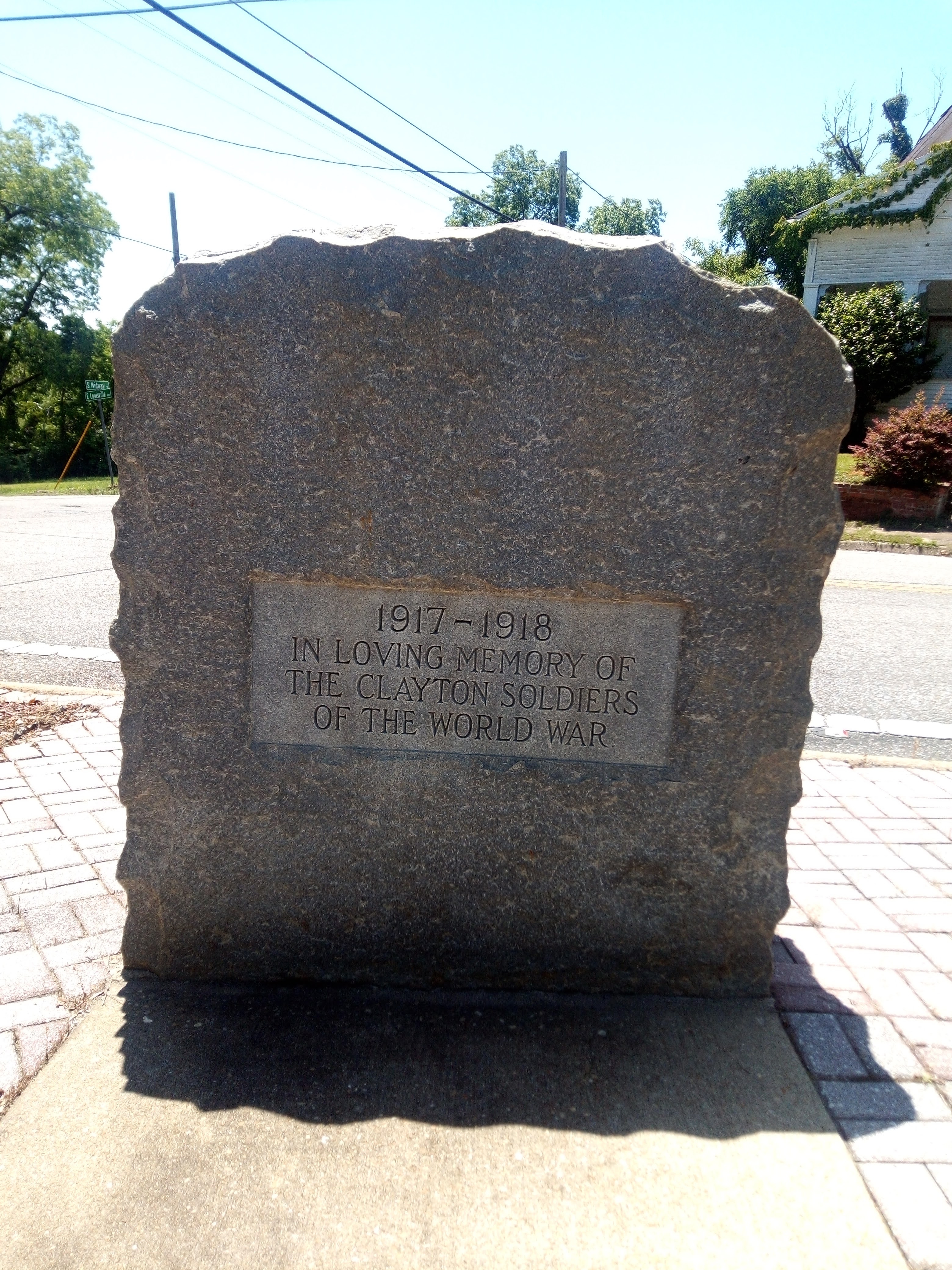
This memorial is a granite marker dedicated to the Clayton men and women who served in World War I. The inscription on one side reads:
1917-1918
In Loving Memory of the Clayton Soldiers of the World War
The inscription on the other side lists the names:
Col. Bertram T. Clayton
Jeff Quillin
Luther Winburn
Ralph Dorman
George Johnston
Vernon Kennedy
Katie Dent (Nurse)
- Details
- Memorial Hunters Club Submission: Robert Shay, PH3, USNR-R, 1964-70
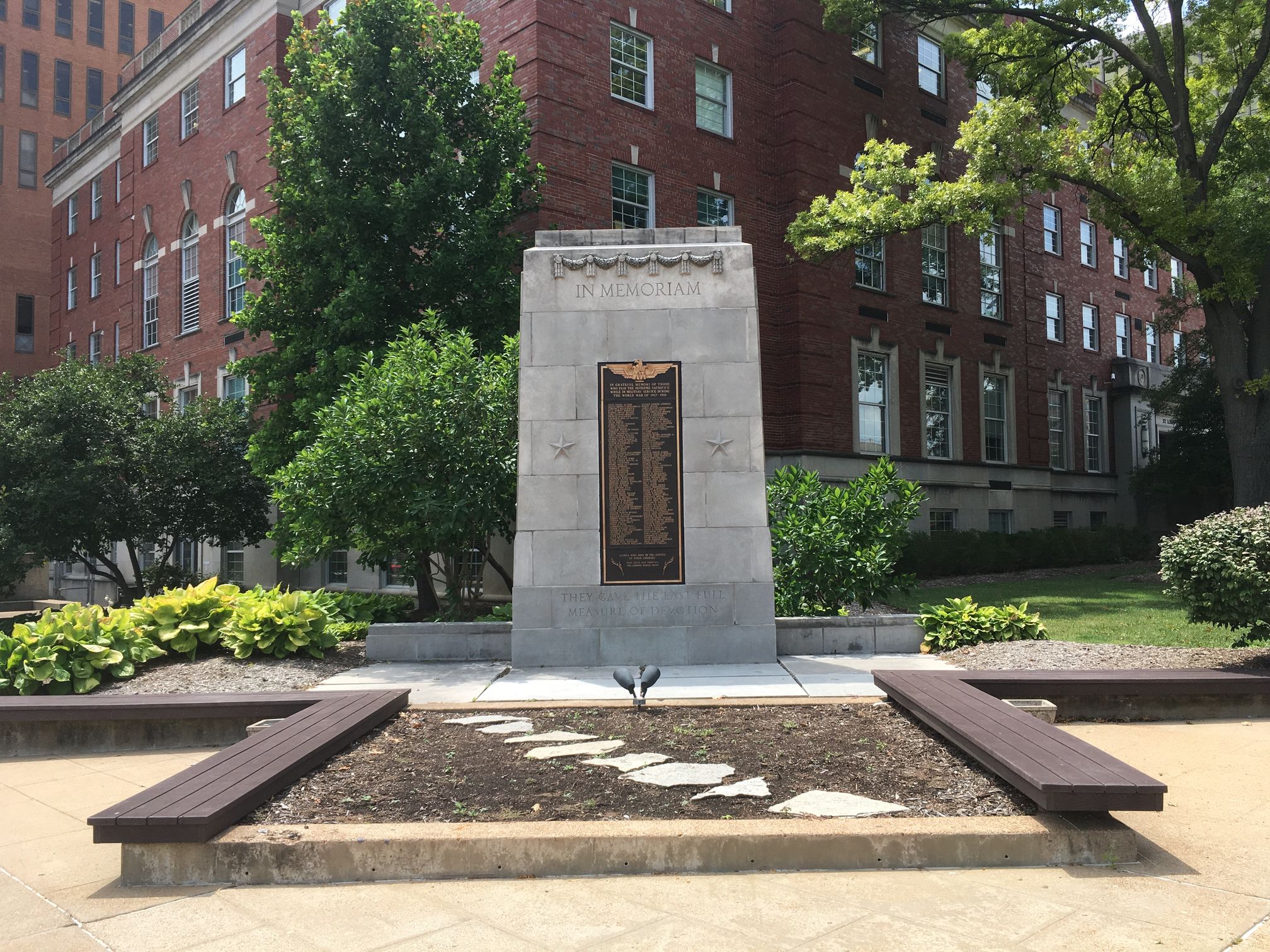
THE WORLD WAR Memorial Plaza
Southwest Corner of S. Central Ave. & Forsyth Blvd.
2 S. Central Ave. - 7903 Forsyth Blvd.
St. Louis County Police Headquarters
Dedicated to the 146 Men and 2 Women
from St. Louis County, Missouri:
"IN GRATEFUL MEMORY OF THOSE
WHO PAID THE SUPREME SACRIFICE
WHILE IN MILITARY SERVICE DURING
THE WORLD WAR OF 1917 - 1918”
“THEY GAVE THE LAST FULL
MEASURE OF DEVOTION”
Abraham Lincoln
- Details
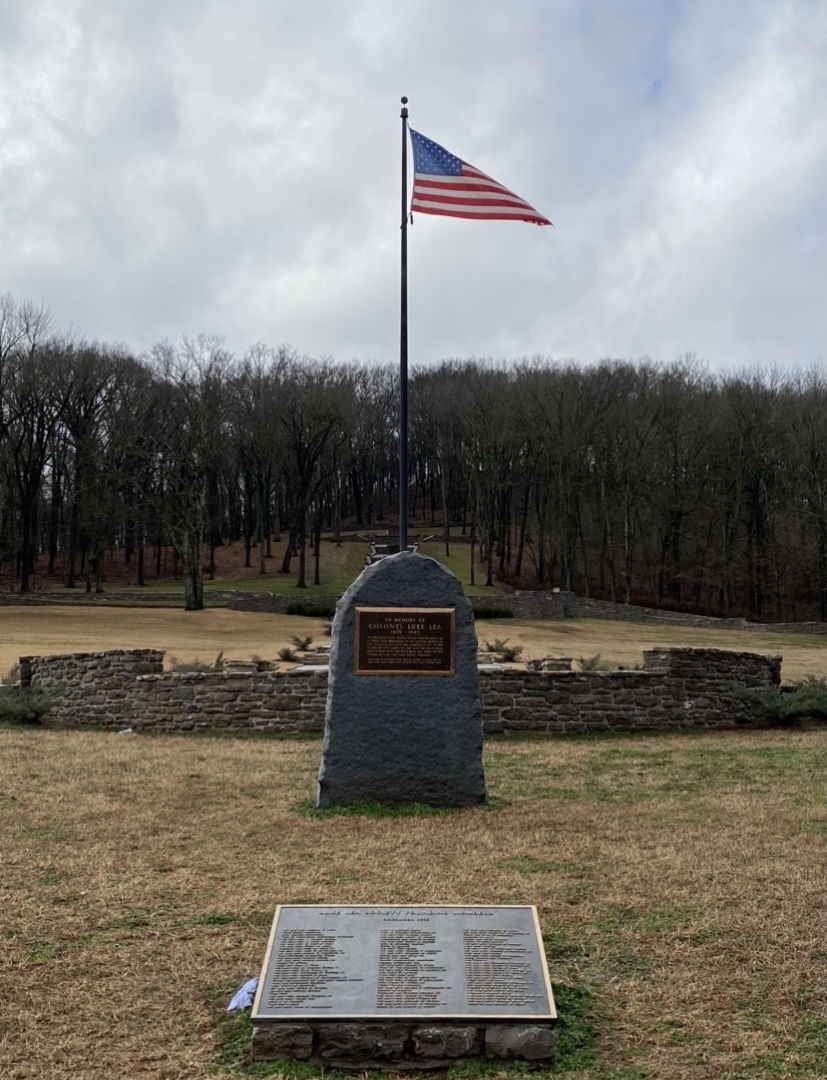
The inscription on this memorial reads:
So the posterity might enjoy the benefits of a public park preserved in its natural beauty, in 1927 Colonel Lea gave the original tract of 868 acres of this land to the city of Nashville requesting that the park near the name of his late father-in-law, the late Percy Warner.
Erected by officers who served under Colonel Lea in the 114th field artillery during the First World War.
After serving as a U.S. Senator from Tennessee from March 1911 to March 1917, Lea returned to Nashville and organized a volunteer military outfit which, on 6 Apr. 1917, became the First Tennessee Field Artillery. With the rank of lieutenant colonel, Luke Lea was its commander until 18 October when he became colonel of this regiment of the Thirtieth Division. An imposing military figure, colorful and daring, Lea led the all-volunteer regiment in many battles. During the lull just after the armistice and Kaiser Wilhelm's abdication, Lea and a group of younger officers made a bold trip to Holland to capture the Kaiser at his retreat. They got to the doorway of the retreat, but the coup attempt failed when the kaiser refused to turn himself over to Lea and his officers. The episode became an international incident, Holland protesting that its neutrality had been violated. Colonel Lea received the Distinguished Service Medal before his discharge on 12 April 1919.
- Details
- Memorial Hunters Club Submission: The Wanderer
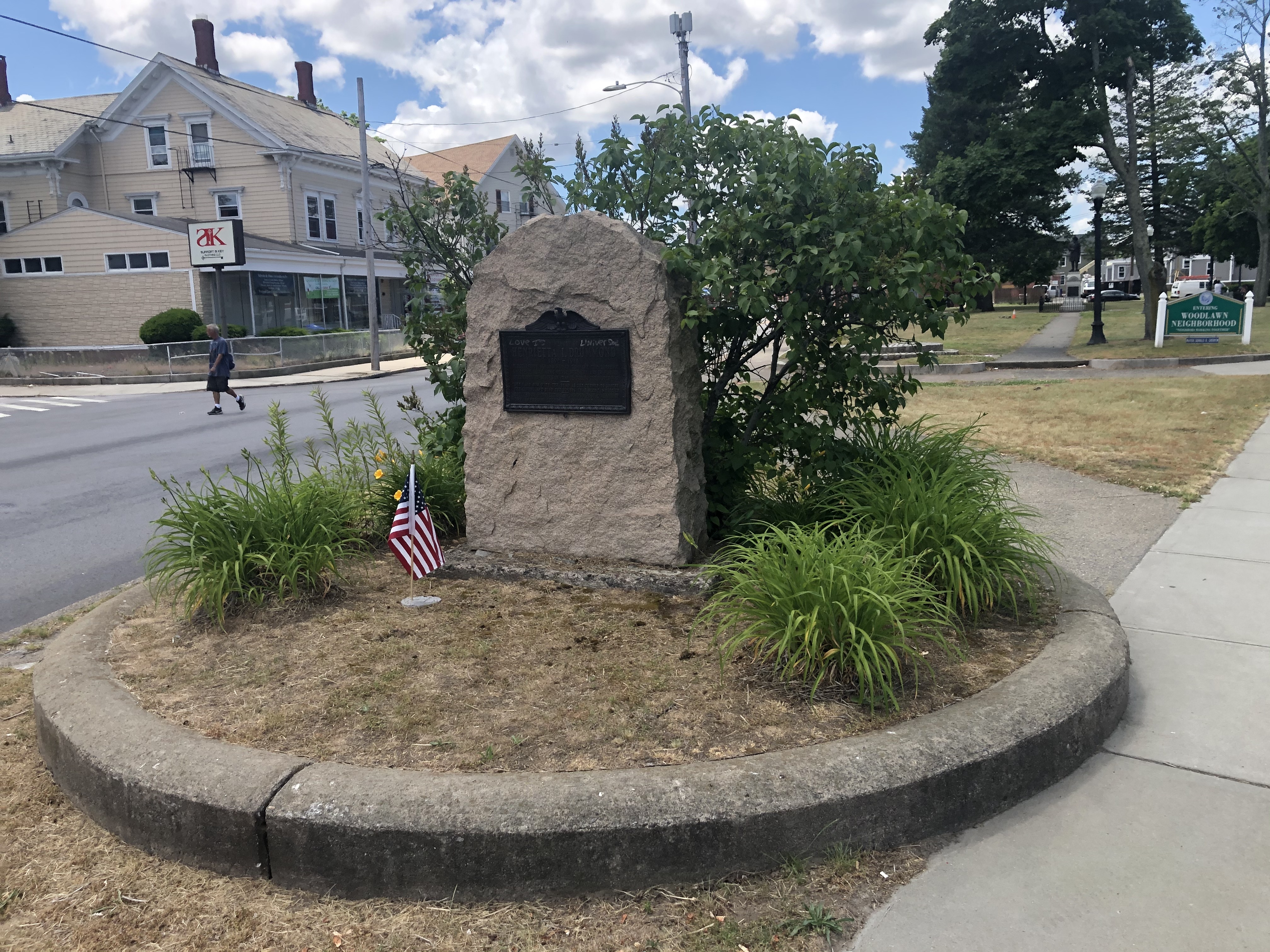
The inscription on this memorial reads:
IN MEMORY OF
HENRIETTA ISABELLA DRUMMOND
1892 - 1918
FIRST RHODE ISLAND WOMAN TO MAKE THE SUPREME SACRIFICE AS AN ARMY NURSE WITH THE ARMED FORCES OF THE UNITED STATES IN FRANCE DURING THE WORLD WAR
"SHE LAID HIM WITH THE DEAD AS SHE TURNED TO SOOTHE THE LIVING AND
BIND THE WOUNDS THAT BLED." WHITTIER
ERECTED IN 1937 BY HENRIETTA I. DRUMMOND POST & AUXILIARY, THE AMERICAN LEGION.
In the waning days of World War One, Henrietta Isabel Drummond, 25, of Pawtucket, RI, USA, made her way across the Atlantic Ocean to serve as a Red Cross nurse. Her parents were from Glasgow.
"I am having a wonderful time here," she wrote to her mother from aboard the Balmoral Castle, "and it will be a trip to remember. " They were to be the last words that Jean Drummond would ever receive from her daughter.
Having graduated in 1917 from the St Joseph Hospital School of Nursing, in Providence, RI, Henrietta Drummond trained in South Carolina and then made the submarine-menaced voyage from New York to France, arriving on October 4, 1918.
Assigned to a hospital in Nevers, in central France, Drummond worked 15-hour days caring for soldiers who had been gassed, who had not eaten in days, who had lost arms and legs, whose wounds had been left to bleed. As the nursing went on, a piercing whistle would signal enemy planes overhead - the threat of attack was constant. (Shortly before Drummond's arrival, a shot from a long-distance gun had struck a maternity hospital, killing 50 babies.)
The other constant danger in the soldiers' hospital was infection. And indeed on October 10, just six days after her arrival and a month before the war's end, Henrietta Isabel Drummond died, of either typhoid fever or Spanish influenza.
- Details
- Dedication Date: May 21, 1961
- Memorial Hunters Club Submission: Memorial Hunter: Gene Carlson
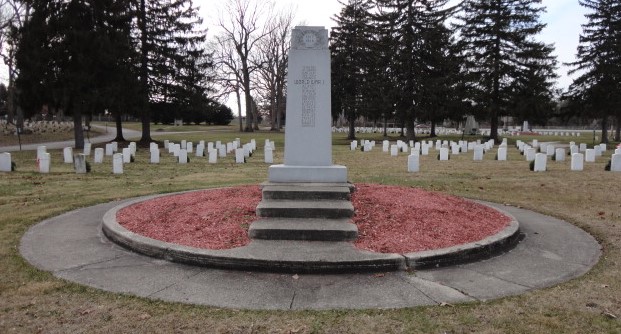
The World War I Memorial is located in the Indiana Veterans Home Cemetery to the right as you enter the cemetery.
Inscriptions:
Front: To The Men Of Indiana Who Served Their Country In World War I We Dedicate This Memorial To Their Noble Deeds And To The Lasting Memory Of Their Courage & Sacrifice. May We Pause In A Silent Prayer Of Gratitude
Rear: Erected By The Department Of Indiana World War I Veterans And Auxiliaries Dedicated May 21, 1961
- Details
- Dedication Date: 1925
- American Legion post
The Indiana World War Memorial Plaza was originally built to honor the veterans of World War I. The five-city-block plaza was conceived in 1919 as a location for the national headquarters of the American Legion and a memorial to the state's and nation's veterans. At the north end of the plaza is the American Legion Mall, which is the site of the administration buildings of the Legion, as well as a memorial cenotaph. South of that is the Veterans Memorial Plaza with its obelisk. Combined, it is the largest war memorial project in the United States.
The centerpiece of the plaza is the Indiana World War Memorial, modeled after the Mausoleum of Halicarnassus, which contains "the Altar of the Flag" in the Shrine Room. There is also a military museum and an auditorium. At the south end is University Park, the oldest part of the plaza, filled with statues and a fountain. On October 11, 1994, the Indiana World War Memorial Plaza was designated a National Historic Landmark District.
- Details
- Dedication Date: 1924
- 89001404
- Art Deco, Beaux-Arts, Neoclassical
- Walker & Weeks; Henry Hering
- Other
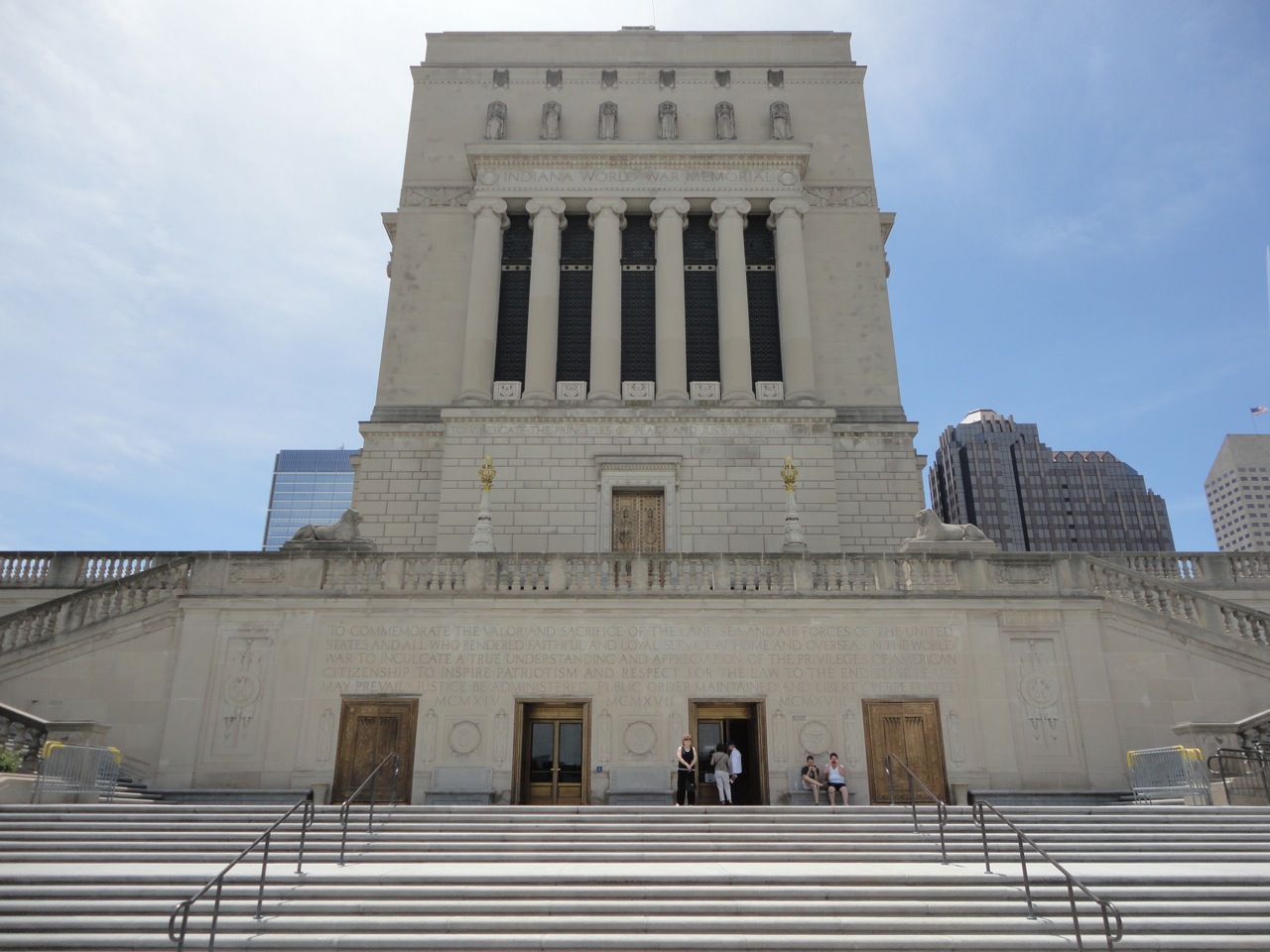
To commemorate the valor and sacrifice of the land, sea and air forces of the United States and all who rendered faithful and loyal service at home and overseas in the World War; to inculcate a true understanding and appreciation of the privileges of American citizenship; to inspire patriotism and respect for the laws to the end that peace may prevail, justice be administered, public order maintained and liberty perpetuated.
- Details
- Memorial Hunters Club Submission: Bill Betten
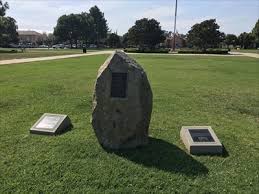
Ingram Plaza, located in San Diego on Liberty Station in front of the former Naval Training Center’s former base Command Center, is named for Osmond K. Ingram, the first U.S. Navy enlisted man killed in action during World War I. The monument, located in the plaza and dedicated to the heroic efforts of Gunner’s Mate Ingram, consists of a large natural stone with a bronze plaque.
Born in Alabama on August 4, 1887, Osmond Kelly Ingram had advanced to the rank of Gunner's Mate First Class and, during World War I, was serving on board the USS Cassin, a destroyer.
On 15 October 1917, while his ship was operating off the Irish coast, she was attacked by the German submarine U-61. Gunner's Mate Ingram spotted the incoming torpedo and, realizing that it would hit near the depth charges at the ship's stern, ran aft in an attempt to release them before the torpedo arrived. However, the torpedo struck the ship before he could release the depth charges and Ingram was killed in the ensuing explosion. For his extraordinary heroism on this occasion, he was posthumously awarded the Medal of Honor. In 1919, the USS Osmond Ingram (DD-255, and later AVD-9 and APD-35) was named in honor of Gunner's Mate First Class Osmond K. Ingram.
- Details
- Memorial Hunters Club Submission: JEANNE WINNICK
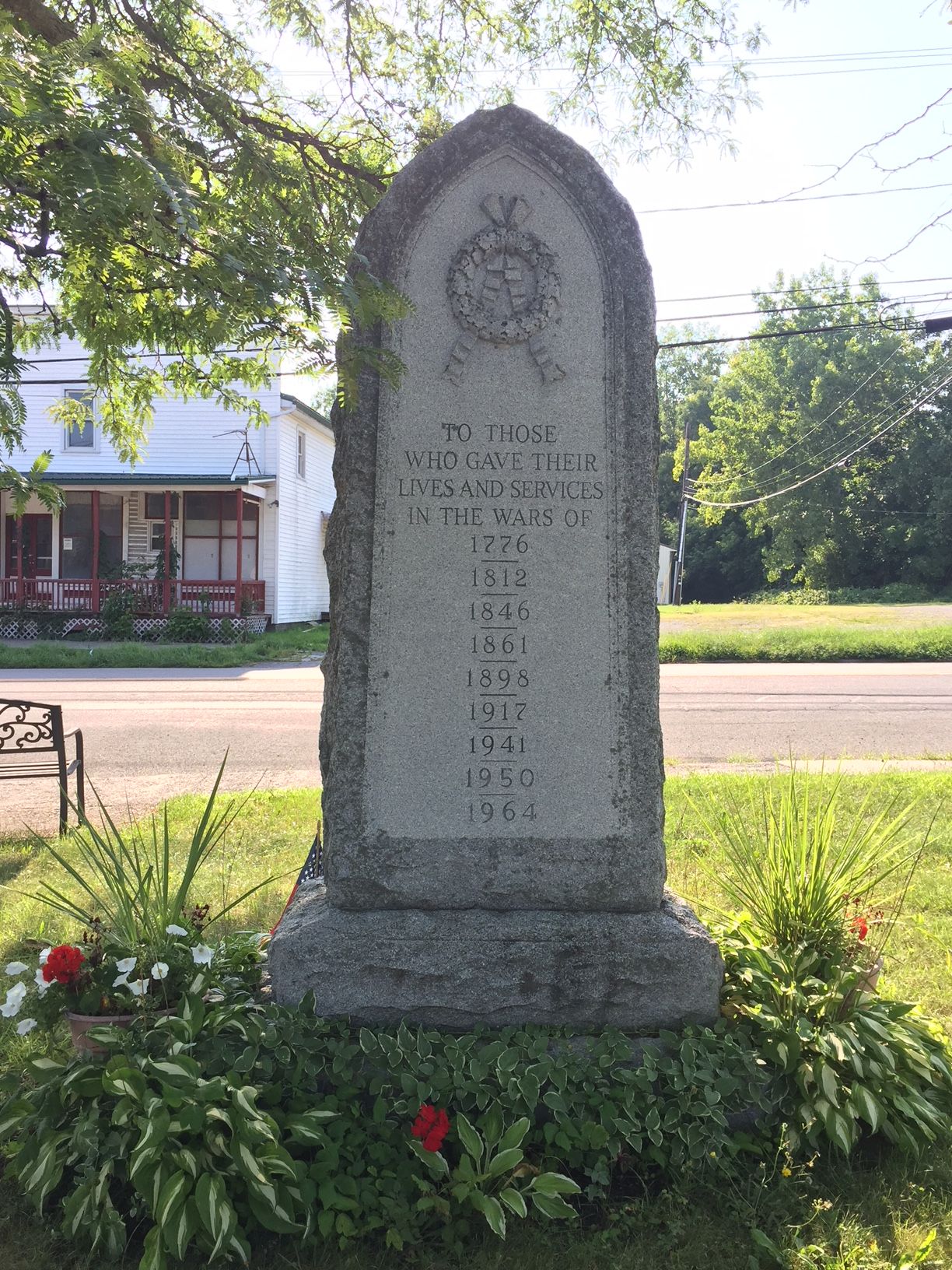
Across from the US Post Office in a tiny town stands a monument to those from the area who gave their lives and services in all the wars from 1776 to 1964 with each war's initial year listed.
- Details
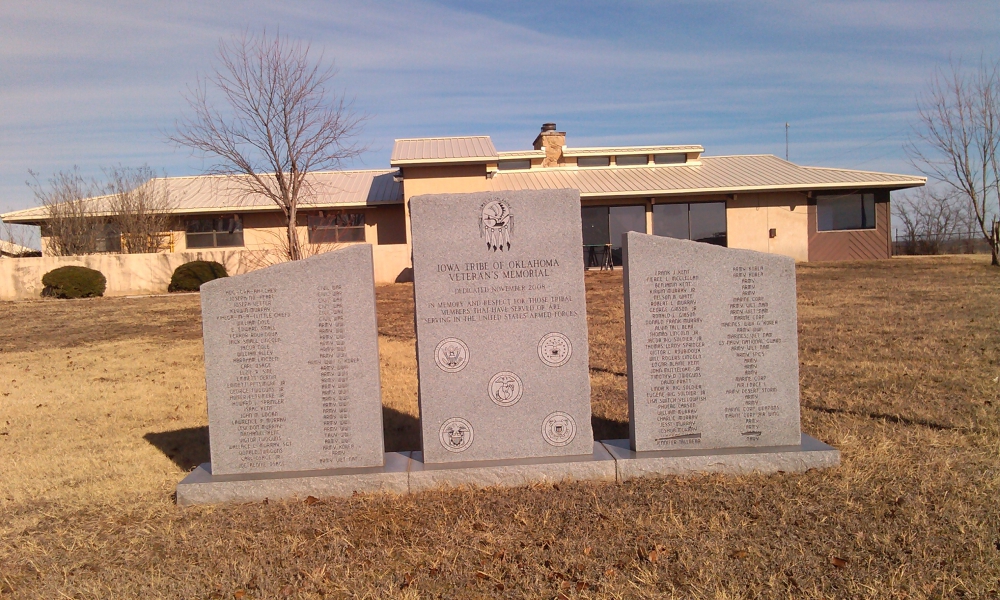
This memorial consists of three gray granite pillars situated between two flagpoles, which fly the American and Iowa Tribe of Oklahoma flags. The memorial was dedicated in November, 2008. The central pillar shows the Iowa seal, and Army, Air Force, Marine Corps, Navy, and Coast Guard insignias.
There is an inscription on the central pillar which reads: “Iowa Tribe of Oklahoma Veteran’s Memorial. Dedicated November 2008. In memory and respect for those tribal members that have served or are serving in the United States Armed Forces.”
The other pillars bear the names, branches of service, and periods of service of 57 tribal veterans. Army, Navy, Marine Corps, and Air Force branches are represented, as are the Civil War, WWI, WWII, Korea, Vietnam, and Desert Storm conflict periods.
- Details
- Memorial Hunters Club Submission: thewanderer
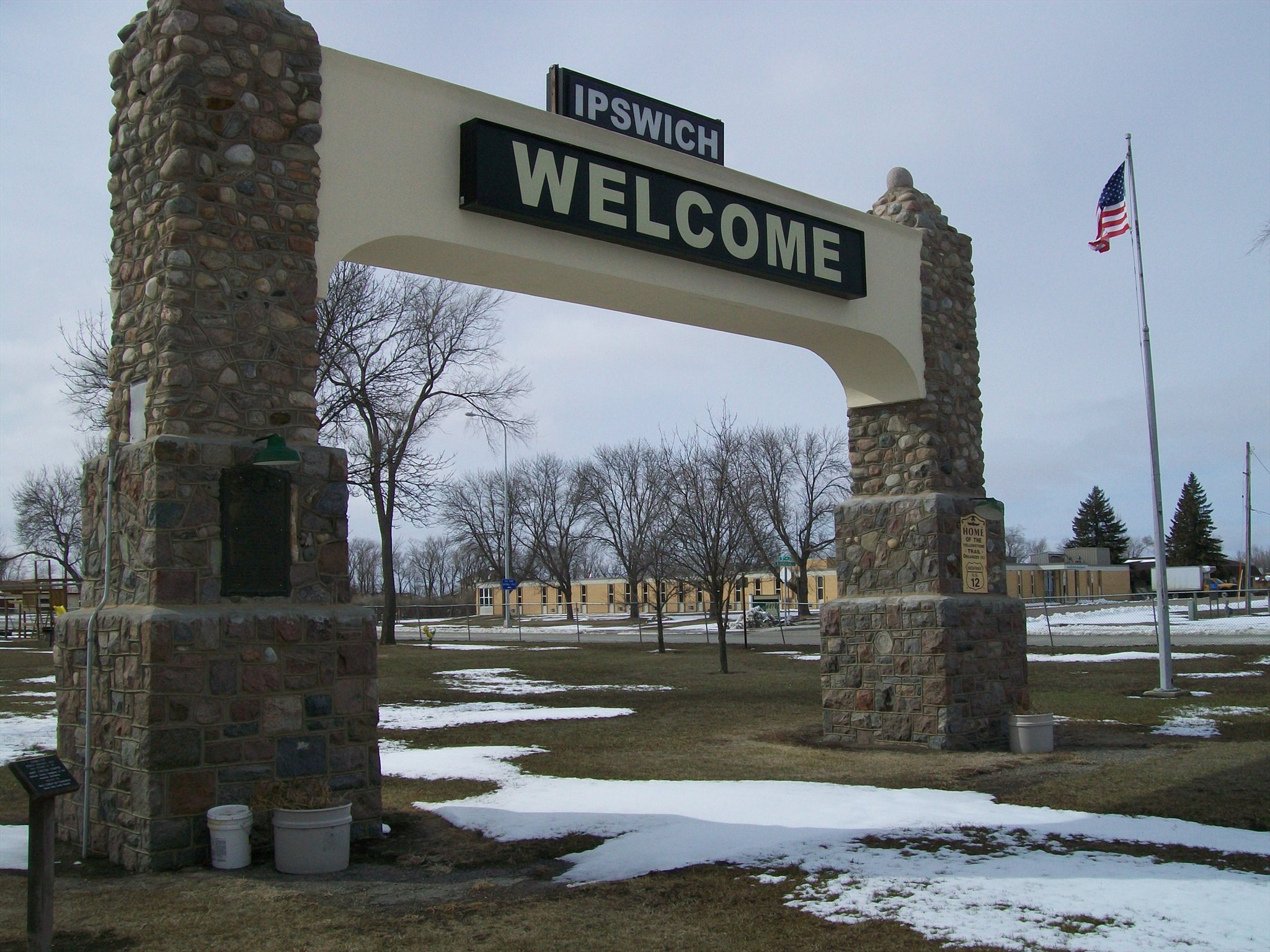
Simply known as The Memorial Arch, this memorial is dedicated to those men from the Ipswich area who lost their lives in World War 1.
This arch is on the east side of a park and playground with many new playground structures, picnic shelters, and trees.
On the south pillar of the arch is a plaque that reads:
"THIS PILLAR OF THE MEMORIAL ARCH OF IPSWICH IS ERECTED IN HONOR OF THE VALIANT MEN OF THE COMMUNITY OF IPSWICH WHO ANSWERED OUR COUNTRY'S CALL TO ARMS IN THE WORLD WAR 1917-1918 AND AS AN EVERLASTING MONUMENT TO THOSE WHO SO NOBLY MADE THE SUPREME SACRIFICE"
At the bottom of the plaque is a list of 12 individuals who gave their lives.
- Details
- Dedication Date: 1928
- Memorial Hunters Club Submission: thewanderer
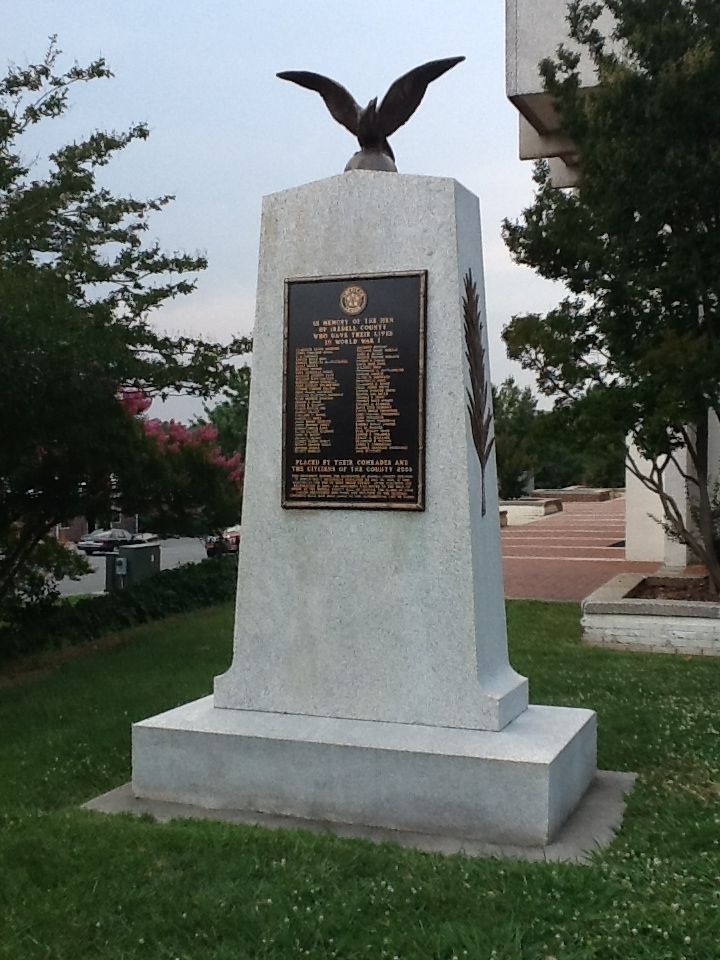
This monument honors the sacrifices of Iredell County citizens in World War I. Originally designed by Louis E. Schwend and dedicated on May 30, 1928. It was erected at the end of West Broad Street. After cleaning and restoration in 2005, the monument was moved to the Walk of Honor at the Iredell County Hall of Justice. The names of four fallen servicemen who were not included on the original monument have now been added to the alphabetical list of names.
- Details
- 1924
- Memorial Hunters Club Submission: thewanderer
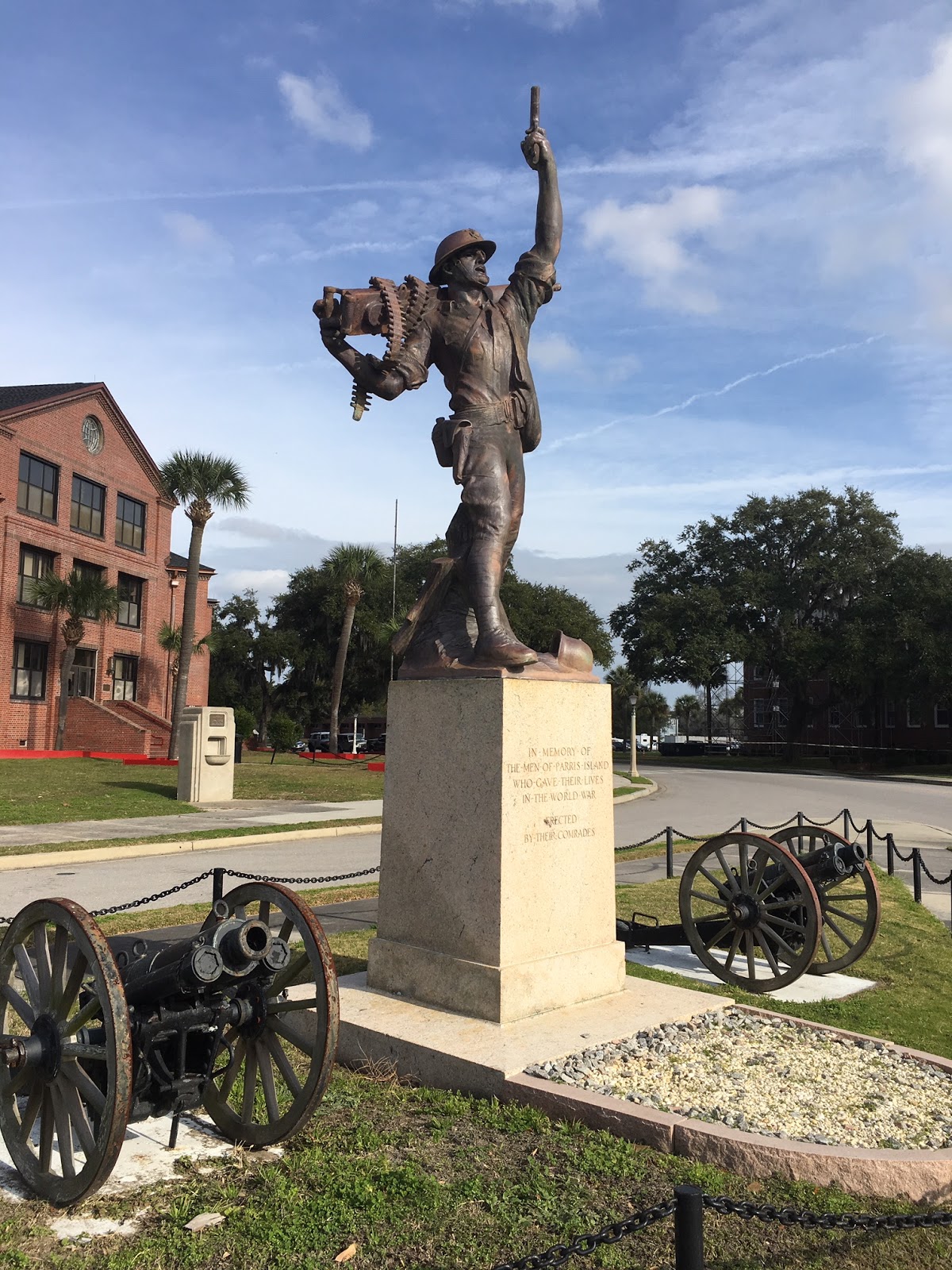
Parris Island's Iron Mike is depicted carrying a Maxim machine gun over his right shoulder and an M1911 pistol in his raised left hand. It was created as a memorial to all of the Parris Island graduates killed during World War I.
The statue itself is approximately life-sized, standing about 8 feet (2.4 m) high from the heel of his boot to the muzzle of his pistol, and is mounted on a 5-foot (1.5 m) granite base. It was created by Robert Ingersoll Aitken, the sculptor of the pediment on the United States Supreme Court Building, and cast in bronze. Officially entitled Monument to U.S. Marines, Iron Mike was dedicated in 1924 in a ceremony presided over by Commandant John A. Lejeune. Due to changes and construction around Parris Island, Iron Mike was relocated in 1941 and now stands in front of the Parris Island Headquarters and Service Battalion Barracks.
The bronze plaque, mounted on the base, reads: "In memory of the men of Parris Island who gave their lives in the World War, erected by their comrades."
- Details
- Group
- Memorial Hunters Club Submission: Memorial Hunter: Robert Shay, PH3, USNR-R, 1964-70
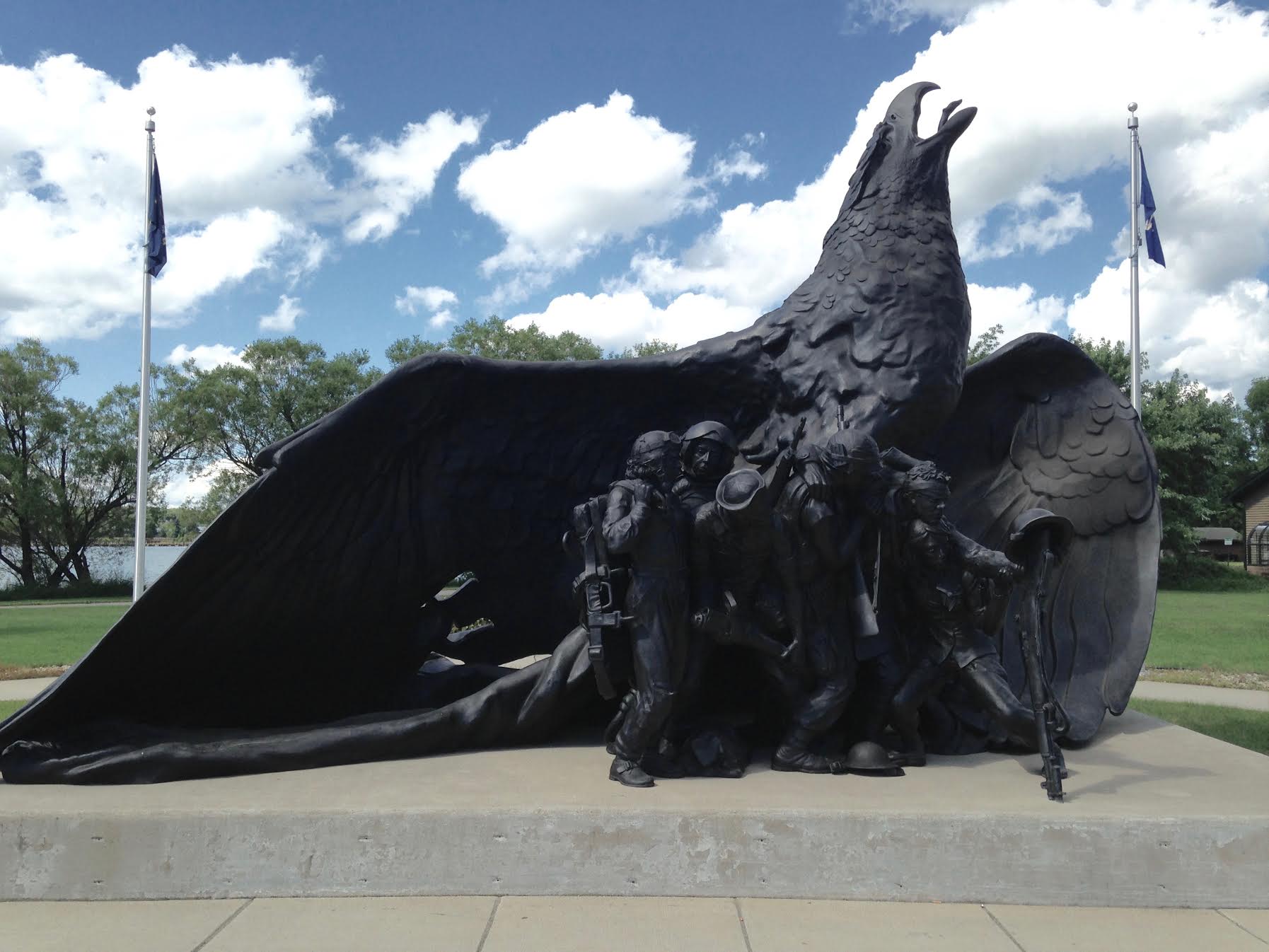
This sculpture and surrounding memorials are dedicated to those who have served in all wars from WW1 to the Persian Gulf War. The sculpture, titled "Shoulder to Shoulder Even the Fallen Stand Tall," depicts servicemembers from each of the wars supporting each other around a marker for a fallen comrade. They are sheltered by a gigantic bald eagle, whose back is designed to resemble both feathers and the fabric of the American flag. A nearby stone marker (pictured in the photo gallery) describes in more detail the sculpture's unique meaning and symbolism, as well as the historical connections between the wars.