































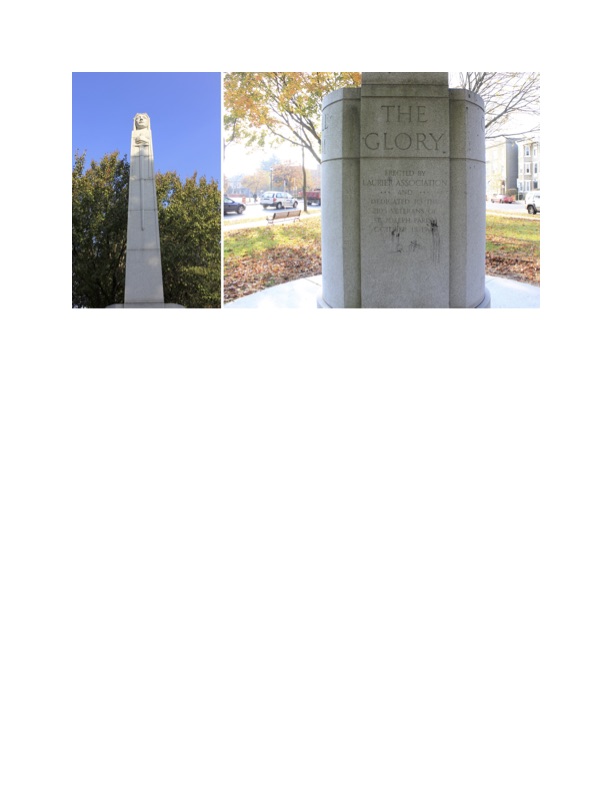
A female angel's head is carved at the top of a tall square shaft of gray granite or marble, which rests on a low two-stepped circular base. The angel wears a laurel wreath on her head and holds a long sword which extends down the front of the shaft. On the sides are the angel's wings and the folds of the drapery she wears. This was sculpted by Joseph A. Coletti and dedicated on October 19, 1947, in memory of the 210 WWI and WWII veterans of St. Joseph Parish.
100 Cities - 100 Memorials
Memorial Inventory Project: There is one other existing partial database to consult - The WWI Memorial Inventory Project [CLICK HERE]. It contains some memorials our map doesn't. The listings on this database are fair game for the Memorial Hunters Club. So if you want to search for treasure from your desk - find missing listings here and submit them. Remember though, you will need to come up with pictures and the history of the memorial. You might be able to hunt that down through www.Proquest.com and Google.
- Details
- Memorial Hunters Club Submission: Robert Shay, PH3, USNR-R, 1964-70, Sue Doocy, Research & Archives Mgr., Mower County Historical Society
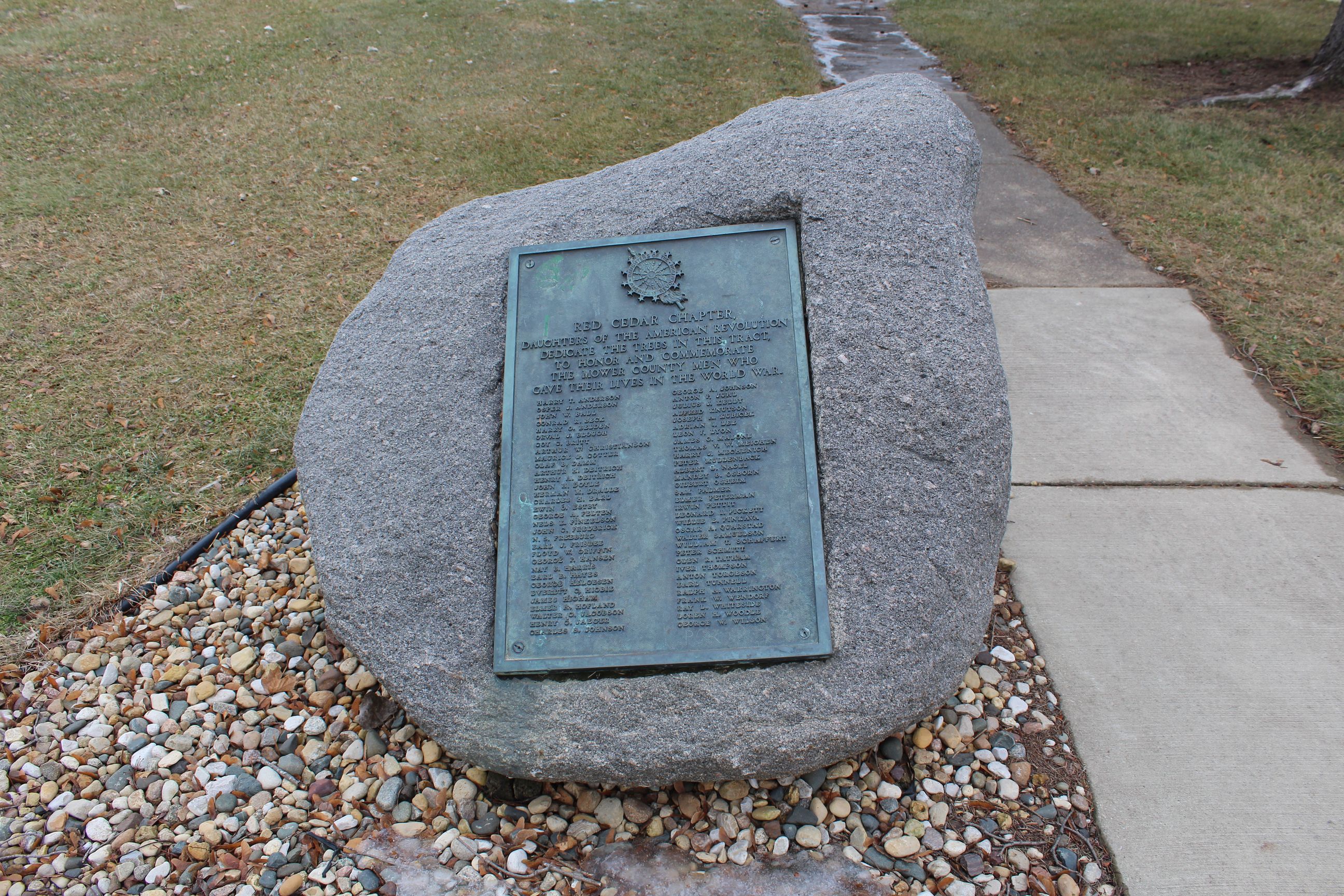
Erected by: Daughters of the American Revolution
Red Cedar Chapter, Mower County, MO
Text below is quoted from the Historical Society brochure:
Members of the Red Cedar Chapter have been very diligent in the care of this
tribute to the Mower County men who gave their lives in World War I. Originally
placed in Todd Park at the edge of a grove of sixty-four elm trees, one planted
for each man named on the tablet, it has been moved to several locations over
the years since it was first placed. After the trees succumbed to age and Dutch
elm disease, the boulder was removed from the park to the court house square,
then to Main Street N and 5th Place NW, in the area of the city’s public swimming
pool. During 2014 construction of the area, the marker was again displaced to
a temporary site in another area near the pool and finally to it’s present and
permanent location on the grounds of the Mower County Historical Society.
- Details
- Memorial Hunters Club Submission: Robert Shay, PH3, USNR-R, 1964-70, Sue Doocy, Research & Archives Mgr., Mower County Historical Society
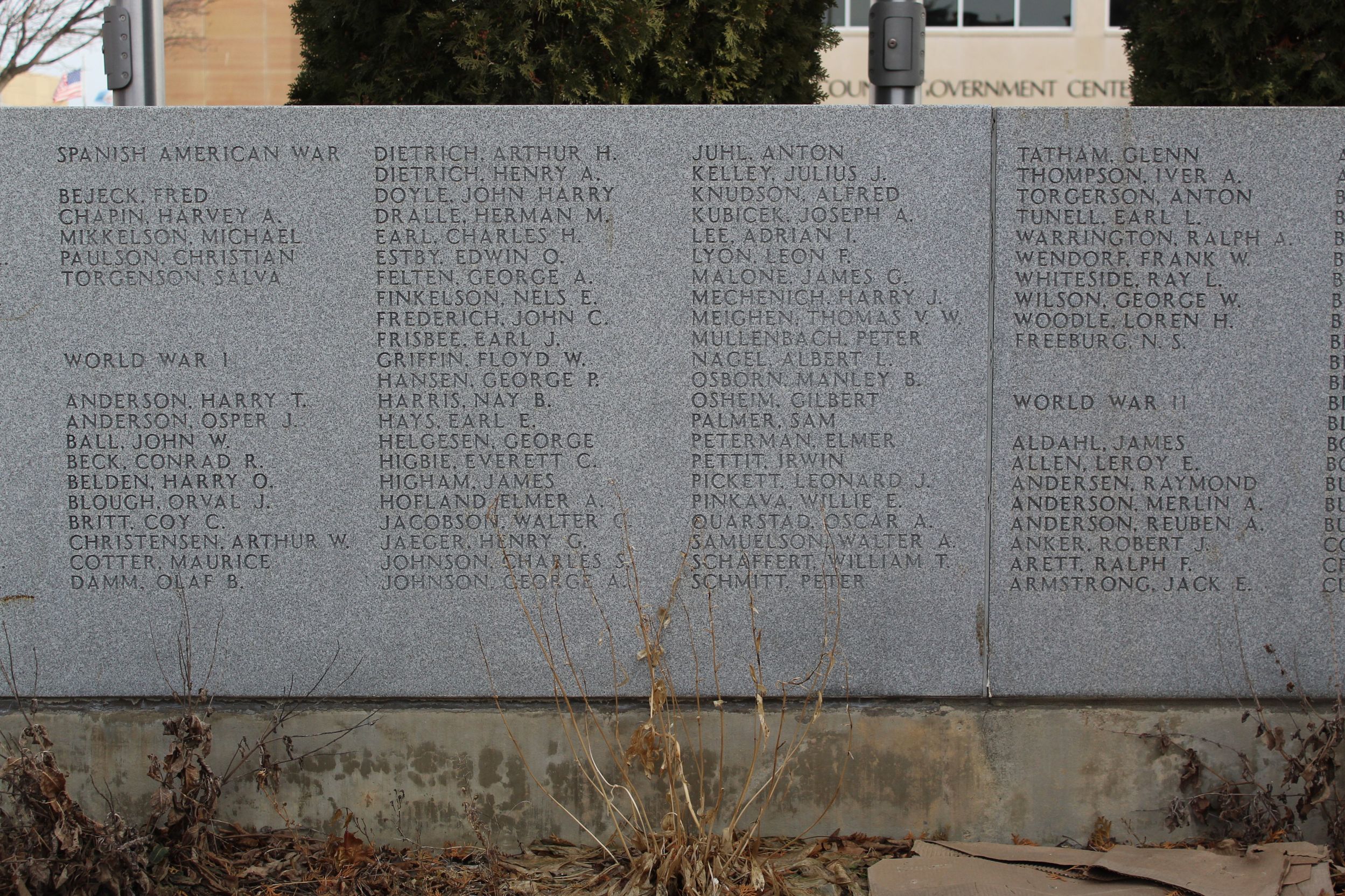
Mower County Government Comples
Main Street N. @ 2nd Avenue NE.
136 2nd Ave. NE
Austin, MN 55912
- Details
- Memorial Hunters Club Submission: Robert Shay, PH3, USNR-R, 1964-70
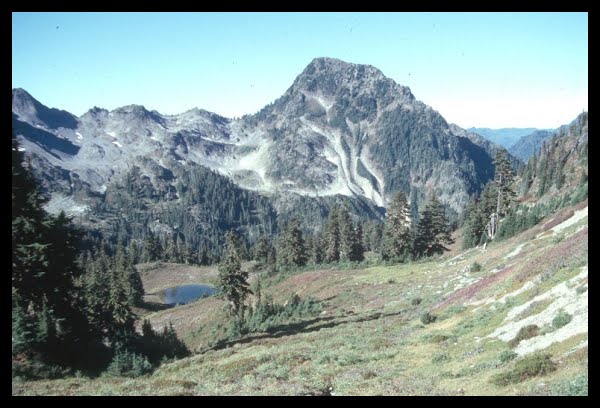
Olympic Mountain Range
Olympic National Park & Wilderness
Jefferson Count, WA
19.5 Miles NE of Quinault, Washington
Elevation: 5,910'
Named for Private Roy Muncaster
Killed In Action on February 5, 1918
U.S. Army - D Co., 6th Batn., 20th Engineers
Former District Forest Ranger, Olympic National Park
February the 5th 2018, the centenary of the sinking of the troopship Tuscania by a U-boat off the Oa killing more than 200 American soldiers and British crew. There was an enormous effort made by local people to rescue and tend the survivors of the disaster and to recover, identify and bury with honour the bodies of the dead.
Scotland’s Kilnaughton military cemetery has a particular significance. Not only are British crewmen from the Tuscania buried there, but the one American soldier remaining on Islay from both the sinking of the Tuscania and the Otranto still lies there. Private Roy Muncaster had worked for the National Forest Service before enlisting in the US Army shortly after America declared war on Germany. Born to parents who had emigrated to Colorado from England, Roy Muncaster was a tall, fit, blue-eyed, cheerful American doughboy.
Muncaster served with the 20th Engineers, a forestry regiment that would manage French forests and turn trees into the timber necessary for barracks, bridges and duck boards for trenches. He was a graduate in forestry from University of Washington. The twenty-five-year-old had left his job as a ranger in Washington State’s Olympic National Forest to join up.
On the evening of February 4th, he and the rest of the SS Tuscania’s passengers were treated to an on-board entertainment, at which a Sergeant from Oregon sang the popular song, ‘Asleep in the Deep.’ It was an uncannily prophetic choice.
After the torpedo struck, the practical forester, Roy Muncaster, and his fellow forester Sergeant Everett Harpham from Oregon, spent more than an hour struggling with the rope pulleys to launch lifeboats from the stricken ship for other men. Eventually they slid down a rope into what they believed to be the last boat to leave the foundering liner. They pulled away as fast as they could for fear of being sucked into the whirlpool that the Tuscania would create as she plunged to the bottom of the sea.
Many of those in the lifeboats were picked up by destroyers and naval trawlers – they were the lucky ones. A destroyer slid past the lifeboat that Everett Harpham and Roy Muncaster shared with as many as 60 others. A Royal Naval officer shouted to them: ‘Float around a while boys. We’ll pick you up later.’ But the destroyer never came back. It was pitch black, the sea was rough and, as that bitterly cold February night wore on, the hopes of survivors who had not been picked up by destroyers or trawlers were fading. None of the men were dressed to withstand the cold, or the perishing waves that broke over them. They had no idea where they were heading.
By about 1.00 am – nearly six hours after the Tuscania was torpedoed – Everett Harpham and Roy Muncaster were desperately trying to row their frail lifeboat away from the seething waves that were smashing into the rocks of the Oa. When they had first glimpsed land through the darkness they thought they were heading for a wooded island, before realising what they were seeing were cliffs. An officer hurled his flashlight ashore, and the men on board could see white foam dashing high on the rocks.
Harpham described the fight with the sea. ‘We tried to row away, but we had drifted so near that the breakers were taking us in faster than we would row in the overcrowded boat. Muncaster was handling the oars when the boat struck the rocks and was very cool and courageous all through the terrible experience. I was very sick in the lifeboat myself and could do nothing but dip water to keep us from foundering. Just before we struck Roy slapped me on the back and said, “Cheer up Harp, we will get the Kaiser yet.” That was the last I heard him say. Finally our boat struck a rock with a terrific crash and broke in a dozen pieces and after that it was every man for himself.’
Later that day, Muncaster was found drowned.
In 1920, most of the bodies of Americans buried on Islay were exhumed and repatriated to the USA, or buried in the American Cemetery at Brookwood in Surrey. However, one American still lies buried in Islay soil – Private Roy Muncaster. His family’s wishes were that their son and brother remained where the people of Islay buried him with respect and sorrow, and to the sound of a lament played on the Highland pipes as a homemade American flag fretted in the wind. Roy Muncaster is commemorated in the Olympic National Forest in Washington State, where a mountain is named after him in the area he once served as forest ranger.
- Details
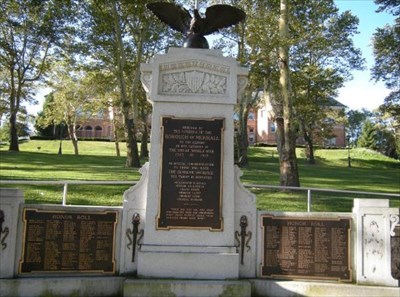
The inscription on this memorial reads:
ERECTED BY
THE CITIZENS OF THE
BOROUGH OF MUNHALL
TO THE MEMORY
OF HER PATRIOTS IN
THE GREAT WORLD WAR
1917 - 1919
IN SPECIAL COMMEMORATION
TO THOSE WHO MADE
THE SUPREME SACRIFICE
THIS TABLET IS DEDICATED.
★ ELLSWORTH K. DAVIES
★ EDGAR GALLAGHER
★ DAVID JONES
★ MARTIN LACEY
★ ROBERT LEAN
★ GEORGE MCSHANE
"THEY DID NOT DIE TOO SOON WHO HELD THE FRONT FOR CHRISTENDOM. WHAT EQUAL GLORIES COULD THEIR FURTHER YEARS HAVE WON?"
- Details
- Memorial Hunters Club Submission: Robert Shay, PH3, USNR-R, 1964-70
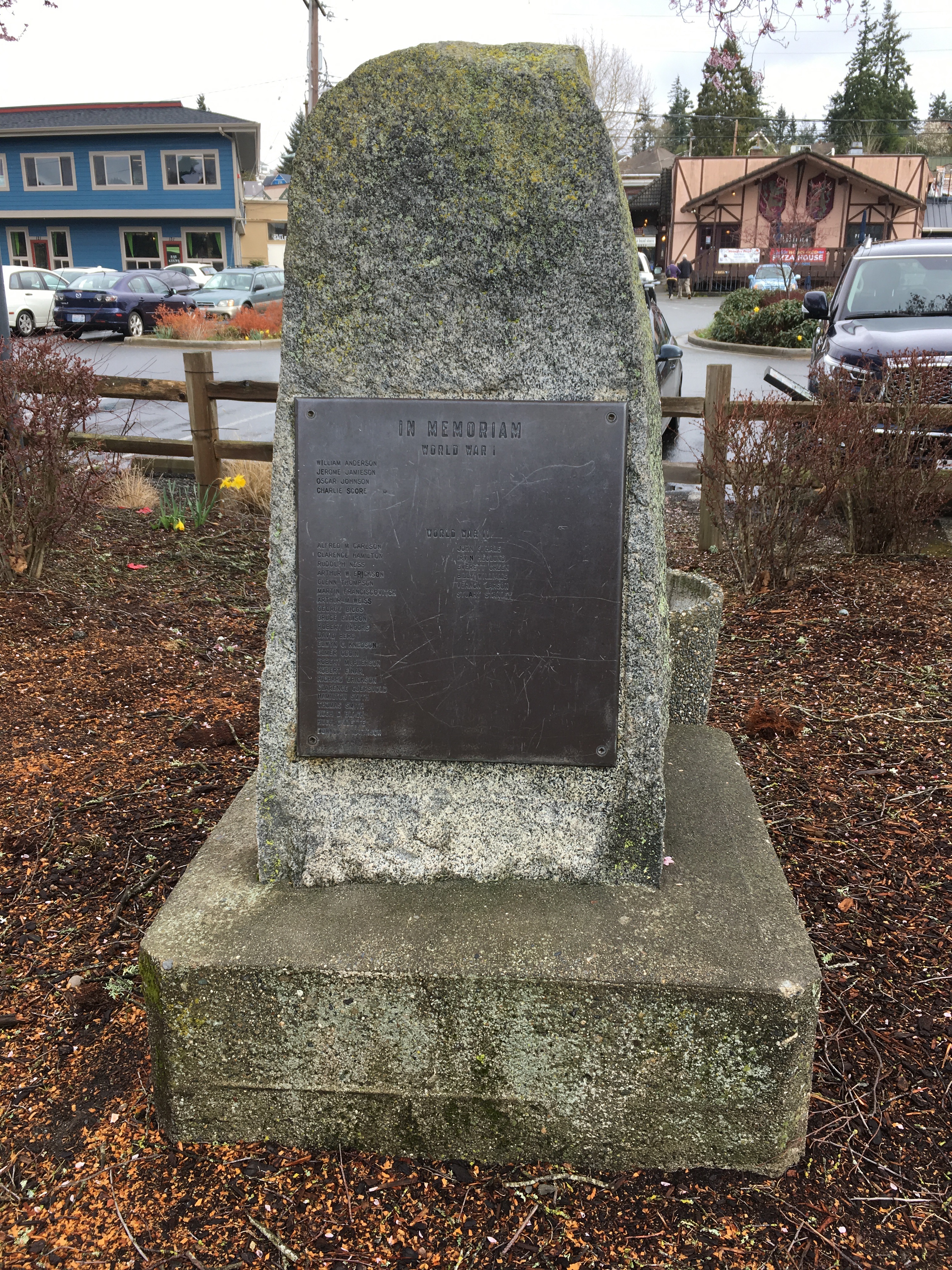
“In Memoriam”
World War I
Followed by 4 names
World War II
Followed by 28 names
- Details
- Photos courtesy of Lamar Veatch
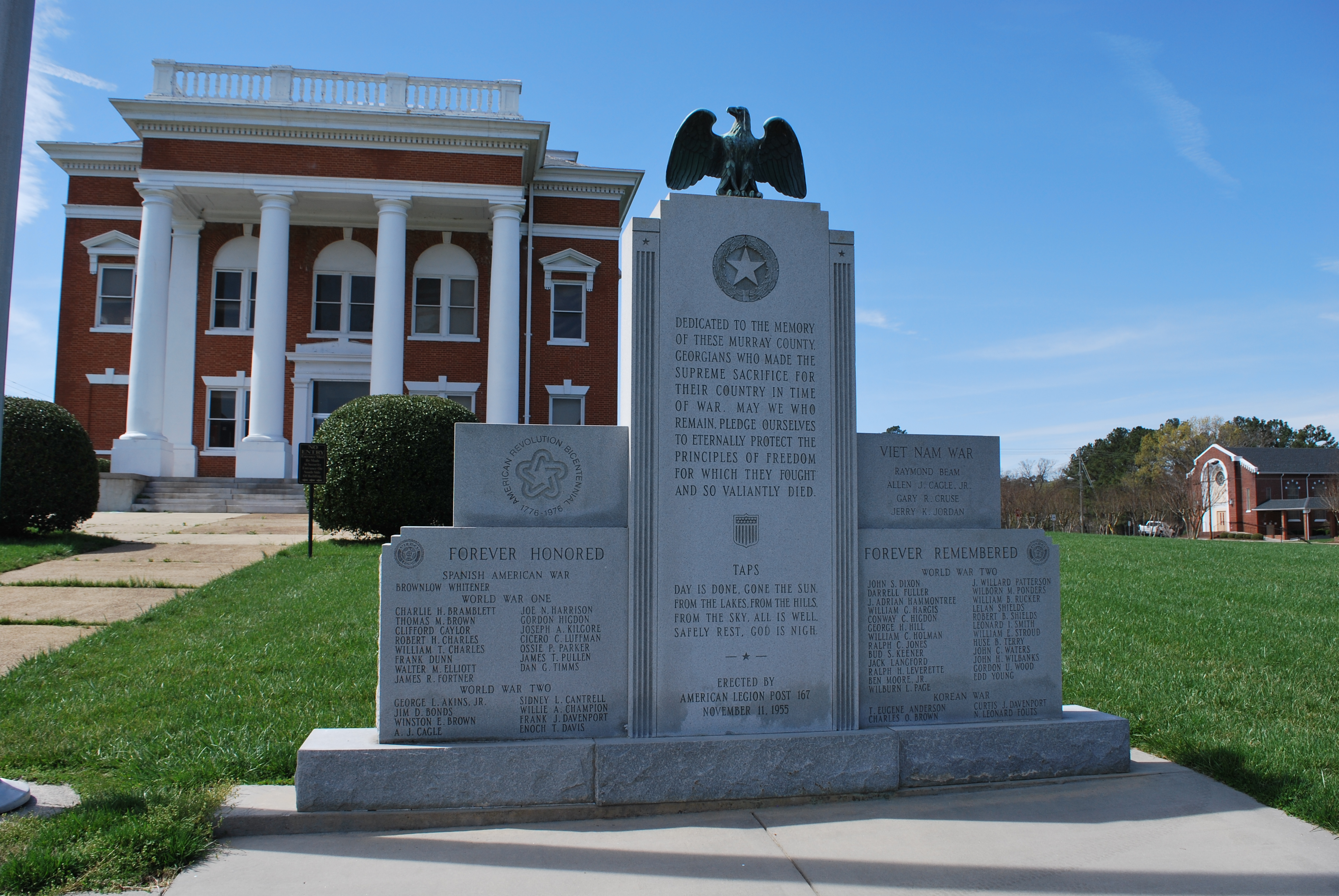
Murray County Courthouse in Chatsworth, Georgia was built in 1916. It was listed on the National Register of Historic Places in 1980.
- Details
- Width: 2
- Other Measurements: Base H:3'7
- 1936
- Dedication Date: 1936
- Murry Hill Post No. 56, American Legion
- 4 tablets set into exterior of building wall
- Plaque or tablet
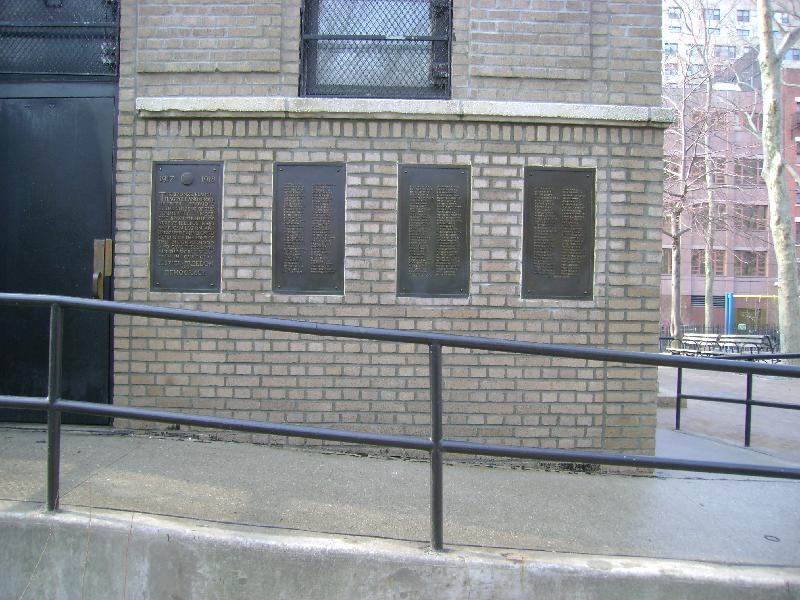
THE BRONZE PLAQUES / FLAGPOLE AND GROVE / OF TREES. PROVIDED / BY
THE CITIZENS OF THIS / COMMUNITY. UNDER / THE SPONSORSHIP OF / MURRY
HILL POST NO. 56 / AMERICAN LEGION, ARE / DEDICATED IN HALLOWED/
MEMORY OF THE SONS OF / THIS NEIGHBORHOOD / WHO GAVE THEIR LIVES/
IN THE WORLD WAR / IN THE CAUSE OF / JUSTICE, FREEDOM / AND/
DEMOCRACY / DEDICATED, 1936
- Details
- Dedication Date: November 29, 1934
- E. M. Viquesney
- Single figure -- soldier
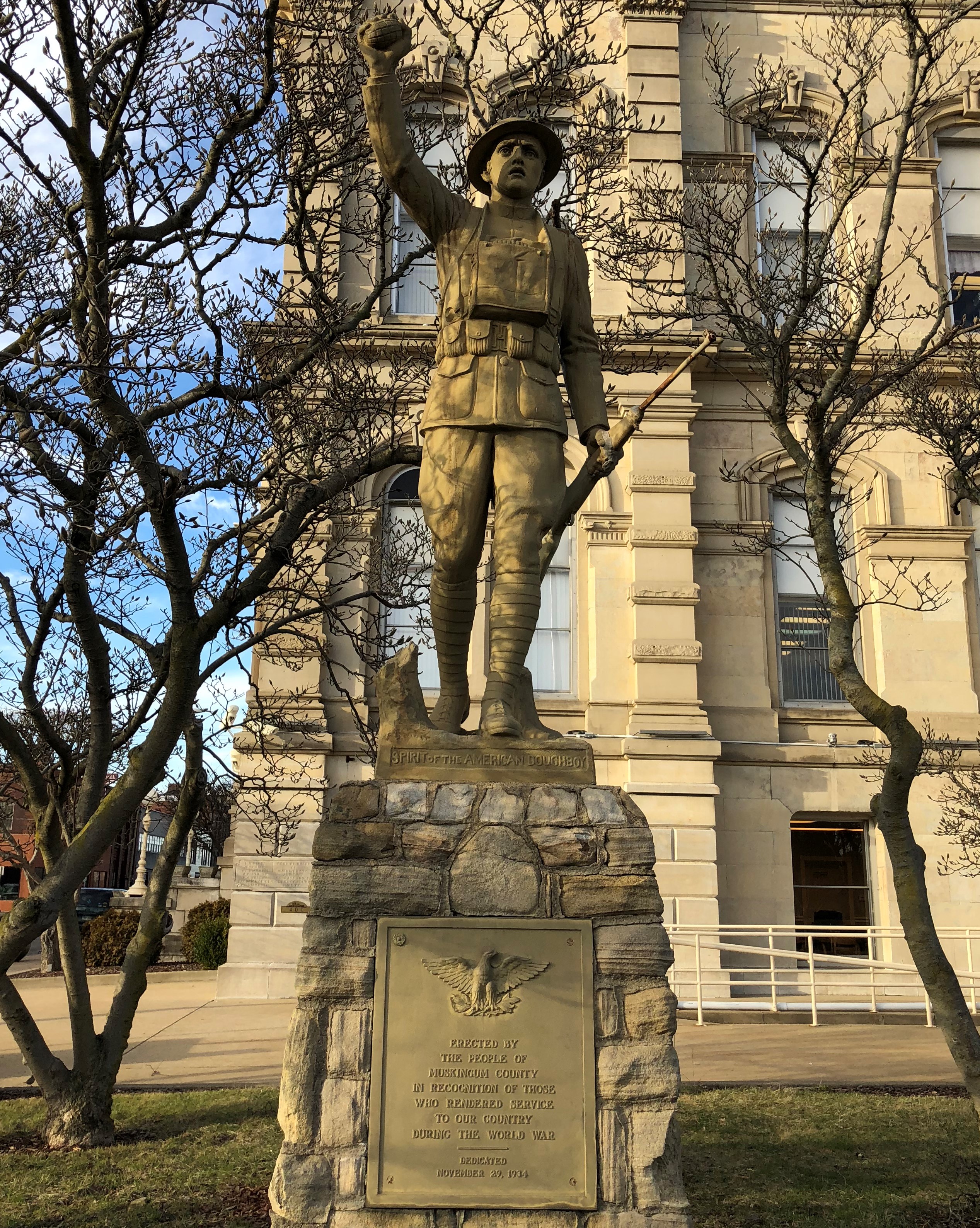
This life-size metal statue depicts a World War I infantryman carrying a rifle and grenade through the barbed wire and stumps of No Man's Land. It was funded by contributions from the people of Muskingum County and was installed in November 1929.
- Details
- Dedication Date: 5 September 1925
- Ernest Moore Viquesney
- Single figure -- soldier
- Memorial Hunters Club Submission: Vandelia Graham
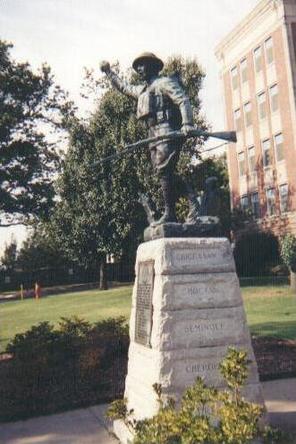
Muskogee Spirit of the American Doughboy - Five Civilized Tribes
100 Cities / 100 Memorials
 This monument was dedicated in September 1925 and honors the Native Americans of the Five Civilized Tribes who fought in World War I. It was placed in front of the Soldiers Home in Muskogee, Oklahoma which thereafter became the Jack C. Montgomery VA Medical Center. The statue is one of only two E.M. Viquesney Doughboys honoring Native Americans (the other is in Bullhead, SD). ERECTED IN COMMEMORATION OF MEMBERS OF THE FIVE CIVILIZED TRIBES, WHOSE RECORD OF ENLISTMENT, CONDUCT IN CAMP, AND FORTITUDE AND VALOR ON THE BATTLEFIELD, ADDED LUSTRE TO THE TRIUMPHANT VICTORY OF OUR COUNTRY IN THE WORLD WAR. Descending engravings on the blocks on both sides of the monument are the names of the Five Civilized Tribes: CHICKASAW, CHOCTAW, SEMINOLE, CHEROKEE, CREEK. Descending on the blocks on the back are engravings naming historically famous leaders of the tribes: COLBERT, PUSHMATAHA, OCEOLA, SEQUOYAH, OPOTHLE-YAHOLA.
- Details
- Memorial Hunters Club Submission: The Wanderer
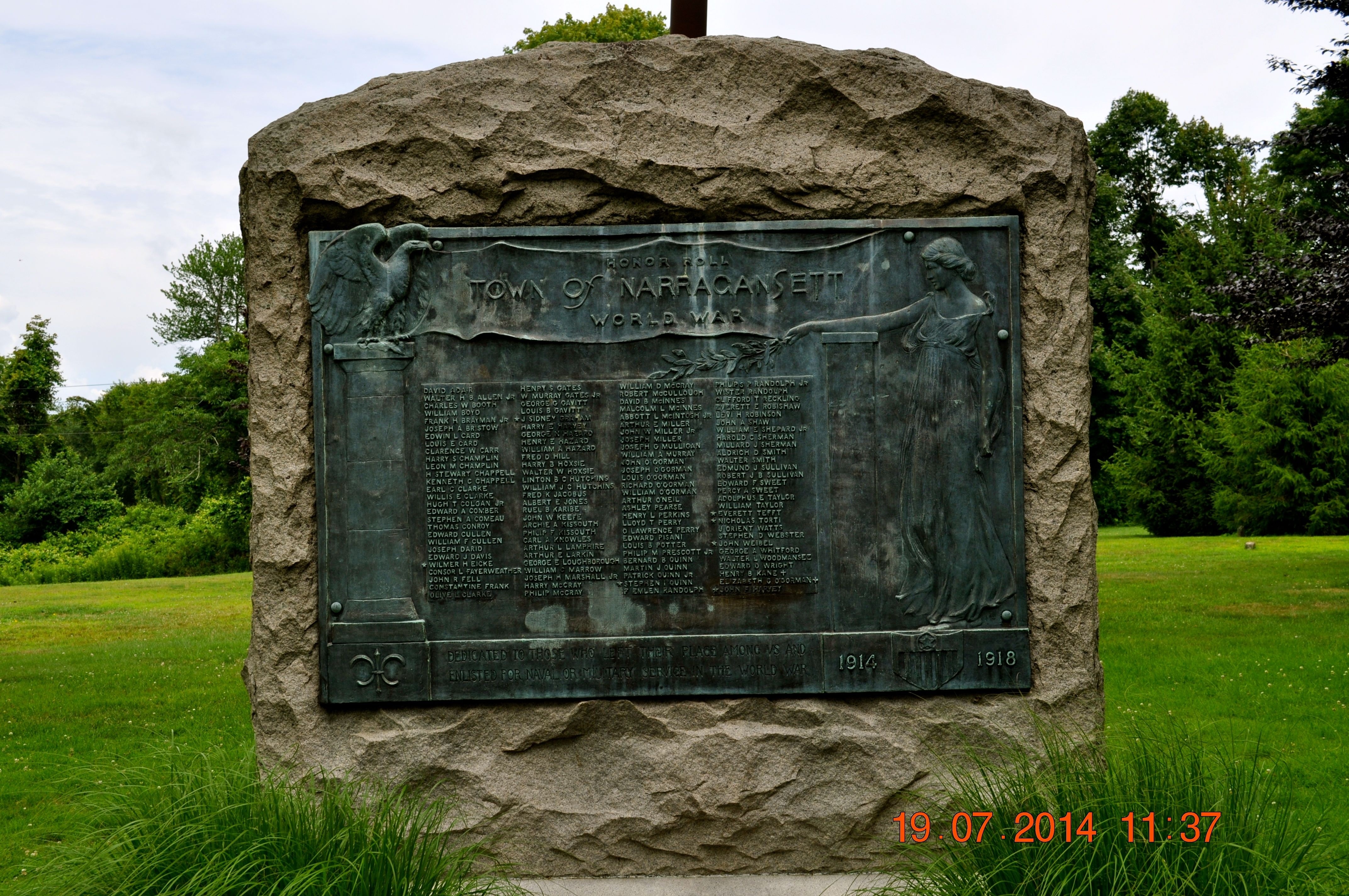
The inscription on this memorial reads:
Honor Roll
Town of Narragansett
World War
David Adair • Walter H. B. Allen Jr. • Charles W. Booth • William Boyd • Frank H. Brayman Jr • Joseph A. Bristow • Edwin L. Card • Louis E. Card • Clarence W. Carr • Harry S. Champlin • Leon M. Champlin • H. Stewart Chappell • Kenneth C. Chappell • Earl C. Clarke • Willis E. Clarke • Hugh T. Colgan Jr • Edward A. Comber • Stephen A. Comeau • Thomas Conroy • Edward Cullen • William F. Cullen • Joseph Darid • Edward J. Davis • *Wilmer H. Eicke • Consor L. Fayerweather • John R. Fell • Constantine Frank • Olive L. Clarke • Henry S. Gates • W. Murray Gates Jr • George G. Gavitt • Louis B. Gavitt • *J. Sidney Graham • Harry E. Harvey • George N. Hazard • Henry E. Hazard • William A. Hazard • Fred D. Hill • Harry B. Hoxsie • Walter W. Hoxsie • Linton B. C. Hutchins • William J. C. Hutchins • Fred K. Jacobus • Albert E. Jones • Ruel B. Karibe • John W. Keefe • Archie A. Kissouth • Philip F. Kissouth • Carl A. Knowles • Arthur L. Lamphire • Arthur E. Larkin • George E. Loughborough • William C. Marrow • Joseph H. Marshall Jr • Harry McCray • Philip McCray • William D. McCray • Robert McCullough • David B. McInnes • Malcolm L. McInnes • Abbott L. McIntosh Jr • Arthur E. Miller • John W. Miller Jr • Joseph Miller • Joseph G. Mulligan • William A. Murray • John O'Gorman • Joseph O'Gorman • Lousi O'Gorman • Richard O'Gorman • William O'Gorman • Arthur O'Neil • Ashley Pearse • Henry L. Perkins • Lloyd T. Perry • O. Lawrence Perry • Edward Pisani • Louis B. Potter • Philip M. Prescott Jr • Bernard B. Quinn • Martin J. Quinn • Patrick Ouinn Jr • *Stephen I. Quinn • F. Emlen Randolph • Philip S. Ranoldph Jr • Wister Randolph • Clifford T. Recking • Everett E. Robishaw • Levi H. Robinson • John A. Shaw • William E. Shepard Jr • Harold C. Sherman • Millard J. Sherman • Aldrich D. Smith • Walter Smith • Edmund J. Sullivan • Robert J. B. Sullivan • Edward F. Sweet • Percy A. Sweet • Adolphus E. Taylor • *Everett Tefft • *Nicholas Torti • J. Orient Watts • Stephen D. Wesbter • *John Weibel • George A. Whitford • Walter L. Woodmansee • Edward D. Wright • Henry B. Kane+ • Elizabeth G. O'Gorman+ • *John F. Harvey
Dedicated to those who left their place among us and
enlisted for naval or military service in the World War 1914 1918
- Details
- Dedication Date: 1921
- Memorial Hunters Club Submission: thewanderer
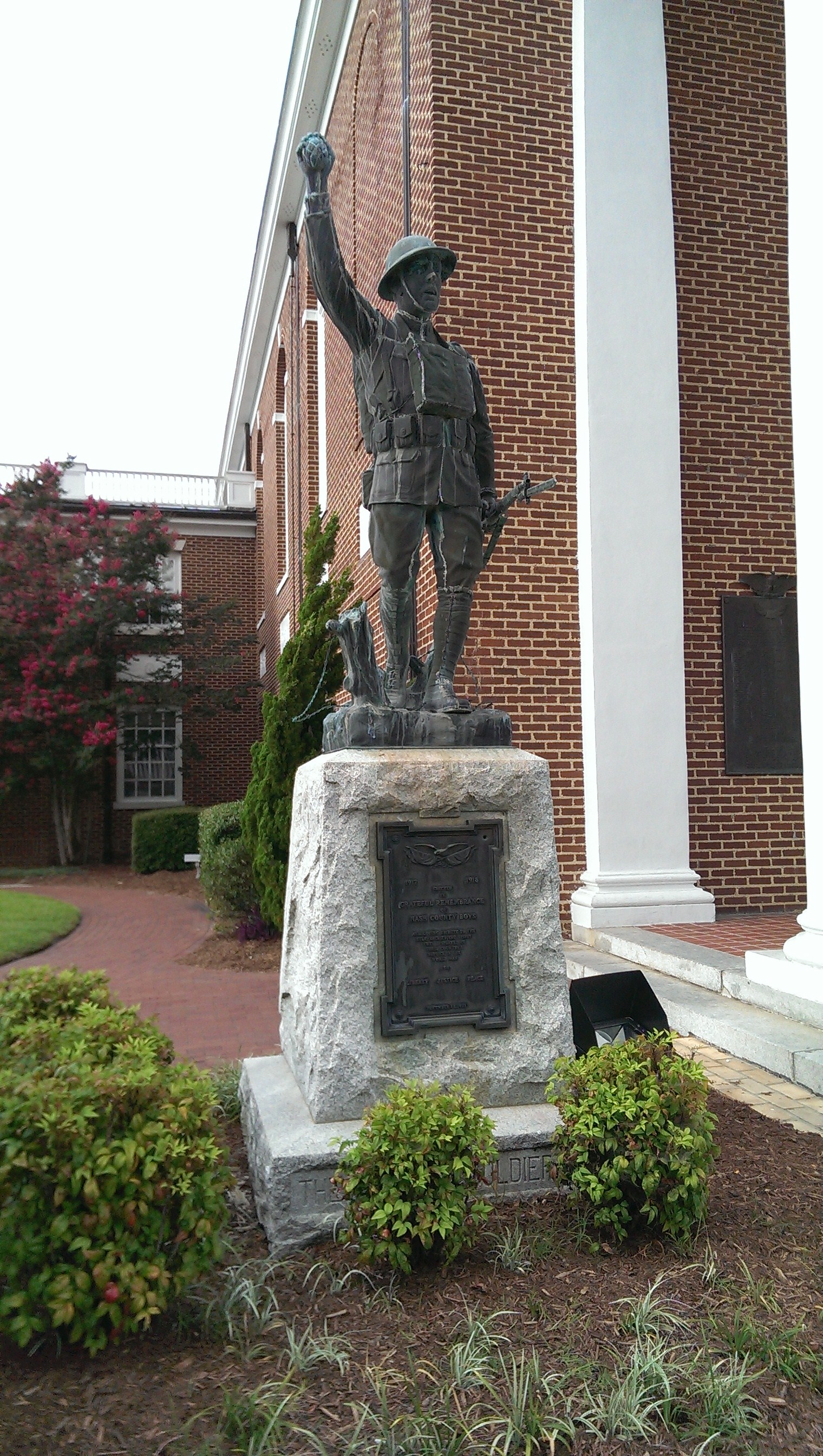
Located on the grounds of the Nash County Courthouse in Nashville, North Carolina, this Doughboy was erected on Armistice Day, 1921.
- Details
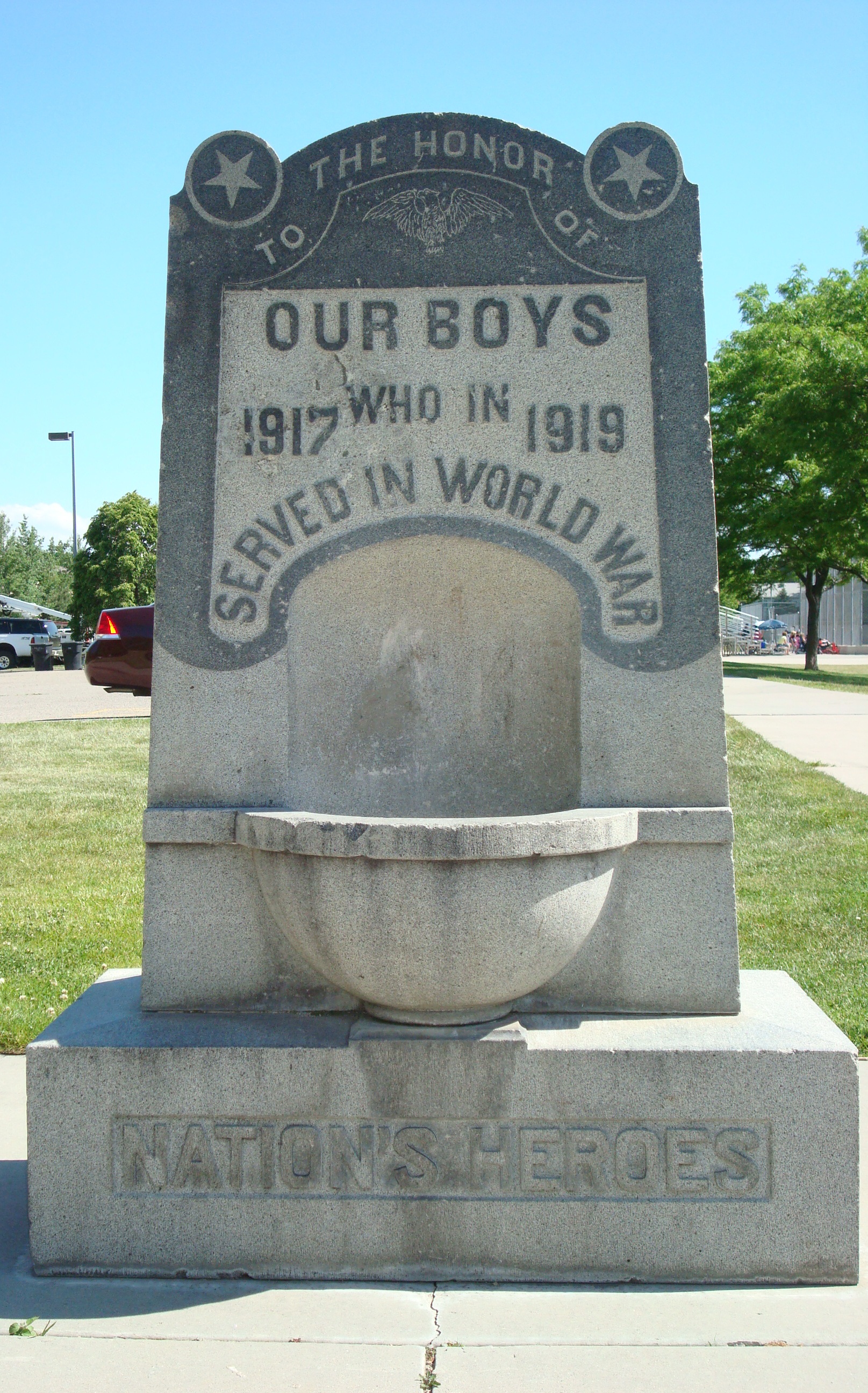
The Nation's Heroes monument placed in the Midvale public park for all visitors to see lists the names of the citizens of Midvale who served during World War I. Is is a beautiful monument placed by a flag pole centrally located in the park near the pavilion and children's play grounds.

- Details
- Dedication Date: 1916
- Other
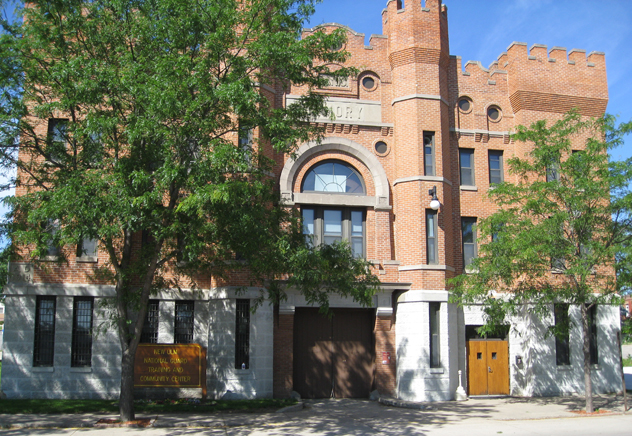
The Minnesota National Guard Armory, 205 North Broadway, New Ulm, Minnesota was dedicated in May, 1916. Burg’s Battery, New Ulm’s private army dating from 1863, welcomed Governor J. A. A. Burnquist to the ceremony with a 21-gun salute. This Armory has served Minnesota and the United States for 99 years. Today it is occupied by the Minnesota Army National Guard Headquarters Battery Battalion Headquarters.
By George L. Glotzbach
- Details
National World War 1 Memorial at Pershing Park
100 Cities / 100 Memorials
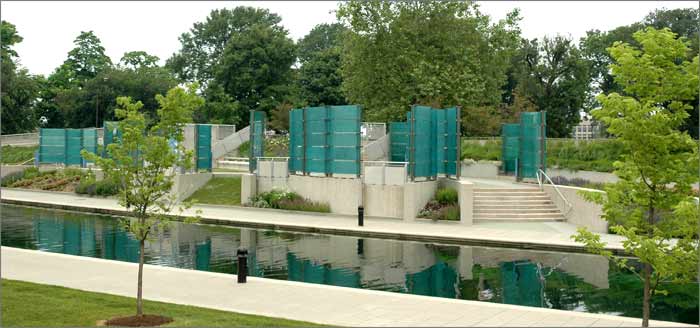
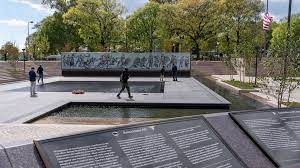
The National World War I Memorial in Pershing Park, currently under construction, will educate the American people, and visitors from abroad, about the significance of World War I in American and world history, and honor the accomplishments of a forgotten generation of Americans. The memorial will have a rightful place alongside the memorials in Washington to the other great wars of the 20th century. The WWI Memorial will be located within Pershing Park on Pennsylvania Avenue, one block from the White House. The park honors Gen. John J. Pershing, commander of American troops in the war. Joseph Weishaar, a graduate from the University of Arkansas School of Architecture, won an international competition to adapt the park landscape, designed by noted American architect M. Paul Friedberg, to accommodate a World War I memorial. On April 16, 2021, the Inaugural Raising of the Flag of the United States over the memorial site was celebrated with a live broadcast event.
- Details
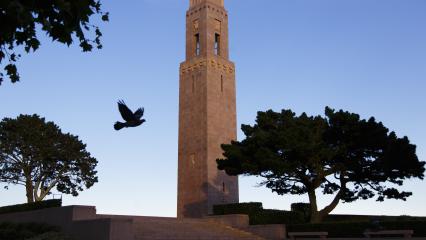
The World War I Naval Monument at Brest, France stands on the ramparts of the city overlooking the harbor which was a major base of operations for American naval vessels during the war. The original monument built on this site to commemorate the achievements of the U.S. Navy during World War I was destroyed by the Germans on July 4, 1941, prior to the United States' entry into World War II. The present structure is a replica of the original and was completed in 1958.
Brest is the westernmost port of France. Its location and activities there have been vital in commerce and conflicts over the centuries. Brest was especially important to many missions of the American Expeditionary Forces (AEF) during 1917 and 1918.
The monument is a rectangular rose colored granite shaft rising 145 feet above the lower terrace and 100 feet above the Cours Dajot. It sits upon a German bunker complex at the approximate site of the original monument. All four sides of the monument are decorated with sculpture of naval interest. The surrounding area has been developed by the American Battle Monuments Commission into an attractive park. The Naval Monument at Brest displays this inscription in both English and French:
Erected by the United States of America to commemorate the achievements of the naval forces of the United States and France during the world war.