










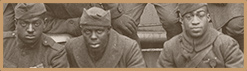
























The Weariness of the Thing - "The Boys Who Live in the Ground"
By Connie Ruzich
Of the American aviators who flew over enemy lines in the war, only fifteen percent were left after the signing of the armistice. Donald S. White, one of these few survivors, served as a pilot on the Western Front with the 20th Air Squadron. He was cited for “exceptional devotion to duty” as a bombing aviator as “he had served in a day-bombing squadron in every raid since the squadron had been called into active work during the severe fighting in the Argonne.” For this week’s post, Connie Ruzich from Behind Their Lines shares her rare discovery exclusively with WWrite: White’s poem about his service, a poem that seeks to speak “for thousands of his fellows.” Read “The Boys Who Live in the Ground” followed by Ruzich’s analysis this week!*
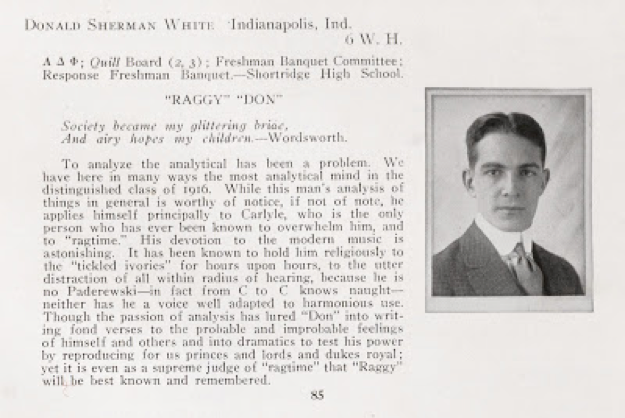 Donald S. White in the Bowdoin Bugle, 1916. Image credit: Connie Ruzich
Songs from the Trenches: The Soul of the A.E.F. was published in Paris in April of 1918 when masses of American troops were beginning to arrive in France and prepare for battle. The anthology was a collection of poems chosen from the thousands submitted to the New York Herald’s Literary Competition and dedicated to the memory of Alan Seeger, “The First American Soldier Poet who gave his life in France.” The foreword of the book states that the poems were “a message from the American soldiers abroad to the home folks.... Each writer speaks for thousands of his fellows.”
History Between Humor and Tragedy: Musings on Robert Graves' Memoir, Goodbye to All That
By David James
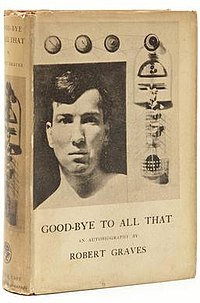
*When thinking about the First World War, I am reminded of a quote by Jorge Luis Borges about the 1982 Falklands War, “It is a fight between two bald men over a comb.” In a similar way, we could say that WWI was a fight between a bunch of spoiled children over who got to use the playroom. Though they all had their own toys, sharing and cooperation were unlearned traits. There is something profoundly important to remember about this tragedy, though sometimes the easiest way to deal with tragedy, if not by outrage, stoicism, or escapism, involves a disarming sense of humor and irreverence. I will bring up these four issues in this post by focusing on Robert Graves’ Goodbye to All That, his memoirs of early life in England, his participation in the trenches of WWI, and his post-war experiences.
Ellen N. La Motte's The Backwash of War. Did a Censored Female Writer Inspire Hemingway’s Famous Style?*
By Cynthia Wachtell
Everyone knows Hemingway, but few know of Ellen N. La Motte. According to Cynthia Wachtell, editor of the new and expanded edition of La Motte's formerly-censored book, The Backwash of War, people should. She is the extraordinary World War I nurse who wrote like Hemingway before Hemingway. She was arguably the originator of his famous style – the first to write about World War I using spare, understated, declarative prose. Wachtell first published this article in The Conversation but was kind enough to not only let WWrite reprint it but also to give some background on her inspiration for studying La Motte and Hemingway: her grandfather, who was a conscientious objector during WWI. At WWrite this week: "Ellen N. La Motte's The Backwash of War. Did a Censored Female Writer Inspire Hemingway’s Famous Style?"
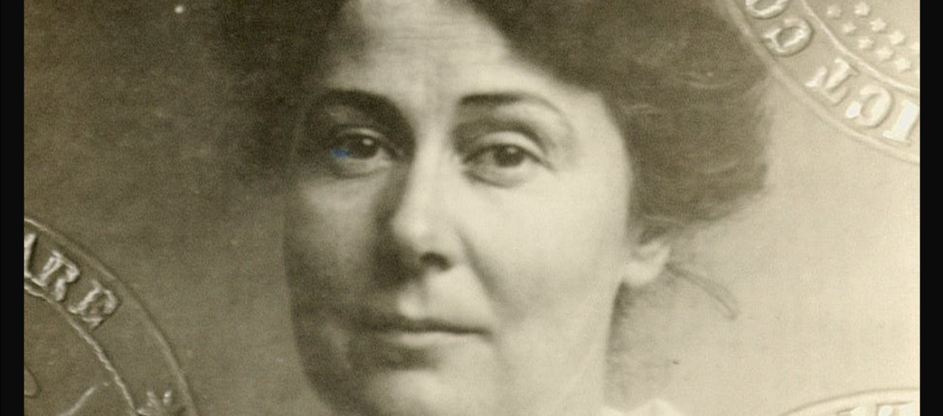 A photograph of Ellen N. La Motte soon after completing ‘The Backwash of War’ in 1916. Courtesy of the National Archives, College Park, Maryland. Source: Cynthia Wachtell
Virtually everyone has heard of Ernest Hemingway. But you’d be hard-pressed to find someone who knows of Ellen N. La Motte.
People should.
She is the extraordinary World War I nurse who wrote like Hemingway before Hemingway. She was arguably the originator of his famous style – the first to write about World War I using spare, understated, declarative prose.
WWI Touches Pablo Picasso
By David Allen Sullivan
While award-winning poet David Allen Sullivan visited the Tate Museum Great War Art exhibition, he was most struck by a painting that seemed almost irrelevant to the other artistic representations of battle carnage in the museum: A Family by the Sea by Pablo Picasso. Sullivan, who has written poetry from the hard lens of the Iraq War in his book, Every Seed of the Pomegranate, contemplates WWI, Picasso, and the ethics of subtlety and beauty in the face of violence. For the poem, he recasts his visit to the Tate as one to the Paris Louvre exhibition, "Disasters of War 1800-2014," Read his poem, "WWI Touches Picasso," published for the first time on WWrite this week.
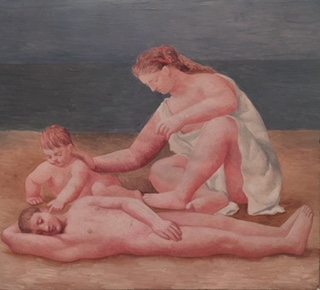 Famille au bord de la mer, by Pablo Picasso
The art of World War I,
displayed on the grey walls
of the Louvre’s special exhibit
are numbing: ranked files
of death-masked soldiers,
faces crumpling into hands,
a brass general fashioned
from spent shell casing…
"The End of Patriarchy": Pat Barker’s WWI Novel, Regeneration
By Jennifer Orth-Veillon, Blog Curator
Legendary novelist, Pat Barker, winner of the 1995 Man Booker Prize for her trilogy, Regeneration, based on the life of British male soldiers in WWI, announced in a January interview with The Guardian that "we're at the end of patriarchy and I’m fine with that as long as it’s remembered that among the victims of patriarchy the vast majority are men." In this last post of Women's History Month in which WWrite has showcased women war writers, blog curator Jennifer Orth-Veillon discusses the meaning of Barker's statement in the context of Regeneration, a novel that takes place in Scotland's Craiglockhart Psychiatric Hospital and features the fictional characters poets Siegfried Sassoon, Wilfred Owen, and their renowned war psychiatrist, W.H.R. Rivers. Read about Barker and her monumental literary work on WWI at WWrite this week.
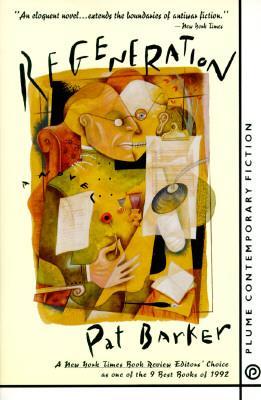
“You could argue that time’s up; we’re at the end of the patriarchy,” announced writer Pat Barker about her newest novel in an interview with The Guardian’s Claire Armitstead. The Silence of the Girls, published in January, retells the story of the siege of Troy in Homer’s Illiad from the perspective of the enslaved Trojan queen, Breseis. Barker is no stranger to the war story; out of 14 published novels, over half are about both world wars written from male and female viewpoints. However, she is best known for Regeneration, a trilogy tracing the lives of British men during WWI.
Army of Shadows*
By Roxana Robinson
When award-winning author Roxana Robinson was writing her critically acclaimed book about a veteran of the Iraq war, Sparta, she only allowed herself to read one war novel: Erich Maria Remarque's All Quiet on the Western Front. For Robinson, it "beautifully resolves the problems of scale and language" with a narrative that is "both beautiful and desolate." Read Robinson's reflections on contemporary war writing through the lens of Remarque's WWI classic novel at WWrite this week.
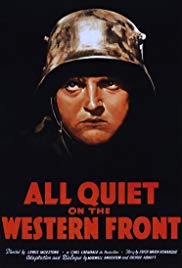 All Quiet on the Western Front film poster. Image credit: imbd
I read only one war novel while I was writing my own.
There were reasons: I didn’t want to hear another novelist’s voice, as I was trying to find my own way into a soldier’s mind. I didn’t want to learn about the wrong war: every war has its own weather and terrain, its own equipment and language, and I didn’t want the wrong ones in my head. I couldn’t read novels about the Iraq war because there were none.