






























"The Land Remembers" and "Zone Rouge"
By Amalie Flynn
Amalie Flynn, author of the memoir Wife and War: The Memoir, her story of surviving 9-11 and her husband's 15-month deployment to Afghanistan, shows in her poems "The Land Remembers" and "Zone rouge" (red zone) that her experience also belongs to a universal history of war, including WWI. "Zone rouge" is the French name for the almost 120,000 hectares of battlefields that incurred major physical damage to the environment during WWI. Due to the presence of thousands of corpses and an estimated 60 million unexploded munitions, certain activities in the area were provisionally or permanently prohibited by law to the public after the war. No one was allowed to build or alter the designated areas. However, in order to preserve the traces of war in the landscape, trees needed to be planted to stabilize the soil. To the surprise of many, these ravaged moonscapes flourished into forests and lush fields years later. Today, It is estimated that 80,000 soldiers remain buried underneath. Read Flynn, who has also published in The New York Times, The Huffington Post, and TIME, as she brings a contemporary poetic eye to France's battle-torn landscapes at WWrite this week!
The Land Remembers
Trenches that twist and turn like empty veins. Bomb craters. Chemical foliage forests. Vapor cities. Burn pits. Dust cities. Radioactive rivers. Dioxin dug into the ground. Unexploded ordnance. Landmines strewn. Alive and circular like metal breasts. A child standing on top of a pile of what is left behind. When war floods a place. The land remembers. It holds war and keeps it. War sinks in a river. Accumulates in the gill of a poisoned fish. Laces itself in the soil and sediment. Twists inside trunks of trees. The land remembers.
Or how it bears witness to our forgetting.
How to Remember Your Ancestors’ Names
By Drew Pham
When WWrite asked veteran and The Wrath-Bearing Tree editor, Drew Pham, to contribute a post, we received a poem that traces Vietnamese heritage by looking at WWI and beyond using experimental techniques with language and style.Pham, who was sent to Afghanistan with the 10th Mountain Division, has published fictional and non-fictional work in Time Magazine, The Daily Beast, Foreign Policy, Columbia Journal, and The Brooklyn Review. Read Pham's innovative poem "How to Remember Your Ancestor's Names" at WWrite this week!
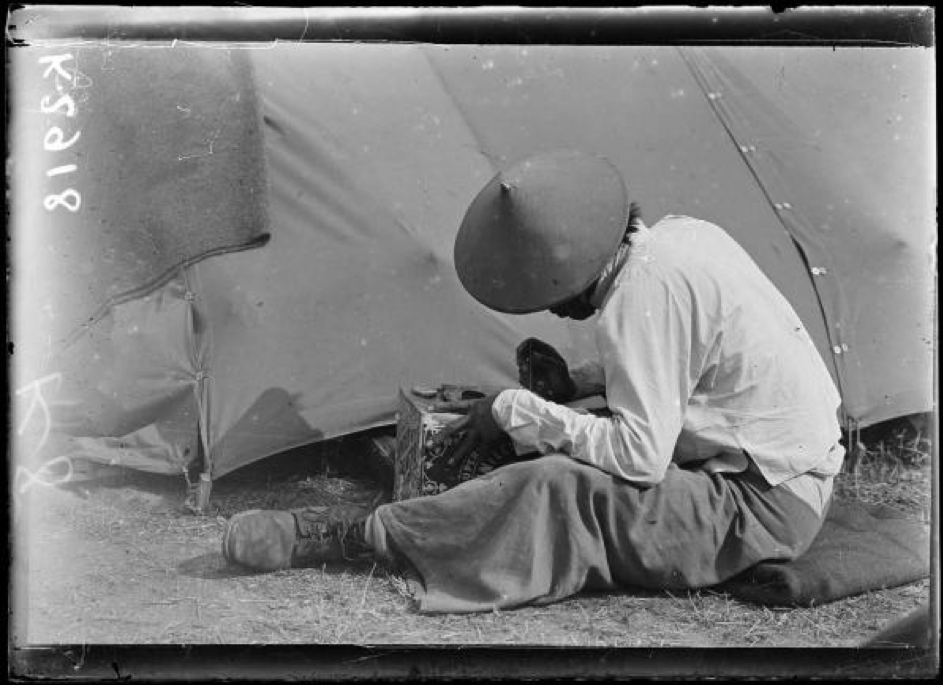 Reference: SPA 54 K 2918. Zeitenlick Camp in Macedonia: a soldier from Indochina (tirailleur indochinois) writing a letter. Date: May 1916. Photo by Georges Dangereux. Image source: The SPCA Archives on Indochina and the Establishment for Communication and Audiovisual Production for la Défense (ECPAD). centennaire.org
How to Remember Your Ancestors' Names
I.
Your mother says her grandmother—
your mother’s
father’s
mother
had hair the color of blood spilled,
moon skin
a bridged nose
and no words
another missing term: người lai—
a person stitched
together from
foreign bodies
Waking Up to History: John Dos Passos, the Cut-up, and World War I
By M.C. Armstrong
When M.C. Armstrong traveled to Iraq as a war reporter, he took with him the work of WWI volunteer ambulance driver and American novelist, John Dos Passos. Like Dos Passos did in 1919, Armstrong came back and began to assert his own theory of war writing based on lessons learned. In this post, Armstrong analyzes language as a weapon in war through the ways Dos Passos criticizes journalism using fiction. Read Waking Up to History: John Dos Passos, the Cut-up, and World War I, which discusses the war propaganda machine and Dos Passos' signature "cut up" technique at WWrite this week!
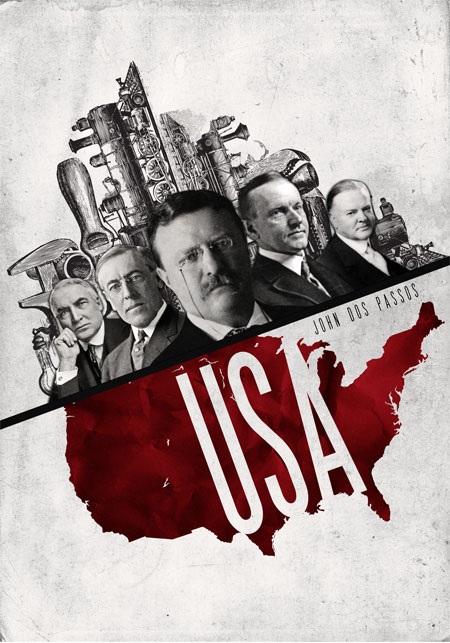 Design for U.S.A. Trilogy cover by David Crunelle. Image source: doedemee.be
Ten years before traveling to Iraq as a war reporter, I took an undergraduate class on World War I and the Modernists at James Madison University. At the time (1999), I was an acolyte of the Beats, a history major who suddenly believed his time would be better spent as an English major exploring the virtues of spontaneous prose and the open road. But my professor, Mark Facknitz, saved my soul. If I could not see the dialectic between English and history prior to this course, I certainly recognized it afterward. Facknitz wore a suit and tie to class every day. He was famously sadistic in his demands of his students and would sometimes erupt in outrage when you could not keep up with the reading. And no author seemed more worthy of his passionate advocacy than John Dos Passos.
The Debt of WWII Resistance Fighters to WWI Veterans, Part 4. Marc Bloch - A History Lesson
By Jennifer Orth-Veillon
On June 16, 1944, ten days after the Americans landed in Normandy on D-Day, the Gestapo massacred 29 French Resisters Among them was Marc Bloch, one of the world's most important historians. This was not the first time Bloch, a Jew from Alsace and Professor at the Sorbonne, had taken up arms against the Germans. In this post, WWrite Curator, Jennifer Orth-Veillon, discusses Bloch's incredible trajectory from Legion of Honor WWI leader to WWII French Resistance hero. Read about Bloch and the ways in which WWI shaped his pathbreaking approach to history at WWrite this week!
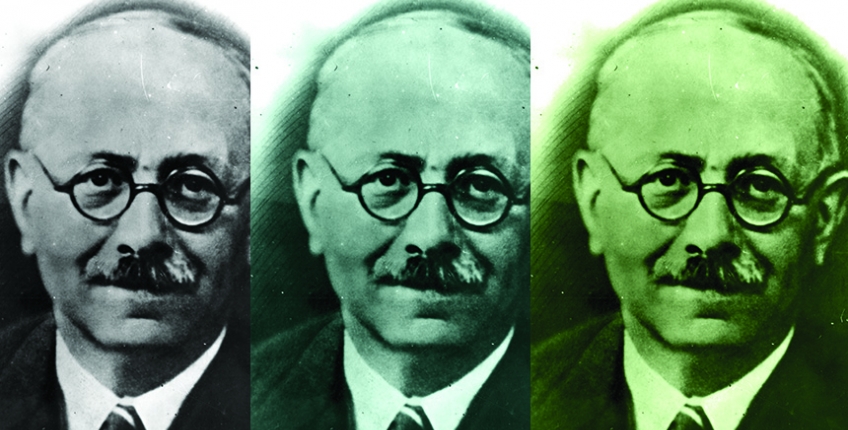 Marc Bloch. Image credit: EHESS.fr
On June 16, 1944, ten days after the Americans landed in Normandy on D-Day, the Gestapo massacred 29 French Resisters who had been interned in Lyon’s Montluc Nazi Prison. Among them was Marc Bloch, one of France’s most important historians. Legend says that he cried “Vive la France!” (Long live France!) as he fell. This was not the first time Bloch, a Jew from Alsace and Professor at the Sorbonne, had taken up arms against the Germans.
The Red and the Gray - Ernst Jünger in the Great War
By Elsa Minisini
In 1914, Ernst Jünger entered the war with weapons and notebooks. He came out of WWI alive with his seminal novel, one of the only to be written on the front lines, Storm of Steel. French director François Lagarde spent 20 years producing, The Red and the Gray, a documentary film combining Jünger’s important text and thousands of images captured by amateur German soldier-photographers on the front. For this post, Elsa Minisini, the co-producer of the film, discusses Lagarde’s journey, one she helped him finish when he passed away before the film was complete. Read about this incredible project and the powerful story behind it at WWrite this week!
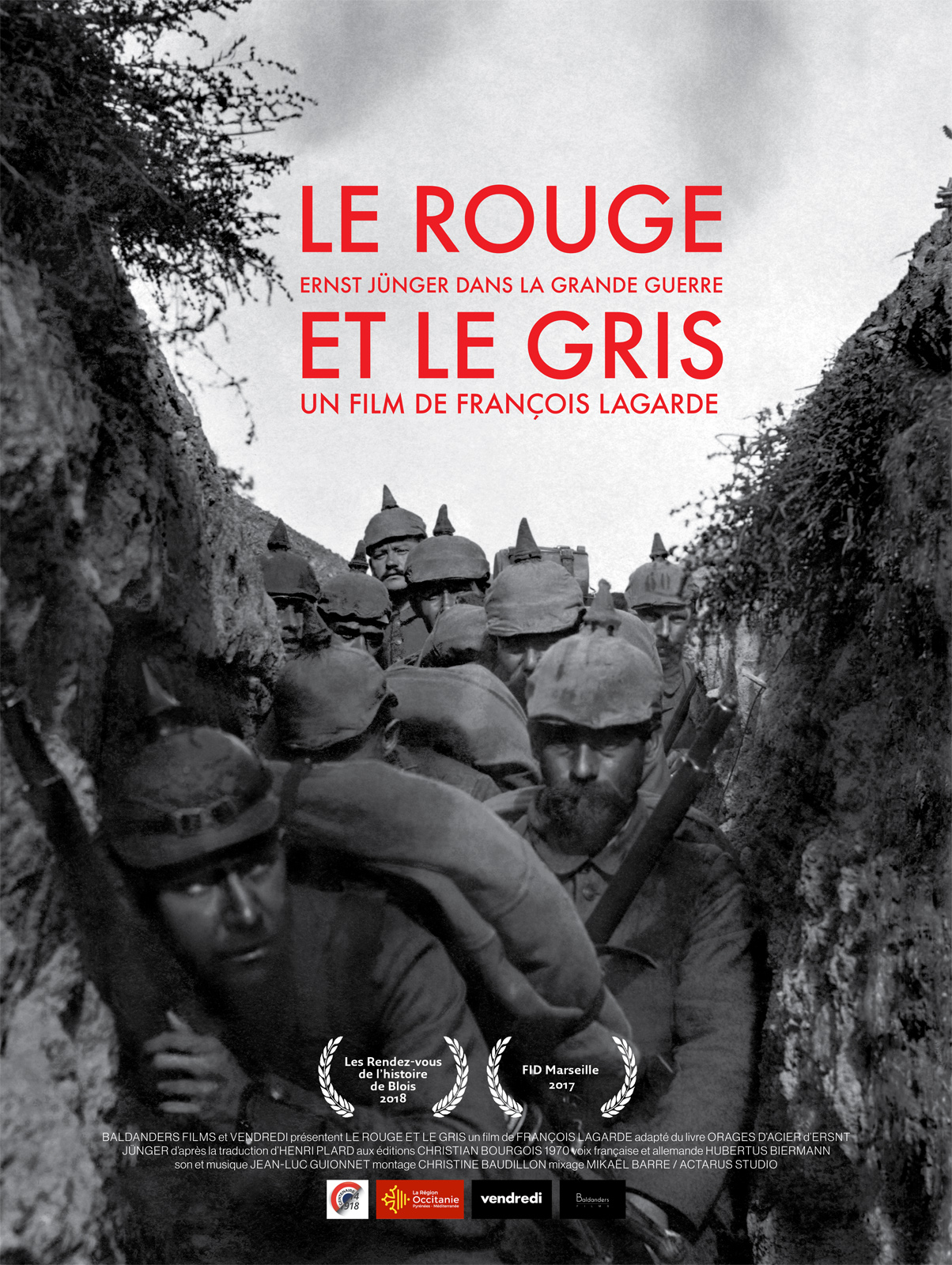 Poster for film, The Red and the Gray, Ernst Junger in the Great War
"Photographic technique is a way of stabilizing an image so that it takes on the value of a document. The World War was the first major event to be recorded in this way, and, since, there has been no important event not grasped by the artificial eye."
--Ernst Jünger, “On Pain,” 1934
*Like cinema, psychoanalysis, X-rays, and the diesel engine, Ernst Jünger was born in 1895. On December 31, 1914, he entered the war with weapons, books and notebooks. In his early 20s, he already had decided to confront the war as a writer and a soldier. He was granted the incredible destiny of coming out alive from this turmoil and he did so with 15 notebooks that contained his important novel, Storm of Steel. Unlike many WWI novels written years after the conflict’s end, Jünger wrote on the front lines.
All the Way Home
By Jane Clarke
The Irish experience of the First World War has been largely overlooked and even denied until relatively recently; now we know that 210,000 Irish soldiers fought and up to 40,000 died. When the Mary Evans Picture Library in London invited poet, Jane Clarke, the winner of the 2016 Hennessy Literary Award for Emerging Poetry, to write a sequence of poems in response to a British First World War family archive, she accepted the challenge: how to find fresh ways of writing about the First World War. This week at WWrite, read the post, "All the Way Home," Clarke's account of imagining the forgotten experience of Ireland through an account of a WWI British soldier.
Against barbarity, poetry can resist only by cultivating an attachment to human fragility, like a blade of grass growing on a wall as armies march by.
---Mahmoud Darwish (1942-2008)
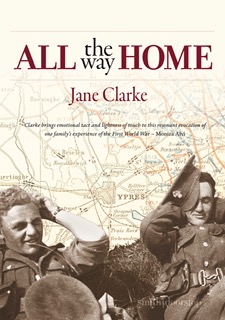
*When the Mary Evans Picture Library in London invited me to write a sequence of poems in response to a First World War family archive, I was initially hesitant. While the photographs and letters were immediately evocative, I was all too aware that poems come of their own volition. I didn’t know if I would find the emotional resonance needed to spark not just one poem but a series. In fact what was most difficult was finding fresh ways of writing about the First World War.