
































August 8th: The Short Story Behind a Photo
by Benjamin Sonnenberg
Benjamin Sonnenberg, a student at University of Maryland and intern at the WWI Centennial Commission, is giving new voice to WWI by creating a fiction collection based on events, stories, and archival documents. Here, is a piece of short fiction inspired by a photo of German Generals Paul von Hindenburg and Erich Ludendorff in 1917:
02-005.jpg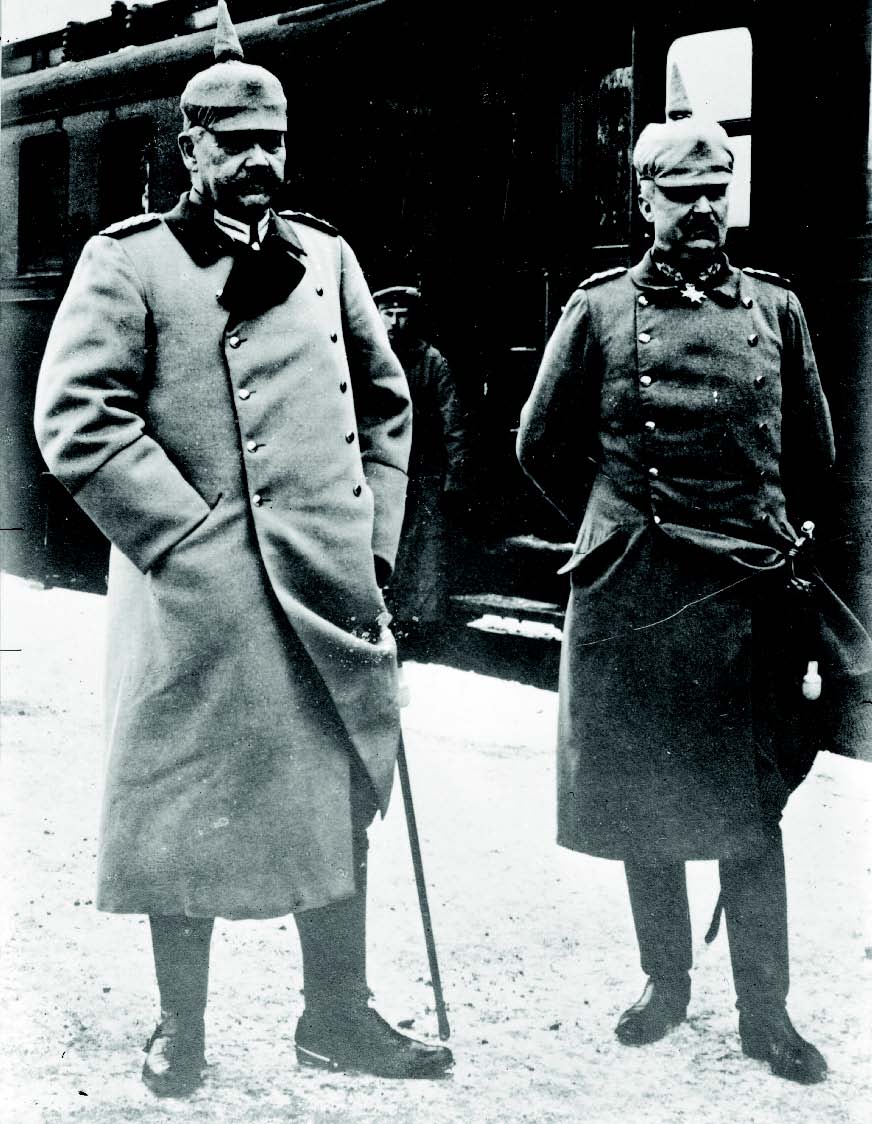
General von der Marwitz was fiddling with his Iron Cross. He played with the corners of the map as he breathed out his report: “19 British divisions. 12 French. A single American. Two-thousand fighters.” Paul von Hindenburg looked at his deputy. General Erich Ludendorff was shaking his head, mumbling something about the Social Democrats.
“Von Hutier’s 18th Army has fallen back to Hargicourt,” Marwitz continued, tracing the tortuous path with a pale white finger. “Von Larisch’s 54th Corps has been shattered and forced back to Proyart. Von Hofacker’s Corps has withdrawn to Ville sur Ancre.”
“Yes, but how much land lost?” Ludendorff thundered, his left hand quavering behind his back.
“I’m not sure, Herr General. The attack has only just ceased, and prisoners are —”
“Prisoners?” One eye twitched. Then the other. “How many men?”
“Again, it’s rather unclear because—”
A small glass fell to the floor, shattering. Now Ludendorff’s right hand began to shake. “Christ, is there anything you can tell me?”
Journalist Tweets WWI to French Youth. Plus! Her Exclusive Twitter
Feed from Bastille Day in Paris
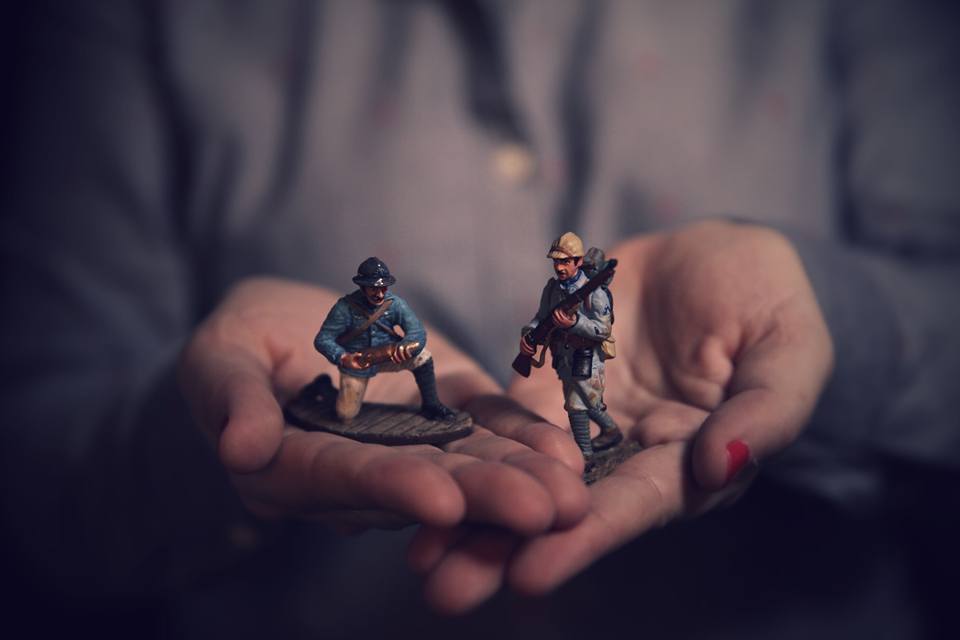 Stéphanie Trouillard's Facebook Cover Photo, WWI figurines in her hands
Stéphanie Trouillard, 33 years old, is a T.V./web journalist and WWI Centenary Correspondent for French main media source, France24. With over 12,000 people following her blog and Twitter accounts about WWI, she explains her personal and professional passions driving her innovative historical writing project.
A Personal and Professional Project
*I have been working a journalist for the France 24 website, a main French media source, for over four years. Most of my work covers international news,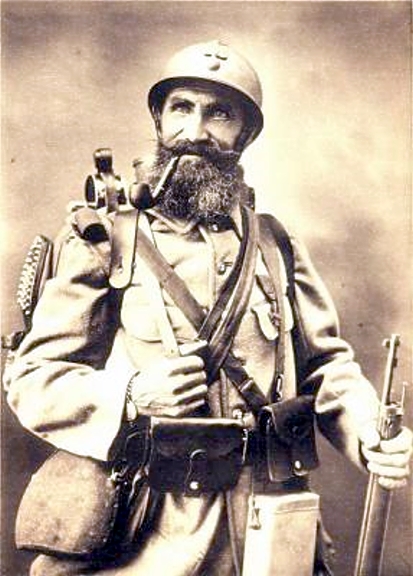 A French WWI "Poilu"but since the beginning of the centennial of the First World War in November 2013, I have also been dealing with this war. In three years, I have written more than a hundred articles on the Great War. This has allowed me to broach many subjects—military, but also cultural, sports, and even scientific subjects. Every day, I compose a press review on my Twitter account and give the news about the centenary. In parallel to my professional activities, I research the Poilus of my family. [Poilu is the French term for WWI soldiers. It means “hairy,” which is how the French press described the haggard, and, yes, hairy soldiers]. I tell their stories in articles and I go to the field to try to trace their different paths. Three of my great-uncles lost their lives during the conflict and two of my great-grandfathers were involved. They were all in different armies and regiments: the infantry, the artillery, and the navy. The family connection has allowed me to have a more intimate approach to this great story.
Special Bastille Day Edition! WWrite Weekend Update for July 16th
Latest Post: The latest post, Ernst Jünger: The Modern War Story, comes from critically-acclaimed veteran writer Elliot Ackerman. In an interesting flip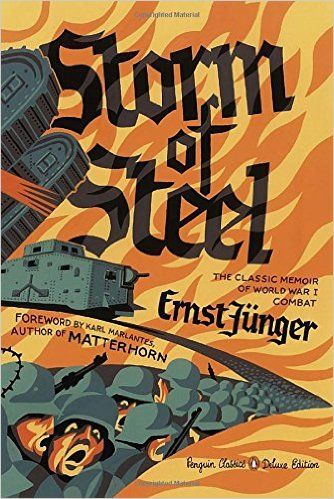 for convention, this WWrite post steps out of the current narrative in war literature to explore our culture's allure not to peace, but to violence. Rather than glorifying war, recent memoirs and books have concentrated on its debilitating and destructive effect on the returning soldier. In this post, Ackerman gives us his take on Ernst Jünger's seminal war memoir, Storm of Steel,, and the ways in which it assigns a redeeming quality to combat violence.
Ernst Jünger: The Modern War Story
-- “The character of battle … is slaughter.” – Carl von Clausewitz
Cover, Storm of Steel, published by Penguin, 2016
Much of the modern literature of war, which was birthed in the trenches of the First World War, has been arrayed into the following moral arc: a naïve, idealistic youth goes to war; he witnesses the horrors and waste; he returns home haunted, or even destroyed by what he’s seen; hence war is evil. Obviously there are many variations on this theme—sardonic novels like Catch-22, or narratives that only obliquely reference war such as The Sun Also Rises—but much of literature adheres to this basic framework and its moralism. And why shouldn’t it? What could be redeeming about the slaughter Clausewitz references? Yet it took the unprecedented bloodletting of the trenches, with their poison gas and futile advances into machinegun fire, to codify this conclusion in art. But is there room for another narrative in literature?
Brian Castner Interviews Matti Friedman about Pumpkinflowers and Gives Insight on "The Forever War."
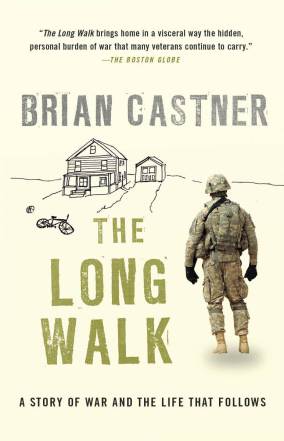 This Week's Post: This week's post, "Echoes of Sassoon: A Conversation with Matti Friedman," comes from Brian
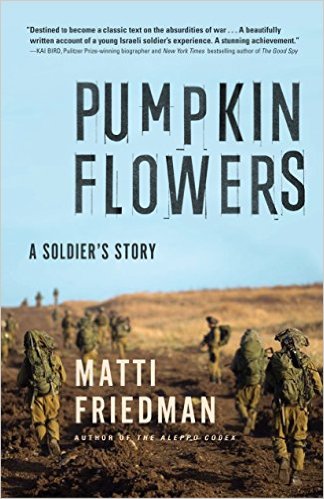 Castner, co-editor of The Road Ahead and author of All the Ways We Kill and Die and The Long Walk. He also wrote the foreword for See Me for Who I Am, authored by WWrite blogger, David Chrisinger.
Echoes of Sassoon: A Conversation with Matti Friedman
by Brian Castner
When Matti Friedman was seventeen years old, he moved from a typical middle-class neighborhood in Toronto to a kibbutz in Israel, to work as a farmer. A few years later, he was drafted into the Israel Defense Forces, and fought in Southern Lebanon in 1998 and 1999, in a conflict that still has no official name. After his military service ended, he settled in Jerusalem and became a journalist with the Associated Press. It took him fifteen years to write about his war. His memoir of that time, Pumpkinflowers, was published last year, and was chosen as a New York Times Notable Book.