
































World War I Centennial News
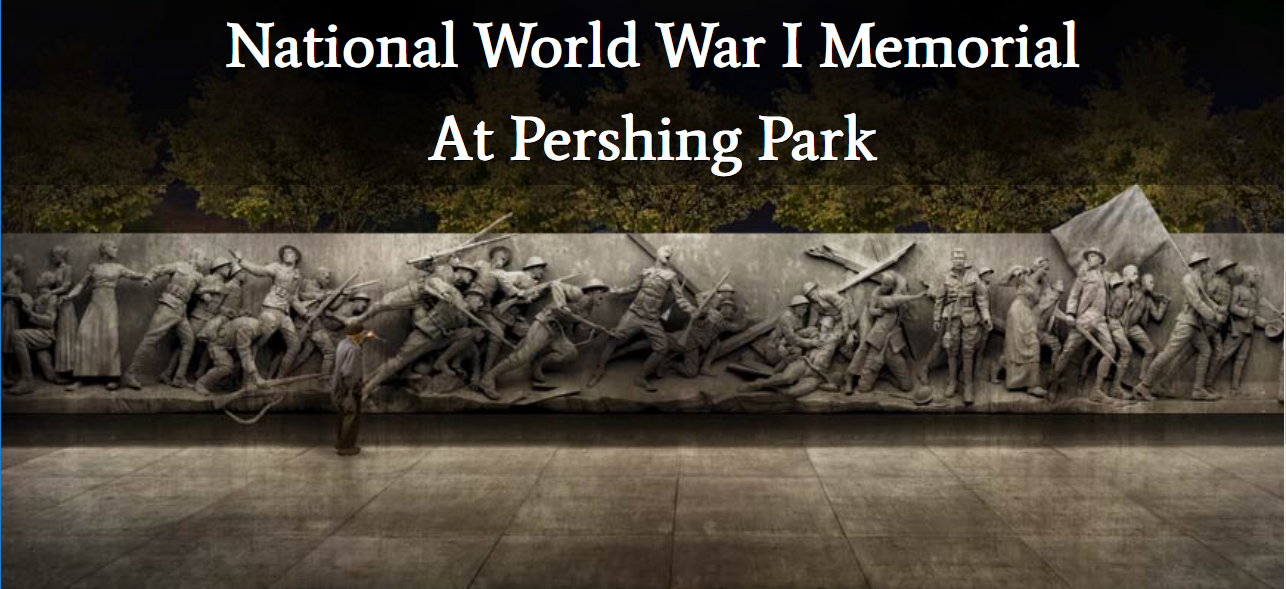
World War I Memorial ceremonial groundbreaking set for Nov. 9 in Washington, D.C.
By Joe Curtin
Director, National Veterans Outreach Office, U.S. Department of Veterans Affairs
via the VAntage Point blog
After years of extensive research, planning and coordination with state, federal, military and international governments, supporters of the World War I Memorial will break ground for the site just prior to Veterans Day.
The groundbreaking event is scheduled for Nov. 9 at 11 a.m. at Pershing Park in Washington, D.C. The program will serve as an opportunity to thank partners and supporters who have helped turn a historic vision into reality. Unique to the event, the symbolic groundbreaking ceremony will include soil brought from French battlefields signifying the allied service and sacrifice of those who fought for the common cause of freedom.
The event will be streamed via Facebook Live at https://www.facebook.com/ww1centennial.
VA Secretary Dr. David Shulkin is scheduled to be among the featured speakers. VA is one of many federal agencies participating in the World War I Centennial Commission’s mission to build a new national memorial. Although there are no living World War I Veterans, VA recognizes the incredible history this generation of Veterans made to both America and the world following the Great War.
Read more: World War I Memorial ceremonial groundbreaking set for Nov. 9 in Washington, D.C.
United War Veterans Council events for Veterans Week in NYC
By Chris Isleib and Ryan Hegg
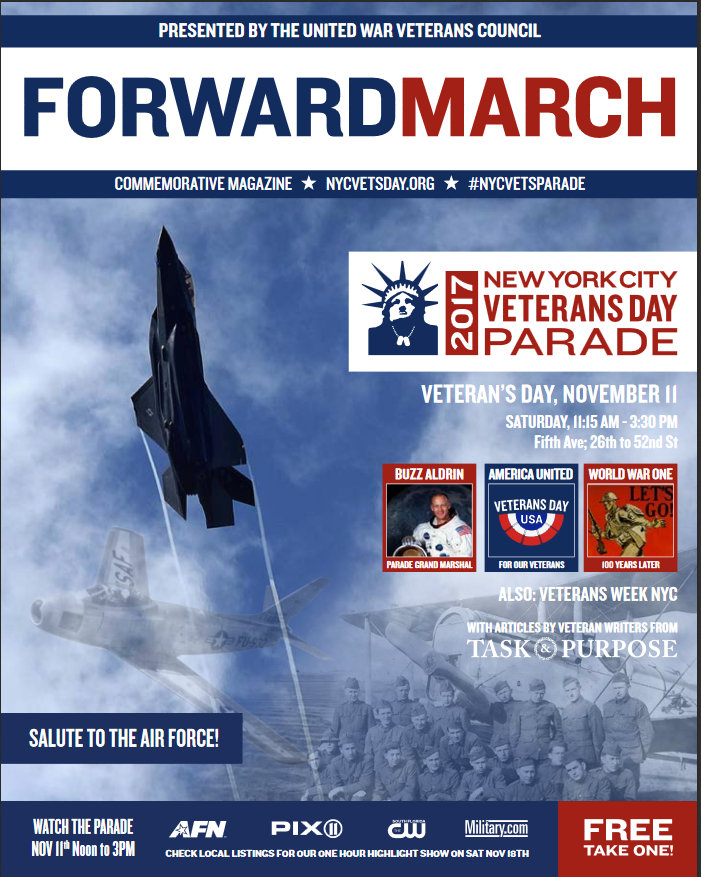 The Centennial of World War One is featured on the front cover of the 2017 Forward March program for the New York City Veterans Day Parade.The United War Veterans Council in NYC invites you to join us in honoring America’s veterans in our nation’s largest city!
The UWVC is hosting activities on and around Veterans Day, including the New York City Veterans Day Parade (formerly America’s Parade) on November 11th, as well as activities that take place during Veterans Week NYC, November 4th-11th. The parade will feature100+ WWI re-enactors.
World War One is mentioned or showcased on 12 out of 88 pages of this year's FORWARD MARCH parade program, including a full-page highlight of New Yorker Sabin Howard, sculptor of the National World War One Memorial at Pershing Park in Washington, DC. 95,000 copies of FORWARD MARCH will be distributed as an insert in the New York Daily News. The full FORWARD MARCH is available at nycvetsday.org/2017-forward-march.
95,000 copies of FORWARD MARCH are going out tomorrow as an insert in the NY Daily News. Full publication available at nycvetsday.org/2017-forward-march
NYC Veterans Day Parade
The New York City Veterans Day Parade on Saturday November 11th, is our nation’s largest event honoring service. The Parade provides the public with the opportunity to salute our veterans and military, and raises awareness for organizations working to serve their needs.
This year’s Parade marks the centennial of America’s entry into the First World War (1917 ~ 2017). The U.S. Air Force is this year’s featured service. The Parade is also a key part of Veterans Day USA, a national network of events working towards the 100th Anniversary of Veterans Day in 2019. Astronaut Buzz Aldrin, a U.S. Air Force veteran of the Korean War, will be the Grand Marshal for this year's parade.
The parade kicks off at 11 a.m. from 26th Street and Fifth Avenue and proceeds up Fifth Avenue to 52nd Street. About 40,000 veterans, Active Duty military personnel, marching bands and veterans’ supporters march past 500,000 spectators.
Read more: United War Veterans Council events for Veterans Week in NYC
Prohibition and World War I
Returning U.S. soldiers faced a sobering reality in 1919
By Thomas Richardson
Digital Imaging Technician, National Personnel Records Center, National Archives and Records Administration
The global impact of the Great War reverberated throughout world history. Millions of lives were changed in four years, putting nations on radically different paths. In the United States, the war fundamentally shifted how the nation viewed itself in global affairs and how it behaved at home. As industries and the federal government prepared for conflict, a social movement that brewed for nearly eighty years saw the golden opportunity to achieve its ultimate goal: the national prohibition of alcohol.
 Thomas Richardson The 18th Amendment was ratified and Prohibition began in January 1919 following the armistice. Dry forces advocated for decades to limit the consumption of alcohol. Temperance was practiced at first; simply regulating and restricting the amount one could drink. The Women’s Christian Temperance Union (WCTU) advocated heavily throughout the late 19th century on these issues, while simultaneously addressing other reforms. The WCTU quickly established themselves as the leader of progressive causes, but the single issue of alcohol was taken up by another organization: the Anti-Saloon League (ASL). The ASL engaged in large-scale lobbying that called for the total prohibition of alcohol and set the path for a constitutional amendment. Alcohol, they believed, was a moral scourge upon families, causing poverty, and criminal figures operating from saloons fostered public corruption.
The Great War itself wasn’t the only contributing factor to the amendment’s passage, but instead it was the culmination of decades of work carried out by temperance and progressive groups.
Large breweries looked to secure their essential economic role through lobbying and political groups, such as the United States Brewers Association and the German-American Alliance. The wets, opponents of prohibition, staved off alcohol restrictions through their lobbying and commercial interests. Wet leaders like Adolphus Busch embarked on massive public relations campaigns showing the essential role the alcohol industry played in the American economy. Federal tax revenue depended heavily on alcohol sales, but that changed drastically in 1913 following passage of the 16th Amendment implementing an income tax. No longer was the government reliant on alcohol excise taxes, which gave progressive advocates much needed support for prohibition.
Indiana events honor Corporal Gresham, Veterans Day
By Chris Isleib
Director of Public Affairs, United States World War One Centennial Commission
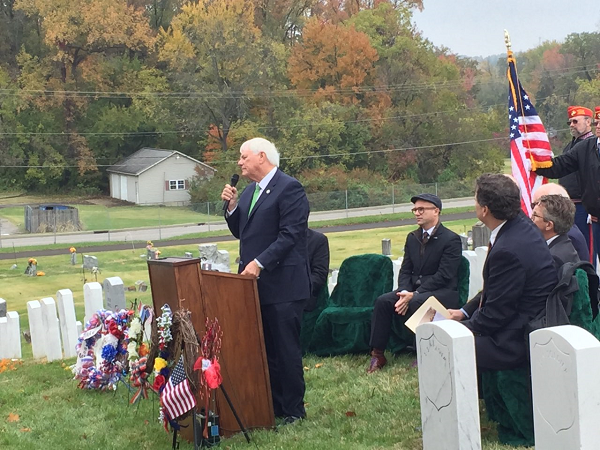 Terry Hamby, Chair of the United States World War One Centennial Commission, speaks at an Evansville, Indiana event honoring Corporal James Bethel Gresham one of the first three American soldiers killed in combat in WWI.A number of events took place in Indiana last week, to mark the approach of Veterans Day, and to honor the centenary of the first U.S. Army soldier killed in combat during World War I. That first soldier, Corporal James Bethel Gresham, hailed from the town of Evansville Indiana, and was lost on November 3rd, 1917. United States World War One Centennial Commission Chair Terry Hamby, attended these events as representative of the U.S. World War I Centennial Commission.
On Thursday, November 2nd, the Indiana Military Museum, in Vincennes, Indiana, dedicated a new addition to their collection -- a fully-restored World War I-era M1917 tank. (See prior coverage of the tank restoration project here.)
Hamby joined Jim Corrigan, Chair of the Indiana WWI Centennial Committee, and Mr. Pat Waters, grandson of General George S. Patton, at the event with the museum staff & supporters. At a celebration banquet that evening, Chair Hamby expressed his thanks and solidarity with the community, in their great effort to keep alive the memory of our World War I veterans.
On Friday, Chair Hamby took part in a wreath-laying ceremony at Corporal Gresham's graveside, in Evansville. At the ceremony, French Consul General Guillaume Lacroix said, "He is a hero who made the ultimate sacrifice for his country, but also for my country... The region where he was killed in action still keeps the memory alive of Corporal Gresham, himself, and his two companions who died with him".
Read more: Events honoring Corporal Gresham, Veterans Day in Indiana
Fighting for respect
Fascinating images of the Black soldiers who fought for America during WWI
By Chris Pleasance
via the Daily Mail online web site
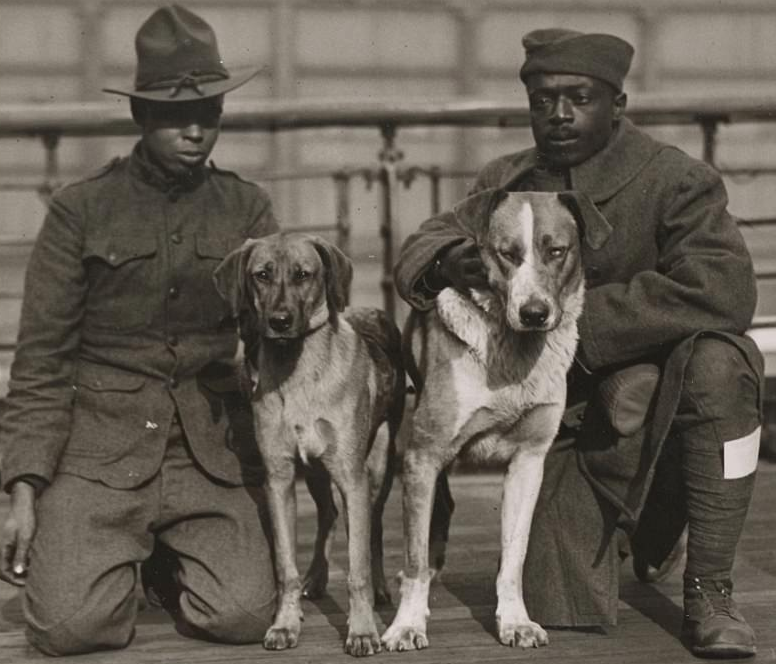 Privates Robinson Cleve of the 539th Engineers, and Daniel Nelson of the 372nd Infantry Regiment, both wounded in action, pose with war dogs Crown Prince and Kaiser Bill on their return to the US from the First World War.At the outbreak of the First World War there were just four black regiments in the American military. After the Selective Draft Act was passed, more than a million African American volunteers responded.
By the end of the conflict, just a year later, almost 400,000 black troops have served, many in combat roles. Their role paved the way for future black regiments and the eventual integration of the armed services
These are the striking images that reveal the African-American soldiers of the Great War - who faced racial discrimination even when they simply wanted to fight for their country
When the First World War broke out there were just four 'colored' regiments in the American military, but by the end nearly 370,000 African Americans had served in some capacity - paving the way for future generations.
Over one million African Americans responded to draft calls and the War Department had to stop accepting black volunteers because the quotas for African Americans were filled within a week of Woodrow Wilson's declaration.
These images show crowds of black men lining up to enlist for service in Chicago in 1917 and Ike Sims from Atlanta whose eleven sons drafted for the army.
Meanwhile other photos show African American troops arriving in France, carrying their good luck charms as they head to war and wounded black soldiers receiving chocolates and cigarettes from the Red Cross.
Read more: Fascinating images of the Black soldiers who fought for America during WWI
Veterans Day event to take place in World War I trenches at USAHEC
 WWI trench reenactors at the U.S. Army Heritage & Education Center in Carlisle, Pennsylvania.
By Amanda Neal
via the Army Heritage Foundation web site
At 11:00 am on November 11th, 1918, the First World War, one of the most devastating and tragic conflicts the world has ever seen, came to a conclusion. Early on that November morning, senior military and political officials of both the Allied and German armies met in the Compiègne Forest of northern France to finalize and sign the armistice that would bring peace to war torn Europe.
Since that time, countries across the world have chosen November 11th to honor those Soldiers who died in the “war to end all wars.”
In the case of the United States, we have grown the purpose to honor all of those who serve in the Armed Forces, past and present, by renaming it Veterans Day.
In recognition of the World War I Centennial, and to honor all those who have served and are currently serving in the U.S. Armed Forces, the U.S. Army Heritage and Education Center (USAHEC) in Carlisle, PA will be hosting a living history event entitled “Remembering Armistice Day” on Veterans Day weekend, November 11th and 12th, 2017.
The event will commence at 10:00am and run until 3:00pm and will be located at the World War I Allied and German trenches on USAHEC’s Army Heritage Trail.
Among the day’s highlights include reenactors who will be illustrating the events as they unfolded for the 316th Infantry Regiment, AEF in the hours leading up to and the day following the Compiègne Armistice. Visitors are invited to come witness the life of an American Doughboy in the trenches and the end of the war for the 316th.
Read more: Veterans Day event to take place in World War I trenches at USAHEC
Medford, NJ honors 89 county residents who died in WWI
By Carol Comegno
via the Courier-Post web site
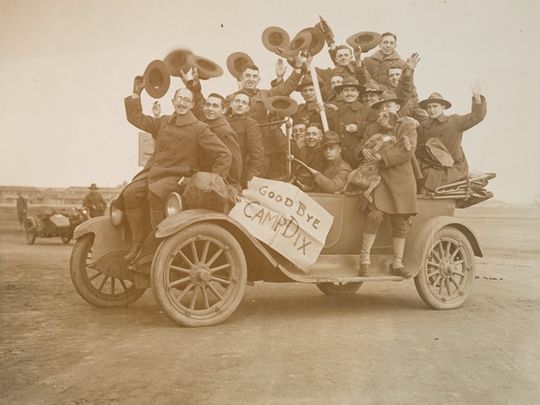 Army soldiers bid a joyous farewell to Camp Dix in Burlington County after World War I ended Nov. 11, 1918. (Photo: National Archives)Lethal gas permeated the air above the French battlefield from another enemy chemical attack, suffocating soldiers.
When a fellow U.S. soldier was overcome by the gas in Juvine, France, his sergeant picked him up and carried him 50 yards across a road under heavy enemy bombardment.
For that heroic rescue during the Meuse-Argonne Offensive in World War I, Sgt. Howard M. Karg of Mount Holly received the Distinguished Service Cross — the second highest military honor after the Congressional Medal of Honor, but he died a few days later on French soil on Nov. 5, 1918, just six days before the war ended.
Like other World War I soldiers, Karg’s name has melted into history, but he and 88 other Burlington County residents who gave their lives during World War I were be remembered Saturday, November 4 at the dedication of a new memorial in Freedom Park in Medford.
“It was to be the ‘Great War’ that ended future wars. We know that was far from reality as our world continues the struggles that have taken many lives. Through strength and courage, the United States and its allies have led the way to preserve freedom and liberty.
"We should not ignore the sacrifice of those who have gone before,” said retired teacher Michael Panarella of Medford, chairman of the Burlington County World War I Memorial Committee.
Read more: Medford honors 89 county residents who died in World War I
New exhibit at the Woodrow Wilson House: The Ghost Fleet of Mallows Bay
By Chris Isleib
Director of Public Affairs, United States World War One Centennial Commission
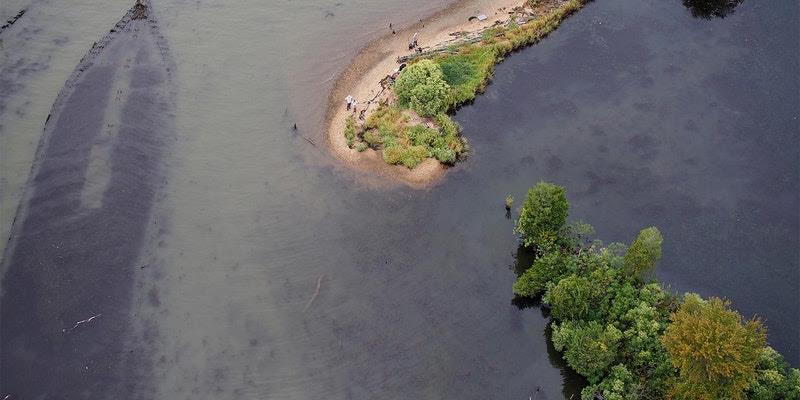 Overhead photo of one of the WWI shipwrecks that fill Mallows Bay in Maryland.Partially submerged in the middle of the Potomac River, in Mallows Bay, lies the largest shipwreck fleet in the Western Hemisphere. This abandoned fleet includes more than 200 shipwrecks, the majority of which date to World War I, and they represent a haunting legacy of the war.
In April 1917, President Woodrow Wilson approved the greatest shipbuilding program in history: an order for 1,000 ships to make up the shortage of transport vessels needed for the war effort. The war ended before any ships were put into service and hundreds were simply scrapped in the Bay.
To celebrate its legacy, the Woodrow Wilson House in Washington DC presents a new museum exhibit that explores the Ghost Fleet’s fascinating—and scandalous—history.
Read more: New exhibit at the Woodrow Wilson House: The Ghost Fleet of Mallows Bay
Centennial Commission to live-stream ceremonial groundbreaking Nov. 9
for National World War I Memorial at Pershing Park in Washington, DC
By Chris Isleib
Director of Public Affairs, United States World War One Centennial Commission
 The U.S. World War I Centennial Commission will host a ceremonial groundbreaking for America's World War I Memorial on Thursday, November 9, 2017, 11:00 am Eastern, at DC's Pershing Park.
This event will be will be live-streamed to the web at https://www.facebook.com/ww1centennial/
Guests of honor will include senior military & veteran leaders, as well as Centennial Commission members, members of the historical/cultural community, U.S. and city officials, and major donors.
U.S. Military Academy Cadets, the Pershing Rifles Group, and the US Army Band's "Pershing's Own" Brass Quintet are also expected to attend.
Our shovels will turn earth that came to us from the World War I battlefields of France.
The U.S. World War I Centennial Commission is a Congressional Commission created in 2013 to provide public outreach, education programs, and commemoration events for the American involvement in the war. The Commission operates through private donation. The founding sponsor of the Commission is the Pritzker Military Museum & Library in Chicago, IL.
LOC Veterans History Project schedules World War I special programs for Veterans Day 2017
 By Benny Seda-Galarza
Library of Congress Veterans History Project
The Library of Congress’ Veterans History Project (VHP) will celebrate Veterans Day, between Nov. 7 to Nov. 11, with live book talks and a variety of performances, guided tours, workshops and other activities.
The series of events, titled “Coming Home: Veterans Day at the Library of Congress,” will take place in the Thomas Jefferson Building of the Library.
From a letter-writing event for active-duty service personnel to examining objects a World War I soldier needed, these activities intend to honor and recognize veterans and their families and explore the ways military men and women have connected to home and family during and after service from World War I, Vietnam and the current conflicts.
Read more: Veterans History Project special WWI Programs for Veterans Day
Flanders Remembers concert commemorates U.S. entry into WWI
By Nicholas Polet
Director of Communications and Public Affairs, Flanders House, New York
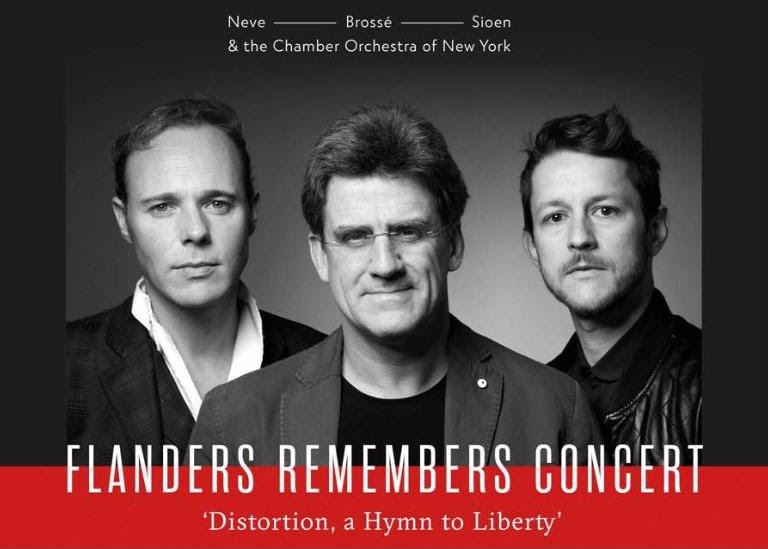 On the occasion of Veterans Day 2017, the Annual Flanders Remembers Concert will present Distortion, a Hymn to Liberty on Thursday, November 9th at 7:30 PM (doors open at 7:00 PM).
One hundred years ago, the United States entered World War One. It was the arrival of fresh American troops that enabled the Allies to turn the tide of war and force the Central powers to sue for peace.
Nearly five million American veterans served in that cruel war; 116,000 men and women gave their lives; and 320,000 soldiers, sailors, marines, airmen, and coast guardsmen suffered casualties in service to this nation, during a war that changed the world.
The total number of military and civilian casualties in World War I was more than 41 million: there were over 18 million deaths and 23 million wounded, ranking it among the deadliest conflicts in human history.
Read more: Flanders Remembers concert commemorates U.S. entry into WWI
"Numbers, statistics are not enough"
After almost a century, Carl Willig came home
By Noretta Willig
Special to the United States World War One Centennial Commission web site
In the American Cemetery at Thiaucourt, France, stands a Doughboy, larger than life. Dressed in a summer tunic, bloused pants, and leggings, this serious soldier notches his thumbs in his belt that holds his cased pistol and his field helmet. His still gaze looks out over the silent rows of white crosses. Strong, handsome and resolute, he seems so young.
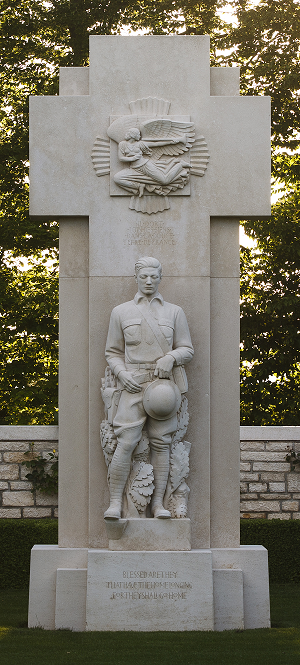 Doughboy sculpture in the American Cemetery at Thiaucourt, France.Above his head, the inscription, in French, translates: HE SLEEPS FAR FROM HIS FAMILY IN THE GENTLE LAND OF FRANCE.
On the pedestal, below, the motto continues in English: BLESSED ARE THEY THAT HAVE THE HOME LONGING FOR THEY SHALL GO HOME.
My uncle, Carl Willig, died on September 16, 1918, at the battle of St. Mihiel.
Fifty-six days before the end of the war and thirty minutes before his replacement arrived, a high impact shell struck and killed Carl. According to an eyewitness, “He suffered no pain, dear friends.”
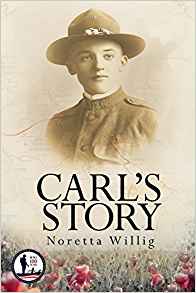 In what we now call “the fog of war,” Carl was lost. In the chaos of the shelling, his body was not immediately recovered from the battlefield, and was lost.
To his parents, his brother and all who ever knew him, he was lost forever. The next three generations continued to experience that loss, an unresolved sorrow that reappeared persistently.
But, over many years, Carl became an ancestral shadow, no longer a reality to anyone.
Then, on November 10, 2008, the eve of the 90th Armistice Day, my phone rang and a genealogist from Oregon working for the US Army identified me as Carl’s next of kin. “They have found something,” she said, explaining that she knew nothing more and that the Army would call me with the full story.
From that second, I was compelled -- I would even say driven – to write Carl’s Story.
My research took me first into old family photos. Looking at them, many for the first time, caused me to make connections with members of my family, some of whom I knew quite well and others whom I never heard of. The linkage and the irony that I discovered looking at those pictures brought meaning and understanding to relationships long cast away in memory.
Then, representatives of the Army visited my home and brought with them hundreds of pages of evidence illustrating the scholarship of JPAC – anthropologists, historians, and several forensic and materials specialists. The information they presented led to an indisputable conclusion. By the single most indestructible part of him, Carl had been found.
They also introduced me to a French organization called "Thanks, GIs", whose mission is to recover the lost remains of American soldiers. In World War I and again in World War II, Eastern France was liberated by the same 5th Division of the US Army.
The World Forgot About a 402-Foot-Long Painting. Here's What Happened When It Was Found
By Lily Rothman
via the TIME.com web site
Shortly after World War I broke out in 1914, two French artists could already predict that the conflict would take place on a scale unlike anything ever seen at that point. A tribute to it would, then, also demand an unprecedented scale.
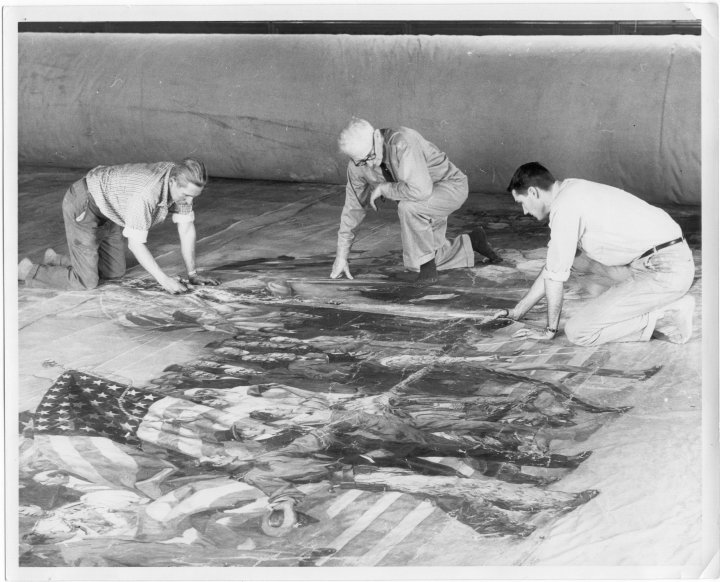 Artist Daniel MacMorris' team at work on recreating the giant painting (National WWI Museum and Memorial)By the time the project they conceived to honor the Allies was completed, shortly before the armistice in 1918, more than 100 French artists — mostly older men who were not able to fight themselves — had worked on it. Dubbed Panthéon de la Guerre, the painting measured a whopping 402 feet around and 45 feet tall, and depicted approximately 6,000 heroes of the Allied war effort. It was billed as the world's largest painting. (Whether it actually was depends on when and how exactly the comparison is made; one competitor for the title, for example, is the Atlanta Civil War cyclorama, which has been displayed at various sizes since it was completed in the 1880s but now clocks in at 371 feet by 49.)
But the version of the painting that exists today is not only smaller, but also takes a different perspective on the war. A full century after American forces first saw combat in World War I — on Oct. 21, 1917, in France — the modern Panthéon de la Guerre reflects late-breaking but crucial role of those troops.
After the painting was initially displayed in a dedicated structure in Paris, it went on tour. At the Chicago World's Fair in 1933, a special building was constructed to display the massive mural. But, after it toured the United States in the years that followed, with the Great War fading somewhat in the minds of Depression-era Americans and a fresh war on the horizon, it wound up by 1940 sitting in a crate outside a Baltimore warehouse, forgotten. A local restaurateur named William H. Haussner — a German immigrant who in fact had fought for Germany in the Great War — purchased the painting at an auction for $3,400. In 1953, he finally unfurled his enormous purchase to see what it looked like.
Read more: The World Forgot About a 402-Foot-Long Painting. Here's What Happened When It Was Found