





























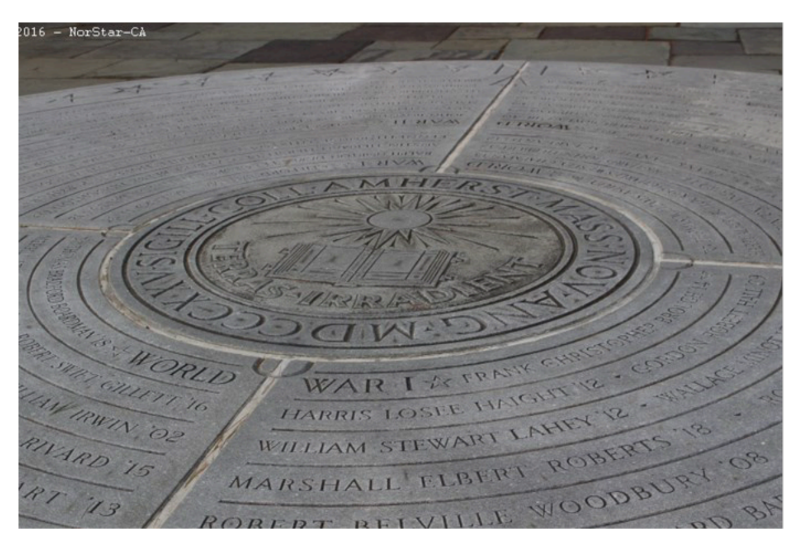
A recessed plaza paved with bluestone has in its center a large granite disc inscribed with the names of Amherst alumni who participated in WWI and WWII. Along the edge of the plaza is a fence made from granite posts and chains, plus rectangular blocks of granite inscribed with the names of individual battles. It was designed by James K. Smith and installed in 1944-46
100 Cities - 100 Memorials
Memorial Inventory Project: There is one other existing partial database to consult - The WWI Memorial Inventory Project [CLICK HERE]. It contains some memorials our map doesn't. The listings on this database are fair game for the Memorial Hunters Club. So if you want to search for treasure from your desk - find missing listings here and submit them. Remember though, you will need to come up with pictures and the history of the memorial. You might be able to hunt that down through www.Proquest.com and Google.
- Details
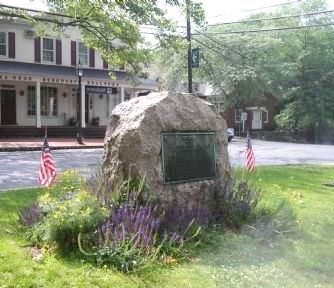
Located near the center of the village of Basking Ridge, NJ this monument consists of a thick glacial boulder slab with a rectangular bronze honor roll plaque mounted on its surface. The plaque recognizes local residents who served in WWI.
Photos courtesy of: Bill Coughlin & Historical Marker Database
- Details
- Dedication Date: 1922
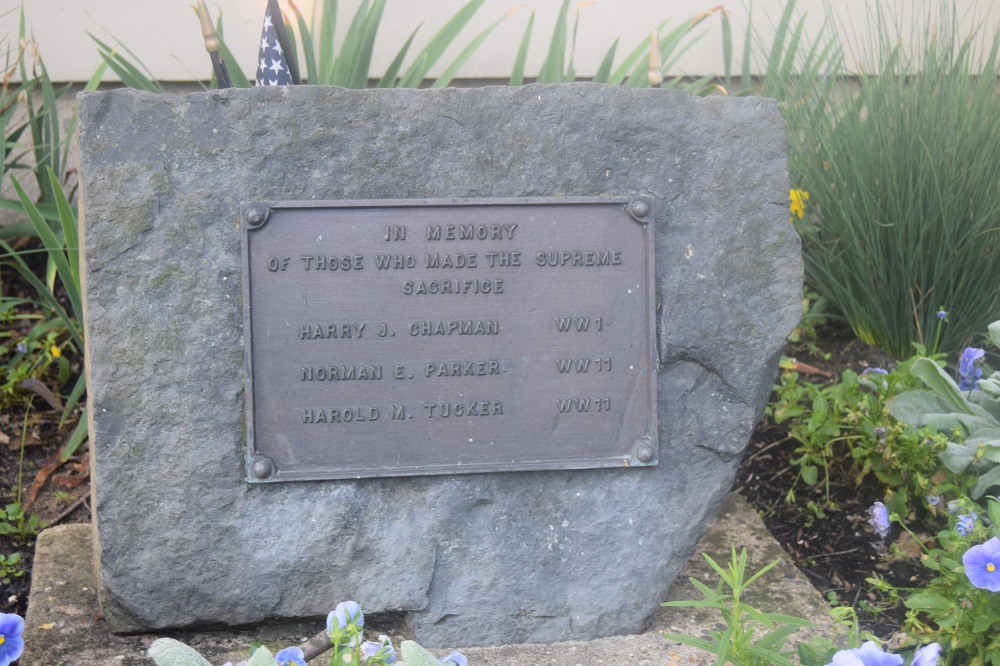
The Crosswicks monument was dedicated on Veterans’ Day 1922 in a ceremony that also included the laying of the cornerstone of the Crosswicks Community House.
Originally, the monument plaque contained only the name of Harry J. Chapman, the one Crosswicks resident killed in action in World War I. The plaque was apparently later recast to add the names of two village residents killed during World War II.
Photo courtesy of: NJ State Historic Preservation Office
- Details
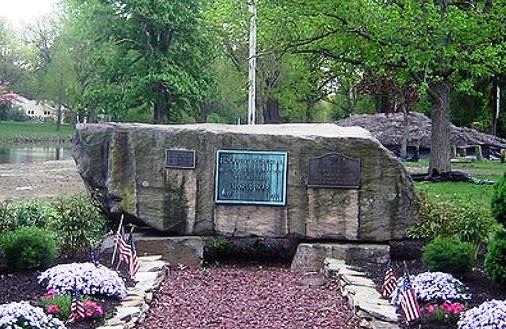
This monument consists of a rectangular boulder with a central horizontal seam that sits upon a concrete base. Three bronze plaques are placed on the front of the boulder with the central plaque commemorating Demarest residents who served in the Great War.
Photo courtesy of: Sheena Chi
- Details
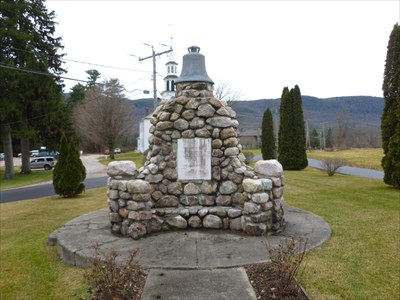
The East Canaan Veterans Memorial is a 6.5' high field-stone triple exedra topped by a bell. The monument rests on a circular concrete base with a walkway that leads southwest to the monument from the direction of Route 44.
A marble plaque on the northeast exedra face is inscribed:
THIS MEMORIAL
WAS ERECTED BY THE
CITIZENS & FRIENDS
OF
EAST CANAAN CONN
1928
A marble plaque on the southwest exedra face has the starting dates of the Revolutionary War, War of 1812, Civil War, Spanish American War and is inscribed:
IN MEMORY OF
THOSE WHO DEFENDED
THEIR COUNTRY
*1776* – *1812*
*1865* - *1898*
A marble plaque on the southeast exedra face has the dates of World War I and is inscribed:
IN MEMORY OF
THOSE WHO ANSWERED
THEIR COUNTRY'S CALL
1917 – 1918
- Details
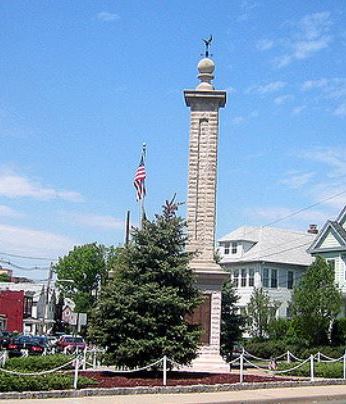
This monument consists of a rusticated granite square column with a central long inset vertical section topped with a segmented arch. The column capital is topped by a concrete hemisphere, which is in turn, surmounted by a concrete orb, both resting on a base. An iron eagle in flight is mounted to the top of the orb.
The base of the statue has a bronze honor roll plaque on its front side, which is also constructed of rusticated granite.
The monument is placed on a landscaped triangular traffic island in downtown Garfield.
Photo courtesy of: Sheena Chi
- Details
- Dedication Date: 1924
- Charles Henry Niehaus
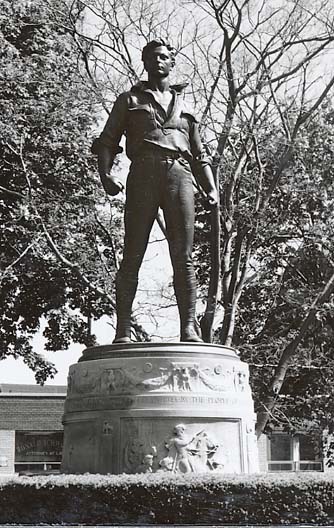
This is one of two WWI monuments on the grounds of the Bergen County Courthouse in Hackensack, NJ. It is the more elaborate of the two. Designed by well-known sculptor, Charles Henry Niehaus, it consists of a bronze figure of a young man standing atop a tapered circular stone base with an inscription.
Above the inscription are reliefs of eagles & garland. Below the inscription are 4 relief panels. The front panel shows a Revolutionary War scene. A side panel displays a meeting of Civil War-era generals. The back panel shows a charge from the Spanish-American War. The final panel depicts a battle from World War I.
Narrative adapted from Smithsonian Institution Research Information System (SIRIS) inventory #NJ 000122.
Photos courtesy of: Smithsonian Institution Research Information System (SIRIS)
- Details
- Width: 32 in
- Depth: 42 in
- Dedication Date: 1924
- NJ000016
- Eagle Bronze Worka
- Pietro Montana
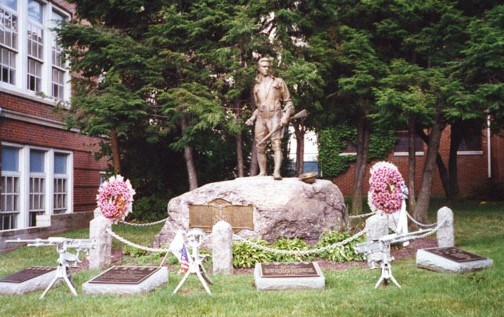
This monument depicts a larger-than-life doughboy soldier standing with his left leg forward and his right leg extended backward. A rifle is held in his left hand, pointing diagonally downward across his extended left thigh. His helmet rests upside down to his left.
The figure stands on a natural rock that features a relief plaque depicting an angel in the center, holding an olive branch and flanked by soldiers. The sculpture was dedicated on July 19, 1924.
Narrative adapted from Smithsonian Institution Research Information System (SIRIS) #NJ000018.
Photos courtesy of:
Monument - Smithsonian Institution Research Information Service (SIRIS)
Plaque - Bill Coughlin & Historical Marker Database
- Details
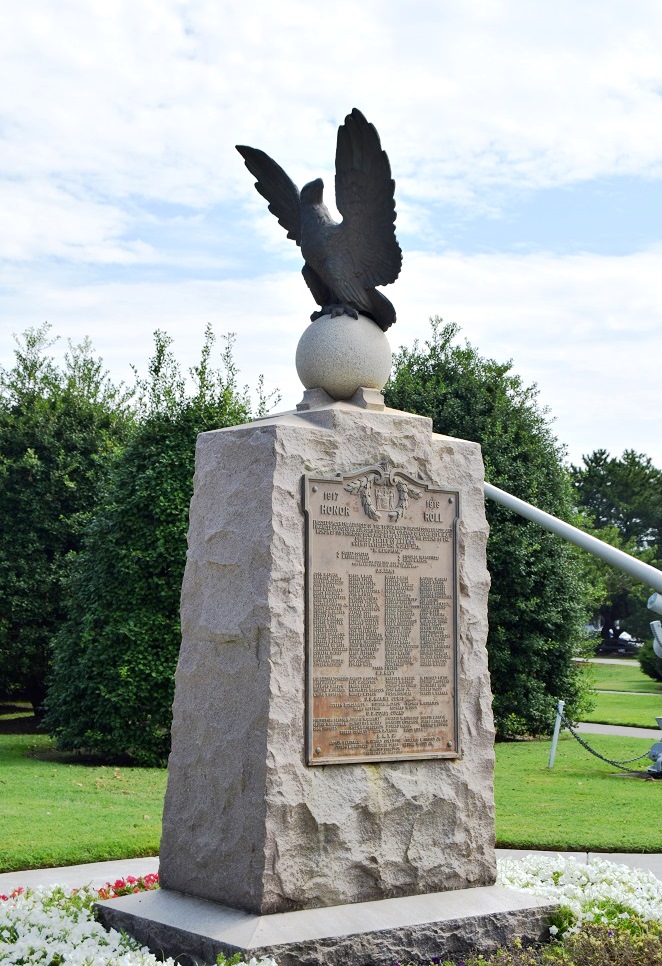
This World War I memorial consists of a tapering, rusticated pink granite slab topped by a cradled, grey granite orb topped by a bronze eagle with outstretched wings. On the front of the slab is a bronze plaque with a curved pediment, containing the names of local residents who served in the war. The monument rests on a shallow-hipped, rusticated, grey granite base.
Photos courtesy of: NJ State Historic Preservation Office
- Details
- Dedication Date: c1926
- Gaetano Cecare
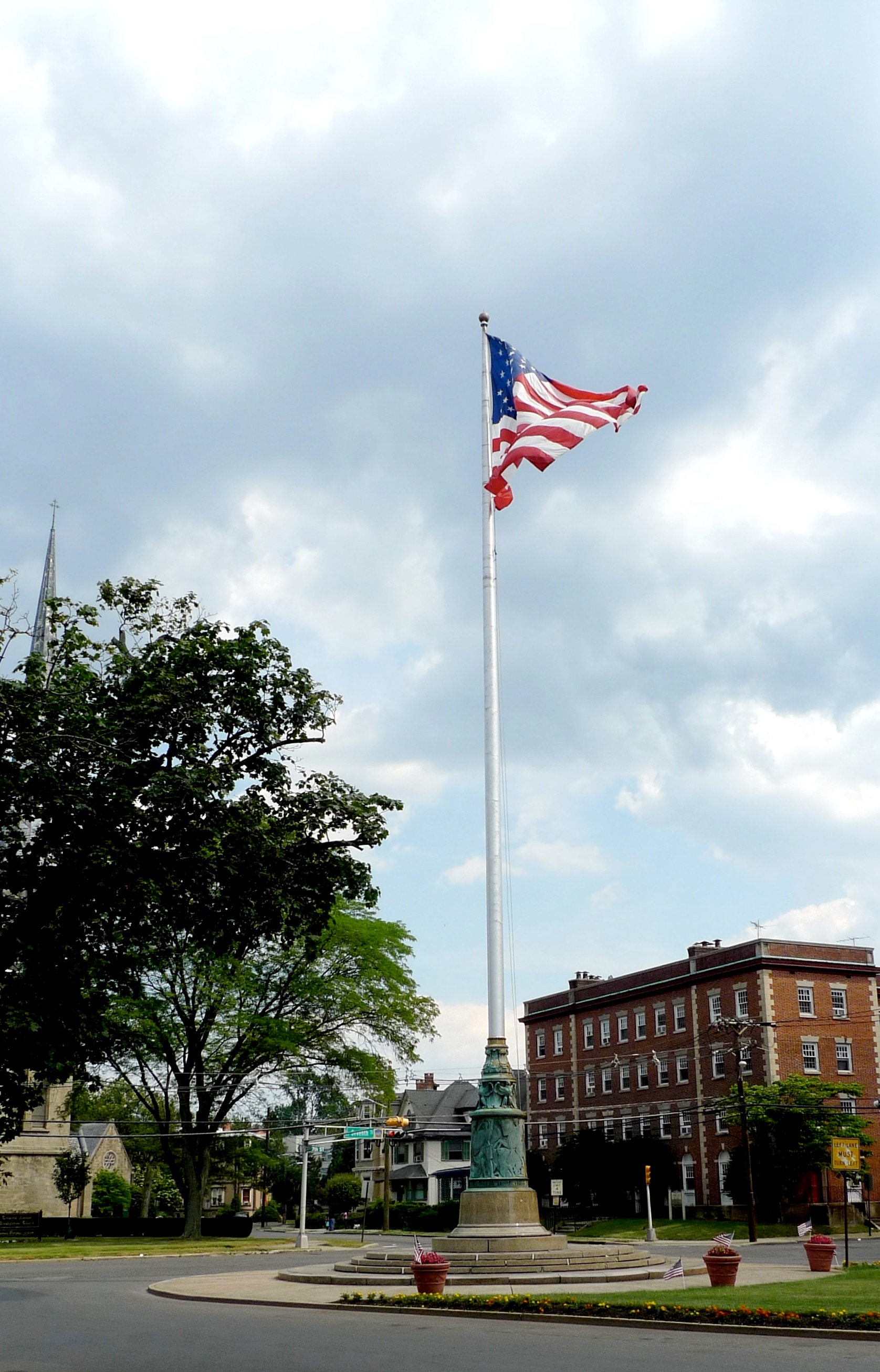
The Plainfield World War I monument is a flagpole with an elaborately decorated base placed on a concrete and grass traffic island in downtown Plainfield. The monument was erected on ground owned by the Crescent Avenue Presbyterian Church circa 1926. It is still maintained by the church.
The sculptural portion of the flagpole consists a cylindrical marble section crowned by a narrower cylindrical bronze section. It was designed by noted New Jersey sculptor Gaetano Cecere. The major portion of the base contains a relief sculpture of a group of Roman warriors. The section above consists of a band of relief eagles with their wings spread.
Narrative adapted from Smithsonian Institution Research Information System (SIRIS) inventory #76009157.
Photos courtesy of: NJ State Historic Preservation Office
- Details
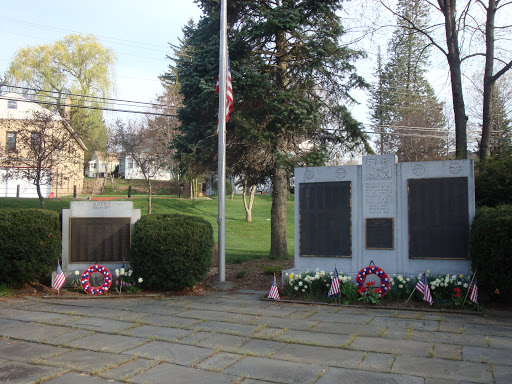
The Plymouth Veterans’ Monument, near the intersection of Main Street (Route 6) and North Main Street, features a monument honoring the two World Wars and Korea, as well as a separate monument commemorating the Vietnam War. Beneath a dedication, a plaque lists the names of eight residents killed in World War I, 25 killed in World War II and two killed in Korea. On the left and right sides of the monument, plaques list approximately 200 World War I veterans and about 700 residents who served in World War II. To the immediate left of the Veteran’s Monument, a granite monument honors residents who served in the Vietnam War. A short walk northeast of the monument, a bronze plaque on a large boulder honors veterans of the two World Wars. The plaque, mounted on the boulder’s southeast face, reads, “Dedicated to the loyal sons and daughters of Plymouth, Connecticut, who served their country during World Wars I and II. Erected through the generosity of Judge Andrew W. Granniss 1953.”
- Details
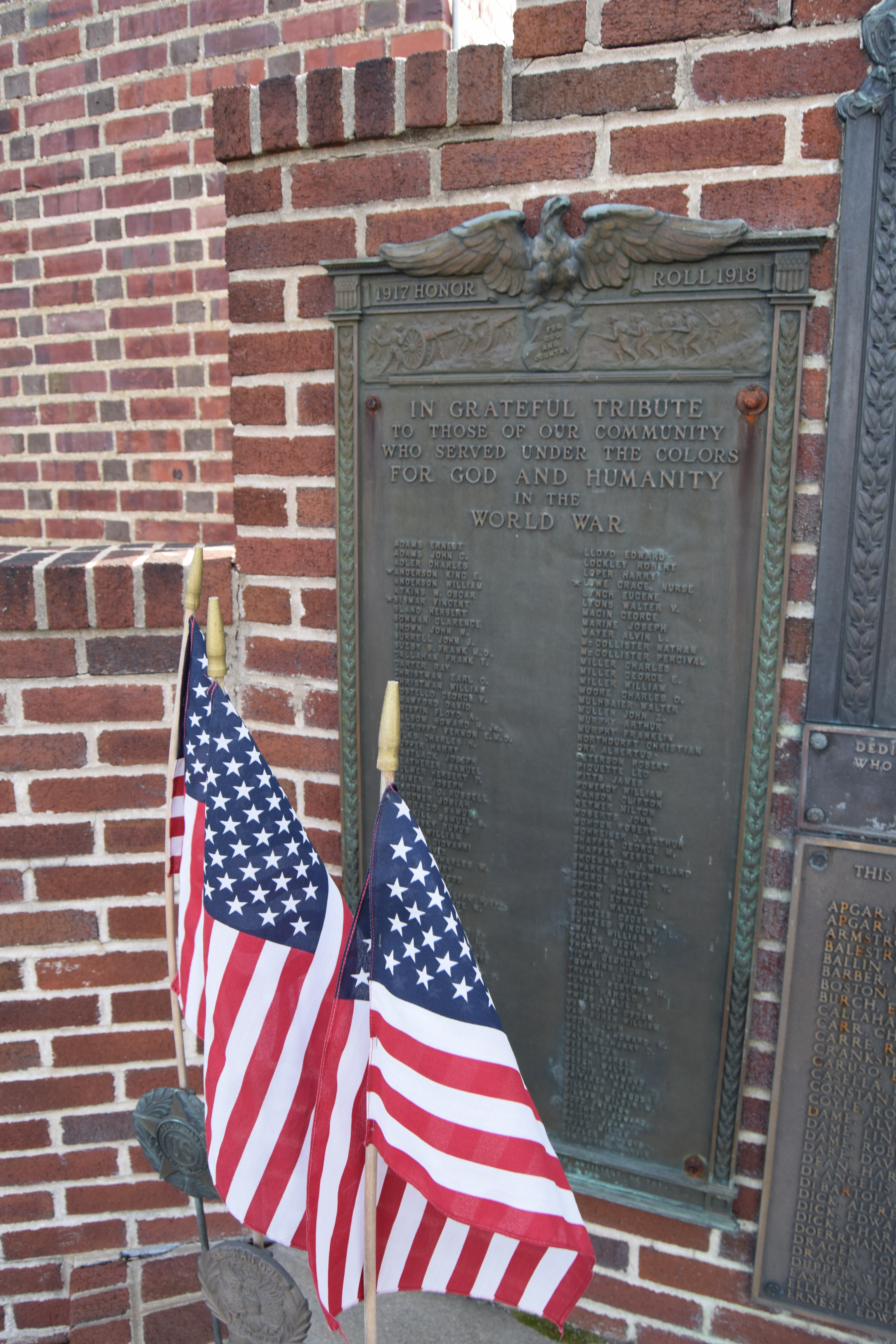
The Swedesboro World War I honor roll plaque has recently been remounted on a consolidated war memorial brick wall next to the Borough Hall. The bronze plaque is topped by an eagle with wings outstretched standing on a bas relief depiction of a boulder which reads, "For God and Country." The boulder image is flanked by US soldiers on the right battling a group of enemy soldiers with cannons on the left side. The plaque reads, "In Grateful Tribute to those of our community who served under the colors for God and Humanity in the World War."
The list of local men who served comprises the rest of the long, rectangular plaque. The names of those who died in the war are marked by a star.
Photos courtesy of: NJ State Historic Preservation Office
- Details
- Memorial Hunters Club Submission: Robert Shay, PH3, USNR-R, 1964-70
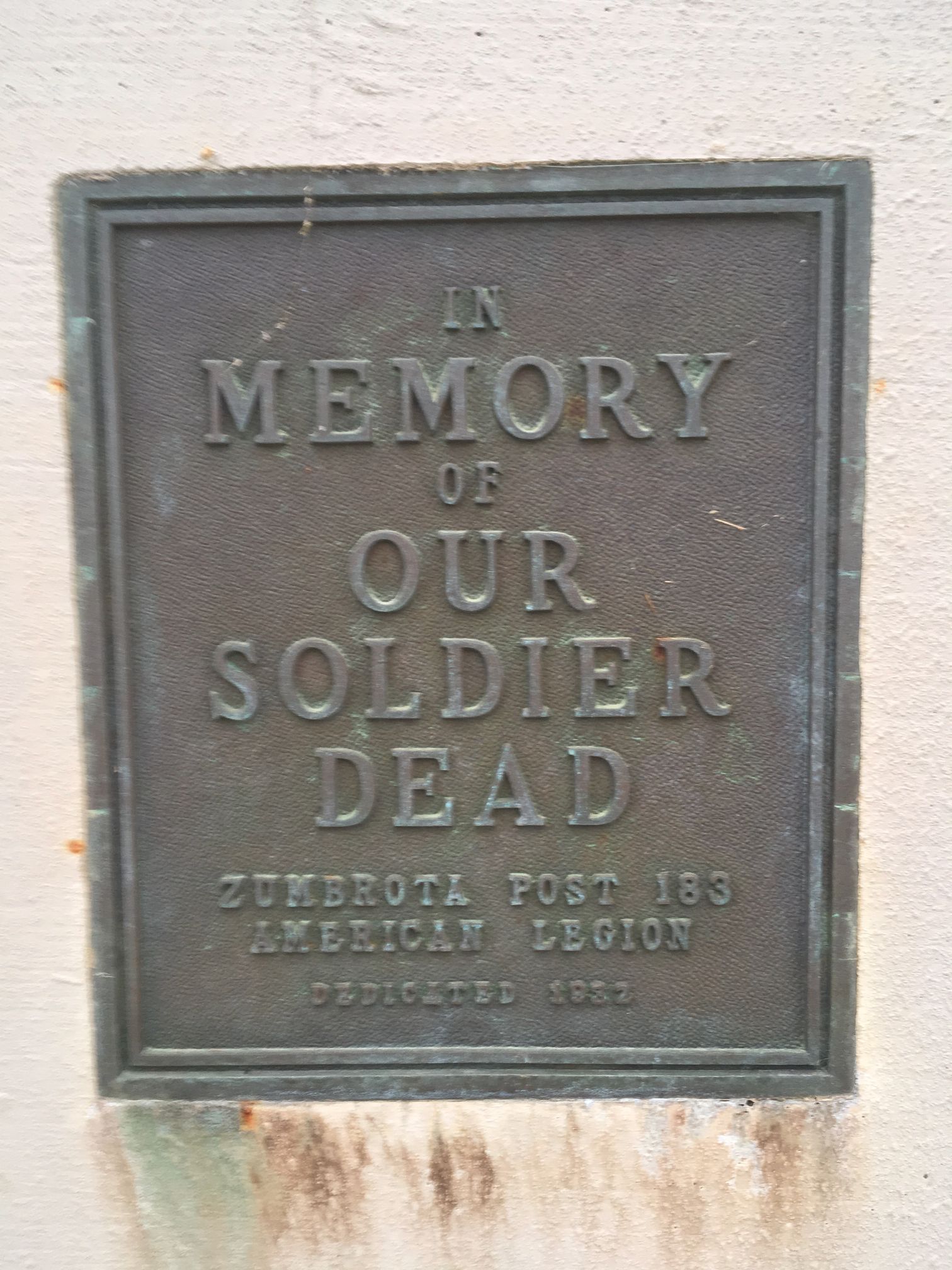
“IN MEMORY OF OUR SOLDIER DEAD - ZUMBROTA POST
183 AMERICAN LEGION - DEDICATED 1932”
Originally, the bridge was not named in memory of the
veterans who returned from The Civil War, Spanish
American War and The World War but in keeping with
the mission of the Legion, it is dedicated to the memory
of those soldier, sailors and airmen who did not come home.
Rebuilt & Rededicated in 2010
BR 25025 Over the North Branch Zumbro River
On North Main Street
Between E. 1st St. & Covered Bridge Rd.
Zumbrota, MN 55992
The bridge is held as a special site in the hearts of
Veterans Of Foreign Wars, Stary-Yerka Post 5727
at 25 E. 1st St., the Southeast corner of the bridge.
Copied from the Minnesota DOT website:
While not officially historic, Bridge 5188
turned out to have more historical
significance than people realized.
During demolition, a time capsule
was discovered within the concrete
behind the veterans plaque. The time
capsule contained many fascinating
artifacts from the time of the 1932
construction, including a page from the
local newspaper, an American Legion
roster, and a listing of local soldiers who
had fought in conflicts dating back
as far as the Civil War. All items were
given to the Zumbrota Area Historical
Society. A new time capsule, containing
similar items, was placed in the same
location in Bridge 25025. Much of the
time capsule information was in current
electronic formats, along with written
instructions to guide a future generation
on how to access the information.
- Details
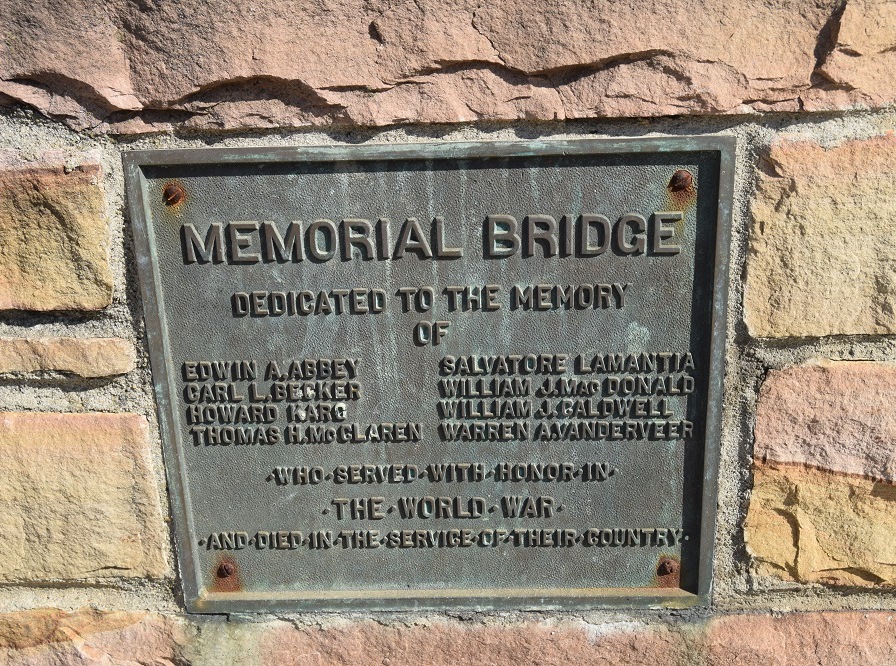
Mount Holly's WWI memorial has always been a bridge crossing the North Branch of the Rancocas Creek west of High Street in the downtown. Originally, an honor roll plaque was placed on the parapet of the existing bridge in the early 1920s.
Today's present bridge appears to date from the mid-20th century. The original plaque has been mounted east of the north parapets, commemorating Mount Holly residents who fought in WWI.
Photos courtesy of: NJ State Historic Preservation Office
- Details
- Dedication Date: November 11, 1930
- Edwin Molander
Edwin Molander designed the War Memorial Building and it was dedicated on November 11, 1930. It originally had a flat roof but a gable roof was added ca. 2000. The interior of the building still has a large room on the lower level for meetings but the kitchen is no longer functional. The upper level was divided into office space and now houses the McHenry County Extension Service.
- Details
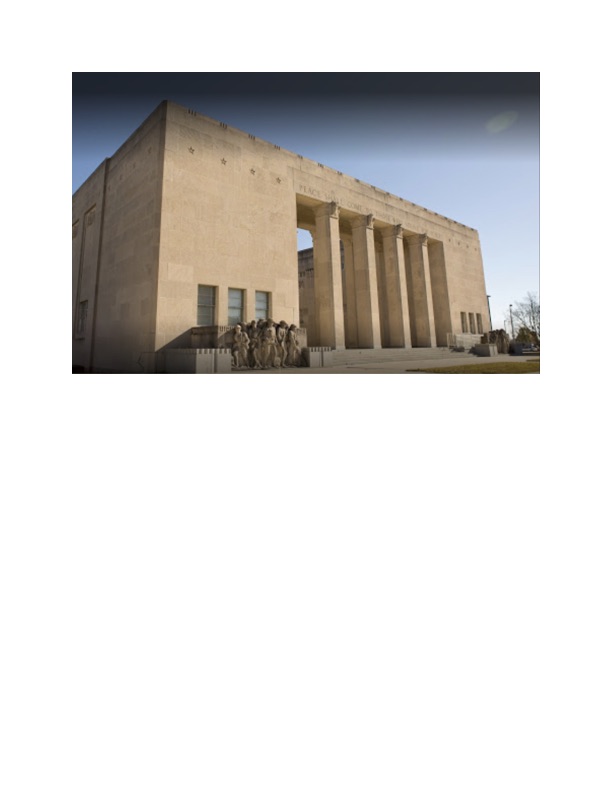
Constructed in 1939-40 and dedicated on July 8, 1940, this is a monument to the Mississippi soldiers from all wars. It is used as the state headquarters for several veterans organizations.
- Details
- Dedication Date: 1926
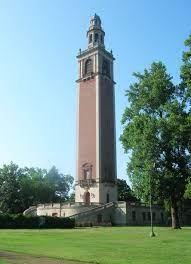
Between 1924 and 1928, the Virginia General Assembly acted to create a World War Memorial Commission and build a lasting memorial to the heroic efforts of Virginia's World War I servicemen and servicewomen.
The City donated a building site in Byrd Park. The War Memorial Carillon is 240 feet high and The Carillon instrument was built by John Taylor Bell Founders of England.
The Carillon Tower originally carried sixty-six bells, but played fifty-three notes - the top thirteen notes had duplicate bells in an unsuccessful effort to produce a louder sound. When the carillon was renovated in the early 1970's, the thirty-four bells which played the highest twenty-one notes were recast into twenty-one new bells with thicker profiles than the originals, producing a better sound. Now there are fifty-three bells for fifty-three notes.
- Details
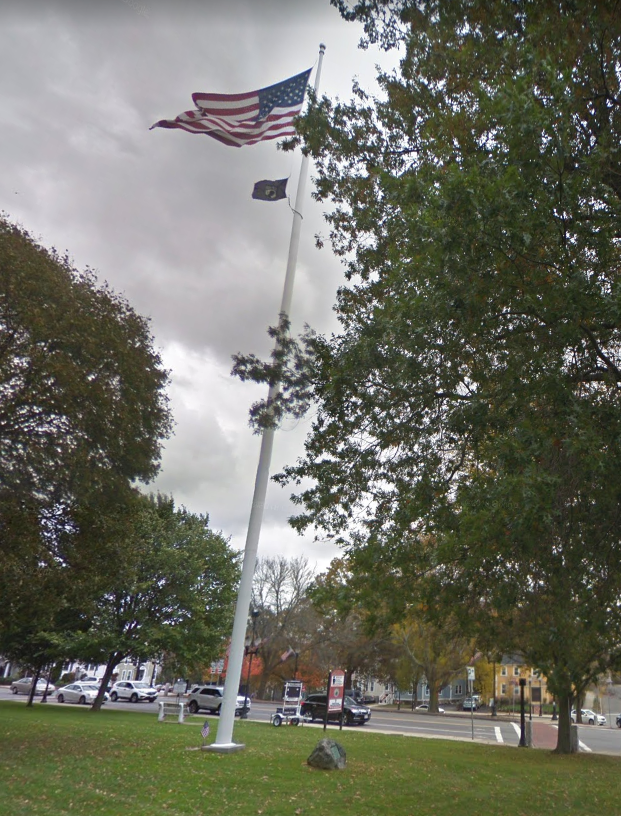
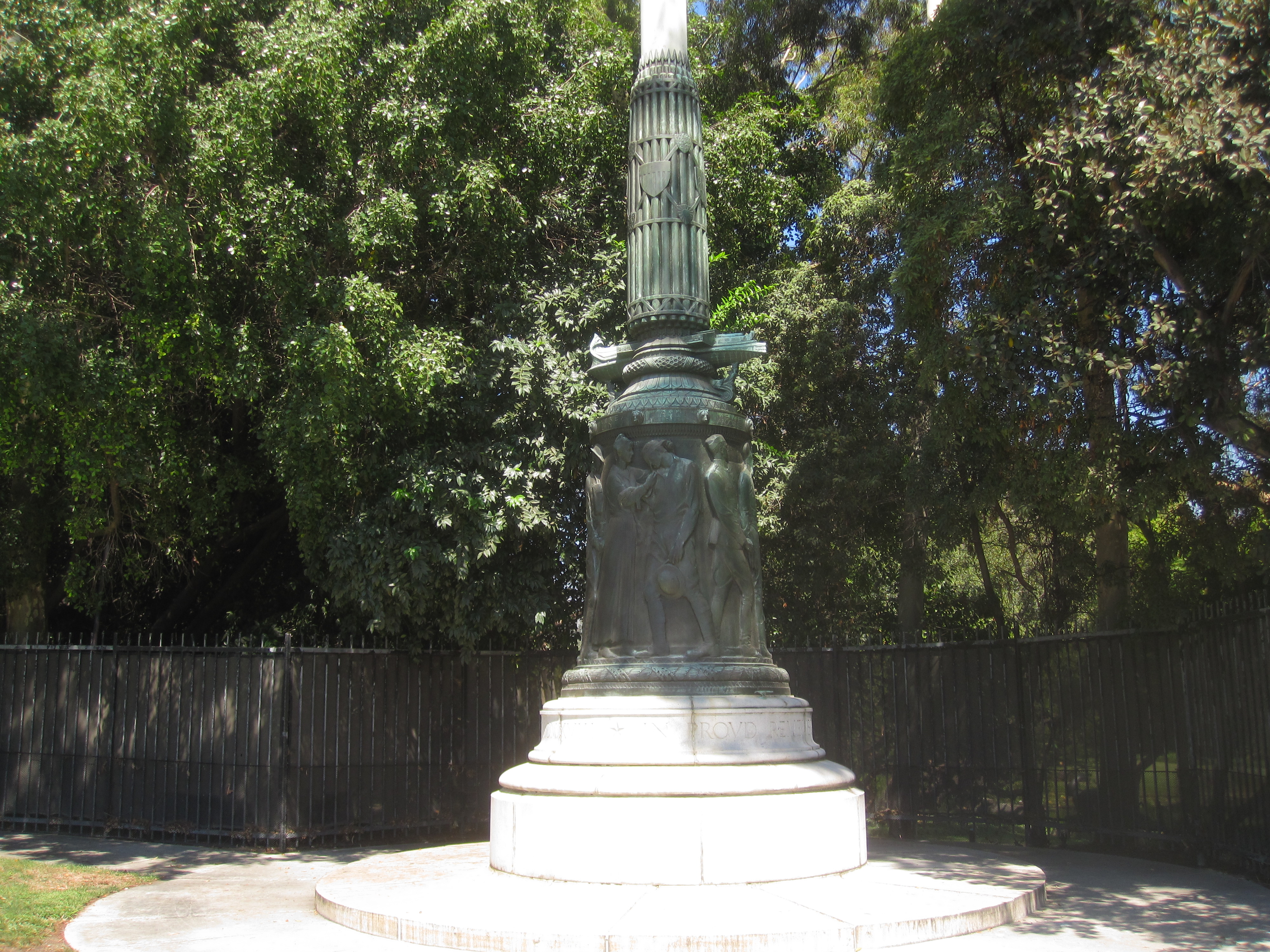
An aluminum flagpole is supported by a square granite base bearing bronze plaques naming those Irom Belchertown who participated in WWI, WWII, and the Korean War, and those who died in them. It was designed hy Alderman & MeNcish and was dedicated on September 23, 1961.
- Details
- Memorial Hunters Club Submission: Tennika Scott-Lawrence
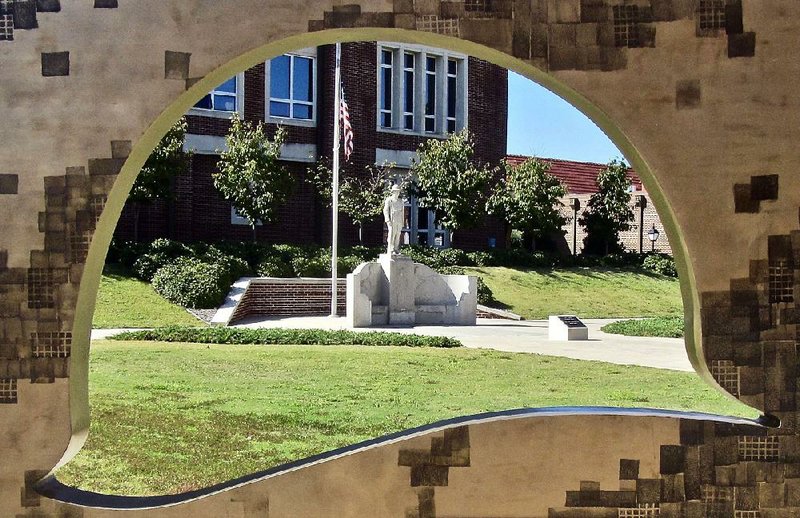
This is a stone statue of a WWI soldier standing at attention, holding a rifle and wearing a wide-brimmed hat. Beneath it is a marble and Bedford limestone base on which is a bas-relief rendition of the Statue of Liberty. It sits in a circular fountain. This memorial was first dedicated on November 21, 1920, in memory of six Hendrix College students who were killed in WWI. It was sculpted by George Currie and was originally located west of Tabor Hall, then moved to the east and then the south side of Young Stadium, and when the stadium was torn down in 1973 the statue was moved to its present location.