

























 The Great War - Hawaii Saves Food
Many Americans have memories, or have heard stories of World War II rationing, war bond sales, internment camps, restrictions on travel or volunteering with the Red Cross or similar involvement . Few remember, however, that World War I brought similar calls on patriotism and challenges to civil liberty for Hawaii residents.
When war began in summer 1914, the United States declared its neutrality, seeing the conflict as European. That position held, despite the mid-1915 death of 128 Americans in the Lusitania sinking. The campaign slogan, "He Kept Us Out of War" helped re-elect Pres. Woodrow Wilson in 1916. Neutrality was soon impossible: in early 1917 Germany began unrestrained submarine attacks on Atlantic shipping; rumors circulated of a German-Mexican anti-US alliance planned to reward Mexico with territory it had lost to the US. When the United States entered The Great War on April 6, 1917, Hawaii citizens did their part financially and socially.
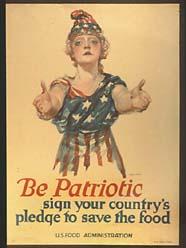
An ongoing 1917-18 effort was food conservation. Herbert Hoover, Pres. Wilson’s “Food Administrator,” exhorted Americans to stretch and increase available food. Food saved by civilians could feed frontline troops. Patriots would plant Victory Gardens, avoid waste, and not horde. Hawaii must feed more troops, stationed here or passing through. Shipping food to Hawaii took valuable cargo space. Better to use less, eat local foods, and dry or can fresh produce.
The Great War - Hawaii and the Red Cross
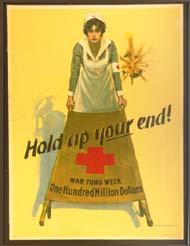 Hawaii may have been remote from the beginnings of World War I in June 1914, but residents felt compassion for all victims of the war. The Territory contributed generously to war relief efforts. While the US remained a neutral party, Hawaii, home to citizens of several combatant countries, donated to the British, Japanese, and German Red Cross groups. At a national level, in 1914 the American Red Cross responded to war in Europe by giving assistance to soldiers of all countries.
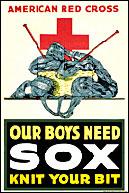 When in 1917 the US joined Britain, France, Japan, and their allies against Germany and her partners, America and Hawaii refocused. America’s Red Cross took on a quasi-military role, governed by a War Council headed by Pres. Woodrow Wilson, and serving mostly US military and civilians. The Red Cross supplied 2 of every 3 Navy nurses and 4 out of 5 Army nurses. Red Cross World War I efforts were transformed from a humanitarian to a patriotic endeavor.
The Great War - Prelude
Submarines: terror weapons of World War I. Two maritime disasters involving submarines bookend Hawaii’s pre-war experience. March 25, 1915: an accident off Pearl Harbor causes the loss of submarine USS F-4 with 21 crew. April 1, 1917: civilian vessel SS Aztec torpedoed off France with 5 Hawaii merchant mariners among those drowned.
As ‘Europe’s war’ began in 1914, Hawaii citizens focus on Kamehameha Day celebration plans, and charitable activity like the Elks 616 Lodge financial support for the Salvation Army July 4th children’s picnic. In the Atlantic, the ocean was the battlefield with both sides expecting a quick victory. Britain, the world’s oceanic super-power, threw up a total naval blockade of goods bound for Germany. Including food as contraband, Britain aimed to starve Germany into surrender. Without the surface vessels to break Britain’s blockade, Germany declared their own blockade enforced by German U-boats. At first war ships were “shot without warning", but unarmed merchantmen were allowed to put crew in lifeboats before torpedoes were loosed and the vessels sunk. Gentlemanly conduct soon ended as both sides took more drastic measures hoping to speed victory.
The Great War - Now It’s Personal
For Hawaii, the approaching war became real on April 1, 1917. Hawaii had sympathized when Belgium was invaded Germany, when French hospitals needed supplies, and when Americans were lost in torpedoed ships like the Lusitania. The community had sent relief aide. Individuals had volunteered as soldiers and ambulance drivers.
This was different. Six young Hawaii-born merchant mariners drowned in the Atlantic when their ship was torpedoed. They were civilians; they were young; they were ours. Now it was personal.
The Great War - War Relief becomes War Support
The Hawaii visitor industry markets Hawaii as a safe vacation destination in a time of conflict. 2014? Nope, 1914. Hawaii, in the neutral U. S., was marketed to upscale resort travelers who might previously have gone to the French Riviera as a safe-haven from war in Europe. The Hawaii Promotion Committee (HPC) and business community said this was “Hawaii’s Golden Opportunity.” The Ad Club and HPC, including Elks Lodge 616 charter member J. W. Jones, began raising funds for tourist advertising in August 1914.
Theodore Richards, editor of the religious monthly news magazine The Friend, also saw a golden opportunity. He chided Ad Club members for planning to benefit by others’ misfortune. Richards suggested collecting funds for both charity and business. The charitable fund would support European war relief, “peace propaganda” between Japan and America, and a reserve “in the event of a war in the Pacific.” Prophetically, Richards wrote, “the appalling nature of this calamity to the world has not come home to us yet…it is coming nearer to us all the time…”
The Great War – Prohibition becomes Patriotism
How could the Elks Lodge members’ traditional 11 o’clock toast to departed members become unpatriotic?
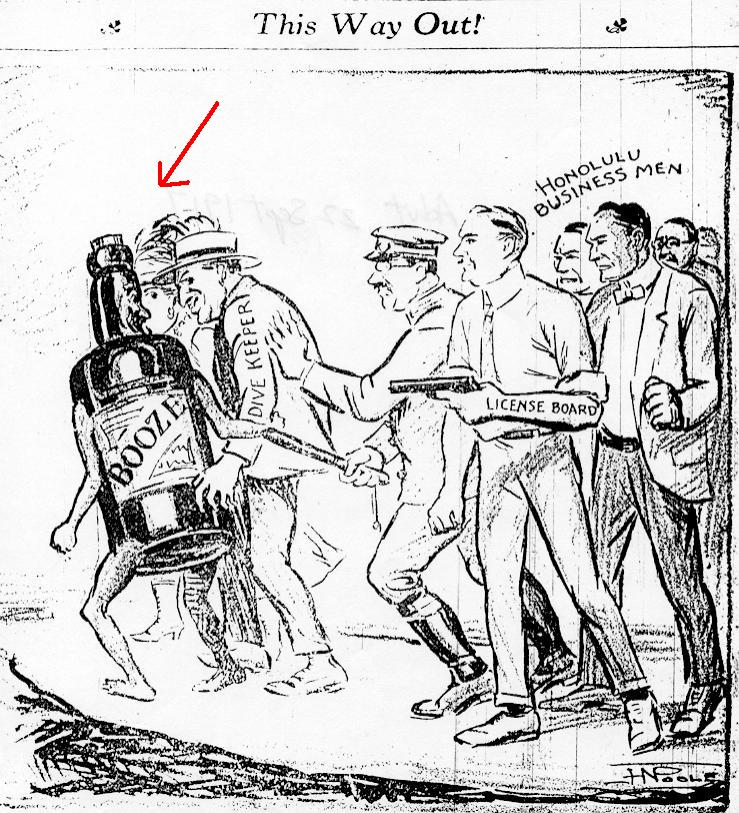 After decades of advocacy, prohibitionists found in World War I food conservation programs an unstoppable vehicle to make prohibition of alcohol patriotic. Even before America declared war, programs saving food aimed to feed starving European refugees. Making alcohol used starch (potatoes, grain, corn) that could feed troops or hungry allies. Drinking alcohol was transformed into an unpatriotic act. Elks Lodge 616 would be square in the debate, and eventually labeled unpatriotic.
Both Hawaii’s branch of the national Anti-Saloon League and Elks Lodge 616 were founded in 1901. By World War I, the Anti-Saloon League was well organized and part of the ‘establishment.’ The press supported prohibition, even if their readers didn’t. Nippu Jiji editor Yatsutaro Soga supported prohibition and nearly lost his job. Advertiser headlines (“Grain much too precious to waste in intoxicants”) reminded readers liquor was now unpatriotic. “Sake not distilled wants exemption” was neutral, but “Liquor Men squealing” showed Advertiser leanings.
The Great War – Elks Attacked as Unpatriotic
By nature and necessity, war creates, then demands an Us vs. Them atmosphere. During war we often see a person’s ethnic origin, not the individual. The drive to be patriotic during any war leads citizens to do and say uncharacteristic things. As Elks Lodge 616 discovered, this is not academic when YOU are labeled unpatriotic.
Who is the enemy?
In 1917 Japan was America’s ally. US Army National Guardsmen and Japanese Imperial Navy seamen posed together for an Advertiser photographer. The State Dept. seized a film “insulting to Japan.” It was unpatriotic to demean Japan and the patriotism of Hawaii’s Japanese community was recognized and put forward as proof of the Territory’s readiness for statehood.
German-Americans were lumped with enemy Germans being vilified as “Huns”. Unlike the World War II Japanese-American experience, nationally a few naturalized German-Americans did commit acts of treason and sabotage. In eerie previews of World War II, American women married to German nationals lost their citizenship, Honolulu bandage rolling parties feared Lutheran ladies would sneak in ground glass, cartoons, slogans and catch phrases de-humanized Germans. Posters told potential Red Cross donors that German sisters (nurses) would not treat wounded Allied prisoners. After killing a German sympathizer, a Honolulu defendant excused his actions as “righteous patriotic wrath.” He was freed on a court finding of “self-defense.” The Territorial legislature petitioned the federal government to establish an internment camp for Germans to protect the community and for the safety Germans. No camps were established however.
The Great War – Aloha to Alcohol, Aloha to War
Hawaii’s first alcohol came with British explorer Capt. Cook in 1778. Hawaii’s first moonshiner doubtlessly was lectured by the first prohibitionist soon thereafter! Hawaii was a good-time, wide-open town when the alii first tried to control liquor. The prohibition laws failed each time, but the bootleggers or blind piggers thrived. In Hawaii, distilling liquor illicitly was an equal opportunity transgression. As far back as the 1800s women and men of all races and classes were reported arrested. This was alcohol we hope no modern citizen would drink - booze made from things inedible, even in an end-of-pay-period mystery casserole. Recipes used banana peels, potato peels, husks of pineapples, kiawe beans, tobacco, and animal feed. The concoction was then ‘matured’ in casks used repeatedly without cleaning to speed fermentation.
A survey of Land Commission Award records and traveler reports shows mid-1800s Oahu with a whopping 45 public houses selling liquor! The damaging effects of the well named “rot gut” on sailors and residents of all races led to periodic unsuccessful attempts to control saloons – and to a couple of sailor riots.
Hawaii Marks the Centennial of ANZAC Day
By COL, Ret. Arthur N. Tulak
The 100 year anniversary of America’s participation in WWI is not until April 2017. But the U.S. National Centennial Committee is already coordinating and collaborating with the WWI commemoration efforts of other Nations who fought in the Great War, as part of the Allies and the Central Powers. The National WWI Centennial Commission webpage has links to the Centennial commemoration websites of four of our WWI Allies (U.K., Australia, New Zealand, Canada) and our present-day Ally Germany. (posted at http://www.worldwar1centennial.org/index.php/participate/international/international-government-commemoration-organizations.html) Hawaii’s WWI Centennial Task Force is taking the same approach and is joining in with commemoration efforts of our international partners, and reaching out to identify events we can commemorate together in 2016.
Centennial of the Hawaii Naval Militia
By COL, Ret. Arthur N. Tulak
Hawaii World War One Centennial Task Force
As the United States prepares to commemorate the Centennial of World War One, we look back a century ago to a moment in history when America was a declared neutral as war waged in the European and Pacific Theaters. Although neutral, the United States prudently improved its defense capabilities. The Territory of Hawaii, along with the rest of the nation, took steps to ensure preparedness for war, if it came. During this time, Hawaii stood up its own Naval force, the Hawaii Naval Militia, under the Command of the Territorial Adjutant General as a Territorial military force alongside the National Guard of Hawaii.