





























World War I Centennial News
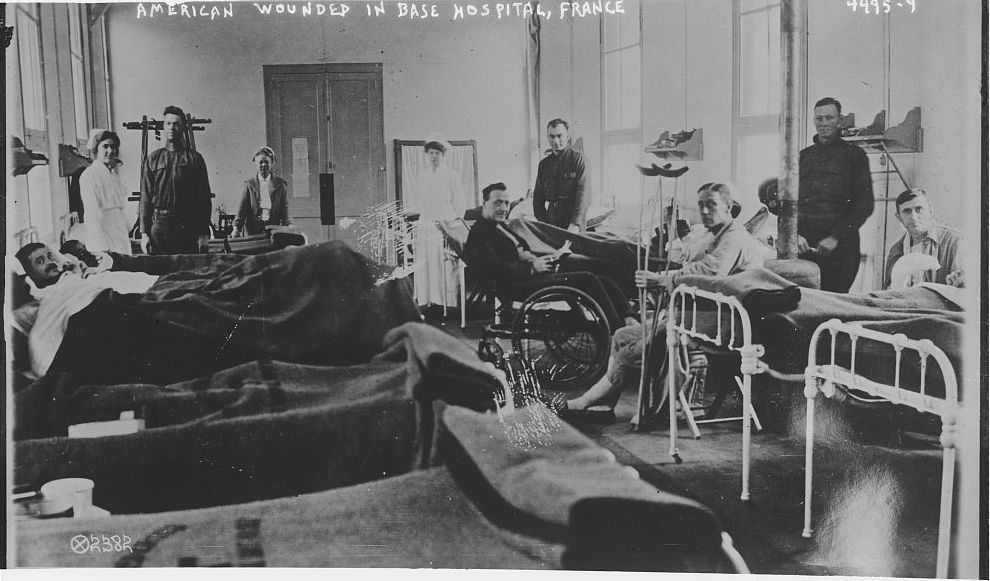 Nurses and wounded Doughboys at a base hospital in France, 1918. Library of Congress Prints and Photographs Division
Sarah Sand: A Nurse Faces War's Legacy
By Chris Isleib
Director of Public Affairs, United States World War One Centennial Commission
The following article comes to us from our friend, historian, author, and tour guide, Ed Lengel. Ed has a special interest and expertise in World War I, and he maintains a great blog site on the topic, that can be found here: http://www.edwardlengel.com
Sarah Sand was a professional. When the United States entered World War I, she was Director of Nursing at Evangelical Hospital in Bismarck, North Dakota. Like many other nurses, she immediately volunteered for service overseas. It took a year, however, for what would become her service organization, Base Hospital #60, to be organized. After extensive training at Camp Jackson, South Carolina, Sand departed the United States in September, 1918. She arrived at the front in time to help care for the massive wave of perhaps 100,000 casualties resulting from the Meuse-Argonne offensive. Her life would never be the same again.
Caring for “Our Boys”
Because of her supervisory experience, Sarah Sand was placed in charge of a surgical ward, where she, one other nurse and two corpsmen had to care for around 100 patients at any given time. Many of them were badly mangled. Because of the sheer volume of casualties, the men passed through her ward so quickly–and some of them died there–that she barely got to know them. Still, her heart filled with compassion for the wounded doughboys who, she observed, endured their suffering with stoicism, dignity and often good cheer.
At the time of the Armistice on November 11, 1918, Sand was in charge of a pneumonia ward, supervising care for many gravely ill patients. There was little time to rejoice at war’s end–everyone was either too sick, or too busy. At Christmas, though, Sand and her fellow nurses did everything they could to bring some joy and hope to the men they had come to call “our boys.” They hung festive decorations, prepared a feast, and gave each patient a basket filled with treats like fruit and candy.
 Group portrait of African American officers standing in front of a building at Ft Des Moines, Iowa in 1917.
Colonel Charles Young was not Alone: The systematic destruction of the African American Officer Corps in World War I
By Paul LaRue
via the United States World War One Centennial Commission web site
The story of Colonel Charles Young's service, sacrifice, and disappointment at not leading African American Troops in France during World War I has been well documented. Unfortunately, his story was not unique; large numbers of African American World War I officers were systematically denied or pushed out of leadership positions. World War I was fought during the backdrop of Jim Crow and in a blatantly racist America. I suppose it should come as no surprise that African American World War I officers were treated extremely poorly. The level of institutional racism encountered by African American officers is shocking.
African American soldiers served both in the 92nd and 93rd Divisions. The 93rd was an incomplete division comprised of four infantry regiments. The 93rd Division was given over to French Command. The 92nd Division was a complete division which stayed under American command. The 370th Infantry Regiment was formed around an Illinois National Guard unit, and was part of the 93rd Division. The 370th is unique amongst African American regiments for being able to keep its African American command structure largely intact. Unfortunately, this was an exception for African American World War I regiments. Ohioan Lt. Charles Jackson served as an officer of a machine gun company in the 370th, and was decorated for bravery in combat.
It is hard to imagine the impact the destruction of the African American Officer Corps had on African American World War I soldiers and their service. One of the best descriptions of service by an African American World War I officer was written by Charles H. Houston for the Pittsburgh Courier in 1940. Houston, a prominent attorney and lead counsel for the NAACP, had served as a First Lieutenant in 368th Infantry, 92nd Division. He wrote a thirteen-installment series on being an African American officer in World War I. Houston masterfully chronicles the racism and bias faced by himself and his fellow officers. The insidious nature of racism is reflected in things both small and large. Lt. Houston reflected on the disparity Black Officers faced in camp "...The Negro Troops were not as well supplied with Coal as the White Troops..." Worse still was the attitude reflected by the senior command.
At Fort Des Moines, 1200 African American officer candidates went to train for service in World War I. Lt. Colonel Charles Ballou was the commander at Fort Des Moines, and later would serve as commander of the 92nd Division. Houston wrote: "... Colonel Ballou told the regiment that the camp was an experiment and the future of Negro Officers in the American Army depended on the record we made at Fort Des Moines; that he expected us to vindicate our friends and justify the decision to make the experiment of training Negroes as Officers by staying out of anyplace where our presence right or wrong might cause friction..." Apparently Colonel Ballou was not aware Colonel Charles Young, the third African American to graduate from West Point, had led the men of the 9th and 10th Cavalry in combat for decades, and was a far more logical choice to command both Fort Des Moines and the 92nd Division!
Read the entire article on the Ohio World War I Centennial page here.
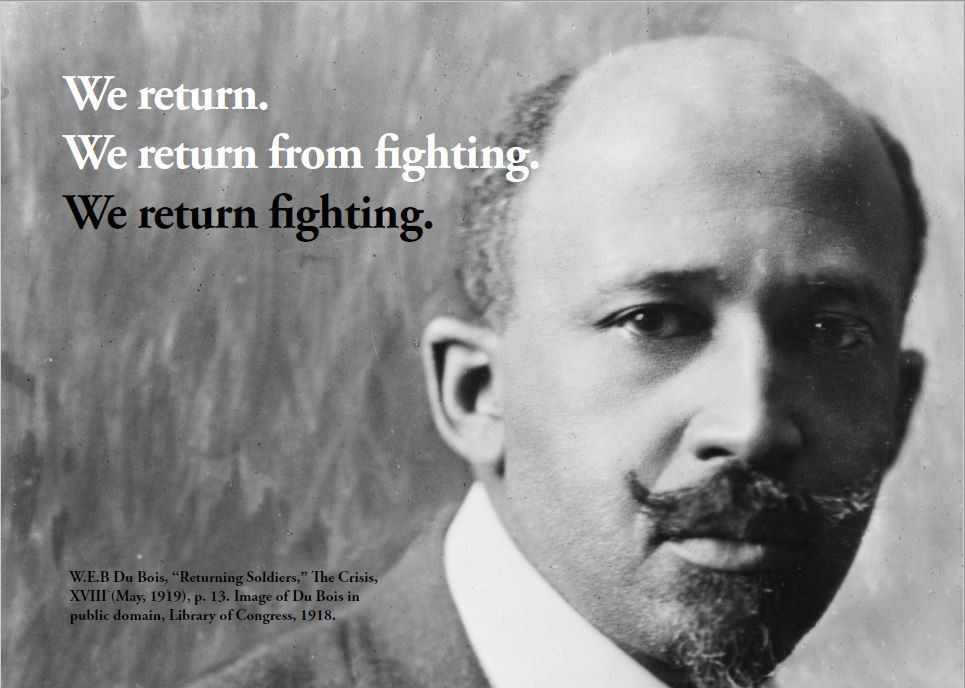 For its 17th annual Black History Month Lecture, VCU Libraries is featuring a statement from an essay by W. E. B. Du Bois about black veterans returning from World War I. He wrote "We return. We return from fighting. We return fighting." The program will feature a conversation-style panel of experts who will offer insight into the experiences of African-American veterans.
Discussion on African-American WWI veterans to highlight Black History Month events at VCU
By Brian McNeill
via the Virginia Commonwealth University web site
Throughout February, Virginia Commonwealth University will celebrate Black History Month with a series of events, including a keynote address on political engagement among African-Americans and a panel discussion exploring how the United States has historically treated African-American veterans.
On Feb. 20, VCU Libraries will host its 17th annual Black History Month Lecture with a thought-provoking discussion about how U.S. society has treated African-American veterans after their service and how that affects them and their communities.
The event, which will be held from 7-9 p.m. at James Branch Cabell Library, Lecture Hall (Room 303), will feature:
- Adriane Lentz-Smith, Ph.D, associate professor of African and African-American studies and women’s studies at Duke University and author of the 2009 book “Freedom Struggles: African-Americans and World War I.” Lentz-Smith will address the challenges faced by African-Americans after service during WWI.
- Kiara Boone, deputy director of community education with the Equal Justice Institute, who will discuss EJI’s landmark 2016 report, “Lynching in America: Targeting Black Veterans.”
- Jeffrey Blount (moderator), an Emmy Award-winning television director whose 34-year career at NBC News included a decade of directing such shows as “Meet the Press,” “Today” “The Chris Matthews Show” and others. He is a commentator on issues of race and social justice and a novelist whose latest book, “The Emancipation of Evan Walls,” is forthcoming this spring from Koehler Books.
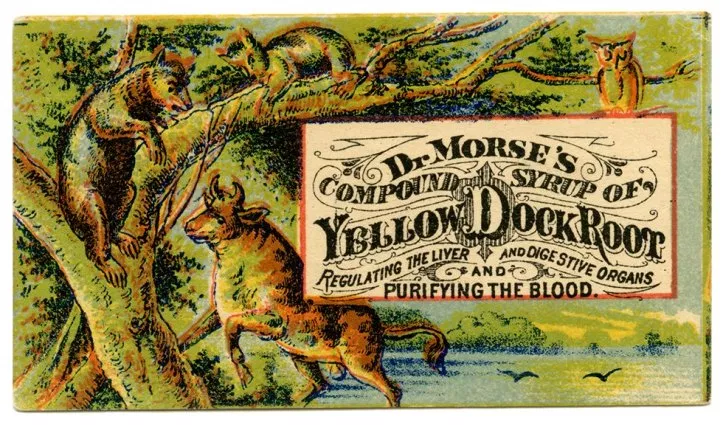
Quacks, Alternative Medicine, and the U.S. Army in the First World War
By Evan P. Sullivan
via the Nursing Clio web site
During the First World War, the Surgeon General received numerous pitches for miraculous cures for sick and wounded American soldiers. Ranging from anti-sea sickness remedies to complex elixirs for treating diseases like tuberculosis and venereal disease, America’s “quack” and non-traditional medical practitioners sought a seat at the table. Serving as a barrier between established medical practices and non-professionally tested “cures,” the Army Medical Department and the Surgeon General worked to shield vulnerable ill soldiers from the potential dangers of the medically unknown.
Yet, at the same time, the military debated allowing the use of osteopaths in the ranks and used alternative medical techniques like hydrotherapy and essential oils for wound rehabilitation. This is part of the U.S. Army’s turbulent First World War relationship with alternative medicine.
American institutional medicine was still crystallizing at the turn of the twentieth century. Medical schools in the United States during the mid-to-late nineteenth century lagged behind those in Europe, largely focusing on lecture-learning with little hands on experience. It wasn’t until the first couple decades of the twentieth century that substantial changes took place in the practical education of American doctors, like adopting more rigorous standards, scientific research, hands-on experience, and university-hospital affiliations.
Americans’ confidence in modern medicine didn’t always keep pace with the developments in medical proficiency. Alternative healing methods like herbalism, hydrotherapy, homeopathy, and massage therapy, were a major feature of turn-of-the-century American life.
Read more: Quacks, Alternative Medicine, and the U.S. Army in the First World War
ABMC Releases Digital Version of WWI Battlefield Companion
via the American Battle Monuments Commission web site
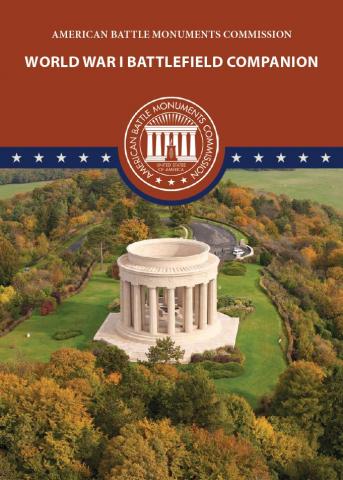 American Battle Monuments Commission (ABMC) has released its World War I Battlefield Companion in digital format. Free to download, this book serves as a guide for visitors to Europe who want to learn more about American involvement in World War I, and see the geographic locations where major events occurred. From ABMC cemeteries and memorials, to private monuments large and small, more than 50 different stops are highlighted.
Seventeen sections in the book take the reader from the onset of hostilities in 1914, through the American declaration of war in 1917 and the major American offensives, to the Armistice. Sections also focus on operations in Italy and Russia, the role of women in the war as well as the courage and sacrifice of African-American soldiers, and much more. This book, grounded in history but seen through a 21st century lens, includes colorful driving maps with directions that point readers to precise World War I locations.
Modern-day photos coupled with historic Signal Corps photography help bring these geographic sites to life. And the text places these locations into historic context, and explains what happened “here.” Readers, whether in-person or online, can gain a better understanding of European World War I sites that are an integral part of American history.
Born out of the Great War, ABMC’s history is intricately tied to America’s role in this conflict. In fact, this is not the first time ABMC has produced a World War I guidebook. ABMC’s founding Chairman, General of the Armies John J. Pershing, guided the agency in drafting the history of American forces in World War I, making it accessible to the American public.
American Armies and Battlefields in Europe, published in 1927 with a second edition in 1938, serves as both a comprehensive history and as a travel guide, directing visitors to historic sites, battlefields, monuments, and cemeteries. This 500+ page book, now considered a definitive resource for historians and anyone exploring the World War I commemorative landscape, was a pivotal piece of ABMC history.
Copies of the World War I Battlefield Companion are available for purchase from the Government Printing Office.
From the World War I Centennial News Podcast
100 Years in the Making: Sabin Howard
 On January 25th's edition of the WWI Centennial News Podcast, Episode 107, host Theo Mayer spoke with memorial sculptor Sabin Howard. Mr. Howard caught us up on the technical progress of the sculpture itself and reflected on the process of 21st-century, technology-assisted sculpting. The following is a transcript of the interview, edited for clarity:
Theo Mayer: For this week's segment of A 100 Years in the Making: the Insider Story about the Creation of the National World War One Memorial in Washington, DC, I had a chance to chat with the memorial sculptor Sabin Howard as he was getting ready to jump on a plane for the UK to launch the next step, scaling up his one-sixth size Maquette, as he heads for one of the only foundries in the world that will be able to cast the full size sculpture. Since developing the Maquette, you've been through some other steps in the development. Could you outline those?
Sabin Howard: Yeah. I developed the Maquette in New Zealand last year, and in February the Maquette got mailed to the Commission of Fine Arts. And we went to a meeting and we did not pass, and so then we continued to make presentations to incorporate the sculpture show would fit better into the park. And from that we finally reached an agreement in July with the Commission of Fine Arts, that we needed to now make a second Maquette that would fit onto a pedestal. My client, The Centennial Commission had some ideas about historical correctness in the uniforms and very, very few edits. But now we are going to go back with the same composition, but just I need to do some historical modifications that are minor.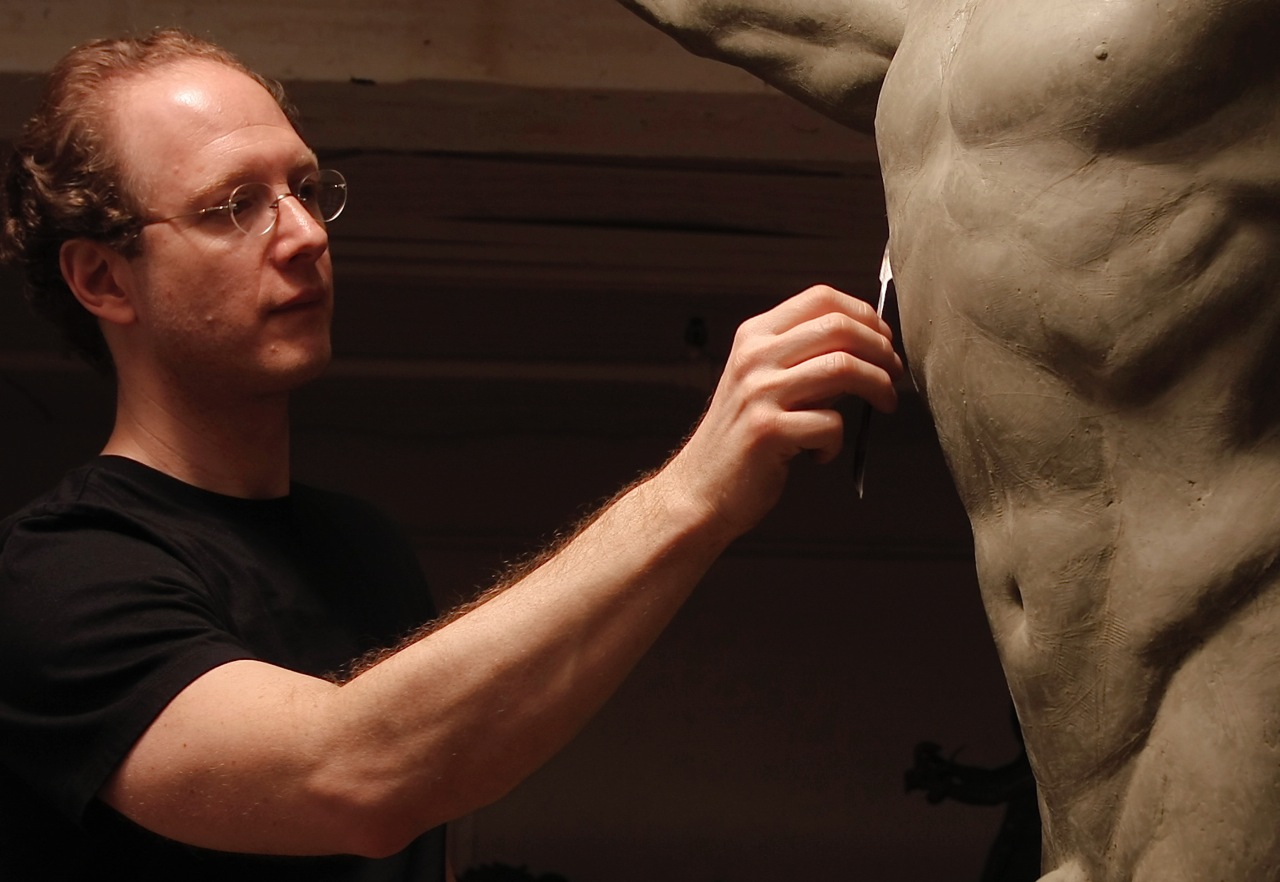 Sabin Howard
Theo Mayer: There's another big thing that happened- you guys started searching for a place that could possibly cast this thing. How'd that go?
Sabin Howard: That was a process and epic unto itself, because I spent four months traveling the United States looking at foundries, looking at enlargement systems, looking at tech companies, because the issue that we have at hand is, this is a really large project with an incredibly small space of time to produce it. And so, technology comes into solving that problem. And most of the foundries that I found in the United States were smaller by nature, maybe 20 employees, and the last month that I was doing my search for where do we get this done, and what's the best process to use, I was looking on Instagram and I came upon a friend's sculpture of a bear that is in Rhode Island. And Nick Bibby, he's a British sculptor, I looked at this bear that he had done, and I looked at the foundry, and I was like, "That's where I need to go look." So this is a 200 employee foundry. It's one of the largest ones in Europe, and what makes it even funnier, Damian Hurst is one of their major clients who has invested a tremendous amount of money for them to cast his own sculptures, which he did this big show in Venice at the Dulgana, called the Wreck of the Unbelievable. Those were these massive pieces that he cast there, and many, many of them too, and then he also did a 65 foot high resin sculpture that was installed into a pallazo in Venice inside the building. And so, there were all these other technical issues of engineering, and weight, and transportation that require an infrastructure, and a company that has really strong logistics and brilliant technicians, and I'm like, "Alright, Eureka."
From the World War I Centennial News Podcast
WWI Education This Week: Cathy Gorn
On January 25th's edition of the WWI Centennial News Podcast, Episode 107, National History Day Executive Director Dr. Cathy Gorn spoke with host Theo Mayer about her organization, how it engages students on the subject of WWI, and the importance of history education generally. The following is a transcript of the interview, edited for clarity:
Theo Mayer: For our segment on World War I education this week, we're joined by Dr. Cathy Gorn, the Executive Director of National History Day, and an Adjunct Professor of History at the University of Maryland at College Park. Cathy, for our listeners, would you give us a quick background on National History Day?
Cathy Gorn: Sure. National History Day is an academic program for students in sixth through twelfth grade, so that's middle and high school. And the program invites students to choose a topic in history, and it can be anything as long as the student is interested in it. And then it asks the student to go out and conduct real research like historians would. Conducting research into primary as well as secondary information and drawing conclusions about why a particular topic is important, what was its significance in history, why should we be aware of it. Students can enter a competition by creating a project, and that can be a paper, or they can do a table top exhibit, they can do a 10 minute documentary, or a 10 minute dramatic performance, or a website. So, it gives them a creative outlook as well as the intellectual heart of the program. And winners move on the first history day contest, which would be sort of a regional competition, maybe a couple of counties in your area, and then winners go on to states. And then, winners come to our big finals in College Park in June each year. So, it's a very rigorous program, it takes a lot on the part of students and teachers. Teachers guide the kids in this work, and it's really several months of work for them, but the pay off is really incredible.
Theo Mayer: Well, the program has a stellar reputation for not only what it inspires, but for what the students do. Let me ask you something: last year National History Day became part of the World War One education consortium. How did that happen, what does it mean, and what have you been doing since then?
Revamping Pershing Park: Giving WWI Remembrance Its Due
via the Federal City Council (Washington, DC) web site
World War I deserves a prominent place in American history. More Americans died in WWI than in the Korean and Vietnam wars combined. The War’s aftermath redrew the map of Europe and the Middle East and set the intellectual foundation for a liberal international order.
 Yet WWI remembrance in the nation’s capital is an afterthought. The World War One Centennial Commission intends to change that. The Commission’s Edwin Fountain and Theodore Sedgwick led a discussion with FC2 Trustees about plans to revamp Pershing Park, dedicated to America’s WWI military leader General John Pershing.
The site, which is just a block from the White House, has fallen into disrepair. Built in the 1930s, it was later repurposed in the early 1980s with a pond and fountain that converted into an ice rink in the winter. Ten years ago, the water system stopped working. Instead of a stately fountain, there is now a barren and unused, concrete eyesore.
The new Pershing Park will be a destination and a proud telling of the American WWI story. The water element will be renovated and modernized. The centerpiece will be a bronze-relief dramatic telling of a soldier’s journey—from home, to the battlefield and back.
Read more: Revamping Pershing Park: Giving WWI Remembrance Its Due
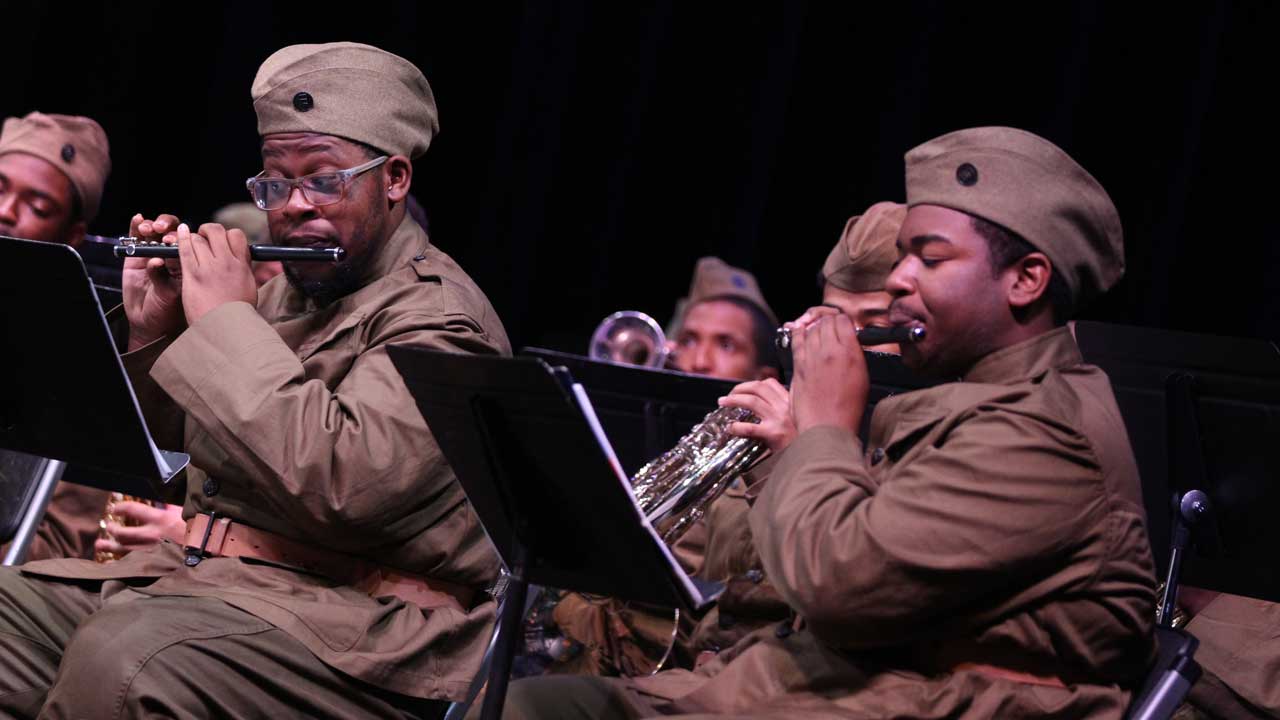 The 369th experience performing at the Kennedy Center in November 2018.
New PBS Arts Series to feature the 369th Experience
By Chris Isleib
Director of Public Affairs, United States World War One Centennial Commission
The Centennial Commission got a wonderful communication this week -- an email from Judy Meschel, Producer for Local Projects at WETA Television, the Public Broadcasting for Greater Washington, D.C. Judy was letting us know that she had just finished producing a segment for WETA on James Reese Europe, the legendary WWI Harlem Hellfighter Jazz Band Leader. The new WETA Arts segment prominently features Europe's service with the 369th during the war. They show a recent performance at the Kennedy Center by our Commission-sponsored 369th Experience, they have interviews with participating musicians Christian and Jaden Adkins about their experience performing in the special 369th tribute band, they feature interviews with the Europe's descendants, along with Noble Sissle, Jason Moran, and others. The WETA Arts segment is scheduled to start airing on Friday, February 1 at 8:30pm on WETA TV 26 -- and the segment will be available online starting Saturday February 2 at https://watch.weta.org/show/weta-arts/. We were thrilled by the news, and begged Judy to give us details. Judy generously agreed to answer a few questions about the show for our newsletter.
Tell us about this upcoming program -- Sounds like an amazing project. What will we see/hear?
 Judy MeschelAs a public broadcasting station in Washington, D.C., WETA is committed to showcasing the important artistic work people are producing in the nation’s capital.
The first segment of the February episode of WETA Arts is devoted to the powerful story of James Reese Europe and the Harlem Hellfighters. We follow students from The 369th Experience into the Kennedy Center, where they perform on Millennium Stage.
Descendants of the Harlem Hellfighters explain the historical importance of James Reese Europe and the band he created, including extensive interviews with James Reese Europe III and Noble Sissle Jr..
We hear the Artistic Director for Jazz at the Kennedy Center, Jason Moran, discuss the musical importance of James Reese Europe, as well as excerpts from his new composition James Reese Europe and The Harlem Hellfighters: The Absence of Ruin, which had its US premiere at the Kennedy Center.
Also featured in the piece are interviews with H. B. Barnum and 369th Experience band members Jaden and Christian Adkins that uncover more about their experience. It’s all illustrated with extensive and thorough archival material throughout.
As a producer who specializes in archival documentaries, in addition to being honored to try to do justice to this story, I find it very satisfying to be able to bring so much archival material to public attention.
How did the Harlem Hellfighters music come to be part of this great arts series? What was your research process? What was your role overall in the effort?
The 369th Experience performed at Millennium Stage on November 12, 2018, and Jason Moran’s band performed at the Eisenhower Theater on December 8, 2018. Those shows focused us on James Reese Europe and the Hellfighters.
The WETA Arts segment includes those performances, and also add an archival recording of Castle Walk, recorded by the Metropolitan Military Band in 1916, available through the Library of Congress. The performances at the Kennedy Center by the 369th Experience and by Jason Moran were recorded by Kennedy Center staff, and footage related to these performances was generously provided by the Kennedy Center in support of WETA Arts.
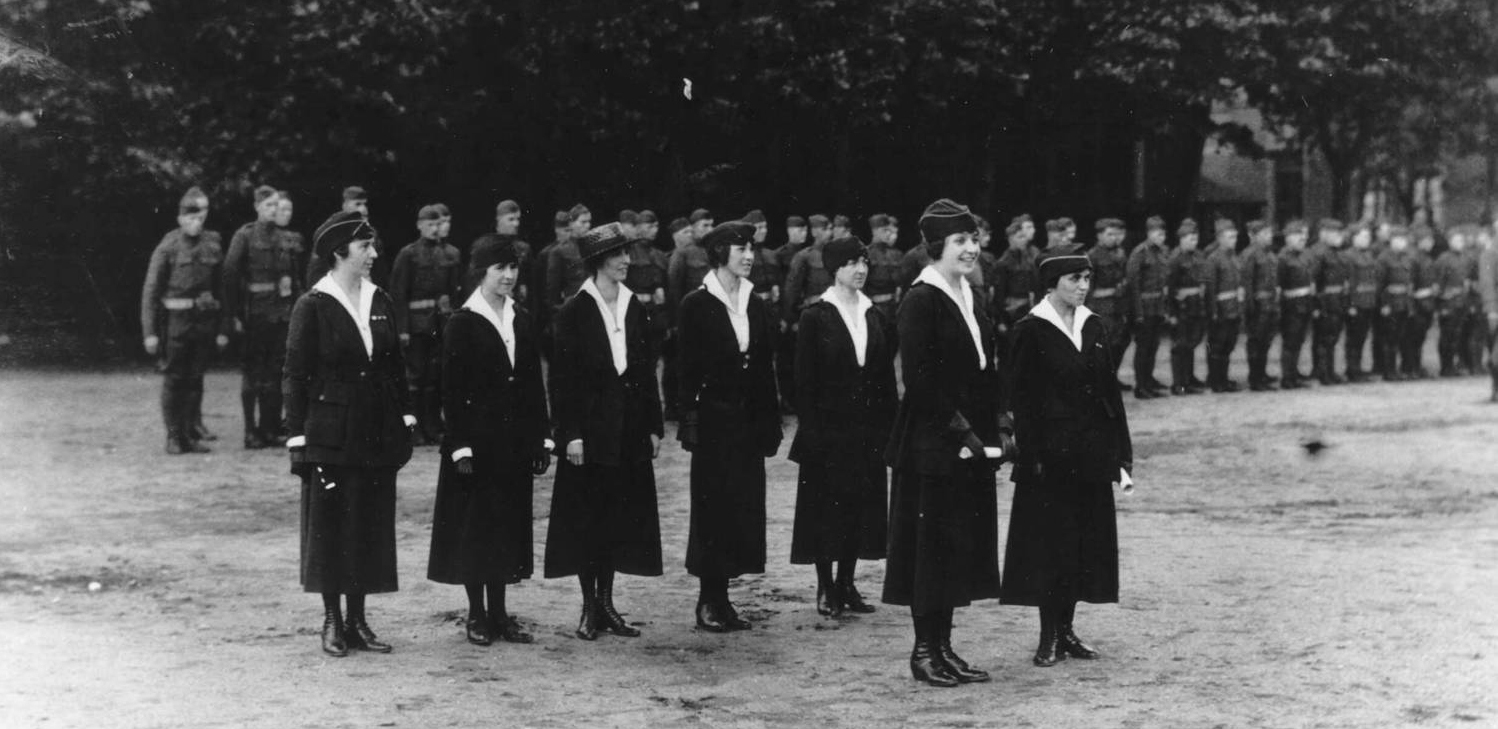 US Army Signal Corps Female Telephone operators, known as "Hello Girls".
Tester, Blackburn Introduce Bipartisan Bill to Honor "Hello Girls"
Special to the United States World War One Centennial Commission web site
(U.S. Senate) – U.S. Senators Jon Tester (D-Mont.) and Marsha Blackburn (R-Tenn.) are honoring the groundbreaking service of the women who connected American and French forces on the front lines of World War I.
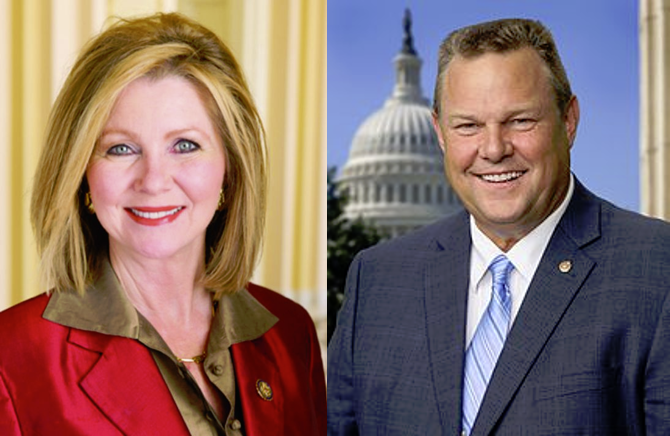 Senators Marsha Blackburn and John TesterThe Senators introduced the bipartisan Hello Girls Congressional Gold Medal Act to award the women of the U.S. Army Signal Corps, dubbed the Hello Girls, with the Congressional Gold Medal for their service and subsequent 60 year fight to be recognized as veterans.
“The Hello Girls were faster and more accurate than any enlisted man at connecting troops on the battlefield with military leaders,” said Tester, Ranking Member of the Senate Veterans’ Affairs Committee. “Their bravery and composure helped our allied forces win the war, but they were still denied the veteran status and benefits they deserve. They blazed a new path for women on the front lines in France, and the Congressional Gold Medal will honor their service as well as their fight for recognition.”
“This bill gives us the opportunity to honor the Hello Girls in our history books,” said Blackburn. “These women played a key role in the communications efforts that enabled the American and French forces to enter into battle with the intelligence needed to succeed. The Hello Girls Congressional Gold Medal Act ensures that their critical role in World War I will not go unnoticed by those who study American history in the years to come.”
The Hello Girls were recruited after male infantrymen struggled to connect calls quickly or communicate with their French counterparts. The bilingual Hello Girls were deployed to France to serve at military headquarters and command outposts in the field alongside the American Expeditionary Forces. Despite their outstanding service and the military oath they took, they were denied veteran status and benefits when they returned home.
Read more: Tester, Blackburn Introduce Bipartisan Bill to Honor ‘Hello Girls’
 Members of the 369th Infantry, formerly the 15th New York Guard Regiment, arrive in New York City in 1919. The regiment has been known as the Famous 369th, the Harlem Hellfighters and the Black Rattlers. (War Department photo)
American Legion supports review of minorities' WWI valor medals
By Matt Grills
via the American Legion Magazine, February 2019 issue
With American Legion support, a group of volunteers is proposing the first-ever review of World War I veterans who may have been denied a Medal of Honor due to racial or ethnic discrimination.
Established by the U.S. World War One Centennial Commission, the Valor Medals Review Task Force is starting with the records of approximately 70 African-American soldiers -- in particular, those worthy of the nation's highest military award who may have been downgraded to a Distinguished Service Cross or received a French Croix de Guerre with palm.
"We're not going in with any number in mind," says Jeffrey Sammons, professor of history at New York University and co-author of "Harlem's Rattlers and the Great War: The Undaunted 369th Regiment and the African American Quest for Equality."
"We want this to be as unbiased and apolitical as possible, and to let the evidence lead us where it may."
The U.S. military conducted reviews of valor awards for minority veterans of World War II, the Korean War, the Vietnam War and all subsequent conflicts, but not those who served in World War I. The posthumous awarding of Medals of Honor to Cpl. Freddie Stowers in 1991 and Sgt. Henry Johnson in 2015 set a precedent for challenging the postwar review conducted in 1919, which resulted in zero Medal of Honor awards for black veterans and few for other minorities.
At its 100th National Convention in Minneapolis in August, The American Legion passed Resolution No. 109, which calls for legislation lifting statutes of limitation and other obstacles that may impede proper review of minority veterans' World War I records that support consideration for a Medal of Honor.
The initiative can be traced to a lecture given by Sammons at Park University in Missouri, home of the George S. Robb Centre for the Study of the Great War. Two years ago, Timothy Westcott, the center's director, invited Sammons to speak on Robb, a white officer with the 369th Regiment and 1912 Park University alum who received a Medal of Honor for leading an assault near Sechault, France, while severely wounded.
Read more: American Legion supports review of minorities' World War I valor awards
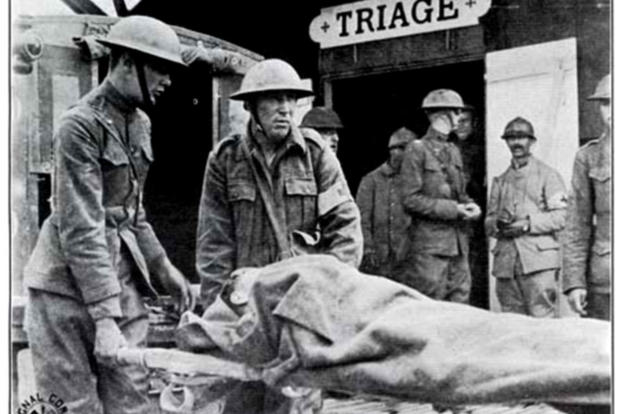 July 17, 1918: A wounded soldier is carried to the 42nd Infantry "Rainbow" Division's triage station near Suippes, France during the Second Battle of the Marne. Army 2nd Lt. Donald A. McClure fought in that battle, but would not be wounded until the war's final day -- November 11, 1918. (US Army photo)
PA Family Gets Back Grandfather’s WWI Keepsake Thanks To Purple Hearts Reunited
By Alexandria Hoff
via the CBS 3 Eyewitness News (Philadelphia) web site
PHILADELPHIA (CBS) — The family of a man injured in World War I gets a welcome surprise.
In a letter home to Pennsylvania, 2nd Lt. Donald A. McClure described the severe leg injury he had suffered. The letter came from France. The year was 1918. McClure was 22.
“What must have been going through his mind, the fear and just what’s going to happen to me,” said McClure’s grandson, Marc, reading the letter for the first time.
He knew of his grandfather’s experience in WWI but didn’t know that there was a piece missing.
“People often ask is there a market for military metals? We like to refer to it as circumstance of life,” said Jessica Jaggars, with Purple Hearts Reunited.
Three weeks ago, the nonprofit Purple Hearts Reunited reached out to this West Chester family, letting them know that they found something that belonged to them.
The organization seeks out and buys them from sellers on eBay as part of a nationwide mission to return misplaced medals of valor.
“I had a lot of questions and I was like wow this is really cool,” said Marc.
Read more: PA Family Gets Back Grandfather’s WWI Keepsake Thanks To Purple Hearts Reunited
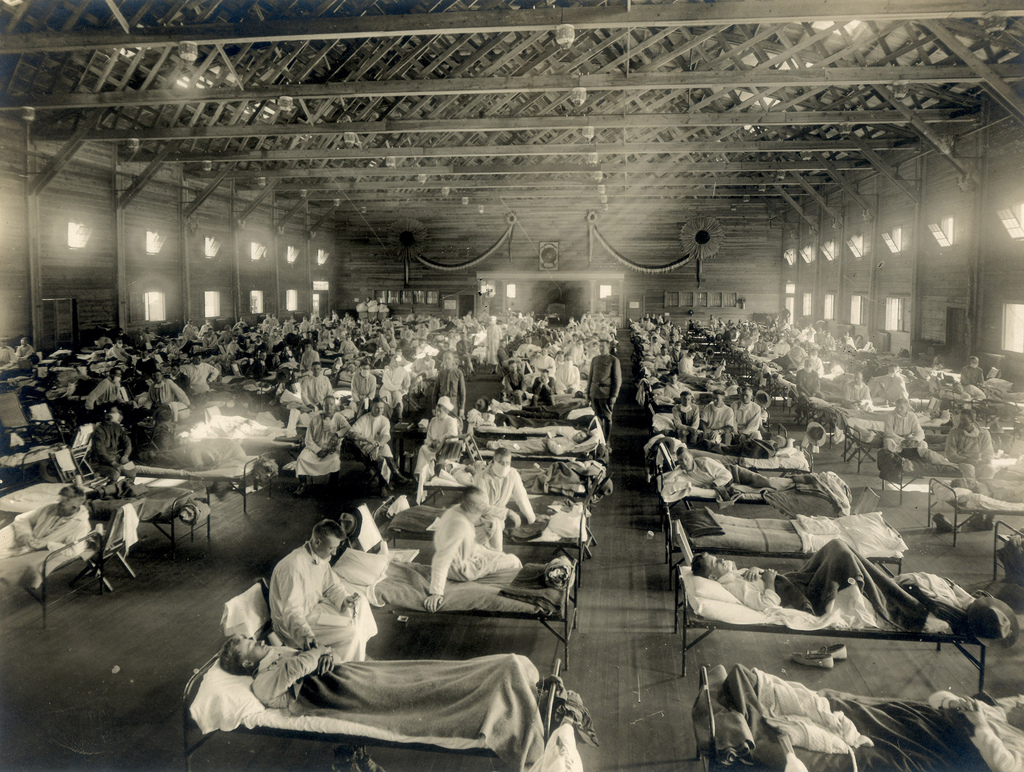 Soldiers from Fort Riley, Kansas, ill with Spanish influenza at a hospital ward at Camp Funston.
How the flu wiped out 675,000 Americans after World War I
By Commissioner Libby H. O'Connell, Ph.D.
United States World War One Centennial Commission, via the New York Post newspaper web site
They survived the trenches of the Western front, machine-gun fire in No Man’s Land and horrifying chemical-gas attacks — only to come home and die of the flu.
One hundred years ago this winter, the troopships began returning to America, carrying tens of thousands of Doughboys home from the Great War. With terrible irony, it would be microbes that would soon bury many of these American heroes.
Public-health authorities were powerless in the face of an unrelenting foe that would kill 50 million worldwide and infect half a billion more before the flu burned itself out.
While the nation paused last year to offer a centennial remembrance of the sacrifices demanded by World War I, there remains little appreciation for the influenza pandemic that followed it, adding viral carnage to the human brutality of the conflict.
Today, we understand much better how the flu worked, why it took so many young, healthy people and how to prevent its spread. But all this was a mystery to frantic physicians at the time, who were overwhelmed by the enormity of it all.
Read more: How the flu wiped out 675,000 Americans after World War I