































World War I Centennial News
A Chambersburg soldier and his family write letters through World War I
By M.L. "Mike" Marotte
via the Chambersburg, PA PublicOpinion web site
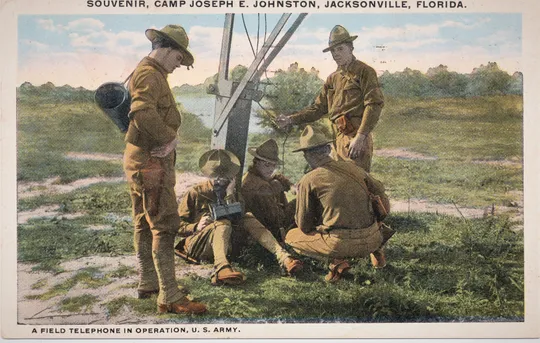 Postcard sent home by Lawrence Funk showing American soldiers training with a field telephone at Camp Johnston in 1918 at Jacksonville,Florida (Photo: Mike Marotte)The one hundredth anniversary marking the end of World War One was observed on November 11th, 2018. My Great Uncle Lawrence E. Funk during World War One was assigned to the Remount Squadron #302. The First World War originated in Europe and lasted from July 28th, 1914 to November 11th, 1918.
This war has also been referred to as the war to end all wars. The United States entered World War One in 1917 sending troops to help the allies defeat the German Army. The Remount Squadron's primary responsibility was supplying horses and mules for military operations.
These men were also responsible for the shoeing and taking care of the sick and wounded horses. On one occasion the men handled eleven thousand head of horses in seven days and seventeen thousand horses in twelve days, what an accomplishment.
Lawrence's family owned and operated A.M. Funk's Grocery Store on North Second Street at the North Point. If you read my story about Lawrence E. Funk's “Over There” during World War One you'll now have the opportunity to read some of the letters that his family sent him stateside while he was training and the communications on postcards that he sent home.
Read more: A Chambersburg soldier and his family write letters through World War I
Effort underway to restore the World War I Monument at the Mohave County, AZ Superior Courthouse
By Travis Rains
via the Kingman, AZ Daily Miner newspaper web site
Businesses, organizations and individuals all throughout Mohave County came together in 1928 to erect a monument dedicated to those who served in World War I. Now that the passage of time and a few bad actors have led to the deteriorating condition of the monument, there’s a group of veterans leading another community effort, this time to restore the World War I monument at the Mohave County Superior Courthouse.
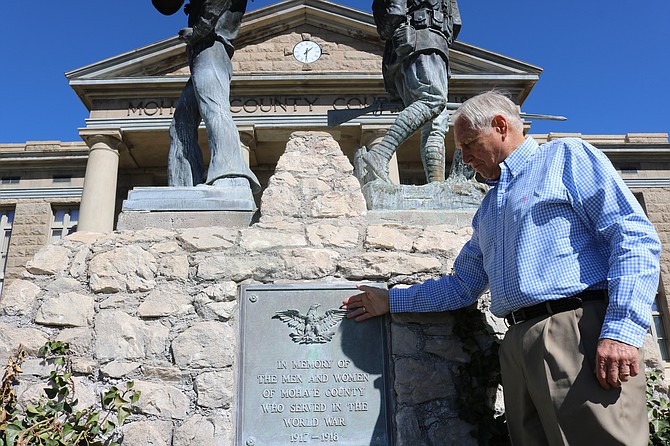 “The monument was to recognize the service and dedication of those young kids that went to WWI,” Wallace said. “They were 18, 19-year-old. This monument is for the memory of those folks that went into what they call the ‘War to end all wars’ and preserved the planet.” (Photo by Travis Rains/Daily Miner)Bob Wallace, director of the Arizona Military Order of Devil Dog Charities, may live in Prescott now, but he grew up in Kingman. He remembers the monument being a focal point and source of pride for the City, and spoke fondly about how he and his friends, and the rest of Kingman for that matter, would gather near the monument to socialize and receive treats during the holidays. But the importance of the monument and what it stood for was never far from thought for Wallace.
“The monument was to recognize the service and dedication of those young kids that went to WWI,” he said. “They were 18, 19-year-old. This monument is for the memory of those folks that went into what they call the ‘War to end all wars’ and preserved the planet.”
Wallace said the monument, which was designed by E.M. Viquesney, remained in great condition from the time it went up in May 1928 all the way through his childhood in the late 1950s and early ‘60s. And it stayed that way, he said, up until the 1990s.
That’s when the Colt machine gun “Potato Digger” was stolen from the monument. The gun sat between the monument’s soldier and sailor, and was never recovered. Now the years have taken their toll on the monument, with alkali and silica deposits being prominent. Its backside is almost completely covered in vines.
 A unit of U.S. Navy Yeomanettes at an inspection in 1919.
Not Every Woman Who Served With the U.S. Military During World War I Got the Same Treatment. Here’s Why
By Pamela D. Toler
via the Time Magazine web site
The First World War is often described as the first “modern” war. The term generally refers to mechanized warfare in the form of tanks and airplanes; terrorizing civilian populations as an act of war; and the mobilization of society as a whole. But it could also apply to the new roles of women in their nations’ war efforts.
Increasing manpower demands on the part of all the combatant powers in World War I made it easier for women to make official contributions, though few would fight. Women signed up as ambulance drivers, telephone operators, munitions workers, members of various service auxiliaries and even as soldiers in Bolshevik Russia’s all-female units. In the United States, the Navy’s “yeomanettes” and the Army’s Hello Girls were the first American women to openly serve in (or at least with) the military. And, though they served in the same war for the same nation, their experiences differed greatly.
Faced with the potential for serious manpower shortages in the approaching war, United States Secretary of the Navy Josephus Daniels decided to take advantage of a loophole in the Naval Act of 1916, which did not specify that only men could enlist. In March 1917, he took the bold — and controversial — step of enlisting women in the Navy as yeomen.
Hundreds of women between the ages of 18 and 35 headed to recruiting stations. By the time the United States entered World War I on April 6, 1917, two thousand women had enlisted as “Yeoman (F).” By the end of the war, the number of female yeomen had increased to 11,000.
Daniels did not intend for his female yeoman to serve in battle. The Navy initially recruited women to take over clerical duties, thereby freeing men to fight. Most female yeomen were indeed assigned to clerical jobs, but the list of jobs the Navy considered suitable for women grew as the war went on. Women also worked as radio and telegraph operators, supervisors for naval shipments, commissary stewards, fingerprint experts, draftsmen, pharmacists, torpedo assemblers and camouflage designers. Once the navy realized young women in uniform were good publicity, it trained female yeomen to march and perform basic military drills so they could parade in support of war bond drives, troop send-offs and other official events where goodwill was valuable.
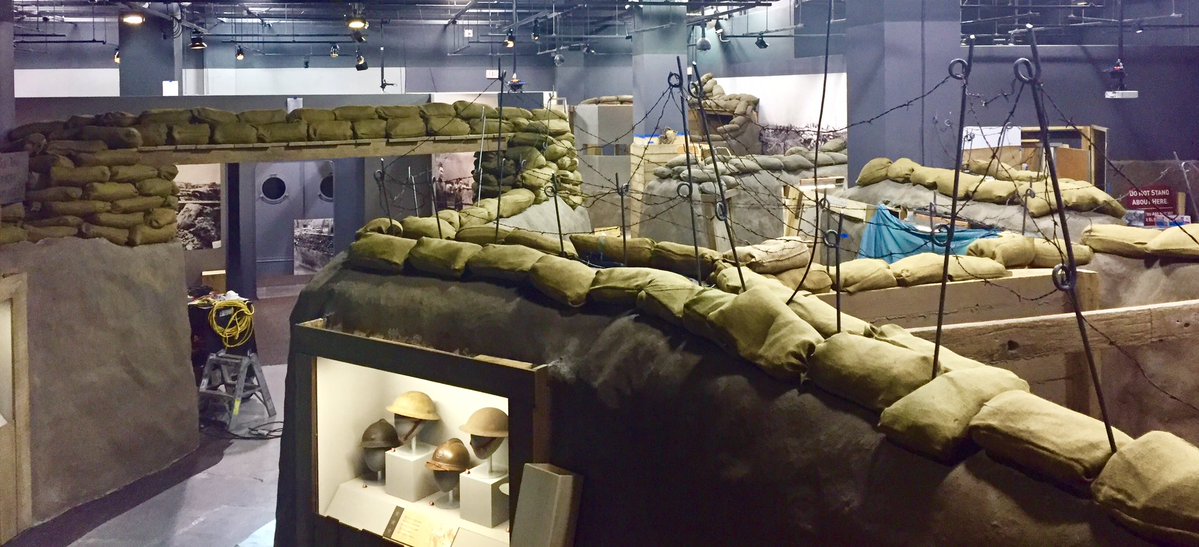 View of World War I exhibit at the North Carolina Museum of History.
Popular World War I Exhibit Extended at North Carolina Museum of History
By Marcie Gordon
North Carolina Museum of History
Due to popular demand, the North Carolina Museum of History will extend one of its most-loved exhibits, NORTH CAROLINA AND WORLD WAR I.
The exhibit will now be open through May 27, 2019 (Memorial Day). "North Carolina & World War I" is a free, award-winning exhibit commemorating the centennial of U.S. entry into World War I and focuses on North Carolina’s role in the War to End All Wars on the western front in France and Belgium. Visitors will experience a re-created trench warfare environment to discover what life was like for Tar Heel soldiers, who entered the war in 1917.
Visitation to the record-breaking exhibit has soared since its April 2017 opening—surpassing half a million visitors in October 2018 and reaching nearly 550,000 by the end of the year, further cementing its status as the most-visited temporary exhibit ever created by the North Carolina Museum of History.
“It’s a great privilege to share our North Carolina & World War I exhibit with more than half a million visitors from across the state, the country, and the world,” said Ken Howard, director of the North Carolina Museum of History. “The museum staff has done a tremendous job creating an exhibit that is much more of an experience than just artifact cases and text on a wall.”
Information can be found here: https://www.ncmuseumofhistory.org/ncww1
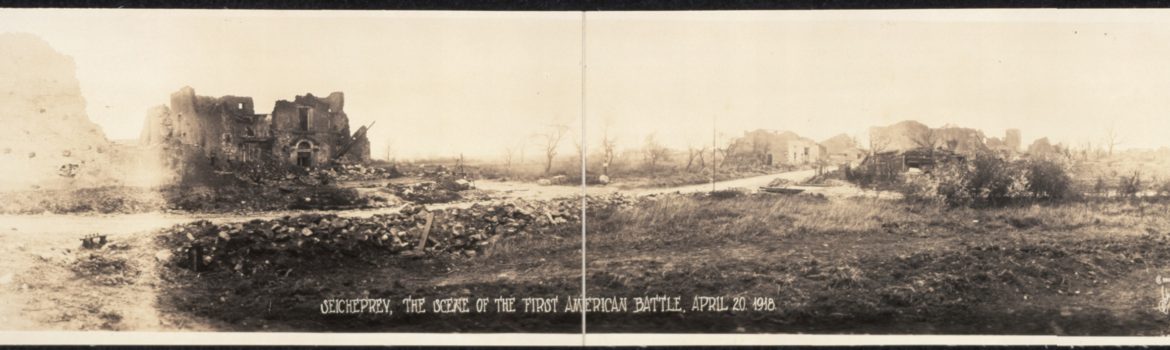
Digging Into History: WWI Trench Restoration in Seicheprey
By Christine Pittsley
Connecticut World War I Centennial Committee
The Seicheprey Trench Restoration Project is a remarkable new Education initiative planned and coordinated by the Connecticut State Library, which will take place in France this summer.
 Christine PittsleyThe project is designed to create a historic site for tourists to visit, and to teach visitors about this important battle & American contributions to the war. The restoration project will take place in France this coming July, and is sponsored, in part, by the American Legion.
Background
In April 1918 German troops launched their first offensive against newly arrived American troops in Seicheprey, France. Those troops were primarily Connecticut men with the 102nd Infantry Regiment who had just recently moved to this “quiet sector” but on the morning of April 20 they fought a battle our small state would never forget.
Connecticut lost 81 young men that day, with another 135 captured and hundreds more wounded. In 1923 Connecticut raised $5,000 to help restore the water supply as the village was rebuilt and installed a fountain with a plaque commemorating the friendship between the people of Connecticut and the people of Seicheprey. This program aims to restore and strengthen that friendship.
Project Details
This July the Connecticut Heritage Foundation, on behalf of the Connecticut State Library, will be bringing 15 Connecticut high school students on a community service trip to Seicheprey. The students, along with 15 French students, will spend July 7-20 in the village where they will work with local historians to restore a section of trench once occupied by Connecticut soldiers.
Read more: Digging Into History: WWI Trench Restoration in Seicheprey
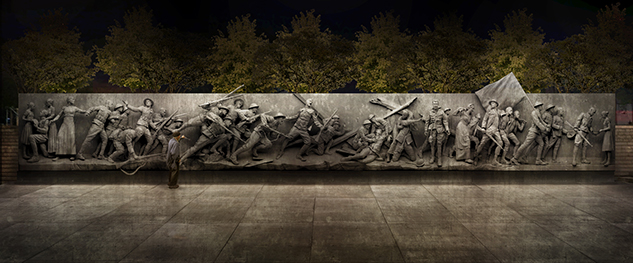 Artists rendering of the sculptural element of the new National WWI Memorial in Washington DC
An Interview with Dale Archer, Chief of Staff of the U.S. WWI Centennial Commission
Remembering the Great War
By Drew Logsdon
via the Sigma Nu Fraternity magazine
Note: The following is an excellent interview article shared with us by our friends at SIGMA NU Magazine. The interview is with our Centennial Commission's Chief of Staff, Dale Archer, about the National WWI Memorial project he has been managing for the past three years. — Chris Isleib, Director of Public Affairs, United States World War One Centennial Commission
World War I’s impact on the world, and American society in particular, is fading from our collective memory but Dale Archer (Central Oklahoma) is working to ensure we never forget the sacrifices made or the legacy the “war to end all wars” left behind.
 Dale Archer100 Years ago, in a train car in the woods of France, the Armistice of 1918 was signed between the Allies and the German Empire, putting an end to all land, sea, and air combat across Europe. This agreement effectively ended World War I, but the tremors of that great conflict have rippled across the world and left no society untouched from its influences and aftermath. In Great Britain, an entire generation of men had been almost removed from their population from years of trench warfare across the Western Front.
The United States left the comfort of neutrality and entered the world’s stage in the final act of the war and setting it up as a world power. Public Relations as a professional occupation, plasma for blood transfusions, wrist watches, trench coats, and most modern music in general; all conveniences or common concepts of today that we likely forget where they came from.
That’s where the World War One Centennial Commission comes in, and specifically its Chief of Staff Dale Archer (Central Oklahoma). As a congressionally chartered organization, the World War One Centennial Commission focuses on three fundamental objectives: Honor, Commemorate, and Educate.
From the World War I Centennial News Podcast
Historian's Corner: Dr. Patricia Fara on Women's Rights post-WWI in the UK
In March 1st's edition of the World War I Centennial News Podcast, Episode 112, host Theo Mayer spoke with Cambridge University's Dr. Patricia Fara about the effect of World War I on women's rights in the United Kingdom. The following is a transcript of the interview, edited for clarity:
Theo Mayer: It's now March, which is Women's History Month. We're also entering the centennial period when American women finally succeeded in getting the vote. But women's suffrage was a global issue these days 100 years ago. In fact, the movement had strong proponents in Europe, and especially in the UK. Joining us today to look at the movement in Europe and the effects of World War I on it, is Dr. Patricia Fara. Dr. Fara is the Director of Studies at the Cambridge University's History and Philosophy of Science Department. Generally considered to be one of the top five HPS departments in the world, she's written on a range of subjects, including a book titled A Lab of One's Own: Science and Suffrage in the First World War. Dr. Fara, welcome to the show. 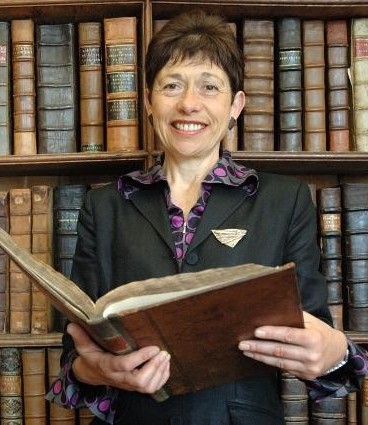 Dr. Fara is the Director of Studies at the Cambridge University's History and Philosophy of Science Department
Patricia Fara: Thank you very much. It's very good to be speaking to you.
Theo Mayer: Dr. Fara, how did you become interested in the effects of World War I on women's suffrage, or I suppose WWI on the Women's Rights Movement in general?
Patricia Fara: I'm interested because it's something that's affected my whole life. I've got a degree in Physics, and I was 1 of only 8 women in a year group of about 200 men. And now I'm a historian, but for me the point of doing history is how to understand how we got from the past to reach the present. Then the whole point of doing that is to try and improve the future. And of course because I teach lots of students who are women, I'm very interested in their position today.
Theo Mayer: That's wonderful. How would you summarize World War I's effects on the suffrage movement? And also, on how the post war period, with women having taken such key roles during those war years, how did that play out?
Patricia Fara: The general story is that as soon as the war started, all the suffrage activities ceased because the women decided that they were going to fight for their country, they were going to be patriotic rather than continuing to campaign for the vote. And in a way, that was extremely good for the movement because by the end of the war, women had been working in factories, they'd be working in science laboratories, they'd been obviously working in hospitals, driving trucks, doing all the sorts of jobs that the men usually did.
So I think the attitude towards women changed permanently after the first World War. And also the fact that they had done all that voluntary work during the war was a very, very big factor in obtaining the vote for women over 30 in 1918.
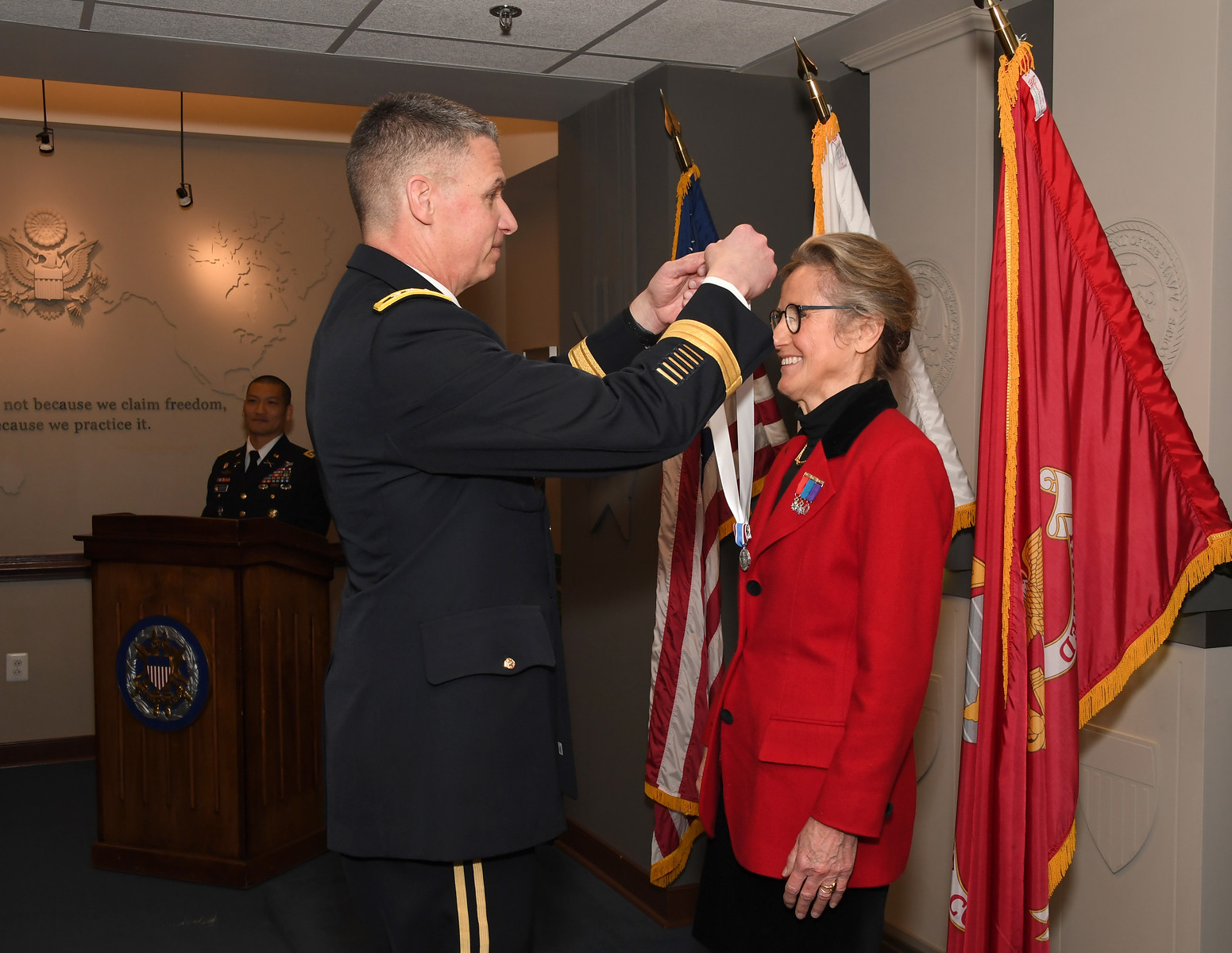 Lieutenant General Martin presents the award to Commissioner Monique Seefried
WW1CC Commissioner Monique Seefried receives Secretary of Defense honor
By Chris Isleib
Director of Public Affairs, United States World War One Centennial Commission
This week, the US Defense Department honored our WW1CC Commissioner, Dr. Monique Seefried, for her remarkable efforts in telling the story of World War I, both here and in her native France.
The award, the Secretary of Defense Medal for Outstanding Public Service, was presented to Commissioner Seefried by Lieutenant General Joseph M. Martin, the Secretary of the Army's Director of the Army Staff, in a ceremony at the Pentagon. Attendees at the ceremony included other WW1CC Commissioners, Dr. Matthew Naylor, and Mr. Jerry Hester, both of whom have worked closely with her in her education and international liaison efforts for the Commission.
The medal is the second highest award presented by the Secretary of Defense to non-career Federal employees, private citizens, and foreign nationals for contributions, assistance, or support to Department of Defense functions that are extensive enough to warrant recognition.
The award consists of a silver medal, a miniature medal, a rosette, and a citation signed by the Secretary of Defense. Some notable past recipients include diplomat Richard Armitiage, entertainer Marie Osmond, legendary Navy diver Carl Brashear, former First Lady's Laura Bush and Hilary Clinton.
From the World War I Centennial News Podcast
Historian's Corner: Dr. Charissa Threat on African American Women in the U.S. Army Nurse Corps
In February 22nd's edition of the World War I Centennial News Podcast, Episode 111, host Theo Mayer spoke with historian and Chapman University Professor Charissa Threat about the participation of African American women in the U.S. Army Nurse Corps. These women faced systemic discrimination along the lines of race and gender, yet managed to serve despite these barriers. The following is a transcript of the interview, edited for clarity:
Theo Mayer: This week in our segment, "The Historian's Corner" we're gonna talk about a subject that bridges our February's Black History Month theme with March's Women's History Month. We're going to talk about 18 African American Nurses that joined the U.S. Army Nurse Corp. To tell us about this, we're joined by Dr. Charissa Threat, Associate Professor of History at Chapman University. Dr. Threat is part of a growing group of scholars that are broadening the view of military history to include scholarship that explores the intersection of civilian-military relationships that relate to race, gender, and conflict. Dr. Threat, thank you for joining us.
Dr. Threat: Thank you so much for having me, Theo.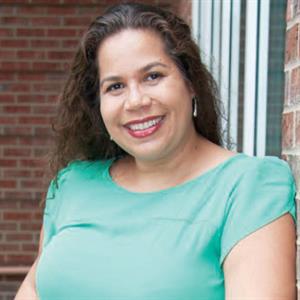 Dr. Threat is an Associate Professor of History at Chapman University
Theo Mayer: I was going to mention that you're an Associate of Dr. Jennifer Keene who was on the show with us a couple of weeks ago, aren't you?
Dr. Threat: I am. Brand new.
Theo Mayer: Oh, well it sounds like the subject of WWI African American participation and women's participation is seriously alive and well at Chapmen.
Dr. Threat: Yes, definitely.
Theo Mayer: Okay, so Charissa, I'm fascinated by the story for a whole bunch of reasons. Let me start with gender. Did the Army actually recognize these women as members of the Army?
Dr. Threat: Well the easy answer to that is, yes and no. Because technically the Army Nurse Corp was an auxiliary of the Army, meaning the nurses who served in the Army Nurse Corp served with the military, but not in the military. So, while they were recognized as being part of the military, they had a very ambiguous relationship in terms of benefits and in terms of status.
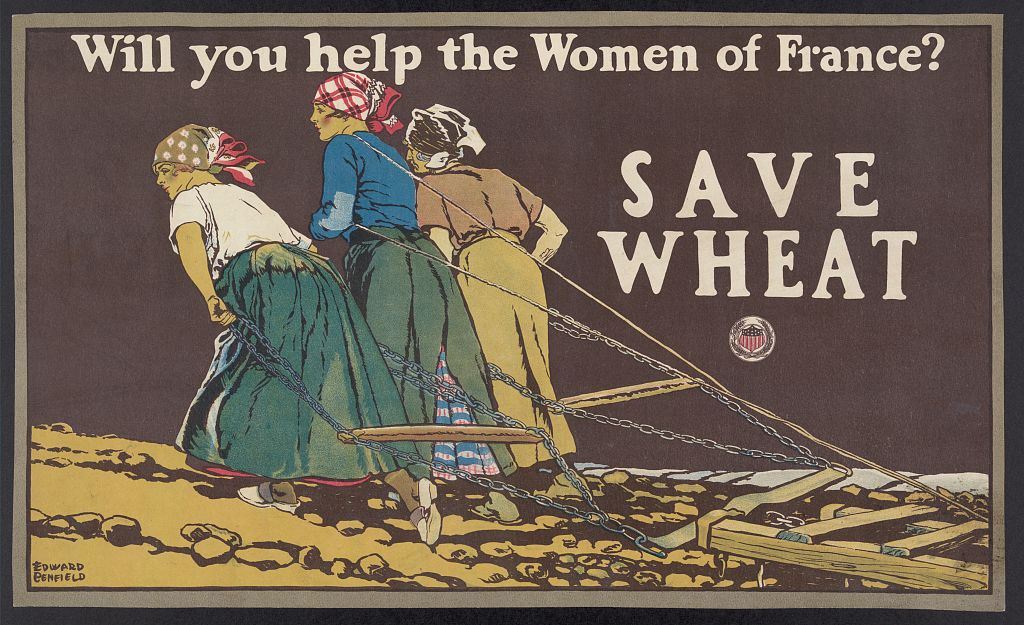
What a WWI Poster Can Teach Us About #FoodWaste
By Rose Hayden-Smith
via the UC Food Observer web site
There’s an increasing awareness of the negative impacts of food waste. A quick reminder of what’s at stake:
 In a guest blog post for UC Food Observer, UC researcher Wendi Gosliner (part of the team at UC ANR’s Nutrition Policy Institute, a cutting-edge unit that’s using research to transform public policy) shared this observation:
“Food waste presents a major challenge in the United States. Estimates suggest that up to 40% of the food produced nationally never gets consumed, causing substantial economic and environmental harms. Wasted food utilizes vast quantities of precious land, water and human resources, yet rather than nourishing people, it feeds landfills, producing methane gasses that poison the environment. Much of the food waste (43%) occurs at the household level.”
What History Can Teach Us
Here’s my take on food waste. It goes back in part to lessons I’ve learned from studying World War I (WWI), when the American government set food conservation goals (along with goals for local food production via Liberty – later Victory – Gardens). I’m a big proponent of both reducing food waste and producing more food in communities via school, home and community gardens.
Big point: the World War I poster included in this post has advice we’d be well served to heed today.
It’s an iconic poster from World War 1. Food…don’t waste it. The image is regularly shared on Twitter and Facebook.
Period piece or photoshopped image?
The original was produced in 1917 by the United States Food Administration, under the direction of the newly appointed food “czar” – Herbert Hoover.
Read more: What a World War 1 Poster Can Teach Us About #FoodWaste
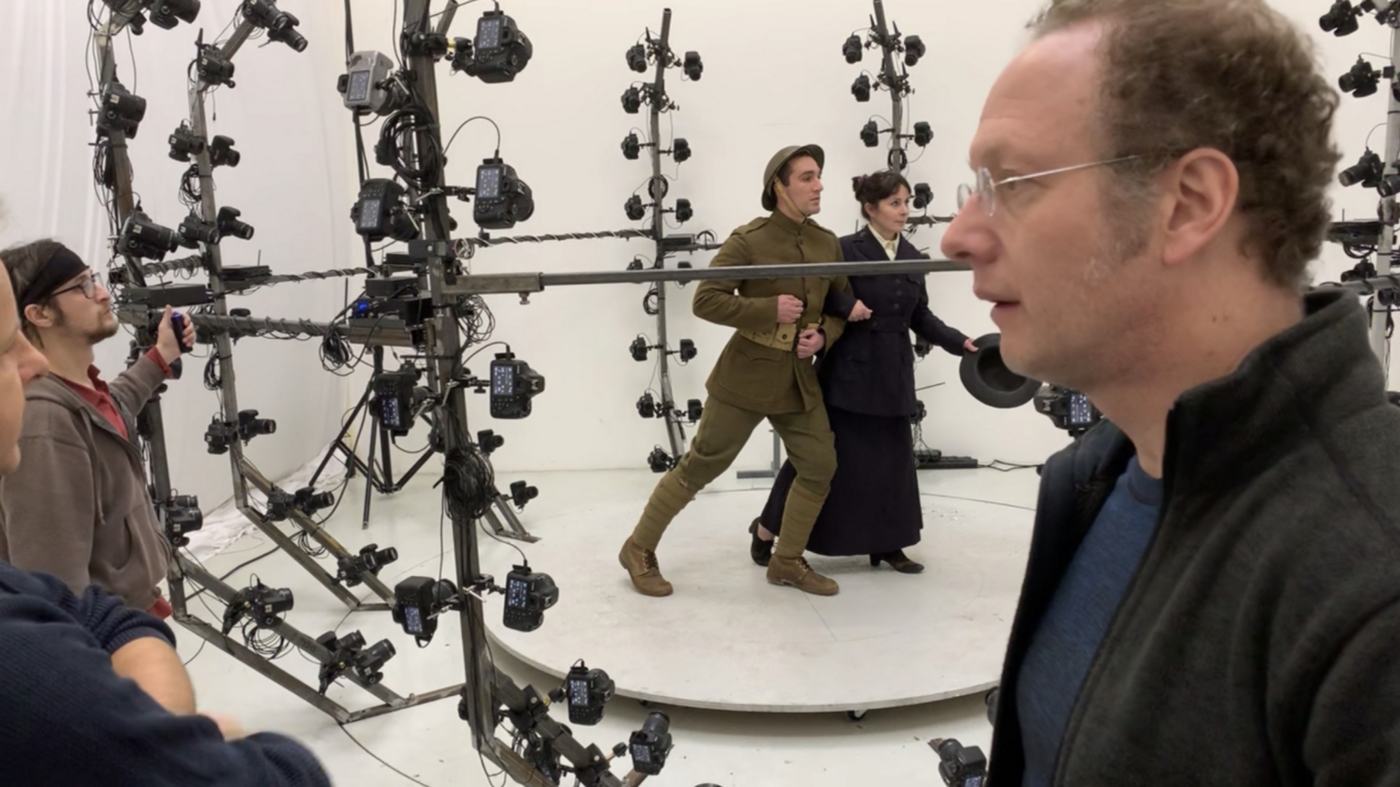 Sculptor Sabin Howard (right) poses WWI Models posing in the Pangolin Editions photogrammetry rig
Digital Technology and the Sculptor’s Art: Innovation and Imagination
By Traci L. Slatton
via the Medium.com web site
There’s a moment, in a life committed to growth, when the call sounds to leave the familiar. It’s the beginning of an adventure — or the first step into calamity. It’s the onset of transformation.
For an artist who has honed his skill over decades, the call can be disconcerting.
So it was for my husband Sabin Howard, a classical figurative sculptor steeped in traditional craftsmanship. By “steeped,” I mean he had worked painstakingly to master the art of sculpting by hand in clay; by “traditional,” I refer to the high aesthetics of classical and Renaissance art.
There were no shortcuts to Sabin’s expertise. It was laboriously gained. He spent tens of thousands of hours in the studio, posing nude models, studying their anatomy, morphology, and gesture, constructing steel armatures, wrapping a foam core around the steel, covering foam with a base coat of clay, and then slowly accreting tiny scrims of clay, layer after layer, until he builds up a workable surface.
Read more: Digital Technology and the Sculptor’s Art: Innovation and Imagination
Stephany Neal historian Dr. Jeffrey Sammons were featured on NYC's ABC 7 "Here and Now" show, with Sandra Bookman.
369th Experience in national spotlight during Black History Month
By Chris Isleib
Director of Public Affairs, United States World War One Centennial Commission
As most of us know, February is Black History Month. This February has been a very busy time for telling the story of the African-American heroes of World War I -- and we at the Centennial Commission are thrilled by the exposure that the Commission-sponsored 369th Experience is getting nationally.
The first major national story that we came across related to the 369th Division was this piece on the official U.S Army website. Featuring the legendary 369th Infantry Regiment "Harlem Hellfighters, and their Regimental Jazz Band, the article appeared on February 1st -- the first day of Black History Month -- and has been seen by over 500,000 people. https://www.army.mil/article/199913/african_american_wwi_harlem_hell_fighters_proved_their_mettle_patriotism_in_combat
Two of our favorite partners appeared on a major broadcast segment in the New York City area. 369th Experience project leader Stephany Neal, and noted historian Dr. Jeffrey Sammons, were featured on NYC's ABC 7 "Here and Now" show, with Sandra Bookman. They were featured in-studio guests, talking about the "369th Experience" tribute band, and about the original 369th Infantry Regiment. The eleven-minute interview can be found here. https://abc7ny.com/society/here-and-now-on-february-10-2019-the-369th-experience/5132788/
The Fox News Network created a remarkable broadcast piece about the saga of the original 369th Harlem Hellfighters, that also posted to a wide social media audience nationwide. https://www.foxnews.com/us/black-history-month-african-american-world-war-i-heroes-played-inspirational-role-in-fight-to-define-true-meaning-of-democracy?fbclid=IwAR0b9g8qRmONA9P7Ts8NVCRj0R9MywGvMIDNTEuaorzqw-7N9xJV6wE7lgQ
Read more: 369th Experience in national spotlight during Black History Month
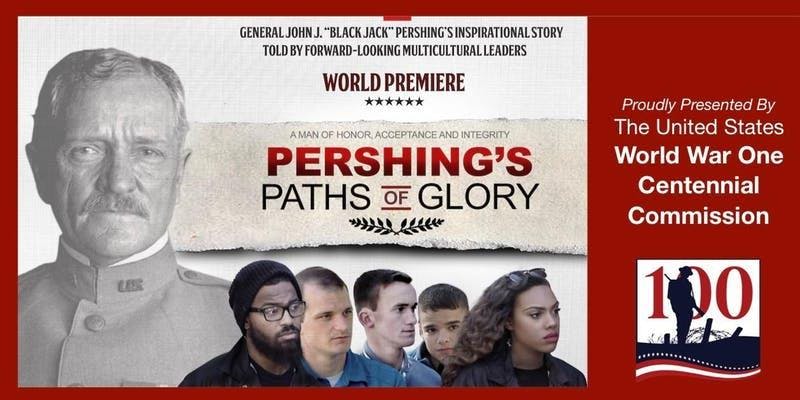
Kansas City Film Premiere Screening of documentary "Pershing's Paths of Glory" on March 15th
By Kevin Upton, Pershing Rifles Group
special to the United States World War One Centennial Commission web site
In recognition of the 125th Anniversary of the National Society of Pershing Rifles, the nation's foremost military honor society for ROTC cadets & midshipmen, we are excited to host this major premiere event in Kansas City, MO, home of the National World War I Museum and Memorial.
 Pershing's Paths of Glory is a documentary that tells the exceptional story of one of America's greatest military leaders, General John J. Pershing. The story is told by Pershing's living legacy - members of the National Societies of Pershing Rifles, Pershing Angels, and Blackjacks.
This premiere event will take place in Kansas City, MO at the KCI Expo Center on March 15, 2019. The event begins at 6:00 p.m. The event is open to the public. Tickets can be found here: https://www.eventbrite.com/e/pershings-paths-of-glory-kc-premiere-tickets-56692699390?aff=MailChimpDistro
Pershing's Paths of Glory is told by Pershing’s living legacy, a group of young leaders following the General’s paths across the globe. Raised in a small town in Missouri, Pershing first went on to lead Soldiers on the American Frontier, in Cuba with Teddy Roosevelt, and against Pancho Villa in Mexico.