
































 Ray Claflin Bridgman
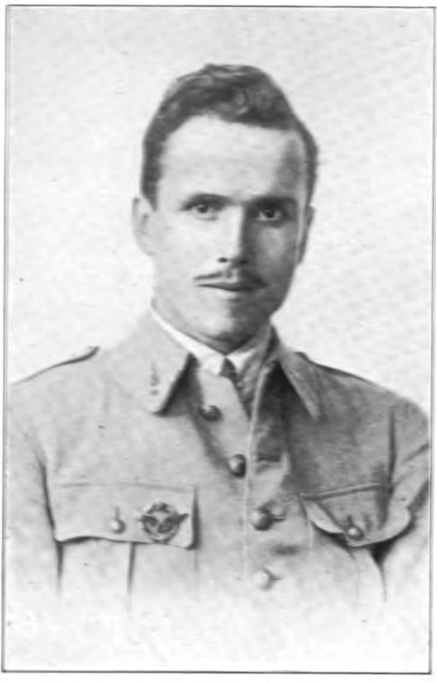
Ray Claflin Bridgman, of Forest Park, Illinois, enlisted in the Escadrille in July of 1916 and was posted to the front in April of 1917. Although originally opposed to the war, Bridgman left his studies at Yale to volunteer for the Red Cross in France. It was en route to Paris that Bridgman decided to focus his energies on aviation, and discovered a natural ability for flying. Bridgman was considered an excellent patrol leader and a tenacious fighter, and throughout his service, Bridgman was often called “the luckiest of unlucky men” for the sheer number of times his patrols were attacked by German two-seater aircraft. Rarely did Bridgman’s plane return without damage, yet Bridgman himself suffered no serious injury, despite being on active duty at the front for 18 months straight. His French citation for bravery from October of 1917 reads “a combat pilot skillful, modest, and conscientious; has always fulfilled with the greatest keenness the missions entrusted to him.”
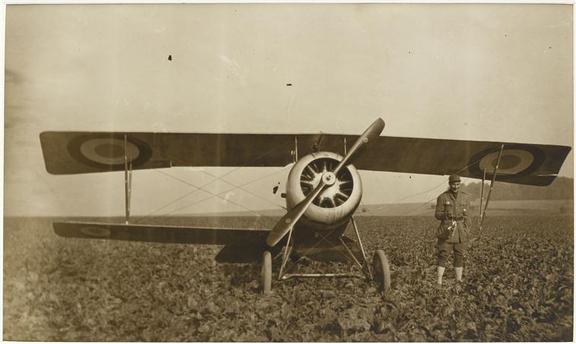 Courtney Campbell and his three wing plane
One of the most remarkable accidents in the history of French aviation happened to Courtney Campbell during his service with the Escadrille Lafayette. While a patrol was assembling over the aerodrome at Chaudun, on the Aisne sector, he lost an entire lower wing of his Nieuport. Despite the typical problems associated with losing a wing of an airplane, Campbell was able to safely land the plane back at the airfield. Theoretically, this should have been impossible, but it was in Campbell's nature to entertain and baffle his comrades. Friends described him as a born jester. Sometimes, after a hard and disappointing day, when dinner at the popote was passing glumly, Campbell would shatter the gloom with one of his ridiculous comments. As many of his friends attested, he rode his jokes as he rode his old Nieuport: zoom up after a play on words, get under the tail of some stale old joke, and bring it triumphantly down with new absurdity. Unfortunately, Campbell’s bonhomie could not save him from German shells; he was shot down behind enemy lines on October 1st, 1917, posthumously receiving the Croix de Guerre.