































Michigan Fighter Aces of the World War
Aces are fighter pilots who shoot down five enemy aircraft in aerial combat.
D'Arcy F. Hilton 8 victories from Detroit
Born on October 1, 1889 in Toronto, Canada, he lived most of his early days in Detroit. He sailed for Great Britain in November of 1916 because he wanted to fight against Germany. He enlisted in the Royal Flying Corps and became a pilot in the spring of 1917 with the 29th Royal Flying Corps Squadron in France flying a Nieuport 17 . He scored his first two victories on July 31, 1917, one was a German Balloon and the second was a Albatros DV. On August 9, 1917 he shot down his third plane and two days later got another victory by shooting down a Albatros DV, for a total of four . Within a week, he became an Ace with his fifth and sixth victory making him the only American pilot serving with the RFC to become an Ace in a Nieuport 17. His seventh victory came on October 30th and before the end of 1917 he had eight victories. He was awarded the British Military Cross for his flying. He was then sent to England to be an flight instructor at Deseranto Field for the remainder of the war. He received the British Air Force Cross for his service.
Edward R. Grange 5 Victories from Lansing
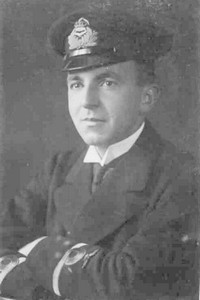
Born on January 11, 1892 in Lansing, Mr. Grange traveled to Great Britain in 1916 to join the war effort with the Royal Navy Air Service. He received his flight training in Canada and was eventually assigned to the First Naval Wing flying a Sopwith Pup. On September 25, 1917 he scored his first victory before transferring to the Eight Naval Squadron in October. He got three victories on January 4, 1917 over Bapaume, France by shooting down three Albatros D.II's to make his total four. On January 7, 1917, he became an Ace by shooting down an Albatros D.II and was wounded later in the aerial battle while trying to help his squadron mates. He recovered from his wounds in England and later became a fight instructor for the remainder of the war. He received the British Distinguished Service Cross and the French Croix de Gurre for his service.
Victories
|
Date |
Time |
Unit |
Aircraft |
Opponent |
Location |
|
|
1 |
25 Sep 1916 |
1W |
Sopwith Pup (N5182) |
Seaplane (DES) |
6 miles from Ostend |
|
|
2 |
04 Jan 1917 |
8N |
Sopwith Pup (N5194) |
Albatros D.II (DES) |
N of Bapaume |
|
|
3 |
04 Jan 1917 |
8N |
Sopwith Pup (N5194) |
Albatros D.II (OOC) |
N of Bapaume |
|
|
4 |
04 Jan 1917 |
8N |
Sopwith Pup (N5194) |
Albatros D.II (OOC) |
N of Bapaume |
|
|
5 |
07 Jan 1917 |
8N |
Sopwith Pup (N5194) |
Albatros D.II (OOC) |
Near Grevilles |
Kenneth L. Porter 5 Victories from Dowagiac
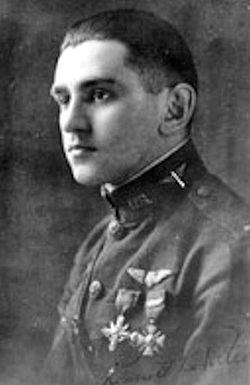
Born December 6, 1896 in Dowagiac, he graduated from the University of Michigan with an engineering degree before enlisting in the U.S. Army Signal Corps, Air Service on August 6, 1917. He trained in Texas and Canada and on January 16, 1918 he received his silver aviator's wings and gold bars of a second lieutenant. In France he served with the 147th Aero Squadron and flew a Nieuport 28. He scored his first victory on July 2, 1918 with a Pfalz D.III over Chateau Thierry, France. Lt. Porter and four other American planes engaged 12 German planes that day. When he sighted the German planes he gained altitude until he was between them and the sun from which he attacked a flight of six Pfalz D.III's along with another American pilot. He scored his first victory and received the Distinguished Service Cross for his efforts. In August 1918, the 147th Aero Squadron was equipped with the new S.P.A.D. S. XIII aircraft. On October 12, 1918, he became an Ace by shooting down his fifth plane, his total was three bombers and two fighters. He received the Silver Star and the French Croix de Gurre in addition to his Distinguished Service Cross for his service during the war.