
































Delivery of Medical Care off of the battlefield
Hospital Centers
While each base hospital could operate independently, that was relatively inefficient and the AEF quickly began planning hospital centers. These were envisioned for 2-20 base hospitals, and would allow more specialization within a center (providing better treatment to patients), and use fewer specialists such as radiologists and plumbers or electricians. They would also allow a hospital train to make one stop instead of dropping off a few patients at a number of hospitals, thus speeding the whole system. While 20 hospitals never operated together, centers also facilitated another economy step, the convalescent camp (or hospital), where mostly-recovered men were moved out of the hospitals, got therapeutic exercise to speed their recovery, but also were not sent back to their units too soon.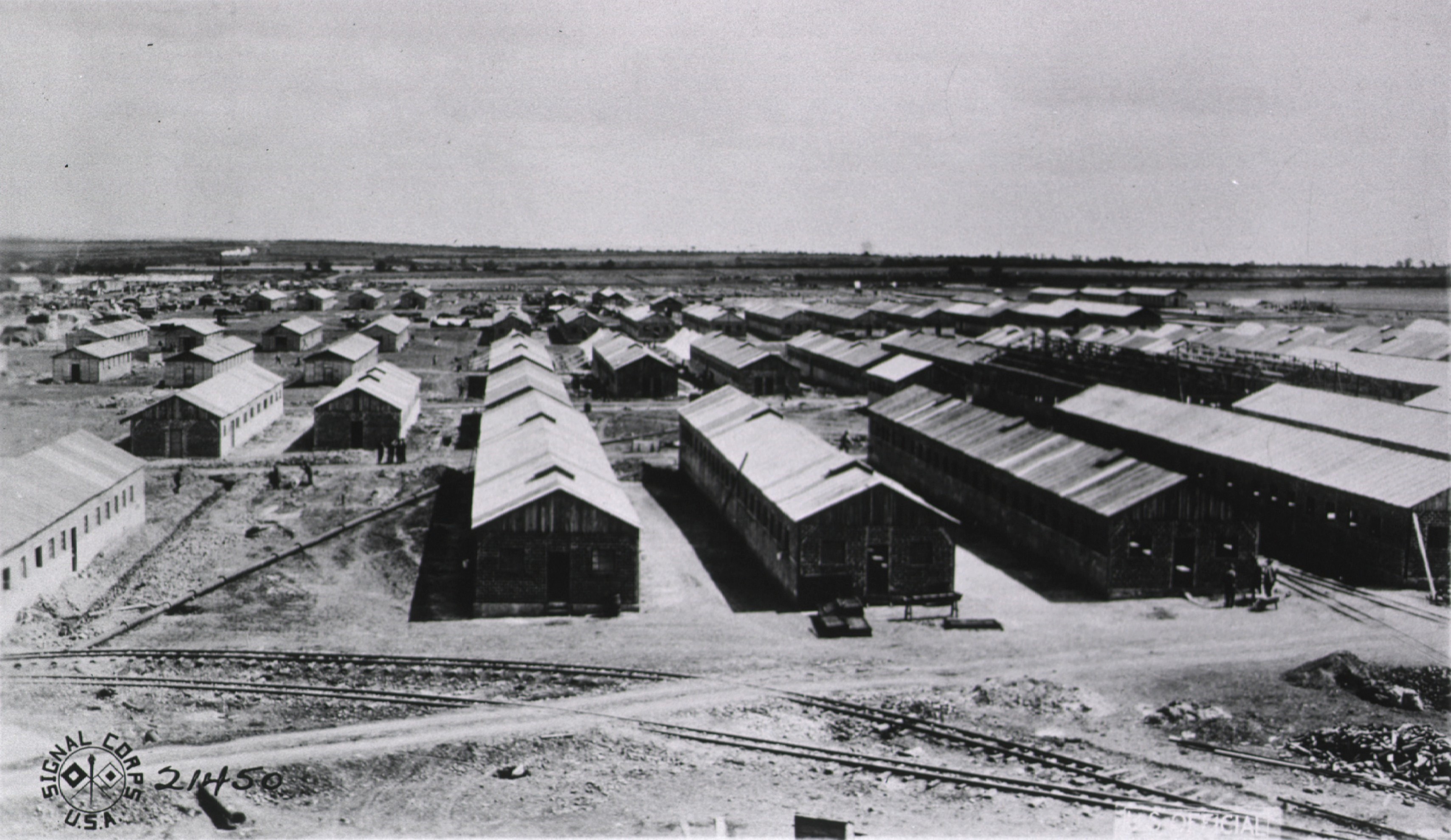 Hospital Center at Mars-sur-Allier
The largest of these ‘hospital cities’ had close to 20,000 beds in 1918-19, and several thousand hospital staff as well. Hospital Center Mars-sur-Allier, located in Nièvre, France, even had its own "town" newspaper, The Martian. The construction was temporary, as can be seen above. Today, there is virtually nothing left on the ground.