



































Introduction
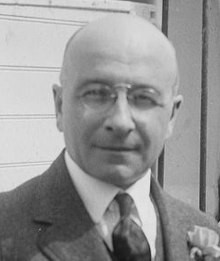 Alexis Carre
The treatment of wounds goes back to the dawn of recorded history. By World War 1, however, there had been several fundamental improvements, resulting in dramatically improved care of battlefield wounds. First, the developments of effective local and general anesthesia allowed surgeons to take as much time as they need to debride and repair wounds. Second, the recognition that bacterial contamination causes postoperative infections prompted the development of aseptic surgery, in which everything used during an operation is sterilized. Third, debridement, which is complete cleaning of the wound including excision of devitalized tissue, became standard surgical treatment.
Because they were able to incorporate the advances of the previous century, the treatment of injuries and wounds was very different from previous wars, and far better. A notable example was Alexis Carrel. An eminent American surgeon, who would win the Nobel Prize in 1912, he was originally from France. In 1914, he volunteered for service with the French, and served with the French medical service throughout. He brought with him the most advanced wound care techniques of the day. He taught these to an entire generation of young French surgeons. In this war, surgical care was not left to conscripted civilian doctors or to the few pre-war Army doctors, but was rather led by the best surgeons in the US and Europe.
During the war, the Carrell-Dakin method of treating wounds was introduced and became universal. Dr. Carrell developed the method with Henry Dakin, an American chemist. Sodium hypochlorite is a mild antiseptic, derived by bubbling chlorine gas through saline solution. Simple irrigation of wounds with water or saline helps to clean wounds, and the use of hypochlorite further reduces bacteria. Many of the wounds seen in the war were heavily contaminated with dirt from the trenches and battlefield, so these methods were widely used. Dakin’s solution is available today, although with the increasing use of antibiotics, it is used much less today.