
































The Road to the New Berlin Name Change
By M. Carmella Cadusale, Executive Director, North Canton Heritage Society
January 31, 2018
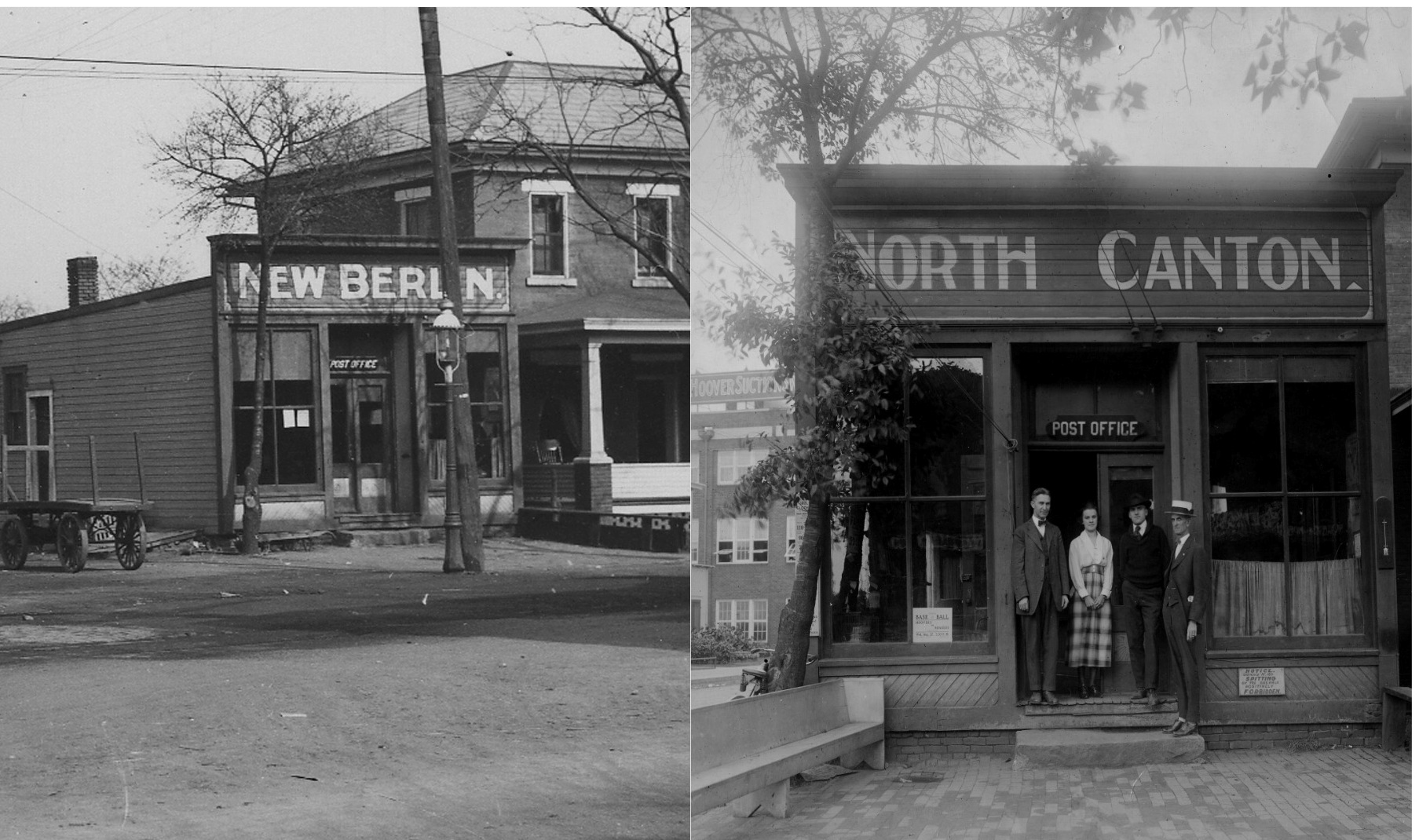
On December 3, 1917, while the world was in midst of war, a small village of New Berlin petitioned the Stark County Common Pleas Court for a change of the village name. It was World War I, and the United States, with the Allied Powers (such as Great Britain, France, and Russia) were at war with Germany and the Central Powers (made up of Germany, Austria‐Hungary, Bulgaria, and the Ottoman Empire [Turkey]). Due to the conflicts, anti-Germanic sentiments were born and became a way to demonstrate patriotism as well as support for Allied Powers.
Ohio, however, was home to many of those who were of German descent. New Berlin, in particular, was settled by Pennsylvanian migrants and settlers from this border state were mainly of German and Irish descent. These settlers made up about 43% of all Ohio migrants during the first half of the 19th century and most, if not all, of New Berlin. German-Americans faced backlash, their patriotism was questioned due to their ancestry and culture. People presumed that those of German descent were objectors to the Allied cause and considered traitors, even if there was no evidence to support those assumptions.
Federal organizations, such as Ohio’s Americanization Committee, reformulated their organization’s mission promote anti-German activities. Ohio’s Americanization Committee, created by Governor James M. Cox, to teach American values and the English language to immigrants filing for U.S. citizenship. Committee members, however, heavily influenced by anti-German sentiments began promoting censorship of all/any-German culture, such as banning German affiliated books from libraries and provided a list of "approved books" that were not considered to be "pro-German." In 1919, the state legislature passed the Ake Law, which banned the teaching of the German language in all public and private schools below the eighth grade level. Despite the law not including college and high school levels, many schools ceased offering German language classes. Meyer V. Nebraska ruled this law unconstitutional in 1922. The court determined that the state did not have the constitutional authority to ban German in private schools.
The mass number of anti-German sentiments influenced the livelihood and businesses of villages with German influence. New Berlin’s name change petition on December 3, 1917 was heard then filed on January 30, 1918—promptly changing the village’s name to North Canton. Many towns and cities in the nation changed their names as well as re-named streets and buildings with German influence as a result of the backlash.
North Canton Heritage Society will be commemorating this historic name change with their annual calendar, Photos of New Berlin. The calendar features village photos dated before the 1918 name change from their collection. Original documents, such as petitions and letters, are part of the NCHS gallery display and are available for research. Please contact NCHS at ncantonheritage@gmail.com to schedule research dates.