
































Diseases in World War I
Trench Diseases
A number of diseases were characteristic of trench life. Virtually all front-line soldiers contracted lice. Indeed, the first thing that was done for troops rotating out of the front line was to delouse and bathe them, and give them clean uniforms. Rats were common in the trenches, raising the potential for typhus and other rat-borne diseases.
Nutrition in the trenches was very poor. Army rations in general had improved greatly by 1917. But food for soldiers in the front lines had to be cooked back of the lines, then brought forward in containers through communicating trenches. Because of the risk to the carriers, this was done in darkness whenever possible, making meals irregular and subject to interruptions. Water supply was also a chronic problem. Water had to be purified, transported forward, and then brought to the front trenches, a process which was also subject to interruption. Contamination of both food and water was a constant problem.
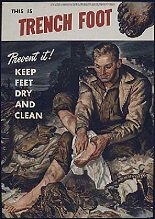
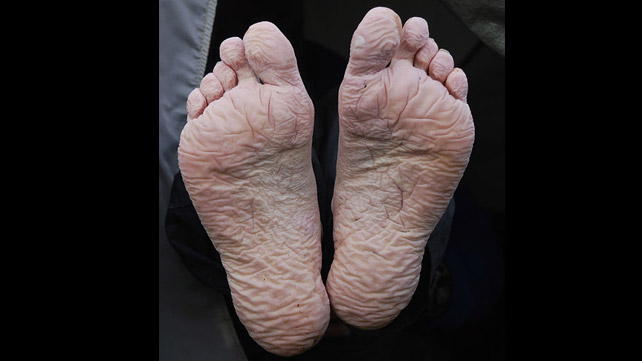 Then, there was trench foot. This was a condition brought about by constant immersion in cold water, without chances to dry off. Technically, this was a cold injury rather than an infection, but secondary infection usually appeared if the injury was not treated. Trench foot was a constant source of troops having to be evacuated, and affected all armies more or less equally. The American army recorded 1800 cases during 1917-18, although only 5 deaths.