



























The Home Front
William E. Boeing
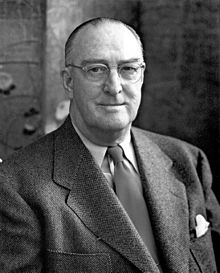
Boeing was born in Detroit, Michigan to Catholic parents, Marie M. (Ortmann), from Vienna, Austria, and Wilhelm Böing, a wealthy mining engineer, from Hagen-Hohenlimburg, Germany. Boeing Sr. had made a fortune from timber lands and mineral rights near Lake Superior. Anglicizing his name to "William Boeing" after returning from being educated in Vevey, Switzerland in 1900 to attend Yale University, William Boeing left Yale before graduating, in 1903 to go into the lumber side of the business. He moved to Hoquiam, Washington and purchased extensive timberlands around Grays Harbor on the Pacific side of the Olympic Peninsula and also bought into lumber operations. He made a success of the venture, in part by shipping lumber to the East Coast via the new Panama Canal, generating funds that he would later apply to a very different business.
In 1916, Boeing went into business with George Westervelt as B & W and founded the Pacific Aero Products Co. The company's first plane was the Boeing Model 1 (B&W Seaplane). When America entered World War 1 on April 6, 1917, a little more than a month later, Boeing changed the name from Pacific Aero Products Co. to Boeing Airplane Company and obtained orders from the United States Navy for 50 planes. At the end of the war, Boeing began to concentrate on commercial aircraft, secured contracts to supply airmail service and built a successful airmail operation and later passenger service that evolved into United Airlines.
Nurse Frances Reed Elliot Davis
First African American Red Cross Nurse
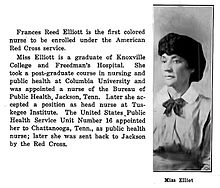 Nurse Davis was the first African American woman accepted into the American Red Cross Nursing Service. She earned this recognition on July 2, 1918.
Elliott was born in Shelby, North Carolina into an illegal interracial marriage of an African-American Cherokee Share Cropper and the daughter of the plantation owner. Tragedy struck and her father had to flee. By the age of five both of her parents were dead. In the foster care system, her education was sporadic at best, but she honed her own reading and writing skills despite having no teacher.
Elliott graduated Knoxville College at the age of 25 and took a teaching career to pay for further education. But Elliott longed "to be a nurse and help little children." Elliott entered the Freedmen's Hospital Training School for Nurses in Washington, D.C. in 1910. The final exams in 1913 were given to students based on race; the exam for the white nurses was considered the hardest and most highly esteemed. Elliott demanded that she take the exam with the white students and became the first African-American to D.C. to pass the exam. Her first job was as a private-duty nurse. Later, she worked at Provident Hospital in Baltimore, Maryland, and completed additional courses at Columbia University.
Though she had been initially refused to the Red Cross on the basis of race she persevered and was accepted in 1918 as the first African American in the Red Cross Nursing Service.
However, this was hardly the end of the discrimination faced by Elliott. When World War I came she signed up for and was refused by the Army Nurse Corps. Her white colleagues were all automatically rewarded Red Cross pins that allowed them to transfer to the Corps and help with the war effort. Elliott’s pin arrived late and displayed “1A” designating her as the first African-American nurse and thus unable to join. The A system stayed in effect until 1949. Elliott refused to be defeated and contributed to the war effort through nursing soldiers in Tennessee, but was never able to go overseas.
Frances Reed Elliott had numerous contributions to the Red Cross, serving as the director of nurses training in Tuskegee, Alabama, and organizing the first training school for African-American nurses in Michigan. She managed prenatal, maternal and child health clinics in Detroit and ran a commissary at the Ford Motor plant during the depression to provide workers with food. She also established a nursery in Inkster, Michigan that was so successful she caught the attention of Eleanor Roosevelt who raised funds for the center.
Herbert H. Dow
Chemist and Businessmen
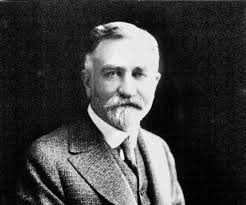 He was an American chemical industrialist, best known as the founder of the American multinational conglomerate Dow Chemical. He was a graduate of Case School of Applied Science in Cleveland,OH. He was a prolific inventor of chemical processes, compounds, and products, and was a successful businessman. In 1889 Dow received his first patent after inventing a more cost-effective and streamlined process for bromine extraction. He quickly formed his own company but was bankrupt within the year. His associates were impressed with his work and in 1890 helped him to found the Midland Chemical Company in Midland, Michigan. Dow continued his work extracting bromine, and by early 1891 he had invented the Dow Process, a method of bromine extraction using electrolysis to oxidize bromide to bromine.
Dow Chemical Company focused on research, and soon was able to extract many more chemicals from brine. World War 1 provided demand that enabled its growth, because Britain blockaded the ports of Germany, which at the time included most of the world's largest chemical suppliers. Dow Chemical quickly moved to fill the gap for wartime goods, producing magnesium for incendiary flares, monochlorobenzene and phenol for explosives, and bromine for medicines and tear gas. By 1918, 90% of the Dow Chemical Company production was in support of the war effort. During this time period, Dow also created the diamond logo, which is still used by the Dow Chemical Company.
Henry Ford
Industrialist
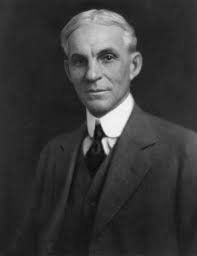
Henry Ford (July 30, 1863 – April 7, 1947) was an American industrialist, the founder of the Ford Motor Company, and the sponsor of the development of the assembly line technique of mass production. He was the biggest contributor to the war effort on many levels.
He developed and manufactured the first automobile that many middle class Americans could afford. In doing so, Ford converted the automobile from an expensive curiosity into a practical conveyance that would profoundly impact the landscape of the 20th Century. His introduction of the Model T automobile revolutionized transportation and American industry. As the owner of the Ford Motor Company, he became one of the richest and best-known people in the world. He is credited with "Fordism": mass production of inexpensive goods coupled with high wages for workers. Ford had a global vision, with consumerism as the key to peace. His intense commitment to systematically lowering costs resulted in many technical and business innovations, including a franchise system that put dealerships throughout most of North America and in major cities on six continents. Ford left most of his vast wealth to the Ford Foundation and arranged for his family to control the company permanently.
Ford was also widely known for his pacifism during the first years of World War I and for promoting antisemitism through his newspaper The Dearborn Independent and the book The International Jew.
Ford was a pioneer of "welfare capitalism", designed to improve the lot of his workers and especially to reduce the heavy turnover that had many departments hiring 300 men per year to fill 100 slots. Efficiency meant hiring and keeping the best workers.
Ford astonished the world in 1914 by offering a $5 per day wage ($120 today), which more than doubled the rate of most of his workers. A Cleveland, Ohio, newspaper editorialized that the announcement "shot like a blinding rocket through the dark clouds of the present industrial depression." The move proved extremely profitable; instead of constant turnover of employees, the best mechanics in Detroit flocked to Ford, bringing their human capital and expertise, raising productivity, and lowering training costs. Ford announced his $5-per-day program on January 5, 1914, raising the minimum daily pay from $2.34 to $5 for qualifying male workers.
Detroit was already a high-wage city, but competitors were forced to raise wages or lose their best workers.
Ford was a pioneer of "welfare capitalism", designed to improve the lot of his workers and especially to reduce the heavy turnover that had many departments hiring 300 men per year to fill 100 slots. Efficiency meant hiring and keeping the best workers.
In addition to raising the wages of his workers, Ford also introduced a new, reduced workweek in 1926. On May 1, 1926, the Ford Motor Company's factory workers switched to a five-day 40-hour workweek.
Ford opposed war, which he viewed as a terrible waste. Ford became highly critical of those who he felt financed war, and he tried to stop them. In 1915, the pacifist Rosika Schwimmer gained favor with Ford, who agreed to fund a Peace Ship to Europe, the Oscar II, where World War I was raging. He and about 170 other prominent peace leaders traveled there. Ford's Episcopalian pastor, Reverend Samuel S. Marquis, accompanied him on the mission. Ford talked to President Wilson about the mission but had no government support. His group went to neutral Sweden and the Netherlands to meet with peace activists. A target of much ridicule, Ford left the ship as soon as it reached Sweden. This began the "Peace" business by making the activity of the Peace Activist news, with headlines to promote there cause, they could then solicit donations. Before the "Peace Ship" the peace activist were not taken seriously and not registered as guests of government officials but with Henry Ford's backing, they became official guests.
Ford plants in the United Kingdom produced tractors to increase the British food supply, as well as trucks and aircraft engines. When the U.S. entered the war in 1917 the company became a major supplier of weapons, especially the Liberty engine for airplanes, trucks, anti-submarine boats and tanks.
In 1918, with the war on and the League of Nations a growing issue in global politics, President Woodrow Wilson, a Democrat, encouraged Ford to run for a Michigan seat in the U.S. Senate. Wilson believed that Ford could tip the scales in Congress in favor of Wilson's proposed League. "You are the only man in Michigan who can be elected and help bring about the peace you so desire," the president wrote Ford. Ford wrote back: "If they want to elect me let them do so, but I won't make a penny's investment." Ford did run, however, and came within 4,500 votes of winning, out of more than 400,000 cast statewide. Ford remained a staunch Wilsonian and supporter of the League. When Wilson made a major speaking tour in the summer of 1919 to promote the League, Ford helped fund the attendant publicity.
Theodore W. Koch
Librarian
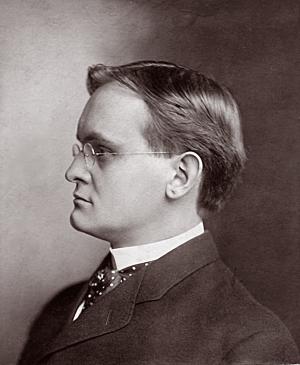 He was for many years a prominent figure in American librarianship. After completing his M.A. degree at Harvard University in 1894, he was employed by the library at Cornell University to catalogue the Fiske Collection of Dante material. He worked at the Library of Congress from 1902 to1904 and then moved on to the library of the University of Michigan, where he served as assistant librarian,1904-1905, and librarian,1905-1916.
A dispute with the Board of Regents led to his dismissal from his post at the University of Michigan so he returned to the Library of Congress, where he served as chief of the order division.
During World War 1, while on the staff of the Library of Congress, Koch played an instrumental role in ensuring that scientific publications from Germany and other combatants continued to be available to American researchers. He was involved in the American Library Association's Library War Service program to provide books for American soldiers in the United States and in France. After the end of the war was very active in organizing American support for the rebuilding of European libraries that had been destroyed during the war. In 1919 he was appointed librarian of Northwestern University where he served until his death in 1941.
Charles Lathrop Pack
Businessmen and War Garden Movement
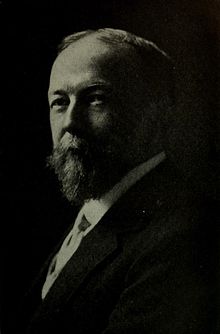 He was a third-generation timber-men, was "one of the five wealthiest men in America prior to World War I". He owed his good start in life to the success of his father, George Willis Pack, and grandfather, George Pack, Jr. in the forestry sector. Growing up on Lake Huron in Michigan, Charles L. Pack moved to Cleveland,OH. from 1871 to the early years of the 20th century. With "savvy investments ... in southern timber ... banking and real estate",Pack became a multi-millionaire. During World War I, he was a principal organizer and was heavily involved in the War Garden Movement in the United States.
The War Garden Movement was based on using organic fertilizers, this saved the Nitrates for explosives, growing your own food or local sourcing it to save transportation space for "War Goods", and save more farm food for the soldiers. Also, using less meat by substituting fish, using less wheat by using other types of non gluten flour, and saving sugar and butter by using vegetable oil and honey.
Rebecca Shelley
Peace Activist
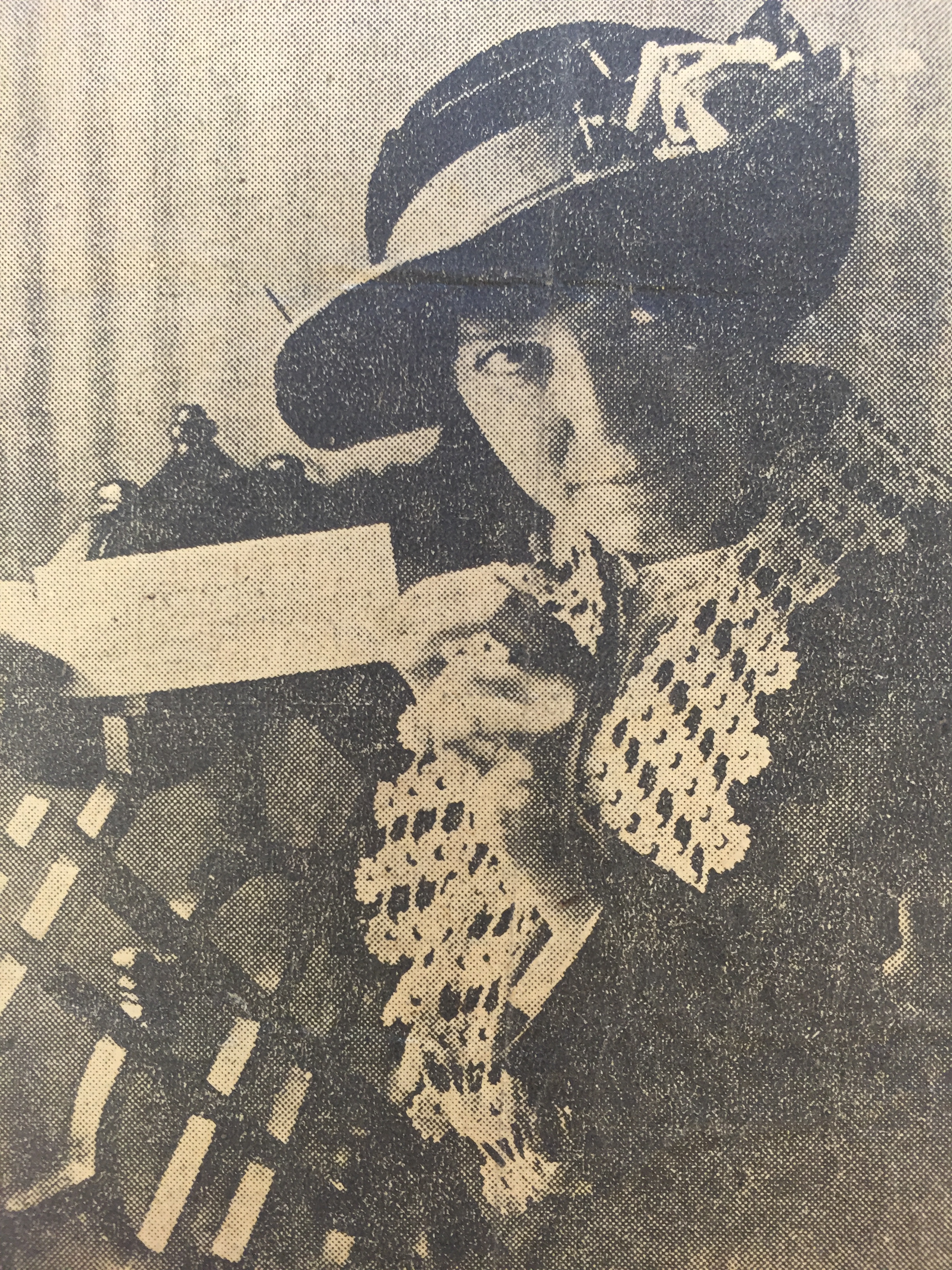
She was born in Sugar Valley, Pennsylvania on January 20, 1887. She attended the Normal School in Clarion, Pennsylvania. In 1904 her family moved to Michigan. In 1907 she attended University of Michigan and majored in German. She graduated Phi Beta Kappa in 1910.
In 1915, she was selected to be part of the U.S. Delegation to the International Congress of Women for a Permanent Peace at The Hague. Later that year, she sailed to Europe on the Oscar II, as part of Henry Ford's peace mission. She became part of the Peace Movement leadership in United States before and during World War One.
(Rebecca is hold a $10,000.00 Check from Mrs. Henry Ford for the Peace Movement)
After the war, she lived in Battle Creek, Michigan and published the Modern Poultry Breeder. She continued with the Peace Movement before and during World War Two, Korea and Viet Nam.
In 1922 she married Felix Martin Rathmer, a German born electrical engineer and she lost her American citizenship. She refused to take the naturalization oath because it contained the phrase "bear arms in defense of the country". She did not regain her citizenship until 1944. She became a widow in 1959.
EDMUND C. SHIELDS
4MM4 Four Minute Men 4MM4
 Born December 30, 1871, in Howell, Michigan, he graduated from high school there and taught in Livingston county schools for a year before entering the University of Michigan. While on Campus, he played baseball for five years,being Captain of the '96 team, and he also was on the football team for a year.
His law career began when he went into practice with his father at Howell, and continued the practice with his brother, Francis Shields, (U of M '94-'95). In 1913, "Ed" Shields founded the law firm, which is now Shields, Ballard, Jennings and Tabor, at Lansing. Mr. Shields began his political career as Livingston county prosecutor, a position he held from 1901 to 1904. He later served as Chairman of the Democratic State Central Committee and as a member of the Democratic National Committee. He managed the successful gubernatorial campaigns of Woodbridge Ferris, in 1912 and 1914. In 1915 he was named Chairman of the Commission for the Compilation of Michigan Statutes, and from 1934 to 1937 he was a member of the State Board of Examiners.
During the Spanish-American War, Mr. Shields was a Second Lieutenant in the 35th Michigan Infantry and during the First World War that he was given the job of directing the compilation of Michigan laws. He was also Chairman of the Four-Minute Men of Michigan.
Mr. Shields was active in and served on the boards of a number of Lansing companies. He was President of the Central Trust Company and the Michigan Surety Company; was a Director of the American State Savings Bank of Lansing; a Director of Motor Wheel Corporation; Director of Duplex Truck Company; Director of Rickert Lumber Company; and served as Vice-President and Director of W. S. Butterfield Theatres, Inc.; of Butterfield Michigan Theatres, Inc.; and of Bijou Theatrical Enterprise Company.
Mr. Shields was appointed to the Regency at the University of Michigan by Governor Comstock in 1933 to fill a vacancy until 1935. He was elected a Regent in 1938, and sat on the board until November, 1945, when his term expired.
Albert E. Sleeper
Governor of Michigan
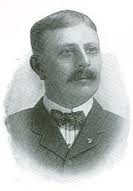 Albert E.Sleeper was elected Governor of Michigan on November 7, 1916, and he was re-elected to a second term in 1918. He served during most of World War I and started measures to supply men, provisions, and arms for the war effort. Also during his four years in office, a department of animal husbandry, a department of labor, and a public utilities commission were established. A county road system was advanced, a permanent state police department was founded, and the first driver's license was issued. Sleeper signed the State Parks Act creating the State Park system and an epidemic of the Spanish influenza was dealt with. On April 19, 1917, Governor Sleeper created the Michigan State Troops Permanent Force (Michigan State Police and the Michigan Volunteer Defense Force).