


























American Field Service Volunteer Ambulance Drivers for the French Army - 1915-1917
By Brooke Anderson, MAPS Museum
June 15, 2018
The American Congress declared war on Germany April 6, 1917. Prior to that declaration, America had maintained a position of neutrality; this was strictly a European war. However, many young American men and women were eager to join the fray, regardless of their Government’s official position. There were many reasons; some wanted to fight, others saw war as a romantic crusade. Germany’s brutal attack on and occupation of Belgium angered others to the point of volunteering. Plus, the 1915 sinking of the Lusitania by a German submarine, with the loss of 128 American lives, as well as many women and children was not to be forgotten. And, many remembered the aid a young America received from the French during our own Revolution; this was a very strong feeling, and many wanted to repay what they felt to be a debt to France for their aid in our victory over the British.
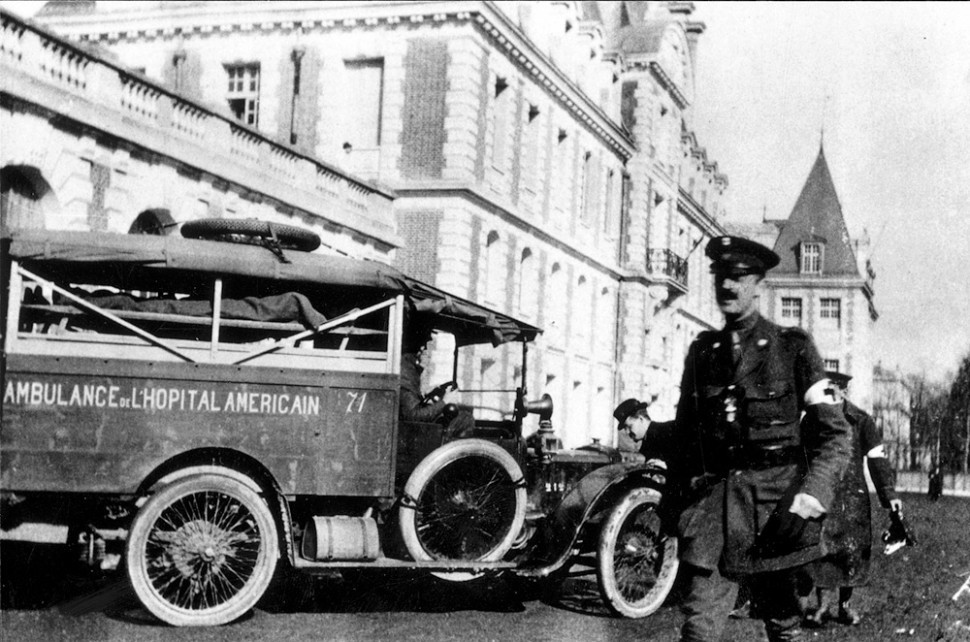
As German troops stormed into France in the fall of 1914, the large American colony in Paris inaugurated a volunteer ambulance service to transport the wounded from the front lines to the American Hospital on the outskirts of Paris. In January, 1915, A. Piatt Andrew - a former Harvard professor and future Congressman from Massachusetts - arrived in France as a volunteer ambulance driver. He soon began to transform the service from a subsidiary of the American Hospital to an independent organization that transported the wounded from the front lines to aid stations to the rear. His effort was supported by another American volunteer organization, the Norton-Harjes Ambulance Corps.
At its height, the American Field Service (AFS) numbered 2,500 volunteers and operated not only on the Western Front in France but also in the battle areas of Italy, Greece, Serbia and Albania. This is one of the many incredible stories of WWI. The volunteer drivers were primarily university men from all over America; the ambulance of choice was a Model T chassis with a purpose-built body. The ambulances were provided by fund drives; schools, clubs, towns, individuals all collected and donated the funds necessary to purchase these vehicles. With America’s entry into the war, these units became a part of the US Army Ambulance Service, which continued to serve the French and Italians, as had the AFS. The AFS participated in every major French battle, and carried munitions, supplies, and more than 500,000 wounded soldiers from both sides of the war.
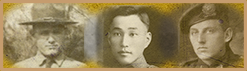
Among the many AFS volunteers were six men from Akron, OH: Paul A. Cahill, TMU 184; David Darrah, TMU 397; Chester A. Elliott, SSU 9; Russell J. Henderson, TMU 397; Harry R. Karnaghan, SSU 14; Harry C. Roth, SSU 14. As the French needed truck drivers as well as ambulance drives, AFS volunteers drove both. SSU units drove ambulances; TMU units drove trucks. All drivers were close to the Front on a daily basis, often in the middle of artillery barrages and even enemy attacks. When America joined the war, AFS volunteers, already battle veterans, were given the choice of leaving the service with honor, or enlisting in the U. S. military; five of the six Akronites chose to stay. Mary Gladwin also from Akron, was another dedicated medical volunteer, serving overseas in the International Red Cross.