|
|
|
|
|
|

Centennial commemoration events in France honored those who served in St. Mihiel and Meuse-Argonne offensives
Six Commissioners from the U.S. World War I Centennial Commission attended events in France honoring U.S. service members who fought in two of the largest battles ever in U.S. military history, the St. Mihiel Offensive, and the Meuse-Argonne Offensive, of World War I. Ceremonies at the American Cemeteries in St. Mihiel and Meuse-Argonne marked the centennial of the battles, and honored the men and women buried there. These special events were hosted by the American Battle Monuments Commission, and also involved the U.S. Defense Department. Click here to read more about these solemn events to honor those who served.
Special Smithsonian Research Prize for WWI Exhibit at National Postal Museum

Lynn Heidelbaugh, Curator at the Smithsonian’s National Postal Museum, has been awarded a 2018 Smithsonian Institution Secretary’s Research Prize in recognition of scholarship for the exhibition “My Fellow Soldiers: Letters from World War I.” This is an exhibit that the World War I Centennial Commission has covered previously, and followed since it's early concept & planning stage. The exhibition explores the history of America’s role in the war through personal correspondence to and from the front lines and home front. Click here to read the entire story of the award-winning WWI exhibition.
|

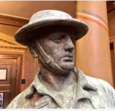
In the small town of Maryville, Illinois, a part of Madison County, with a population of less than 8,000, is found the remarkable story of one First World War veteran and a mysterious statue representing his bravery and the sacrifice he made. Why is the figure mysterious? WWI Centennial Commission intern Madison Menz digs into the startling appearance and enduring mystery of the memorial figure in a small town cemetery. Click here to read the entire nearly century-old mystery in Illinois.
|
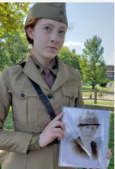
Recalling life as it was actually lived and breathed during the WWI-era, military and civilian reenactors gathered on Governors Island last weekend for the third annual Camp Doughboy World War I History Weekend. The intriguing experience – which drew some 8,500 visitors to the bustling encampment – was held on the island’s Parade Ground – some five hundred yards east of historic Fort Jay. Vintage vehicles were on exhibit, as were displays of artillery, communications, infantry, medicine, and the veterinary corps. Representatives from American Indian House were also on hand to talk about Native American soldiers. Click here to read more about the big annual WWI event in New York.
|
From the World War I Centennial News Podcast
WW1 Then: September Roundtable looks at the Saint Mihiel Offensive
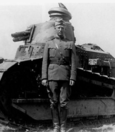
In September 14th's WW1 Centennial News Podcast, Episode 89, host Theo Mayer and regular contributors Mike Shuster and Dr. Ed Lengel discussed the Saint Mihiel Offensive, a huge moment for America and one of the decisive Allied blows against Germany. 100 years ago. The big focus was on a transformative battle, especially for General John J. Pershing and his newly minted US First Army and the fledgling US Army Air Service, led by a guy named Billy Mitchell. And a new tank corp led by none other than George Patton. The story plays out near a town called Saint Mihiel, where Germany has long held a major salient. Click here to read the entire transcript of this lively and informative podcast session.
|
International Report: Dr. Monique Seefried, WW1 Centennial Commissioner

Dr. Monique Seefried is an accomplished educator, fluent speaker of four languages, and a US World War I Centennial Commissioner. In September 14th's WW1 Centennial News Podcast, Episode 89, Host Theo Mayer spoke with Dr. Seefried about the Commission's participation in upcoming commemoration events in France. Click here to read the entire transcript of the interview.
|

Episode 90
Financing War & Going Dry!:
Activities on the many fronts - Mike Shuster | @04:20
Meuse-Argonne opening days - Dr. Edward Lengel | @08:25
Financing War & going dry | @15:20
Farewell to David Shuey | @22:00
Update on Armistice Centennial Events in DC | @23:35
Kentucky in WWI: Filson Historical Society - Jana Meyer & Jim Pritchard | @24:55
Utah in WWI: Utah WWI Centennial Commission - Valerie Jacobson | @31:35
Spotlight on the Media: Documentary on German Air Service - John Heinsen | @37:40
WWI WarTech: Blood transfusions | @44:45
Speaking WWI: Cooties (reprise) | @47:35
Dispatch Highlights | @49:10
Buzz - The centennial in social media - Katherine Akey | @51:50
|
Faulkner Stole My Father's War Wound: Centennial Reflections on William Faulkner and John Reid, Part I
Panthea Reid,Professor Emerita of English at LSU, made a startling discovery while writing her book on William Faulkner.
Faulkner, who received the 1949 Nobel Prize in Literature, had claimed that he was wounded while serving in the British Royal Flying Corps during WWI.
Not only did Professor Reid debunk these claims with archival research; she also learned that Faulkner had confiscated the record of her own father's WWI wound and claimed the story for himself.
Read the first part of "Centennial Reflections on William Faulkner and John Reid," a surprising literary detective story this week at WWrite.
Behind the Lines
This week on Connie Ruzich's poetry from WWI blog, "Behind Their Lines:
“The natural world often remains a voiceless casualty of war,” writes Tait Keller in his essay “Destruction of the Ecosystem” (1914-1918 Online).
Read about British soldier and writer A.P. Herbert's poem “The Windmill” in which the speaker listens to the landscape of the Great War and invites it to tell its story.
|
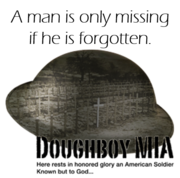
A man is only missing if he is forgotten.
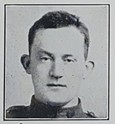
Monday's MIA this week is Sergeant Harry Convin Pruitt. Born September 17th, 1889 Harry Pruitt was a professional soldier, having enlisted in the regular US Army in March, 1913 at the age of 24. He served his first hitch at Columbus Barracks, Ohio, where he was assigned to Company E, 14th Infantry Regiment. He embarked for ‘Over There’ on April 7th, 1918 and in France was reassigned to Company I, 7th Infantry of the 3rd Division; soon to gain fame as the ‘Rock of the Marne’ division. With them he was killed July 15th, 1918 during the Second Battle of the Marne, helping the 3rd earn their title. Originally buried at Fossoy, Marne, his grave was never located after the war. Nothing else is known at this time.
Would you like to help us solve this case? Give 'Ten For Them' to Doughboy MIA and help us make a full accounting of the 4,423 American service personnel still listed as missing in action from WW1. Make your tax deductible donation now, with our thanks.
|

Proudly wearing the WWI 100 Years cufflinks is a fantastic way to let folks serving in the military, along with veterans, know that we still honor those who served our country one hundred years ago.These satin nickel cufflinks are a simple, yet meaningful, way to display your pride and remember those who sacrificed throughout our nation’s great history. A portion of the proceeds from the sale of this item goes towards funding the building of the national World War One Memorial in Washington, D.C.
A Certificate of Authenticity as Official Merchandise of the United States World War One Centennial is included.
This and many other items are available as Official Merchandise of the United States World War One Centennial.
|

|
|
|
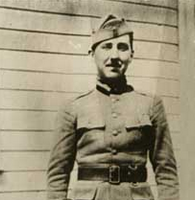
Submitted by: Pat Mosites, Employee at Minneapolis International Airport-airfield named in his honor Wold-Chamberlain Field
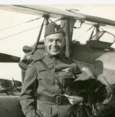
Earnest Groves Wold was born around 1897. Earnest Wold served in World War 1 with the Lafayette Escadrille. The enlistment was in 1917 and the service was completed in 1918.
Story of Service
Ernest Groves Wold, served as a reconnaissance pilot in France’s First Aero Squadron, the Lafayette Escadrille, during World War I. Wold’s exceptional coolness and accuracy of fire enabled him to crisscross enemy lines four times on August 1, 1918, photographing German positions and forcing down at least two of five attacking German aircraft.
After machine gun bullets riddled his arms and killed his observer-photographer, Wold piloted his disabled plane back to base, flying with his feet and knees. He died in the crash landing, but his photographs safely reached French forces.
|
|
|
|
|





























 Signature Events Major Moments
 Video Streaming video resources
 Publications Dispatch, Sync-Call and more