

































Ohio in the Army of Occupation
Cyrus Moore, Ohio WWI Centennial Committee
April 26, 2019
Spring of 2019 marks the centennial of the United States occupation of Germany. Following the Armistice of November 11, 1918, Allied forces entered German territory and established bridgeheads. These bridgeheads were footholds in Germany that would give the Allies a military advantage if peace negotiations broke down and war resumed. The US forces controlled a bridgehead around the city of Coblenz, at the confluence of the Rhine and Moselle rivers. US forces in Germany were organized into the Third Army, known as the Army of Occupation. Within the Army of Occupation were many Ohioans, including the 166th Infantry Regiment—part of the 42nd "Rainbow" Division—and the 308th Engineers and 308th Field Signal Battalion serving with the III Corps, as well as the 158th Artillery Brigade, attached to the 32nd Division.
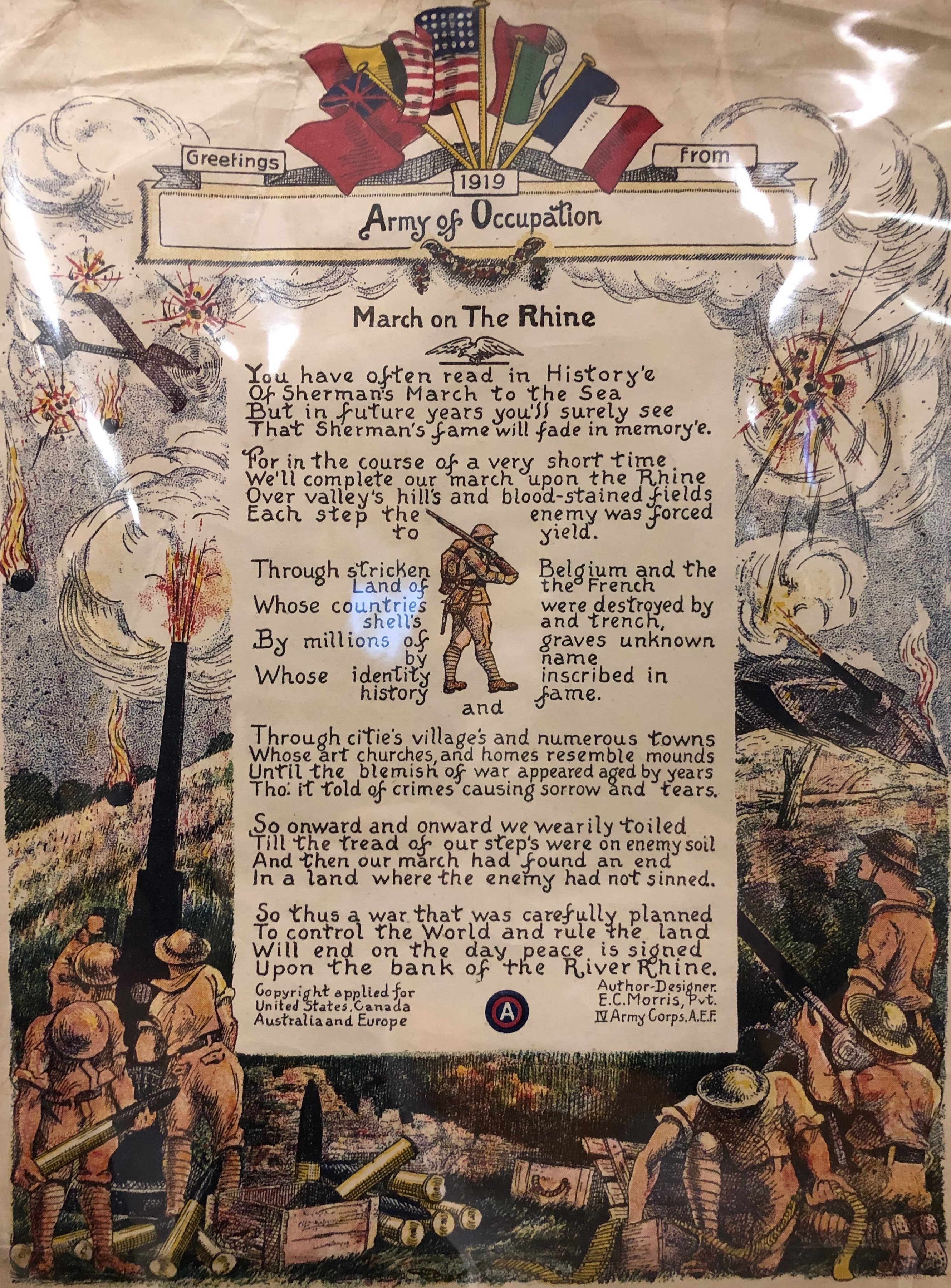 Souvenir poem of the Army of Occupation
The War Department chose highly decorated divisions for the Army of Occupation and treated the men well, especially compared to what they had endured fighting in the trenches. As they crossed into what had been German held territory, soldiers were able to light fires, take baths, and they received fresh new uniforms. The men made the long march into Germany over muddy roads, though the German countryside had been untouched by war. Once the army reached Coblenz, the command established headquarters and various unit took up posts in the city and surrounding villages. To keep morale high, show troupes and lecturers visited the men, keeping them entertained. The men of the 308th Engineers even wrote and put on their own play, which they called “Shell Shock.” Letters and care packages poured in from home. The YMCA stations entertained and provided the men with additional supplies for purchase. German souvenir shops opened up to ensure the Americans were well-supplied with keepsakes. General Headquarters opened areas for leave, which offered officers and men the opportunity to vacation as far away as the south of France.
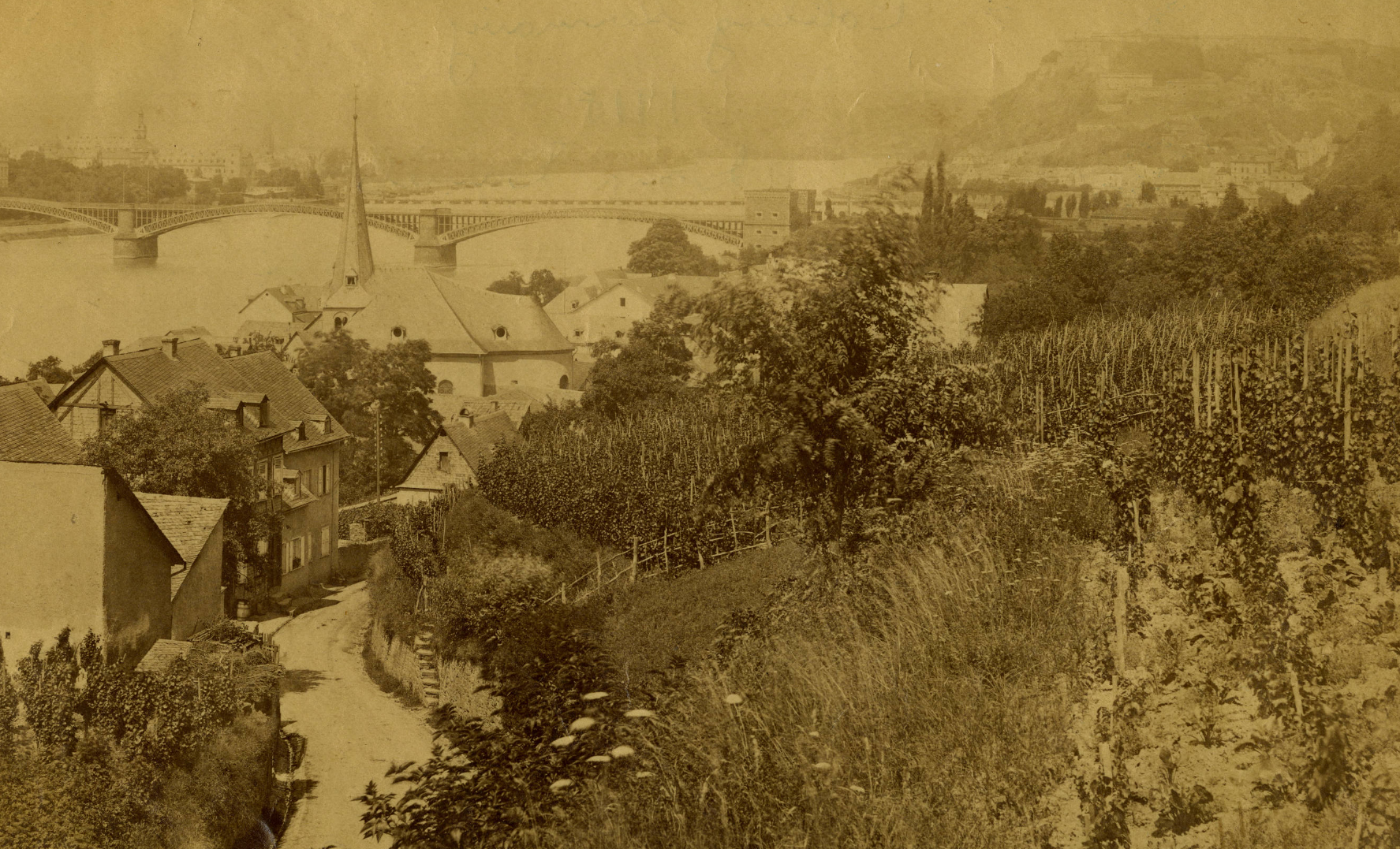 Coblenz, Germany. Via Ohio Memory.
When the Army of Occupation first took up its position on the bridgehead, the men stayed close to their assigned posts, performing guard mounts and drilling often. By January the commanders deemed the occupied area safe for travel and men were allowed leave their billets and go out among the German population unarmed. The men took the opportunity to tour the German countryside, and found themselves often invited into the homes of locals. Some even made friends with the young women of the area and would sneak out after dark to avoid the MPs. Unit histories remark of the friendliness shown to the US soldiers by Germans, who increasingly grew to trust the occupying Americans.
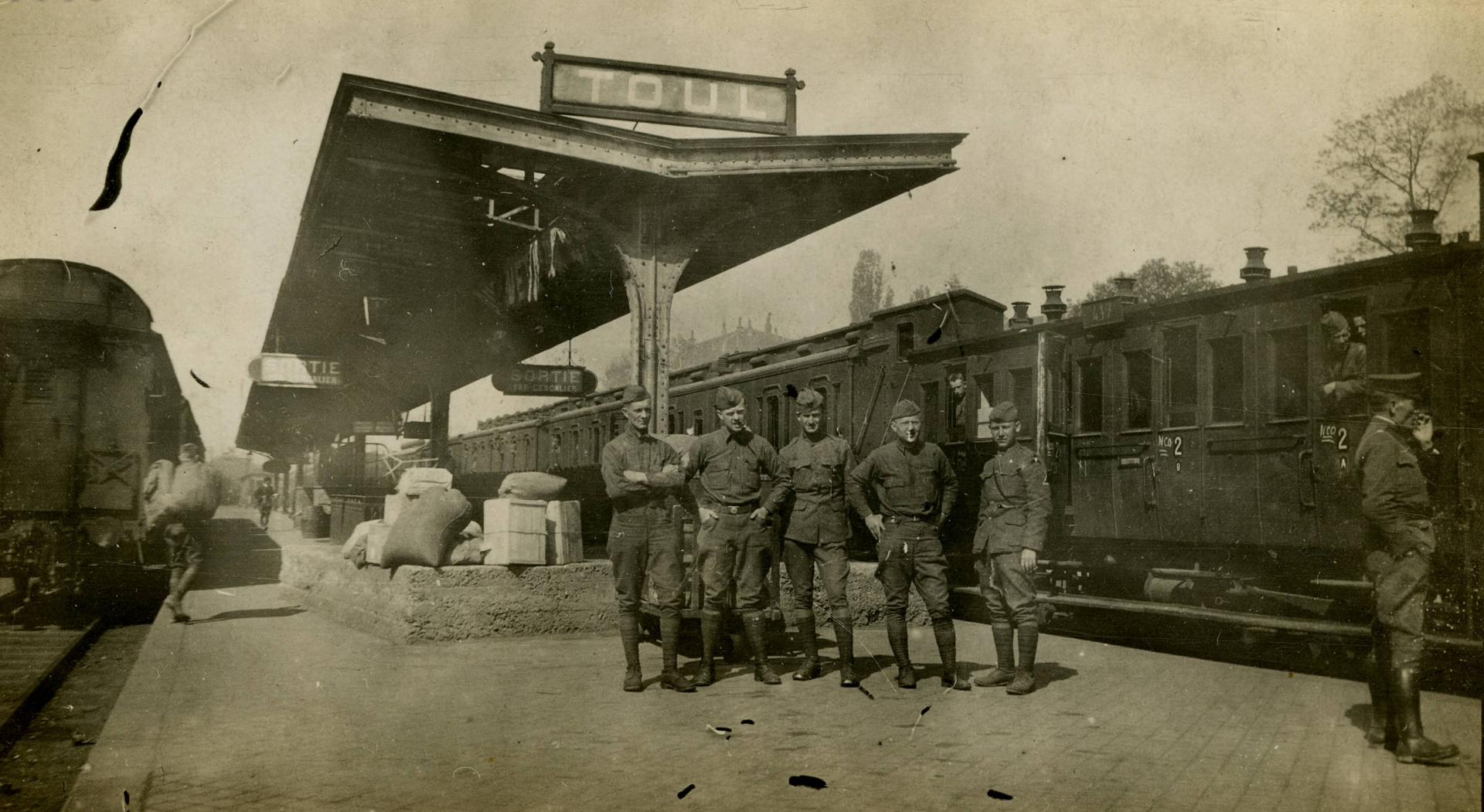 Members of the 308th Field Signal Battalion on leave in Toul, France. Via Ohio Memory.
To be chosen for the Army of Occupation was certainly an honor felt by the men. Despite this, they had been away from home for months, or over a year for many, and desired to return to the United States. This feeling was only exacerbated when the Germans made it clear they had no inclination to pick up the fight again on the Western Front, owing largely to social turmoil and the Weimar Republic’s struggles against communists. To the men of the Occupation, the Watch on the Rhine, as they called it, became increasingly unnecessary. Politicians in the United States began calling for men’s return. In March, the 158th Artillery Brigade received orders to prepare to to leave Germany. Not long after they boarded trains destined for French ports and ships that would carry them back the US. The 308th Engineers and Field Signal Battalion were not far behind. The last Ohio outfit to leave Germany was the 166th Infantry Regiment. On April 6, 1919, two years after the US entered the war, the men left the Rhineland.