










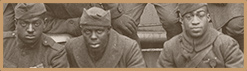
























Taylor Field: Alabama's 1st Military Flying Facility
November 2, 2016
By Dr. Robert B. Kane, Director of History, Air University, Maxwell AFB, Montgomery, Alabama
Images courtesy of the Directorate of History, Air University, Maxwell AFB, AL
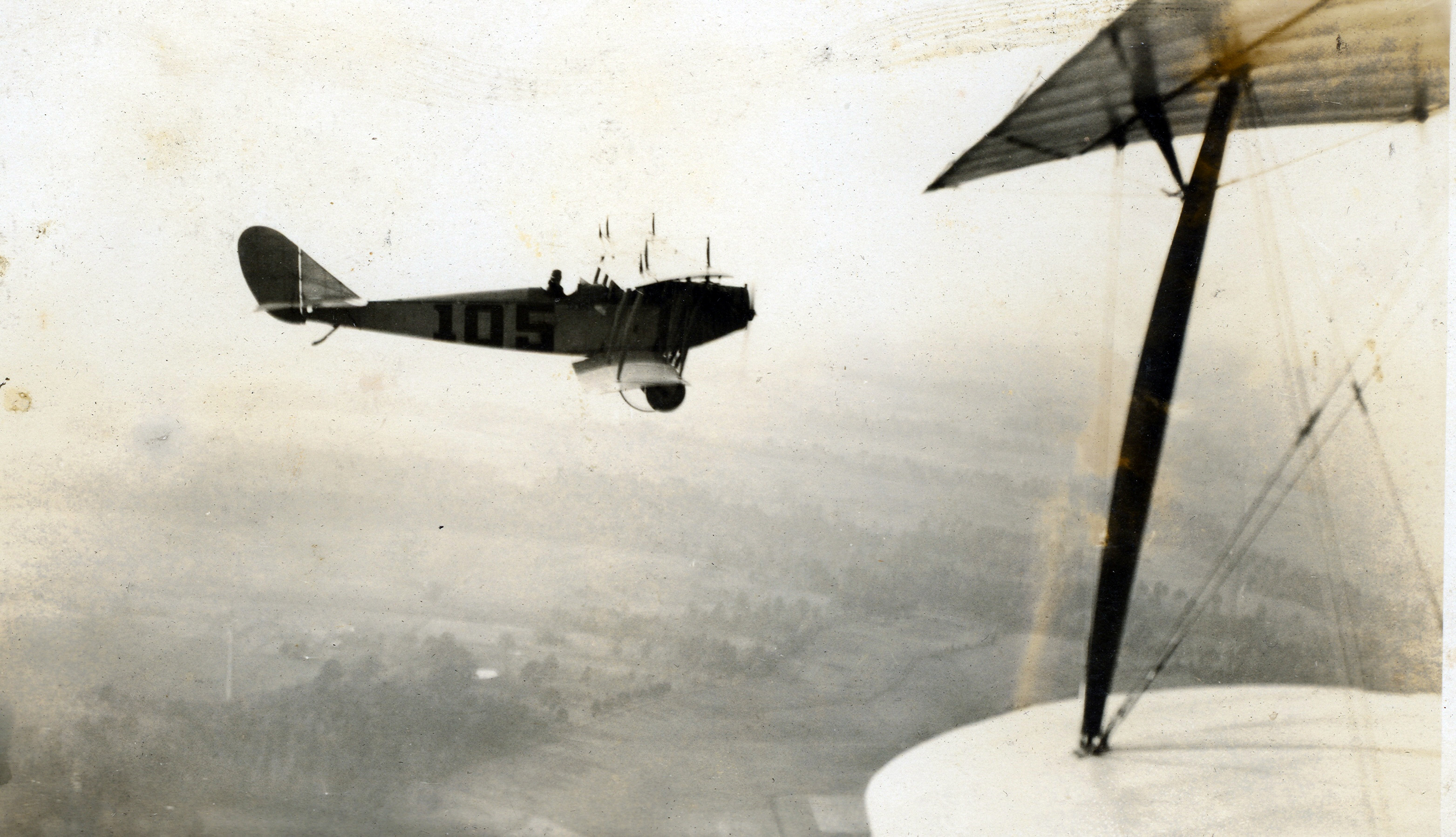
A Taylor Field Curtis JN-4 Jenny, taken from another Taylor Field aircraft, during a flight training mission
On April 2, 1917, the United States Congress declared war on Germany. To train pilots for combat in France, the Air Service established 32 training installations in the United States. One of these was Taylor Field, the first military flying facility in Alabama. The War Department leased 800 acres of land, 11 miles east-southeast of Montgomery for $4,000 a year with an option to buy for $32,000.
Taylor Field opened on November 16, 1917 and was named for Captain Ralph L. Taylor of Stamford, Connecticut. Taylor was commissioned a captain in the Nebraska National Guard Air Service on May 3, 1917, and sent to Mineola Field (later Roosevelt Field), New York, on May 23, 1917, as an aviation instructor. He was killed in an accident on August 2, 1917.
Construction of the airfield’s facilities for a primary flight school began on December 11, 1917. By April 16, 1918, the 128th, 129th, 131st, and 193rd Aero Squadrons had arrived at the field to begin training up to 300 students through an eight-week flight training course, using about 200 Curtiss JN-4 "Jenny" and De Havilland DH-4 "Gypsy Month" trainers. To service these aircraft, the War Department established Aircraft and Engine Repair Depot #3 inMontgomery on the site of the former Wright Brothers flying school. Besides the flight school, facilities at the airfield included the post headquarters, 16 hangars, repair shops, warehouses, barracks, and a hospital.
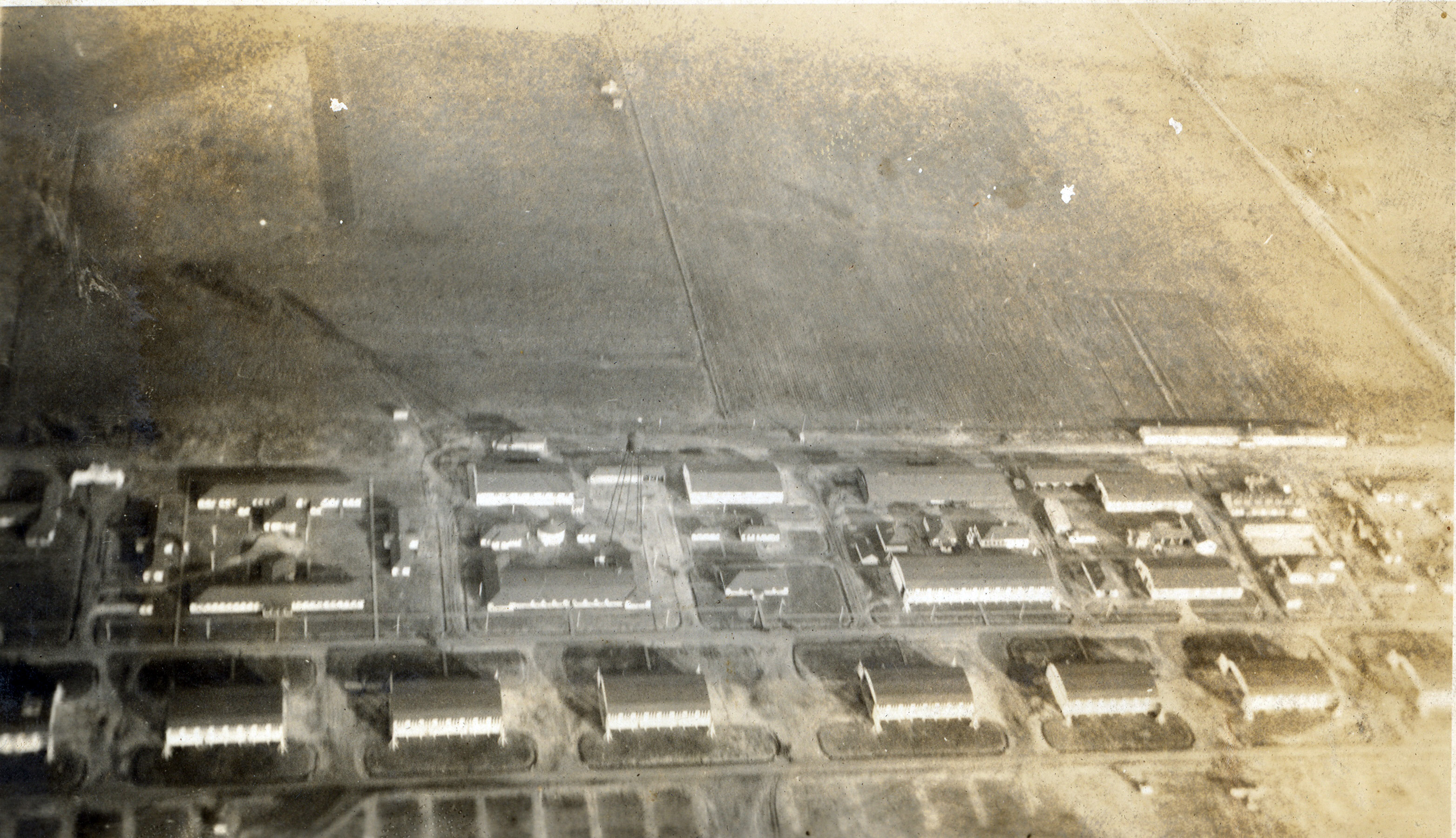
Aerial view of Taylor Field showing the school facilities, center, and some of the 16 large hangers, lower part of photo
Flight training began May 2, 1918. Major E. M. Hoffman was the first post commander. 2nd Lt. Charles N. Monteith succeeded him on July 9, 1918, and 2nd Lt. Kenneth G. Fraser, in turn, succeeded Lt Monteith on October 2, 1918. By the Armistice on November 11, 1918, the Taylor Field flight school had graduated 139 cadets and flown a little over 20,619 hours. Some of the graduates saw combat France during the war. With the war over, the War Department closed the airfield in April 1919.
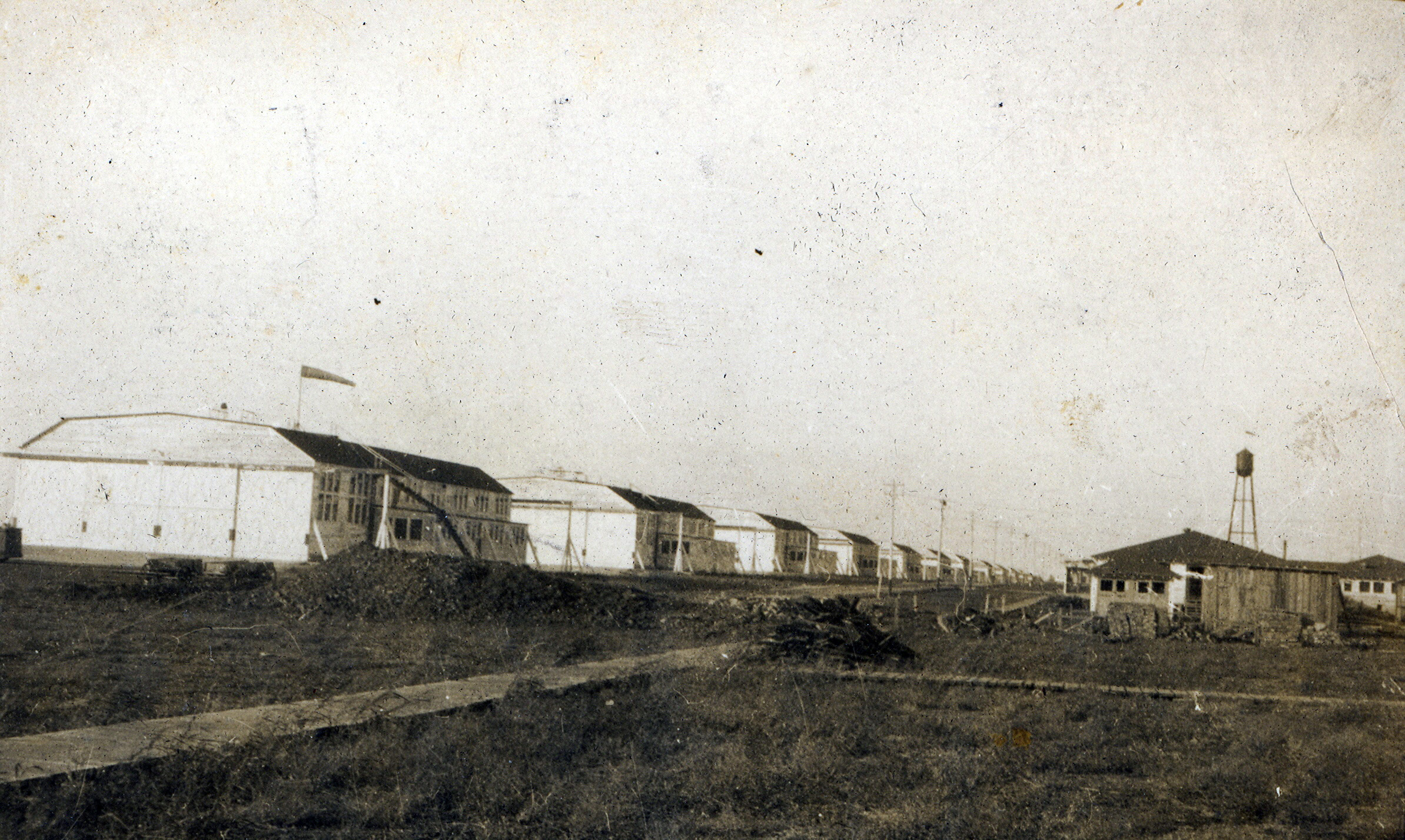
Ground view of the 16 large hangers, left, at Taylor Field
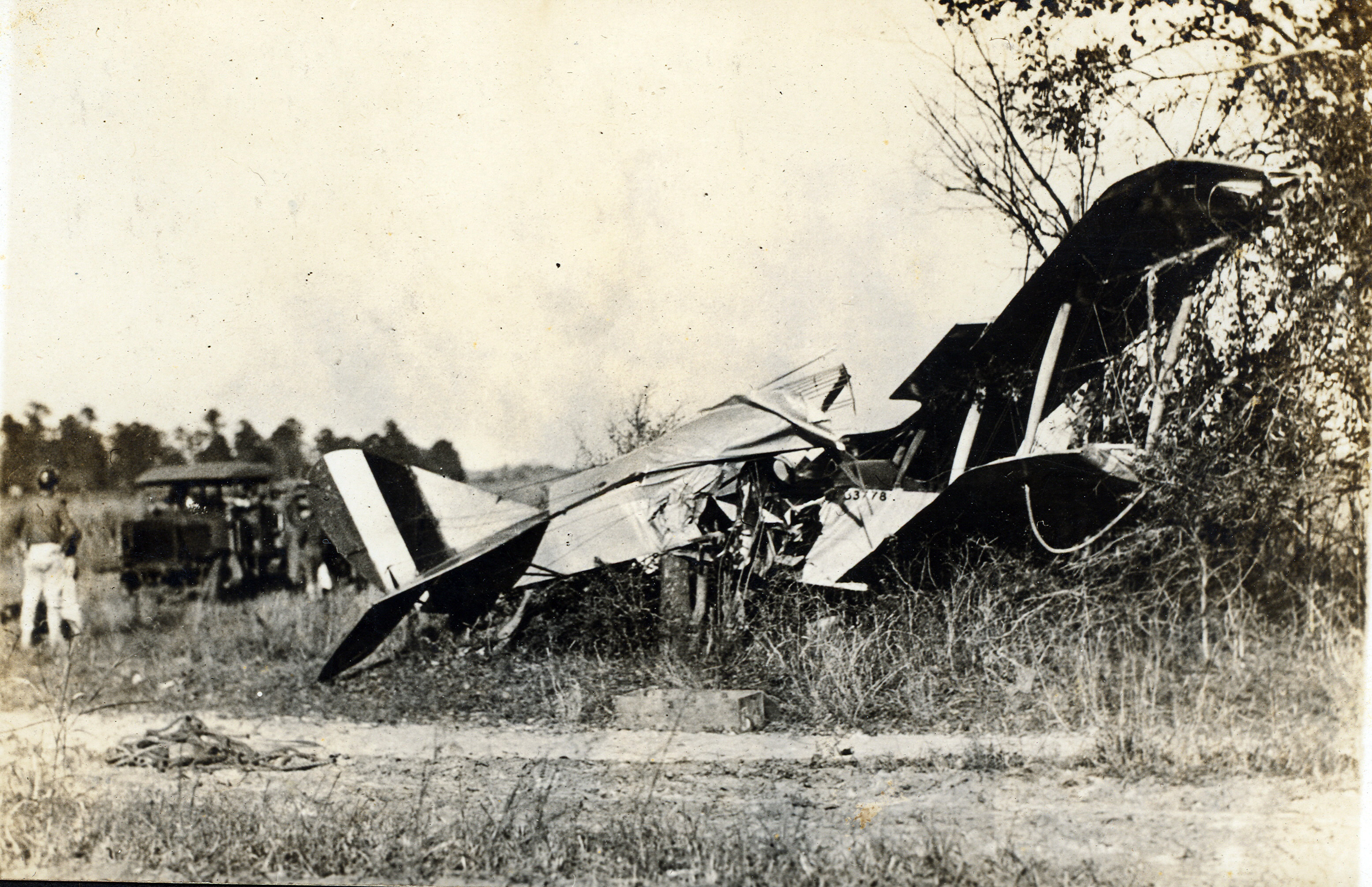
A wrecked Curtis JN-4 Jenny from Taylor Field
By the start of World War II in December 1941, the hangers and many of the other structures at Taylor Field had been torn down. In 1942, as the number of flight cadets increased at the basic flight school at Gunter Field, just north of Montgomery, the US Army Air Force (AAF) reopened the airfield as Gunter Auxiliary Airfield #5 to reduce growing air traffic congestion at Gunter Field.
With the end of the war, the AAF closed the field in July 1946, and the War Department sold portions of the installation to private owners and tore down the remaining structures although aerial photos show the remnants of the installation swimming pool. A 1993 historical marker on the south side of Ray Thorington Road near Foxchase Drive marks the site.
In 2005, private developers established the Avalon subdivision along the northwest border of the airfield's former location, approximately 200 yards east of this marker and across the former southwest-to-northeast runway. A dirt road to the east of Avalon runs along the same path as the former main entrance to the hangars and a few homes were built along the east side of it in the 1950s. Lancelot Drive in Avalon crosses over the old main airfield road near where the dirt road terminates.