


























The 37th Division’s Return to Ohio
By Cyrus Moore III, Ohio World War I Centennial Committee
June 11, 2019
When the Armistice of Compiègne went into effect on November 11, 1918, ending fighting on the Western Front, the infantry regiments of Ohio’s National Guard Division, the 37th “Buckeye” Division, were in Belgium, on the banks of the Scheldt River. At the same time, the 37th Division’s artillery brigade was in the Meuse-Argonne, part of American Expeditionary Force’s First Army, making a drive towards the city of Metz in Lorraine. Though the fighting had ended, the division would spend the winter in Europe, before returning to Ohio in the spring of 1919.
During their relatively short time in combat, Ohioans of the 37th Division had fought courageously. Under the command of Belgian King Albert, the Ohio Guardsmen had been part of a final push in the Ypres-Lys Campaign. After the Armistice a German officer noted that the German General Headquarters rated the 37th among the six best-fighting US divisions, and the King of Belgium personally met with and thanked the men who had served under his command.
Following the Armistice, the 37th‘s infantry remained in Belgium. The various regiments were stationed in towns throughout the lower part of the country. On November 20, a provisional battalion of the 37th had the honor of accompanying King Albert’s ceremonial return to Brussels. In early December, the 146th Infantry Regiment crossed No Man’s Land and entered areas that the Germans had controlled since the early days of the war. Here the men ushered in the year 1919.
As the threat of renewed fighting diminished, the US began making preparations to bring divisions home. Since the 37th Division was not among the US divisions selected for occupation service in the German Rhineland it was selected to return home. In January the men of division began boarding trains that took them to ports of embarkation in France. It was a slow and methodical process; on March 4, the first elements of the division to leave Europe boarded transport ships in Brest.
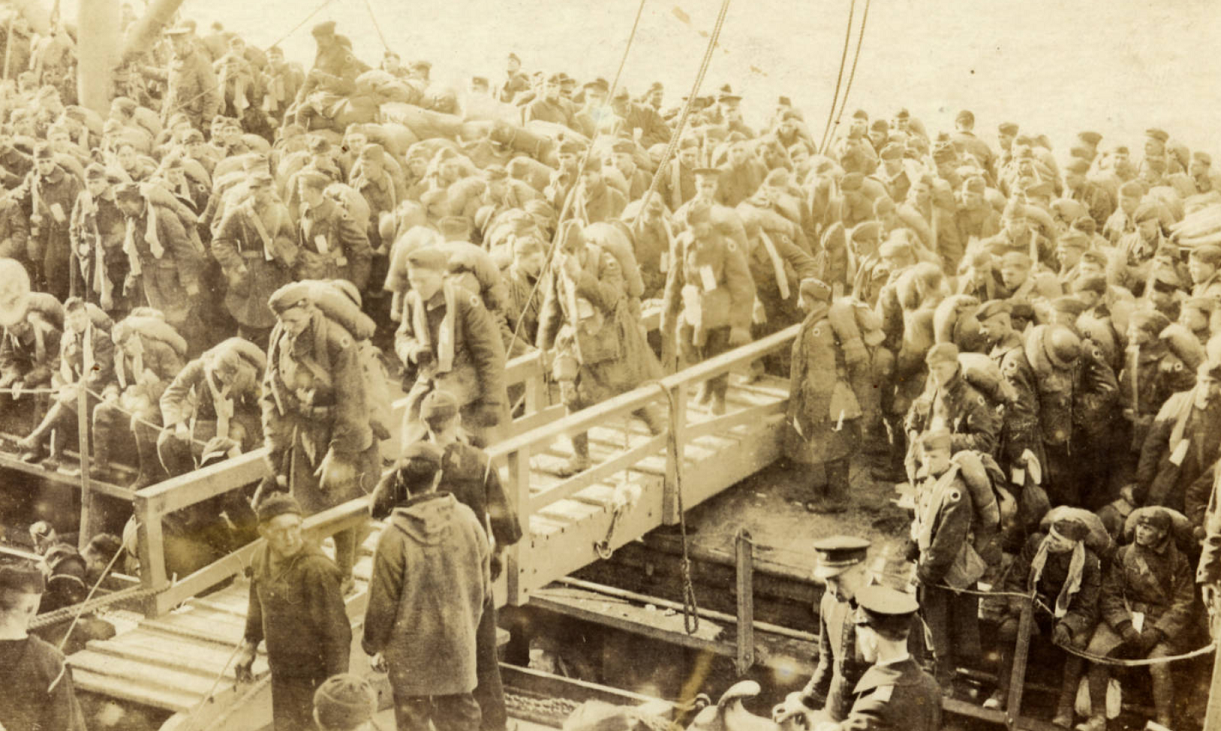 The 37th Division's 136th Field Artillery boarding the USS Connecticut on March 11, 1919. Ohio National Guard Digital Collection via Ohio Memory.
The 37th returned to the United States in March. Behemoth transport ships and even battleships moved the men back across the Atlantic. By way of Camp Mills, Long Island, New York, the division made its way to Ohio. In April, the division returned to its home state to great fanfare. Canton, Cincinnati, Cleveland, Columbus, and Marietta held welcoming ceremonies and the men paraded through the streets. After the parades, the men proceeded to Camp Sherman where they received their Honorable Discharges and rejoined the civilian world.
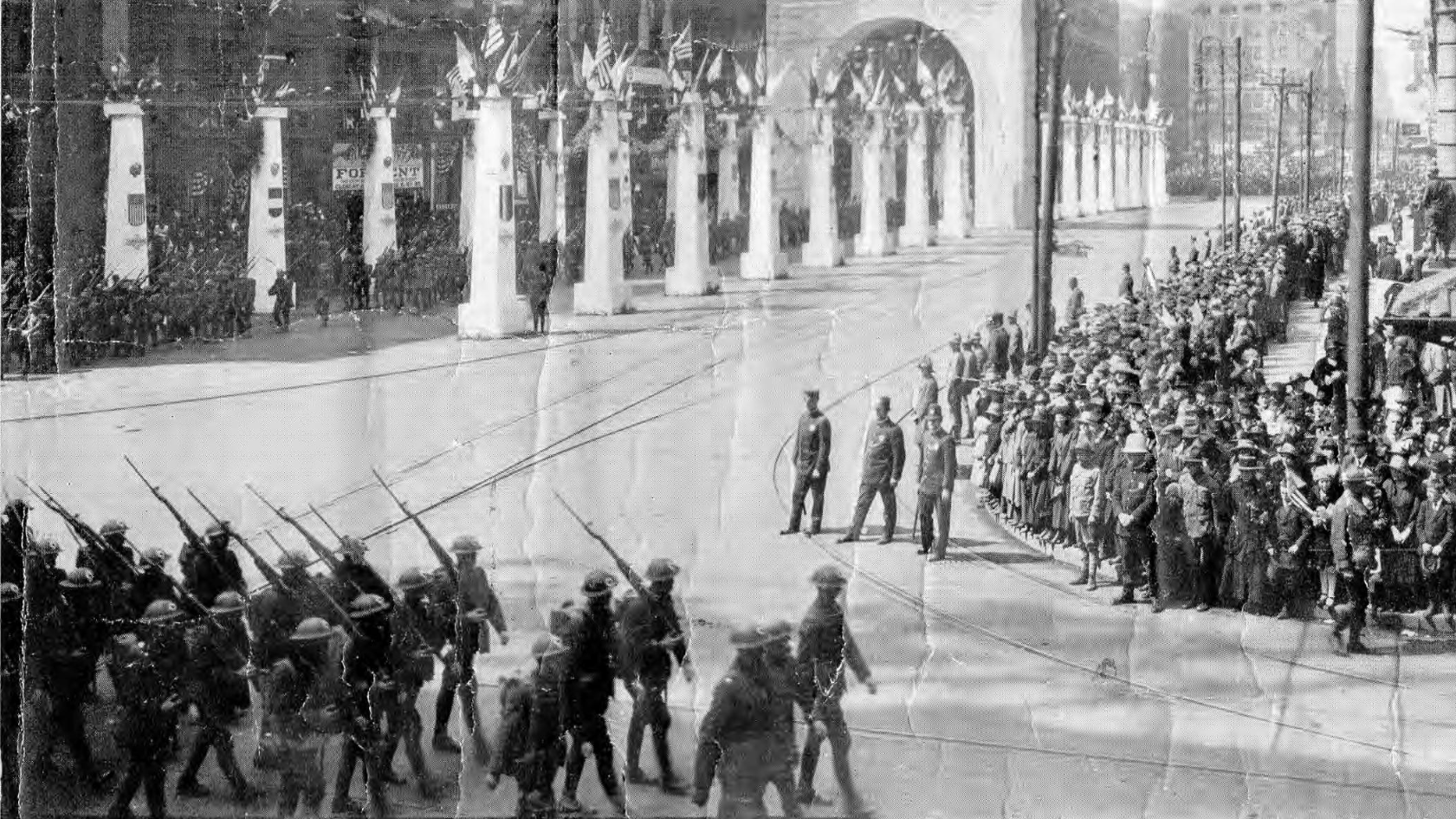 The 37th Division's 147th Infantry parading through Cincinnati, April of 1919. Ohio History Connection via Ohio Memory.
Ohio’s returning soldiers had to adjust to social changes taking place in 1919. Women’s Suffragists who had largely suspended their activities during the war took up the campaign again to win the right to vote. Prohibition was also a major concern, with Dry activists gaining support for legislation that would permanently ban the sale of alcohol. On top of these issues, Socialist workers, emboldened by Communist revolutions in Europe, demonstrated publicly and violently clashed with police and soldiers in Cleveland on May Day.
Though their service in the military had ended, the men did not forget the role they played in the World War. Many joined veteran’s organization, and the recently-established American Legion quickly swelled in numbers as veterans established posts throughout Ohio. The 37th Division veterans formed their own association, and held reunions annually. For years afterwards veterans of the 37th Division, some still wearing their uniforms, were staples of Armistice Day and later Veteran’s Day parades.
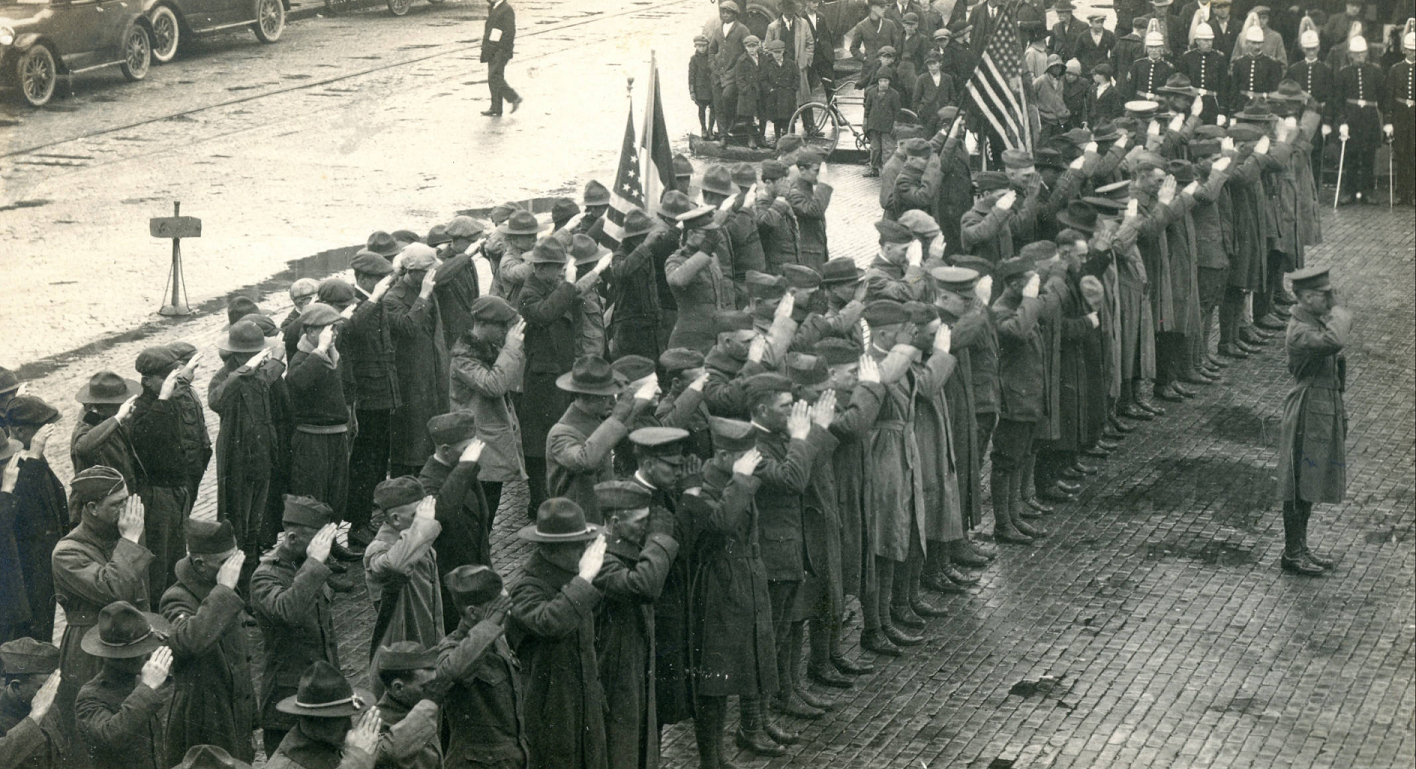 Young World War Veterans in Armistice Day Ceremony in Nelsonville. Southeast Ohio History Center via Ohio Memory.