































Teaching WWI: Primary Sources & the Story of Leon McGavock
March 14, 2018
By Wesley Garmon, Education Coordinator, Alabama Department of Archives & History
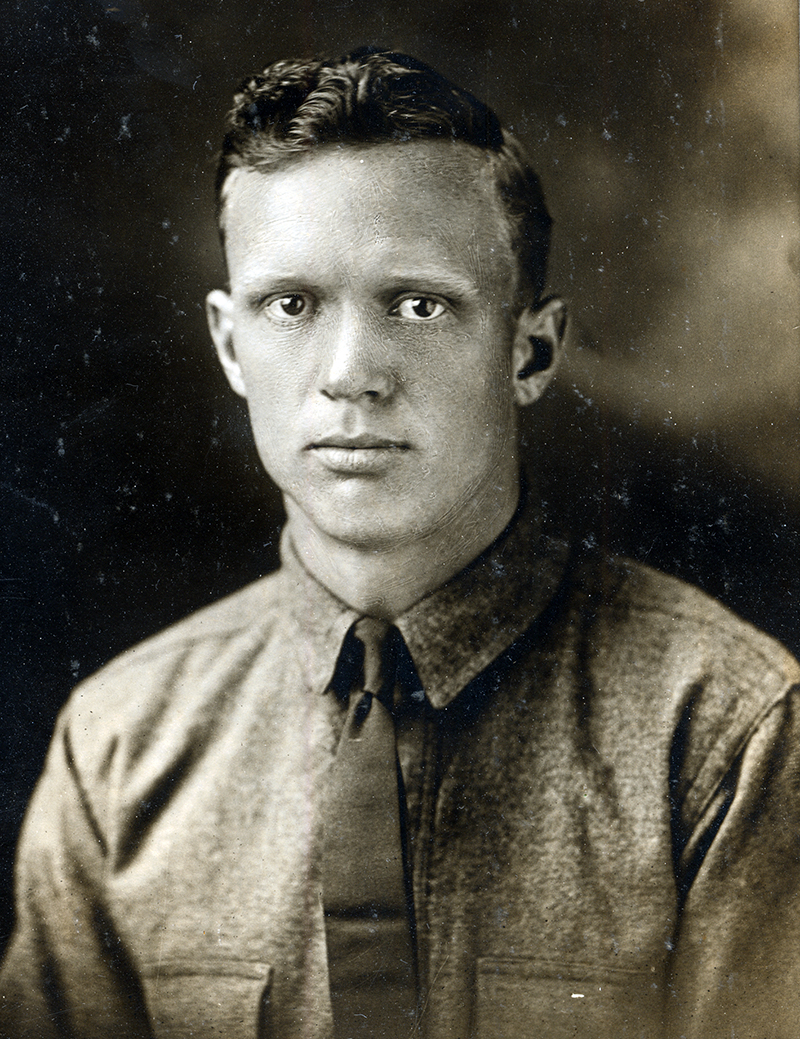
The Alabama Department of Archives and History (ADAH) contains a wealth of information, primary sources, and artifacts related to World War I. These resources are particularly useful to educators, but it is easy to feel overwhelmed when trying to choose which materials to use in the classroom. Fortunately, the ADAH website contains everything you need to make these harrowing stories come to life. Using the story of Leon McGavock, this post will provide a few tips and ideas that you can implement in your classroom today.
By choosing the research tab from the ADAH homepage, patrons can find the “Search Our Collections” feature. Once there, you will find the “Online Records” section, which contains all digitized resources available from ADAH. These records are available for download and use in your lesson plans or by your students.
The first resource that you will want to explore is the World War I Goldstar Database. During World War I, mothers of Alabama soldiers who died in service or who were recognized for distinguished service were awarded Gold Stars by the federal government. The ADAH used the Official Bulletin, published by the U. S. Committee on Public Information, to identify these soldiers, then sent out biographical questionnaires to their families. Many families responded by sending completed biographical forms, letters, newspaper clippings, and photographs. The department’s original goal to compile a publication honoring these individuals was never realized, but these materials now constitute this rich database.
The Goldstar Database is searchable by name, branch of service, race, town, and/or county. The search feature makes this database great for engagement activities and web-based scavenger hunts. Students can be assigned a soldier to research or they can be allowed to search for a family member or person from their hometown. Once a subject is chosen, students can use the biographical information contained in the database to construct a story or presentation about their selected individual.
One excellent example of the stories contained in the Goldstar Database is that of Sergeant Leon McGavock. McGavock, of Birmingham, served in Texas during the Pancho Villa Expedition for three years before sailing for France in July 1918. He distinguished himself during the Meuse-Argonne Offensive, as a member of the 312th Machine Gun Battalion, 79th Division in September and October. On October 6th McGavock sat in a billet near the frontlines to write a letter home to his mother.
The letter, which makes for an excellent close reading activity, begins with a short telling of McGavock’s extraordinary experience during the previous four weeks. He describes being in the trenches for eight days and going “over the top” to begin a six-day drive which ended the Meuse-Argonne Offensive. It is not long before McGavock turns his attention to his sweetheart “Freddie,” whose letters Leon desperately coveted. He professes his love for her as he transitions to more mundane details. In a perfect illustration of foreshadowing, Leon mentions that he recently had his first bath in four weeks and jokingly worries that he will “get a cold getting all that dirt off me.” Leon also mentions that his twenty-fifth birthday was the next day and wistfully hoped to be home for his next birthday. Two days after his final letter home, Leon McGavock became ill with the flu. He died October 15, 1918.
By using the materials in the Gold Star Database, your students can gain a well-rounded view of everyday people who were involved in extraordinary events. In McGavock’s story, we see a heroic young man coming to terms with his involvement in one of the bloodiest conflicts in human history, all while thinking about his sweetheart back home. Suddenly Leon is not just a black and white photo or a dusty old government record. Instead, he is a relatable young man who shared many of the same hopes and dreams that your students hold today. These materials and others from the ADAH digital collections can truly bring history to life for your students and place them directly into shoes of those involved.