|
|
|
|
|
|
"The women who joined the Corps during WWI were heroines we must continually honor"

The WW1CC website is full of interesting pages, and incredible resources. As part of our series on what you can find there, we caught up with Jo-Ann Power, who created and curates a special page devoted entirely to the U.S. Army Nurse Corps in World War I. Jo-Ann is author of more than 60 novels, dozens of newspaper and magazine articles plus non-fiction, and she has won awards and acclaim during her decades’ old writing career. During the 1980s, she became interested in the thousands of women who volunteered to join the Army Nurse Corps. Few Americans had ever heard of them, but Jo-Ann found many primary resources at the National Archives in Washington, D.C. and at Carlisle Barracks in Pennsylvania. Believing these brave women deserved wider recognition, Jo-Ann spent weeks examining boxes crammed with unannotated photographs, tattered letters and old microfilms of newspaper articles. She turned that research into a novel, HEROIC MEASURES, which was published in 2013. She also turned her vast knowledge into the amazing web page we have today. Today's Army Nurse Corps was created during the war, and their history is truly remarkable. Jo-Ann brings this story to life through a number of unique and innovative storytelling features.
|
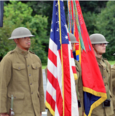
Veterans and current leaders of the 42nd Infantry Division and the New York Army National Guard marked the 100th anniversary of the “Rainbow Division” with a Saturday, August 12, 2017 ceremony in Garden City, NY, where the division first organized in 1917. In an effort to organize and deploy combat units quickly as the United States entered World War 1, the division was formed from assembling the most ready National Guard units of 26 states and the District of Columbia. Because it would take in units from many states, then-Major Douglas MacArthur, the officer who came up with the idea, said it would stretch across the country “like a rainbow.” Read more about ceremony marking the Rainbow Division's centennial here.
|
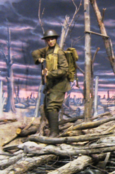
The First Division Museum at Cantigny Park in Wheaton, IL will reopen to the public on Saturday, August 26, at 11 am. The museum began a transformational update last fall. After a ribbon-cutting ceremony, visitors will enter the museum for the first time since Veterans Day 2016. The experience awaiting them features new and updated exhibits plus cutting-edge storytelling techniques. The museum’s reopening coincides with the 100th anniversary of the famed military unit known as the “Big Red One.” It became the first division of the U.S. Army in June 1917, assembling to fight in France in World War I. Read more about the First Division and the museum's new features here.
|
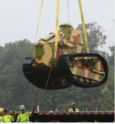
On Tuesday August 15th the team at the U.S. Army Center for Military History placed a Renault FT-17 Tank at the construction site of the upcoming National Museum of the United States Army. The tank followed a remarkable journey, and is a true artifact of World War I. Nicknamed the "Five of Hearts", this tank was given to the U.S. Tank Corps by France during WWI, and is the only known surviving Renault tank used in combat by the U.S. thought to be in existence. Read more about this historic fighting vehicle and its new future home here.
|
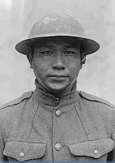
Even before most Native Americans had citizenship rights, thousands of men from tribes across the country showed their patriotism by volunteering for the military and fighting in World War I. Now, as the nation solemnly marks the World War I Centennial, United Tribes Technical College at Bismarck is planning to honor Native American servicemen from North Dakota tribes who served and sacrificed. The honoring will be held on Sept. 10 during the 2017 UTTC International Powwow at the college in Bismarck. Read more about the ceremony and the World War I memorial on the Native American college campus here.
|
The WW1 Centennial News Podcast is about WW1 THEN: 100 years ago this week and its about WW1 NOW: News and updates about the centennial and the commemoration.
Available on our web site, iTunes, Google Play, and TuneIn.
EPISODE 33 HIGHLIGHT
Getting ready for training camp - War Department issues 30 lesson manifesto
RG Head on the War In The Sky - 1917 overview
Richard Rubin & Jonathan Bratton on the Storyteller & The Historian on the Naval Reserve Act
Mike Shuster on the war in the middle east
Speaking WWI: “Thingumyjig”
Anne Taylor & Ruth Edmonson Johnson on 100 Cities / 100 Memorials
Professor Jeff Jakeman on Penrose Vass Stout: Aviator, architect and artist
The eclipse of 1918: What comes around, comes around |@37:00
Susan Werbe on telling the WWI story with the voice of people
And more…
|
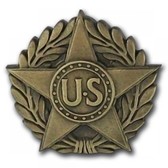
Proudly wearing the World War 1 U.S. Victory lapel pin is a meaningful way to honor the contributions made for our country one hundred years ago. Soldiers received Victory buttons upon their discharge from service in “the Great War”. Hand cast in jeweler’s alloy and hand finished in a satin bronze patina, the design features the star, symbolizing victory, honor and glory; a wreath of evergreen laurel leaves symbolizing triumph over death; and the U.S. insignia, clearly identifying the country served.
Get your at the official WWI Centennial Merchandise shop.
Check out the many other great commemoration items while you are there.
|

|
|
|
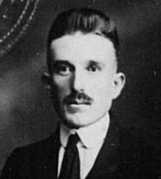
Submitted by: Diego Paganini {great-grandnephew}
Oreste Alberighi served in World War 1 with the United States Army. The dates of service are: Known From July 26, 1918 to July 3, 1919.
Oreste Alberighi was born on Jan. 27, 1887 in Gradizza, a small hamlet of Copparo in Ferrara district in Italy. His father was Antonio and his mother unknown.
He was stout, with brown hair, grey eyes and he used to smoke pipe. From this habit he got the Italian nickname of « Pipa Calda ».
He left Italy in April 1912 for New York – Stoneco (and then Beacon) to follow the paths of his stepsister Ernesta Novelli Manzolli that had left Italy the year before to settle in the US after her marriage and the birth of her second child.
Oreste Alberighi did his military service as private in Dutchess in 1917-1918. He was naturalized in Spartanburg SC – in June 8,1918. After that during WWI he served overseas in France in the company B 51st Pioneer inf - Army serial number 3,181,515 from July 26, 1918 to July 3, 1919.
|
|
|
|
|



























 Signature Events Major Moments
 Video Streaming video resources
 Publications Dispatch, Sync-Call and more