


























Odyssey of the 166th Infantry
By Cyrus Moore III, Ohio World War I Centennial Committee
June 25, 2019
In 1917, as the American Expeditionary Force was taking shape, Ohio contributed a regiment, the 4th Infantry, Ohio National Guard, to the 42nd “Rainbow” Division. The division earned the nickname “Rainbow” early in its existence because it was comprised of National Guardsmen from states across the country, and stretched over the United States like a rainbow. Ohio’s regiment became the 166th Infantry, and it was supplemented by men from National Guard companies throughout the state. It was in this way a miniature of the division as a whole.
The 42nd Division landed in Europe in August of 1917, the first National Guard division to arrive in France, well-before most other U.S. divisions. It immediately began training in trench warfare. In 1918, the division served with the French and first saw combat when the Allies countered the German spring offensive. Until the Armistice, the 42nd fought in heavy action on the Western Front in the Aisne-Marne, at St. Mihiel, and in the Meuse-Argonne. When the Armistice went into effect on November 11, 1918, the 166th and the rest of the 42nd Division was on Western Front, in the French commune of Verpel. As a decorated combat division, the War Department gave the 42nd the honor of being part of the Army of Occupation.
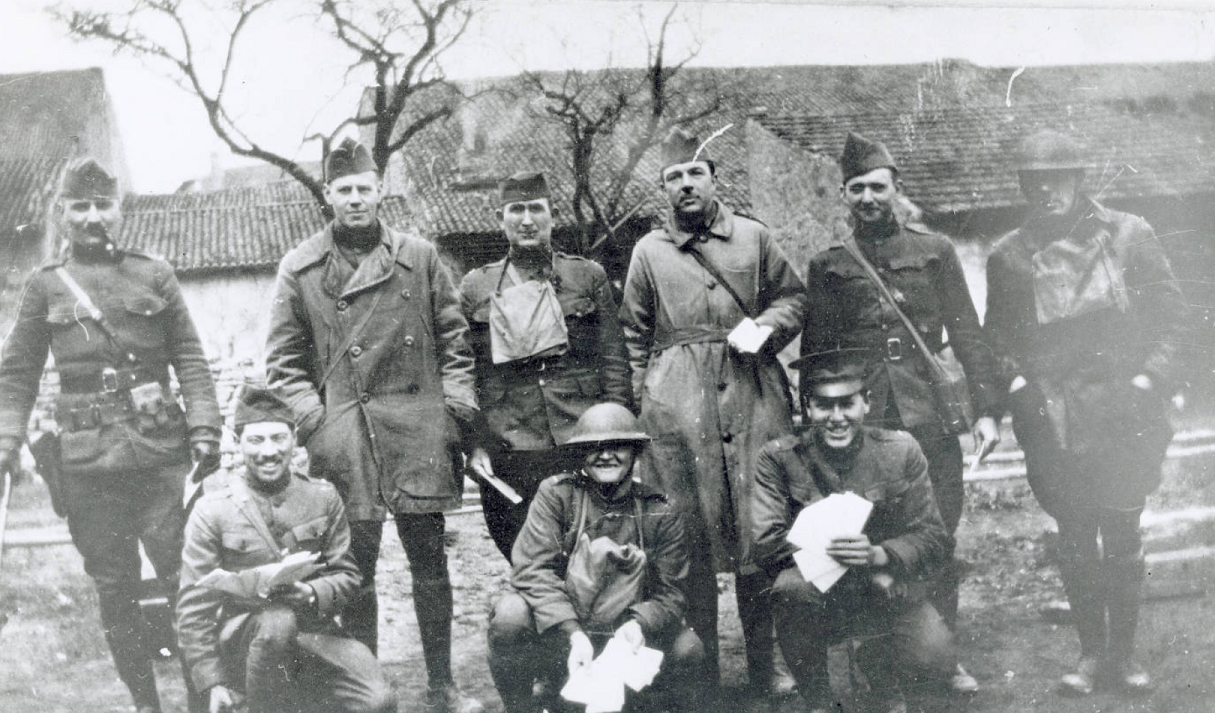 A group of officers of the 166th Infantry Regiment in the Baccarat Sector of France. Via Ohio Memory.
The 42nd Division began its march towards Germany following the Armistice. After receiving new uniforms and automobiles, the division trekked through Belgium and Luxembourg, where they celebrated Thanksgiving Day. On December 3, 1918, the 166th Regiment entered Germany territory for the first time at Bollendorf on the Sauer River. Although the country had not been devastated by war, the men marched over muddy roads and steep hills with worn out shoes, before finally reaching the Rhine. The 166th Infantry took up positions along the Rhine north of Coblenz in the towns of Oberwinter, Rolandseck, Rolandswerth, and at the Ernich Schloss. Here the Ohioans of the Rainbow division spent four months, keeping a Watch on the Rhine.
On April 6, 1919, two years after Congress declared war on Imperial Germany, and two months before the war would formally end with the Treaty of Versailles, the 42nd Division began moving out of the Rhineland. A division review in March by General Pershing at Remagen foreshadowed their departure. Shortly after receiving praise from the commander of the American Expeditionary Force, the men received word that they would be going home. Trains returned the men to France. At the port of Brest they were deloused and once more received new uniforms. There was a delay, however, when the massive transport ship Leviathan needed to take on coal. Eager to get back to the states, the men volunteered to shovel the coal themselves. Encouraged by the regimental band and a burning desire to go home, hundreds of men loaded the fuel until by nightfall the ship was ready to steam. On April 17, the Leviathan set sail.
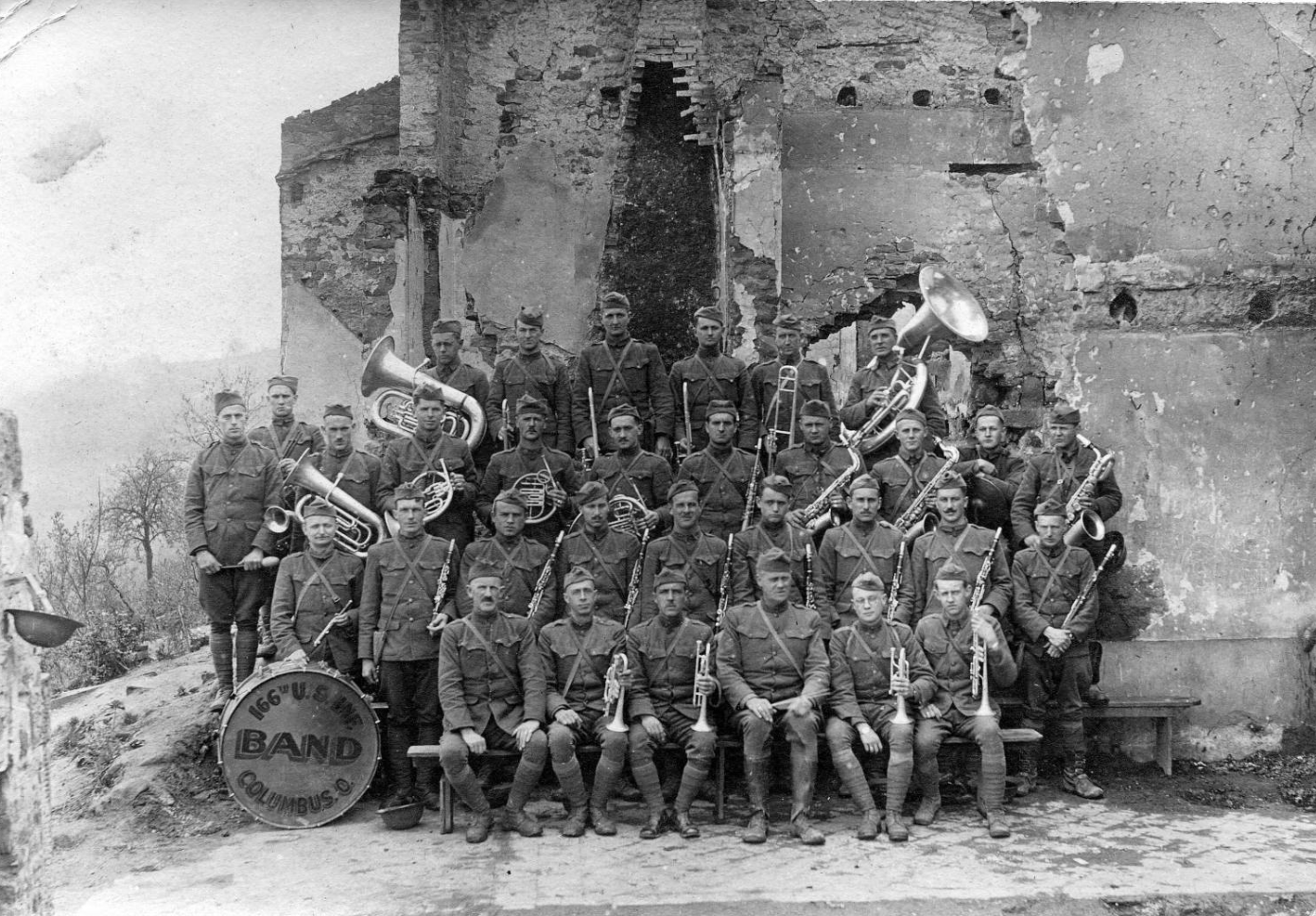 166th Infantry Band in Europe. Ohio Army National Guard Digital Collection via Ohio Memory.
The Leviathan entered New York harbor on April 25, 1919. The soldiers of the 166th were almost home. A large crowd welcomed the ship, and Ohio Governor James M. Cox met the returning veterans. The men stayed in barracks at Camp Merrit, but were nearly delayed there when Colonel Benson Hough of the 166th clashed with the Camp Commander. The Camp Commander chastised Colonel Hough for not removing his cap in the Camp Commander’s presence. Hough responded to the insult by stating how little he cared for the rules when he had so recently returned from fighting overseas, unlike the Camp Commander. Furious for the slight, the Camp Commander placed Hough under arrest. Incensed by hearing the story of their Colonel’s treatment, the loyal soldiers of the 166th nearly mutinied. Colonel Hough diffused the situation by telling the Camp Commander that he was sorry if he had broken any rules. Knowing he was in a potentially dicey situation, the Camp Commander took it as an apology and released Colonel Hough.
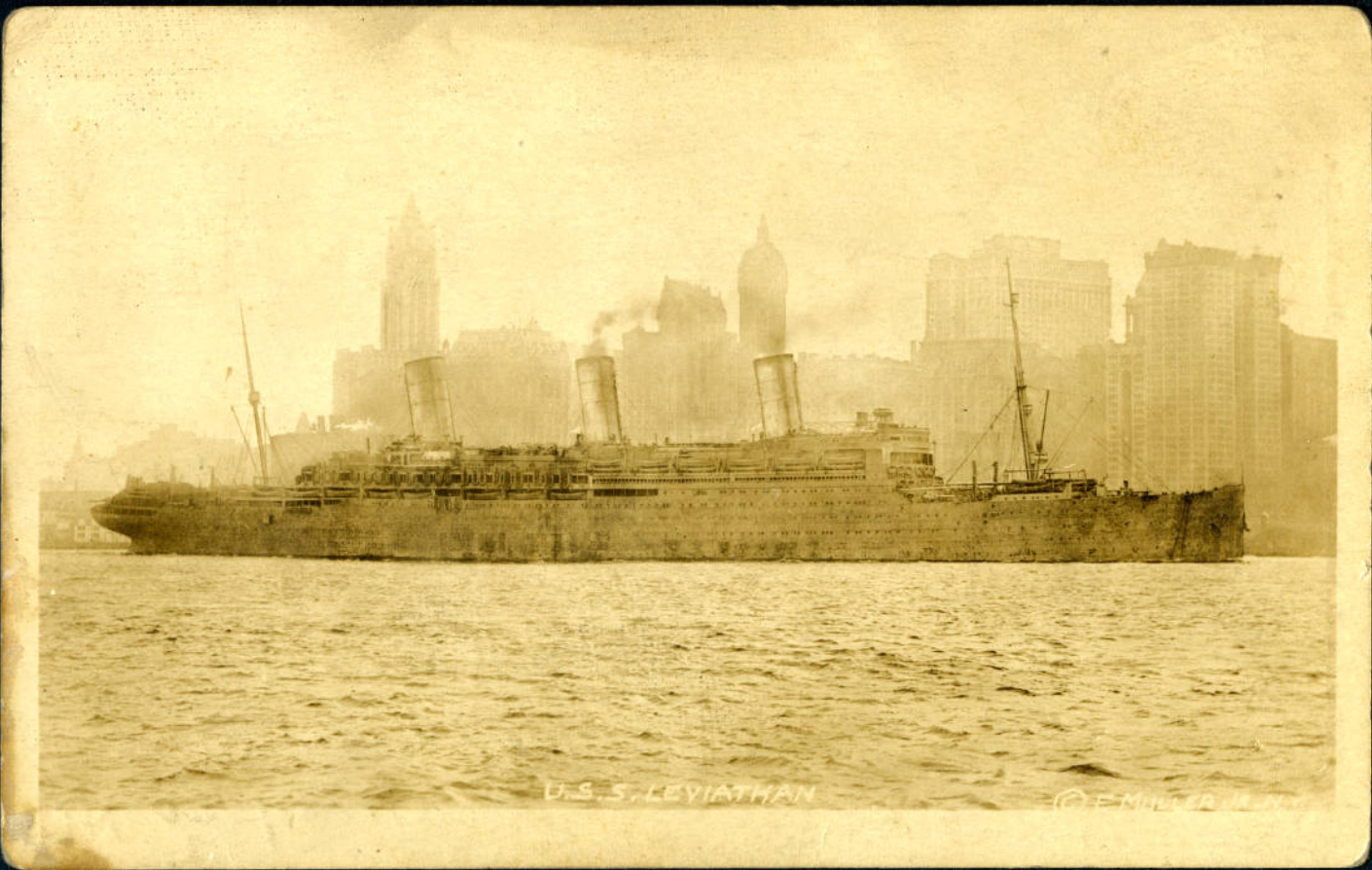 USS Leviathan in New York Harbor. Via Ohio Memory.
The 166th was back on track to return to Ohio. To expedite the process, men of the 42nd Division were to return to their home states directly from Camp Merrit. Saying good bye to comrades from other states, the Ohioans boarded trains and on May 10 were back in Ohio. In Columbus a grand parade welcomed the men. Their final stop was Camp Sherman, where they received their bonuses and honorable discharges. The 166th was the last Ohio National Guard unit to receive discharges, and had spent more time in Europe than any other unit from Ohio.
For a full account of the 166th Infantry Regiment during the war, see Ohio in the Rainbow; Official Story of the 166th Infantry, 42nd Division, in the World War by Raymond Minshall Cheseldine. (Columbus; The F.J. Heer printing co., 1924.)
 Company B, 166th Infantry Regiment, "just returned from France." Ohio Army National Guard Digital Collection via Ohio Memory.