
































A World War I Monument Dedication and its connections to the "Ohio Gang"
By Paul LaRue, Ohio World War I Centennial Committee
March 6, 2019
Numerous monuments were constructed and dedicated to World War I service members following the Armistice. These monument dedication ceremonies were major community events. The dedications often combined a welcome home ceremony for the troops returning to their communities from service in France, with a somber remembrance of the Soldiers and Sailors whom had lost their lives in the war. Washington Court House, and the surrounding community of Fayette County, held such an event on May 27, 1919. What is fascinating are the connections between the World War I monument dedication and the soon to be elected administration of President Warren G. Harding. These connections bridge the end of World War I with the events of the 1920's, and not without controversy.
The Ohio State Register began its reporting of the Fayette County monument dedication with “... Rousing Welcome Extended Soldiers, Greatest Event of its Kind in County's History was Thorough Success and 15,000 Persons Flock to City and Take Part in Extending Hearty Welcome to Fayette's Brave Soldiers and Sailors ...” The event both welcomed home World War I service men and dedicated the newly constructed Memorial Arch.
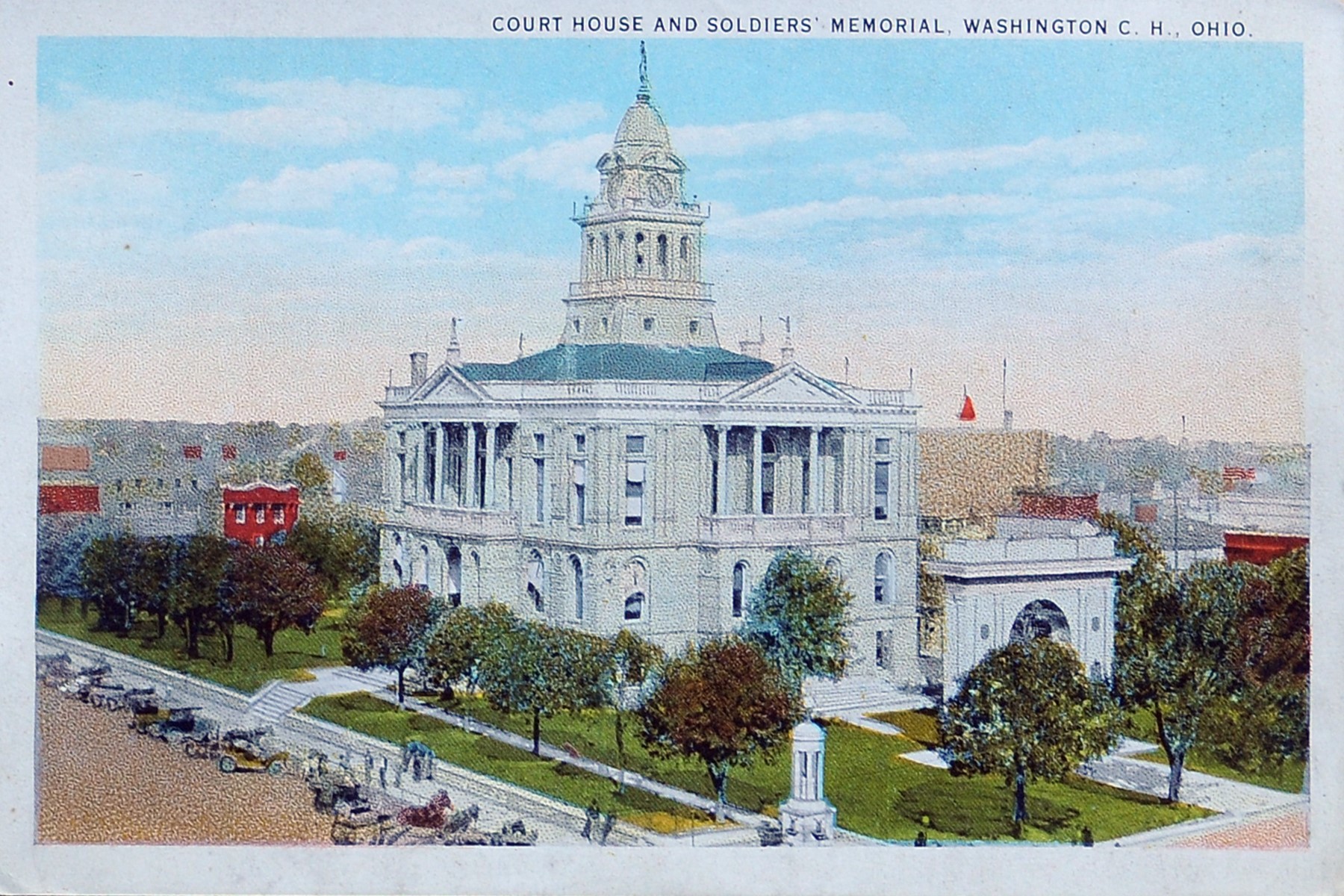 Post card of Fayette County Courthouse, circa 1920. Note the WWI Memorial Arch in front of the Courthouse. Courtesy of Kathleen LaRue.
The Memorial Arch had two bronze plaques with the names of forty-four Soldiers and Sailors from Fayette County who made the ultimate sacrifice in World War I. Fayette County historian B.E. Kelley wrote that “... The Arch was largely the suggestion of Jess W. Smith member of the War Work Council...” Jess Smith served as grand Marshall for the accompanying parade while riding a "prancing" horse. Fayette County's returning African American Soldiers received a formal welcome from Mr. Fred Patterson from nearby Greenfield. Fred Patterson, owner of C.R. Patterson and Sons Company, is the first known African American car manufacturer in the United States. The event's keynote speaker was the Honorable H.M. Daughtery. The Ohio State Register described his remarks by saying “... his words were greeted with frequent outbursts of applause ...” The event concluded with a large fireworks display, and a dance that ran until midnight.
Several participants from the World War I welcome home event were later participants in another important chapter in United States history. One year later, Jess Smith served as assistant to Harry Daughtery, who managed the Presidential campaign of Warren G. Harding. Harding's slogan, "Return to Normalcy," referred to getting life back to pre-war conditions. Smith followed Daughtery to Washington D.C. and then served as his unofficial assistant.
Harry Daughtery served President Harding as Attorney General. Daughtery, possibly the most famous of Harding's "Ohio Gang," would draw scrutiny, though never found guilty of any crimes. Jess Smith was accused of influence peddling and committed suicide on May 30, 1923. Smith's World War I Memorial Arch also met a sad ending. The Memorial Arch (which was poorly constructed) was taken down in 1927. The two bronze plaques from the Memorial Arch were removed, then later placed on a new Memorial to Fayette County's World War I dead. This memorial still stands on the lawn of the Fayette County Courthouse. President Harding would die suddenly and unexpectedly, marking an end to this controversial chapter in Ohio and national politics.
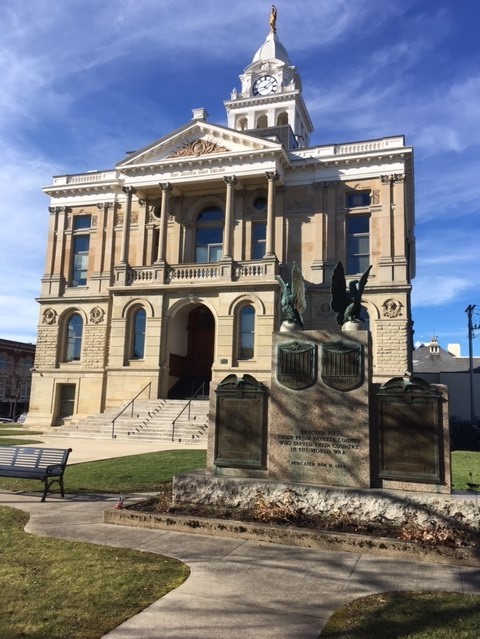 Contemporary photo of Fayette County Courthouse. Note no arch; but the plaques on the WWI Memorial are from the earlier Memorial Arch. Courtesy of Kathleen LaRue.
It is striking to read the newspaper account of the welcome home event for the Fayette County's World War I Service members. The event provides a local account of a community ceremony not unlike others across the United States, but also an interesting early look at several members of the “Ohio Gang” – a foreshadowing of the dark days of the President Warren G. Harding administration.