
































Diseases in World War I
Tetanus
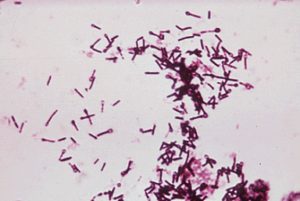 Tetanus bacteriaOne of the great successes of Army medicine in the war was the virtual elimination of tetanus. In the AEF, of 500,000 wounds and injuries only 23 cases were recorded, with no deaths. Yet the war was fought in the mud and dirt of the trenches, and these were the ideal environment for the development of tetanus in wounds.
Tetanus is caused by a bacterium, specifically Clostridium tetani. The characteristic symptoms include rigidity and muscle spasms, therefore the popular name, “lockjaw”. The spores of Clostridium are found widely in soil, and can survive for a long time. Entering the body through a wound, the spores become live bacteria, and release the toxins which produce the clinical symptoms. Beginning in 1914, in the British and French armies, tetanus antiserum was routinely given to patients with dirt-contaminated wounds. Made at that time by harvesting serum from horses injected with modified tetanus toxin, antiserum was effective immediately. Tetanus toxoid, which produces active immunization, was not developed until 1924. In any case, it takes several weeks for the body to build up significant immunity.
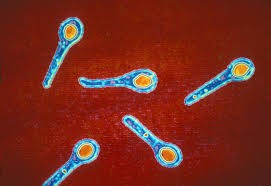 Image of Clostridium tetaniThere is still some controversy about whether the antiserum was responsible for the rapid reduction in the incidence of tetanus. As outlined elsewhere, all of the medical services brought improved evacuation and better treatment of wounds. Specifically, the use of wound debridement, removing all dead and damaged tissue, and thorough surgical cleaning of wounds, would have been enough to greatly reduce the incidence of tetanus. At the time, physicians felt that the deciding factor was the use of tetanus antiserum. It seems clear that both were effective, and the net result was virtual elimination of tetanus from battle casualties.