
































On the Border Chasing Villa
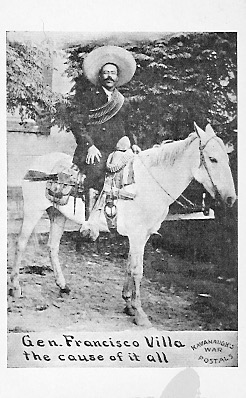
EL PASO, TEXAS (July 1, 1916) -- One could make the case that Pancho Villa helped prepare the U.S. Army for World War I. On March 9, 1916, Pancho Villa’s renegade army of somewhere between 300 and 1,000 fighters attacked the border town of Columbus, New Mexico, killing eighteen Americans (ten soldiers and eight civilians) and wounding another eight.
It was just one of several attacks on U.S. soil that year, but it was the last straw for President Woodrow Wilson who called out the National Guard to defend the U.S. southern border and “ordered a so-called ‘Punitive Expedition’ to invade Mexico, disperse Villa’s guerilla band and, hopefully, capture or kill Villa.” (Tompkins, Col. Frank. Chasing Villa: The Last Campaign of the U.S. Cavalry. Silver City, New Mexico: High-Lonesome Books)
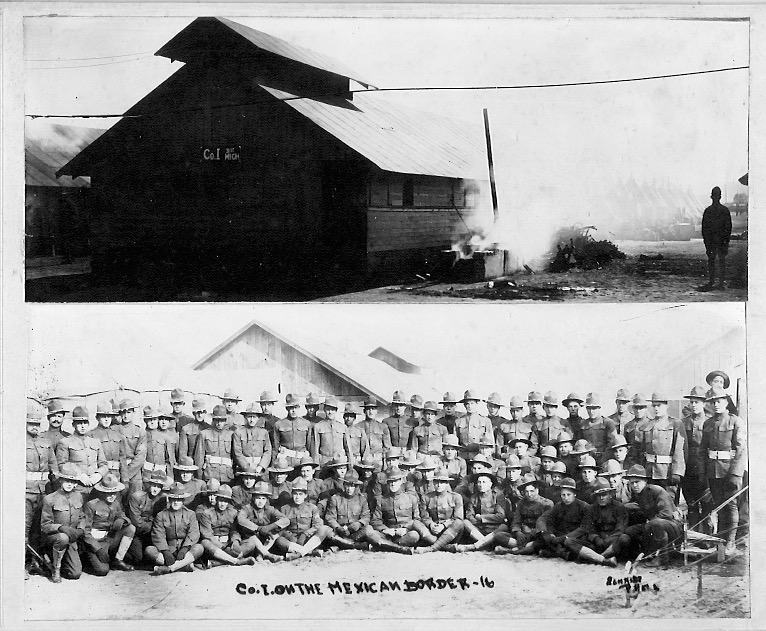
Four months later, the Michigan National Guard was mustered into Federal Service and sent to El Paso to help support Brigadier General John J. Pershing’s cavalry expedition.
The men of Joseph L. Bachus’ company saw little action that would help them with the upcoming fight in France, but Mexican Border Service helped to turn an army that was only the 17th largest in the world into something a bit more formidable.
While Pershing’s punishers chased after rumors of Pancho Villa’s whereabouts south of the border, the Michigan National Guard was garrisoned on the north bank of the Rio Grande. The soldiers of the 1916 “Mexican Border Service,” as it was later called, had lots of time to kill, but they filled their days with marches, training, sports, and the duties of keeping an army in the field.
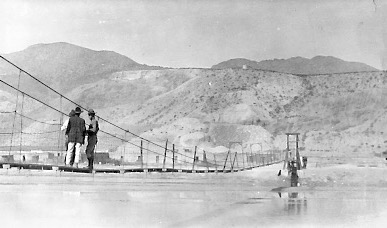 A photo of my grandfather on a rickety bridge over the Rio Grande speaks to me about the kind of experience the maturing U.S. Army was gaining through its border service of 1916. He’s working with the locals, at ease on a flimsy-looking structure, and possibly using his growing language skills. This German-American, farm-boy son of a blacksmith had already picked up Spanish during his Marine Corps stints in Cuba and the Panama Canal Zone. I wonder what these three are talking about. Securing good local food for the men of his company? Scouting reports from south of the river?
While the Michigan guardsmen started out in tents in the summer of 1916, they began to swap canvas for wooden planks by this time 100 years ago. Pershing’s men may not have captured Pancho Villa, but the U.S. Army’s Mexican Punitive Expedition may have helped prepare the various National Guard units for future action in France.
NEXT WEEK: “Postcards from Pancho Villa - Part 1 of 3”