































Osmond Kelly Ingram, An Alabama WWI Hero
October 19, 2016
By Graham Neeley, Curator, Alabama Department of Archives and History
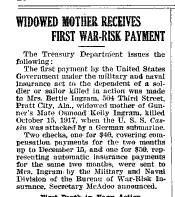
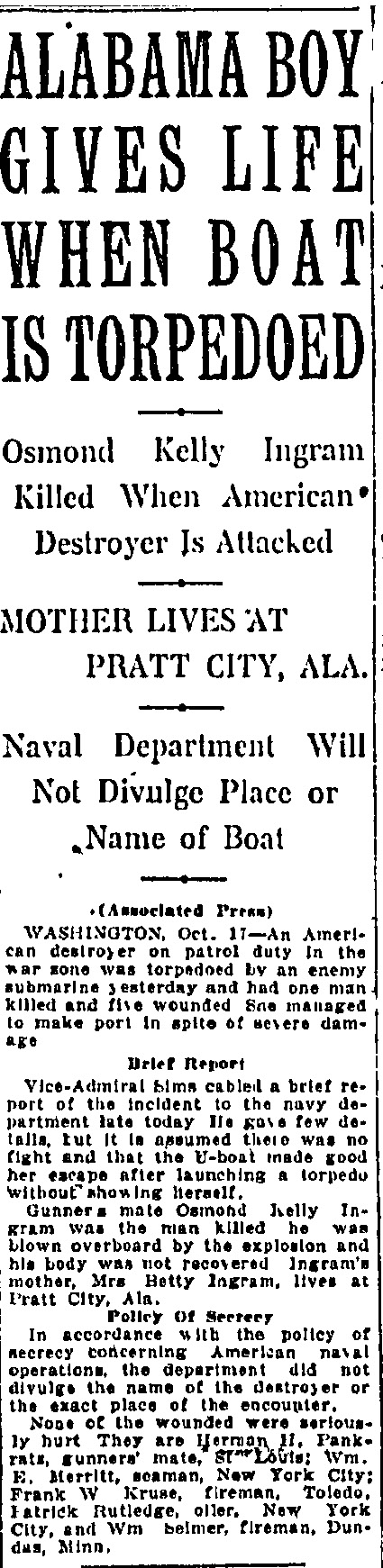
“Pratt City Gunner Thrills Heart of Country By Tragic Death in War Zone.” Birmingham News, October 18, 1917
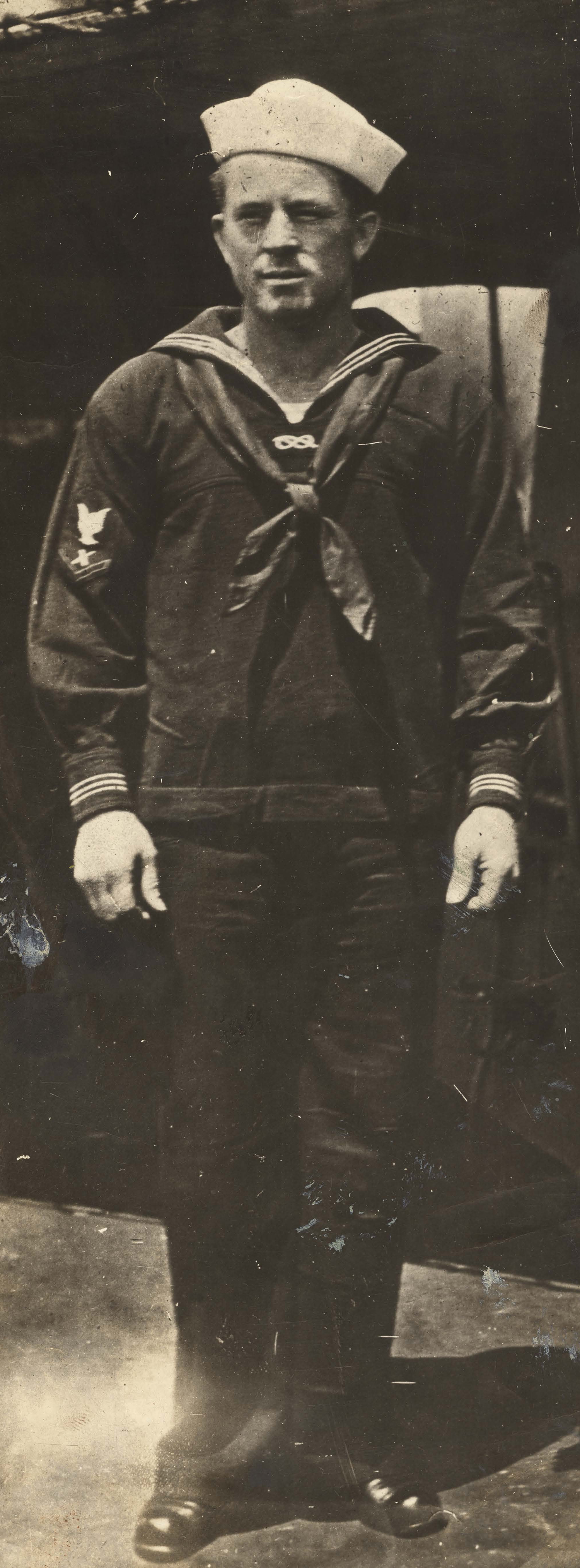
Thirty-year old Gunner’s Mate First Class Osmond Kelly Ingram was the first U.S. Navy enlisted man killed during World War I. On October 15, 1917, the Alabama native was killed while attempting to release the USS Cassin’s depth charges before being hit by a German torpedo. For his heroic actions he was awarded the Medal of Honor posthumously. His body was never recovered.
Born on August 4, 1887 in Oneonta (Blount County), Ingram was one of four boys born to Naomi (Bettie) and Robert Ingram, a Methodist Episcopal preacher and Confederate army veteran. Before Robert’s death in 1897, the family moved to Pratt City in Jefferson County. On November 24, 1903, at the age of sixteen, and with his mother’s consent, Ingram enlisted in the U.S. Navy. When his enlistment ended in August 1908, Ingram moved back to Pratt City and became a fire fighter. In August 1913 Ingram reenlisted and was stationed aboard the USS Cassin, the ship he remained on following America’s entry into the war.
During the war, the U.S. Navy’s two most important roles were to halt German U-boat operations and to link up with American convoys to provide safe transport to ports in France and England. The Cassin was stationed off the coast of Ireland. While on patrol on October 15, 1917, the Cassin came in contact with German submarine U-61. Noticing that the U-boat had fired a torpedo that was headed for the Cassin’s depth charges, and realizing the potential damage and causalities it would inflict, Ingram made a last-ditch effort to release the depth charges prior to the torpedo’s impact. Although he was not able to release the entire load, Ingram’s courageous deed and sacrifice prevented the ship from being completely destroyed and saved many of his mates’ lives. On January 11, 1919, Josephus Daniels, Secretary of the Navy, informed Ingram’s mother that a new ship was to be named after her late son, the USS Osmond Ingram (DD 255). Ingram became the first enlisted man in the U.S. Navy to have ship named in his honor. The ship was docked in Pearl Harbor the day of the Japanese attack.
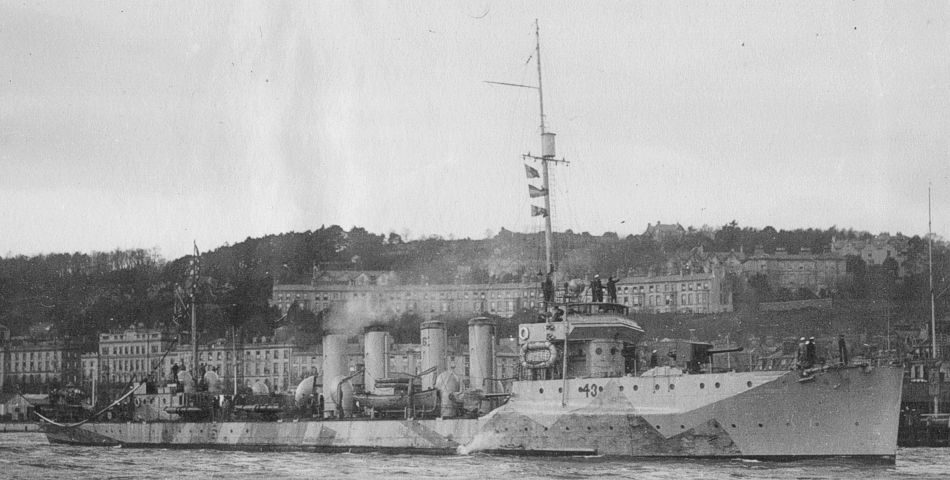
USS Cassin (DD-43) moored alongside another U.S. Navy destroyer, at Queenstown, Ireland, circa 1918. She is painted in "Dazzle" type camouflage. Wikimedia Commons
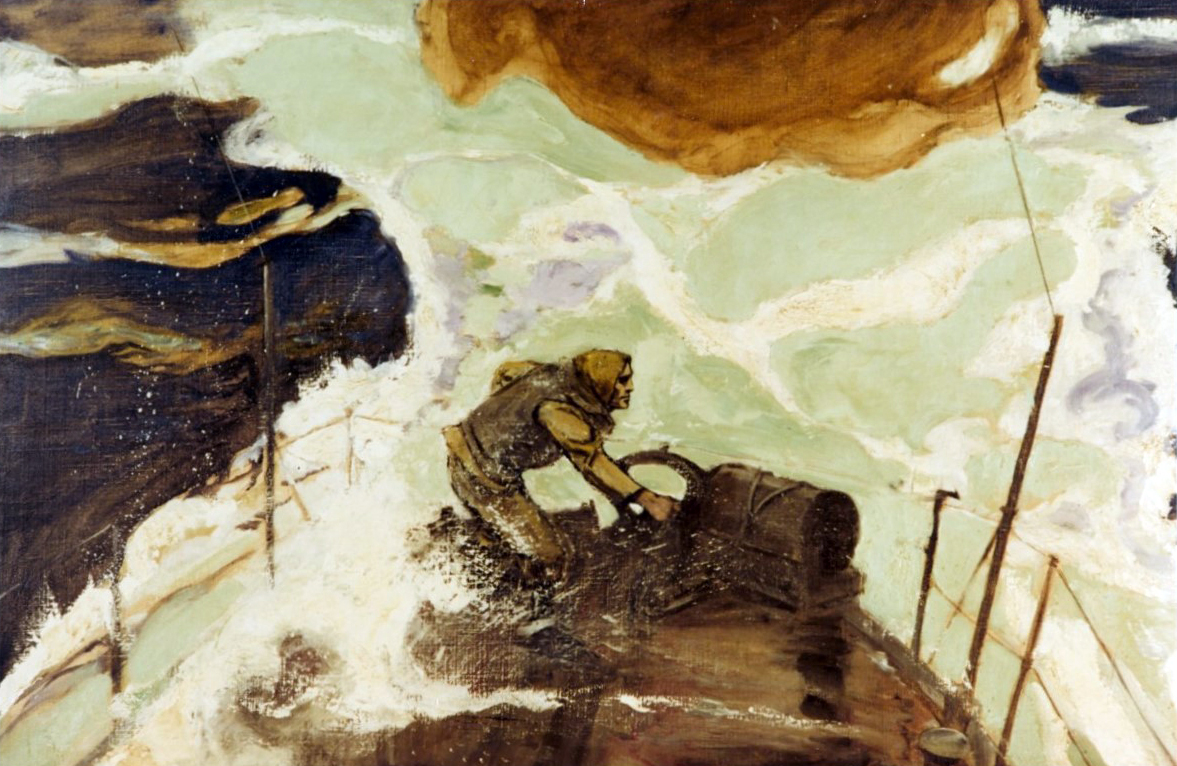
Painting by Charles B. Falls, depicting the gallant but futile effort of Gunner’s Mate First Class Osmond K. Ingram, USN, to release the depth charges just before she was hit by a torpedo from the German submarine U-61 on 15 October 1917. Courtesy of the U.S. Navy Art Collection, Washington, DC. U.S. Naval History Center.
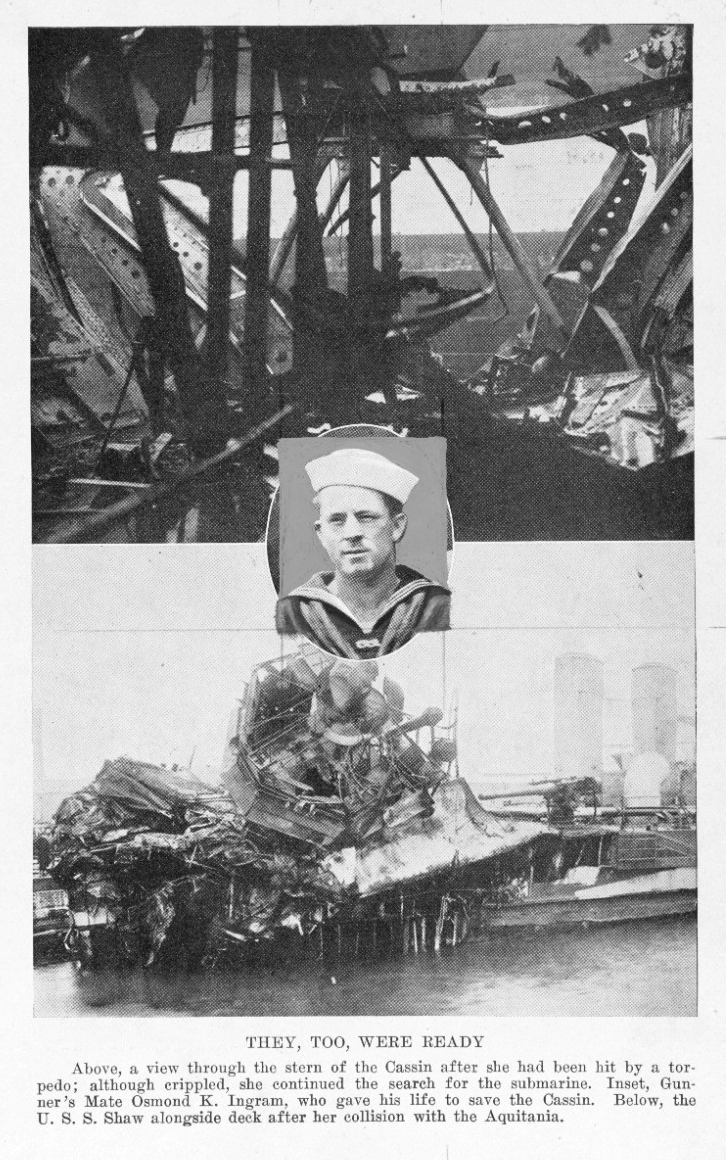
The stern of the USS Cassin after she was torpedoed by German submarine U-61 on 15 October 1917. Courtesy of the U.S. Naval History and Heritage Command, Washington, DC.
 In 1920, Secretary of the Navy Josephus Daniels wrote to his mother notifying her of the decision to award Ingram the Medal of Honor posthumously:
“For extraordinary heroism in the presence of the enemy on the occasion of the torpedoing of the Cassin, on 15 October 1917. While the Cassin was searching for the submarine, Ingram sighted the torpedo coming, and realizing that it might strike the ship aft in the vicinity of the depth charges, ran aft with the intention of releasing the depth charges before the torpedo could reach the Cassin. The torpedo struck the ship before he could accomplish his purpose and Ingram was killed by the explosion. The depth charges exploded immediately afterward. His life was sacrificed in an attempt to save the ship and his shipmates, as the damage to the ship would have been much less if he had been able to release the depth charges.”
In 1932, Birmingham’s West End Park was renamed Kelly Ingram Park and a boulder-like memorial was placed on the park grounds. The park served as an important site for protests in 1963 during the Civil Rights Movement. Ingram is listed on the Wall of the Missing at the American Battle Monuments Commission Brookwood Cemetery, Surrey, England.