




























Practice of Medicine
Precedents for American military medicine
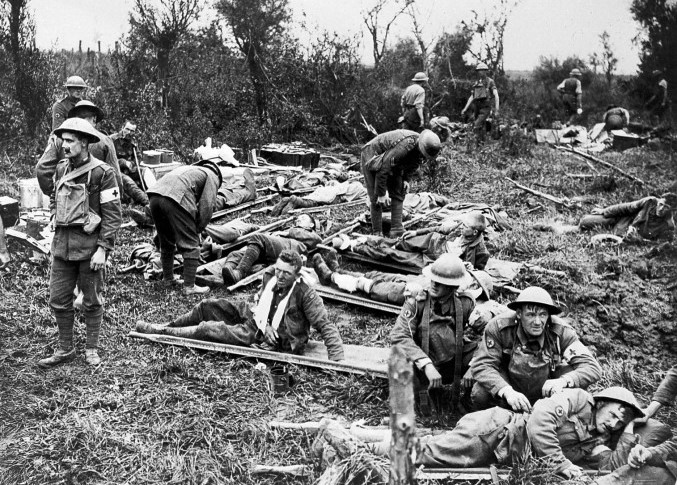 British Regimental Aid StationModern military medicine is a product of the 19th and 20th centuries. At the beginning of the 19th century, the organized practice of military medicine began. However, it didn’t reach its modern form until the beginning of the 20th century. American military medicine during World War I represents the coming of age of modern military medicine. But it built on the achievements of the previous century.
The epic Napoleonic wars, which began the 19th Century, were on a previously unheard-of scale. Armies of 100,000 or more raged throughout Europe. This forced the recognition of a need to care for the wounded, and to provide some organization to the medical system. This was done best in the French army.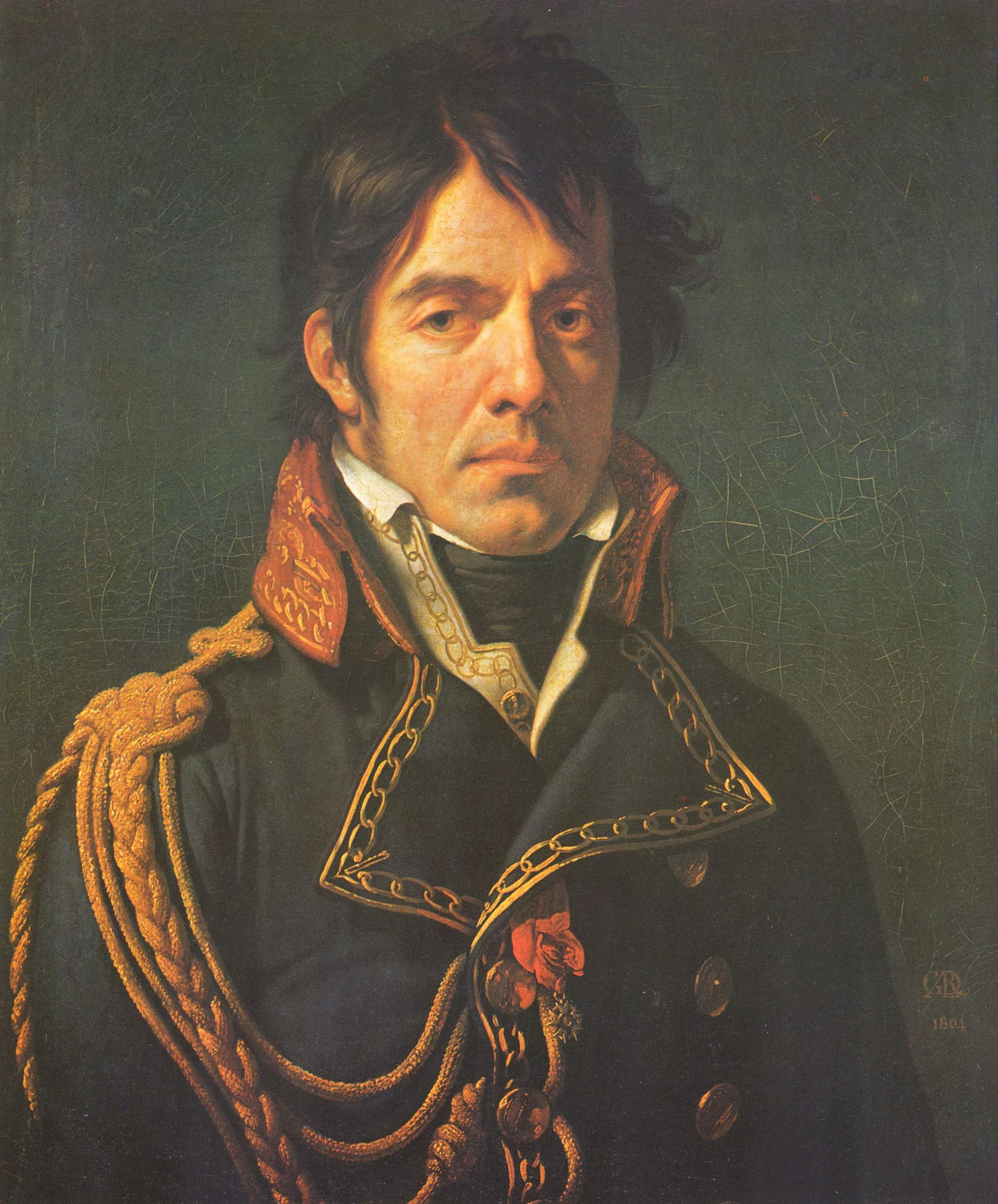 Dominique Jean Larrey, Napoleon's Surgeon
Dominique Jean Larrey, surgeon-in-chief of French armies from 1797 to 1815, contributed in many ways to modern military medicine. He established the criteria for “triage”, which is why we still use a French word to describe sorting casualties into urgent, emergent, and delayed treatment. He invented the “ambulance volante”, or flying ambulance. These were horse-drawn carriages, which could move quickly around the battlefield to provide evacuation. He staffed ambulance units with corpsmen and litter-bearers, placed aid stations just behind the battle, and formalized the use of field hospitals a few miles back from the battle. He is considered to be the first modern battlefield surgeon.
Civilian medicine made impressive advances over the course of the 19th Century, during the 100 years between the Napoleonic wars and the Great War. Perhaps first and foremost, medicine became an organized and respected profession. And not only doctors, but nurses, dentists, and veterinarians. The increasing status of medicine in civilian life carried over to the military. Medical professionals were not only better-established in the military services, they were heard at the highest levels.
The theories of disease and infection, and immunization, had its roots in the 18th century, but became firmly established through the 19th. These had great implications for military medicine. By the end of the century, immunizations for tetanus and typhoid fever were available, and there was effective prophylaxis for malaria. Typhus was known to be transmitted by body lice. These could be controlled by periodic delousing and other measures. Yellow fever was controlled by eliminating the mosquito vector. And the correct identification of bacteria as a cause for wound infection enabled effective treatment for wounds, and prevention of many, although not all, wound infections.
Surgery made great strides. The development of general anesthesia meant that longer and more sophisticated operations became practical. Operations were done with sterile technique, and then aseptic technique. Abdominal surgery became possible, and its development over the last half of the 19th century was rapid and dramatic. Equally, general anesthesia made possible more extensive treatment of wounds. Such measures as débridement of wounds (another French word) prevented infection and promoted healing. One of the great advocates of débridement was Alexis Carrell, a French-American surgeon who won the Nobel prize in surgery for that and other contributions. Local wound antisepsis with measures such as Dakin’s treatment was developed. These advances are discussed in more detail elsewhere (Wounds and Injuries), but taken in sum, they made military surgery far more effective.
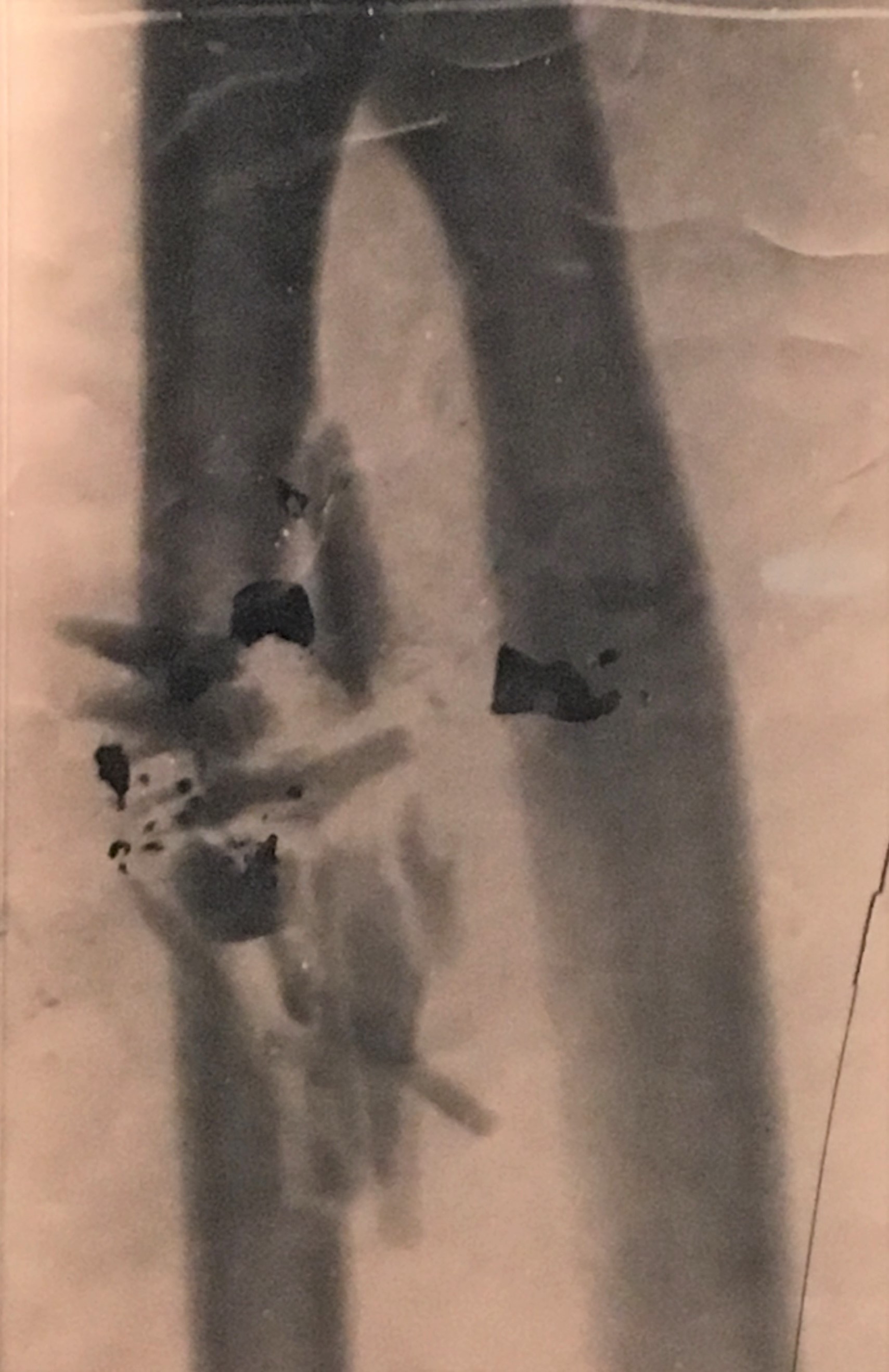 X-ray of Forearm
Other aspects of medical therapy, were advancing rapidly. Intravenous fluids were available by the time of the great war. Early blood transfusion was available, but its use was uncommon. Blood banking was not developed until after the war. The existence of x-rays (“roentgen rays”) was established only in 1898, but their use in diagnostic medicine was firmly established by 1914-18. the Curie Institute in Paris, named for the chemist and physicist Marie Curie, was actively training doctors and technologists in the new field of radiology. Equipment was sufficiently portable to be carried to the battlefield. Medical laboratory studies became available, and incorporated into battlefield medicine.
The development of what we now know as modern military medicine occurred over the course of the late 19th century, and into the 20th. It evolved through major wars, sometimes in adverse environments. This evolution took place across Europe as well as in North America. In the case of Europe, those were the Crimean War and then the Boer War, in South Africa. In the American experience, this was the Civil War and the Spanish-American War.
While military medicine by the beginning of the 19th century looked much better than at any time in the previous millennia and a half, both trauma care and military public health were primitive by today’s standards. The development of what we now know as modern military medicine occurred over the course of the late 19th century, and into the 20th. This evolution took place across Europe as well as in North America. Medical and trauma care made slow progress during the limited wars of the 19th century. It evolved, through major wars, sometimes in adverse environments. In the case of Europe, those were the Crimean War and then the Boer War, in South Africa. In our experience, this was the Civil War and the Spanish-American War.
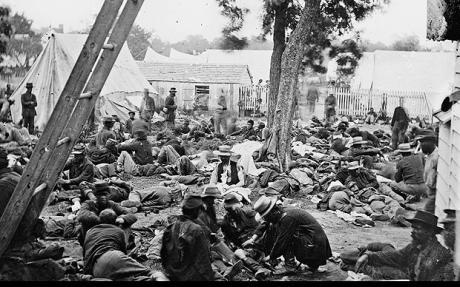 American Civil War Hospital
The American Civil War (1861-65) was fought with mass armies, modern industrial technology, railroad transportation, and telegraphic communications. Unfortunately, its health care was barely up to the 18th century. Both armies had physicians, and organized medical corps. There were systems of aid stations, field hospitals, and medical evacuation on both sides. But they usually failed to meet the huge demands placed upon them by the large numbers of casualties. Both armies depended heavily upon civilian physicians and makeshift facilities to care for their injured soldiers. Even “army doctors” were often contracted civilians. Further, public health was not well developed. Twice as many soldiers died of disease as of injuries, often in training camps far from the battlefield. Sanitation was poor. Epidemics of dysentery, pneumonia (“camp lung”), and typhus swept both armies. These systematic failures were widely recognized among the medical profession, and there was a growing movement to improve military medicine.
The brief Spanish-American War (1898), was fought in the tropics, notably Cuba and the Philippines. Typhoid, yellow fever, and malaria were new to American troops. Disease killed five times as many soldiers as did enemy action. There was inadequate organization, too few medical supplies, and poor use of resources. The war was highly publicized in the newspapers of the day. After the war, there was a great public outcry about the number of soldiers dying from disease. The so-called “typhoid board,” often called the Reed commission, was set up during the war, and made a number of recommendations about sanitation, malaria control, and mosquito control. The Reed commission paved the way for the construction of the Panama Canal, overcoming the high rate of yellow fever among the workers in previous attempts to dig an Atlantic to Pacific canal.
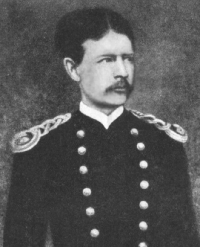 Dr. Walter Reed Walter Reed chaired the typhoid board. He was an outstanding Army physician, one of the true heroes of the Army medical corps. He had immense influence during and after the war. He died in 1902, of appendicitis, but his work was carried on. The subsequent Dodge commission conducted a much more comprehensive review of the shortcomings of the Army medical services. These included poor preparation, poor sanitation in the camps, and failure to organize nursing services. As a result, there was a major re-organization of the Army’s medical support. During the first decade of the 20th century, the Army recognized the need for doctors, nurses, hospitals, corpsmen, and, in short, today’s medical services. Immediately prior to World War I, the Army was headed by a chief of staff who was a physician, Leonard Wood. He oversaw much of the transition of the Army medical service into a modern military medical system.
Re-organization of the Army medical service began in 1901. Among other changes, the Army Nurse Corps was established. The Medical Corps was recognized as a formal organization in 1908, although the term had been unofficially used for over a century. Today’s Army Reserve began as the Army Reserve Medical Corps, in 1908. It was established as a way to identify and mobilize civilian doctors in the case of war. These efforts were a major change in the medical care of soldiers. And fortunately, they happened in time to provide the framework of medical care in World War I. For example, the Army Nurse Corps, only 200 in 1901, expanded to 20,000 by the end of 1918.
The public health aspects of military medicine lagged behind medicine in general. The importance of public health in military medicine was poorly recognized through most of the 19th century. A famous comment made by a Civil War general to a medical officer was, “Don’t worry. All Army camps smell that way." The story is probably apocryphal, but it expresses a general attitude. There was a sort of pessimistic complacency. Senior officers knew that if they could keep down losses from disease, they would have more men to fight. But they didn’t think anything could be done. Even if it could, they didn’t want to do it themselves, and they often failed to listen to the doctors. This changed. Public health finally came into its own as a crucial component of military medicine in the early 20th century.
American military medicine during World War I was able to incorporate many advances of the previous 60 years, and apply them on the battlefield. The great accomplishment of the war was to take the best of civilian medicine in 1917, move it overseas, and apply it on the battlefield. To accomplish this, some of the finest American physicians of the day, such as George Crile, Harvey Cushing, and the brothers William and Charles Mayo, served during the war. (See "Mobilizing of American Medicine")