


































Injuries in World War I
Burn Injuries
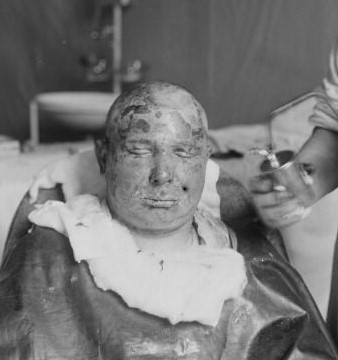 Spraying a Burn Wound of the FaceBurn injuries are among the most devastating injuries known. Burns have been known for 5,000 years, or longer. The use of flame and/or hot liquids in war goes back to the dawn of history. With the onset of mechanized warfare and the use of high explosives in World War I, burns became more and more common. However, therapy was inadequate. Major burns - 50% or more of the body area - were generally fatal. By later in the century, surgeons had realized that early and aggressive intravenous fluid therapy is the key to survival for large burn injuries. Intravenous fluids were available in World War I, and were used to a limited extent, but not to the extent required for treating major burns.
Burns of the face and extremities, while not often fatal, could still produce major disability. Therapy consisted of supportive care, trying to reduce infection, and skin grafts for full thickness areas. Small areas could be adequately treated. But a major facial injury such as that shown here would usually produce major scarring, even after skin grafting. The best that could be hoped for was a mask-like face.
The need to provide better treatment of burn wounds stimulated a great deal of research after the war by plastic surgeons and trauma surgeons. By World War II there was an extensive body of knowledge and practice available. But this came too late for the unfortunate victims in World War I.