





























The Centennial Commemoration of The United States in World War One
Centennial World War One Commemoration effort gearing up
|
|
By Jim Garamone WASHINGTON – It was called The Great War even as it was going on. It engulfed the world, and the world is still feeling its effects. In his day job, Robert J. Dalessandro is the director of the U.S. Army Center of Military History at Fort Lesley J. McNair here. He also is the acting chairman of the World War I Centennial Commission. The Great War began in July 1914 with the assassination of Austrian Archduke Franz Ferdinand. This triggered an interconnecting network of alliances to spark mobilization, bringing in the empires of Europe. England, France and Russia lined up against Germany, the Austro-Hungarian Empire and the Ottoman Empire. A generation of men died in battle on the fields of France. The Somme, Verdun, Ypres and Meuse-Argonne became killing grounds. On the Eastern Front, millions of Germans, Austrians and Russians battled. Overall, about 16.5 million people were killed in the war. At first, the United States stayed out of it. In fact, when President Woodrow Wilson ran for re-election in 1916, his campaign slogan was "He kept us out of war." But on April 7, 1917, the United States declared war on Germany and the other Central Powers and raised a military force of more than 4 million men. The United States lost 116,516 service members in World War One. Another 205,690 were wounded. While the United States didn't enter the war until 1917, the U.S. commemoration commission is beginning its mission of education now to provide Americans some context for the epochal war. Read More... |
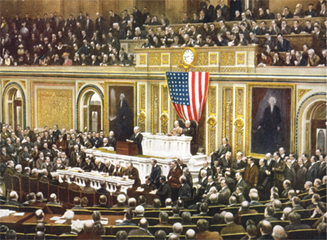 "The world must be made safe for democracy. Its peace must be planted upon the tested foundations of political liberty. We have no selfish ends to serve. We desire no conquest, no dominion. We seek no indemnities for ourselves, no material compensation for the sacrifices we shall freely make. We are but one of the champions of the rights of mankind. We shall be satisfied when those rights have been made as secure as the faith and the freedom of nations can make them.... It is a fearful thing to lead this great peaceful people into war, into the most terrible and disastrous of all wars, civilization itself seeming to be in the balance. But the right is more precious than peace, and we shall fight for the things which we have always carried nearest our hearts—for democracy, for the right of those who submit to authority to have a voice in their own governments, for the rights and liberties of small nations, for a universal dominion of right by such a concert of free peoples as shall bring peace and safety to all nations and make the world itself at last free."
100 Years AgoWorld War One—called the "Great War" until the world learned that there would be more than one such war in the twentieth century—was the first total war of the modern period. The participants, unprepared for the long and bloody conflict that ensued after the summer of 1914, scrambled to mobilize their manpower and industry to prosecute the war. All searched for a decisive military victory. Instead, dramatic and largely unforeseen changes in warfare quickly followed one another, in the end altering both Europe and the larger Western culture that it represented. Although the bloody conflict finally ended with an armistice in November 1918, it cast a long politico-military shadow over the decades that followed. The CommemorationFrom 2017 through 2019, the World War One Centennial Commission will coordinate events and activities commemorating the Centennial of the Great War. (Why?) The Commission has partnered with a broad range of organizations across the United States and around the world to spotlight events publications, productions, activities, programs, and sites that allow people in the United States to learn about the history of World War One, the United States involvement in that war, and the war's effects on the remainder of the 20th century, and to commemorate and honor the participation of the United States and its citizens in the war effort. |
Centennial Conference & Trade Fair held in Washington, DC June 14The United States World War One Centennial Commission held a "trade fair" for historians, educators, curators, cultural programmers, authors, re-enactors, students, and other enthusiasts in Washington, DC on June 14 to discuss the upcoming centennial commemoration, share information, and develop partnerships. Participants receivde a briefing by the Commission on its strategic plan. Discussion of opportunities to partner with the Commission took place. Individuals and organizations made presentations on their centennial programming. The event provided the opportunity to display materials on commemorative programs and capabilities to attendees seeking ideas and services for state and local commemoration activities and events. Commemoration NewsMonuments, memorials
|
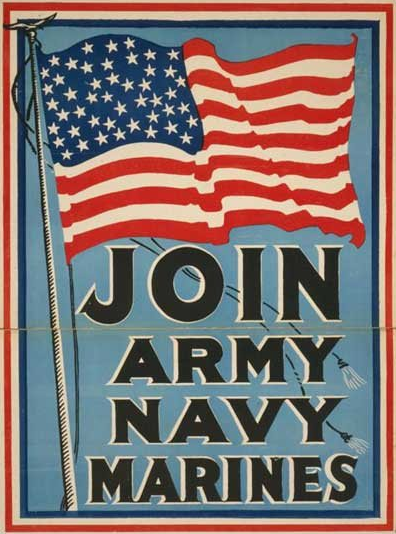 The United States reluctantly entered Europe's "Great War" and tipped the balance to Allied victory. In part the nation was responding to threats to its own economic and diplomatic interests. But it also wanted, in the words of President Woodrow Wilson, to "make the world safe for democracy." The United States emerged from the war a significant, but reluctant, world power.
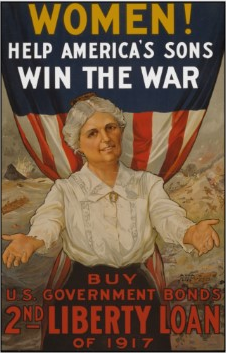
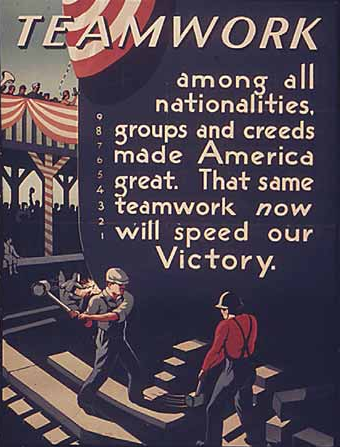 Under unprecedented government direction, American industry mobilized to produce weapons, equipment, munitions, and supplies. Nearly one million women joined the workforce. Hundreds of thousands of African Americans from the South migrated north to work in factories.
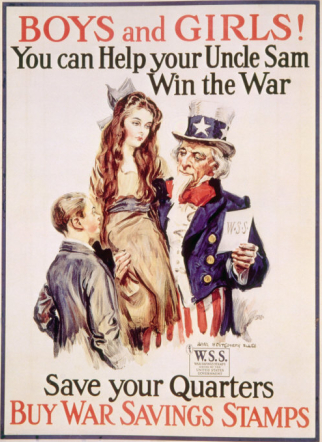
 The first contingent of the American Expeditionary Force (AEF), commanded by General John J. Pershing reached France in June, but it took time to assemble, train, and equip a fighting force. By spring 1918, the AEF was ready, first blunting a German offensive at Belleau Wood.
 Almost three years of horrific fighting resulted in huge losses, but no discernable advantage for either side. American involvement in the war was decisive. Within eighteen months, the sheer number of American "doughboys" added to the lines ended more than three years of stalemate. Germany agreed to an armistice on November 11, 1918.
Commemoration Partners
 |
 |
 |
 |
 |
 |
 |
 |
 |
|
|
|
 |
 |
 |
 |