










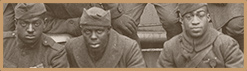
























Commissioner's Select World War 1 Biographies
Corporal Rupert Clay Scheer, USMC-Edwin Fogarty
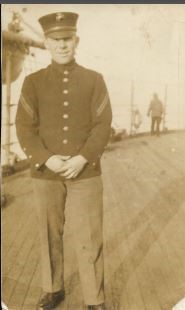
Corporal Rupert Clay Scheer was born on January 18, 1896, in Uniontown Kentucky. As a young man he took to the road and drifted from town to town without purpose or direction. In 1916, he ended up in Cincinnati, Ohio, and made the fateful decision to enlist in the U.S. Marine Corps. From 1916-1918 he served on three battleships: the Arizona (maiden voyage), the Nebraska, and the Louisiana. In May of 1918, Corporal Scheer was deployed to France and was assigned to the 97th Company of the 6th Marine Regiment. In June, he was severely wounded in action at Belleau Wood and spent the rest of the war recuperating in French hospitals. His family in Uniontown had been notified that Corporal Scheer had been killed in action and since he was not a man given to correspondence, you can imagine the surprise when he was seen walking down the streets of his hometown in March of 1919!
Private Joseph Szczurck, 16th Regiment of Engineers (Railway) U.S.A.-Dennis Skupinski
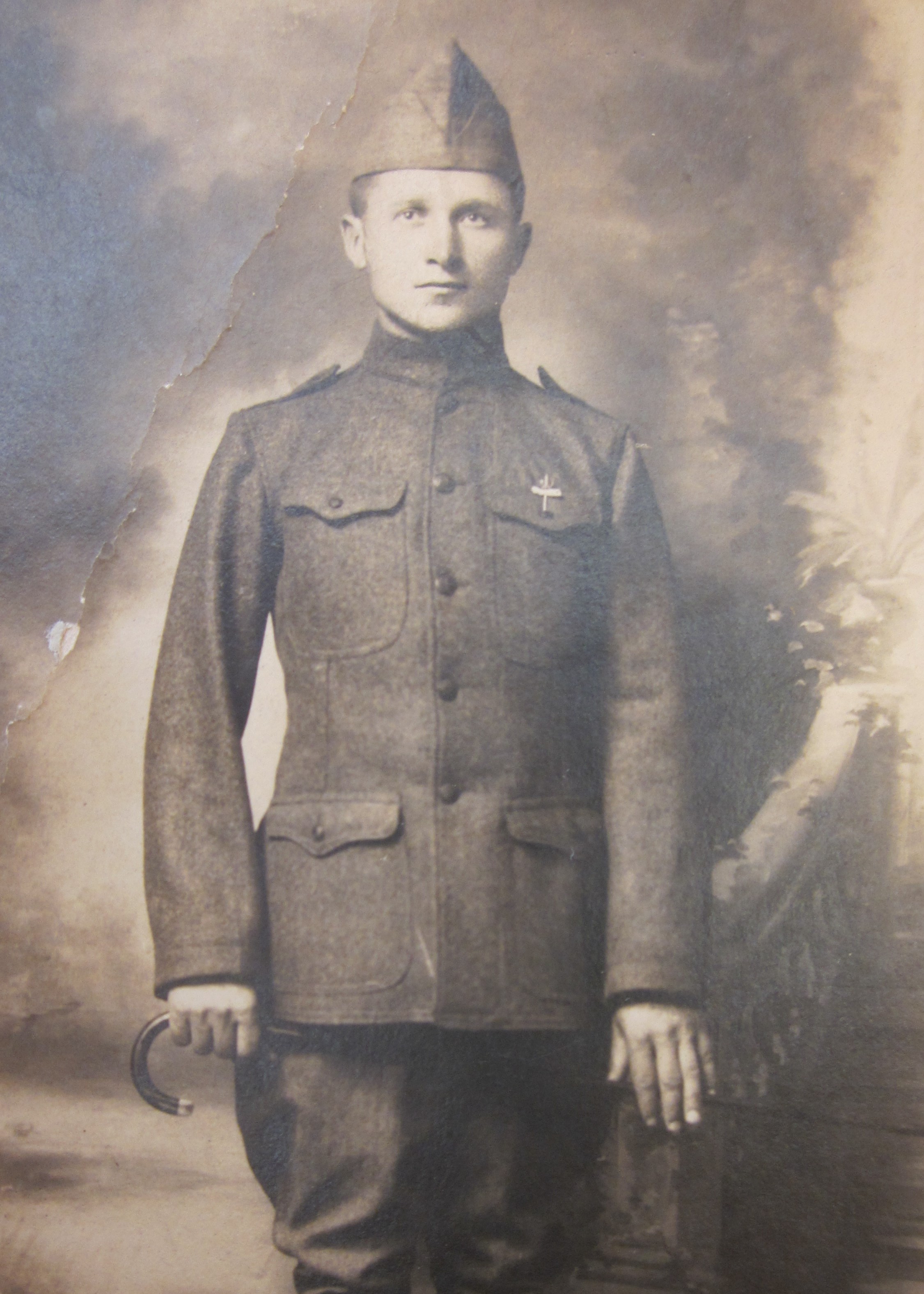
Born in 1889 in Poland, Joseph came to the Detroit, Michigan in the early 1900's and became a Tool Maker. He volunteered for the 16th Engineers during the spring of 1917 in Detroit. The 16th Engineers was one of nine engineer regiments raised to build the infrastructure for the American Expeditionary Force in France. They trained during June & July of 1917 at the Michigan State Fairgrounds before leaving for France. They arrive in France in late August and started building Camp Williams plus Base Hospital 15. They helped the British during the German Spring Offensive during 1918, then participated in the largest construction project in France, the "Never's Cut Off". During the fall of 1918, they served with the First American Army in the Engineer Corps. They returned to Detroit in early May 1919.
Joseph was wounded during a bombardment and became a disabled veteran and a member of VFW Post 582.
The 16th Engineers was Michigan's only "All Volunteer Regiment" and they organized, mobilized and trained within the city limits of Detroit.
Electrician 3rd Class John Reavie Cameron (1899-1975) U.S. Navy- John Dempsey
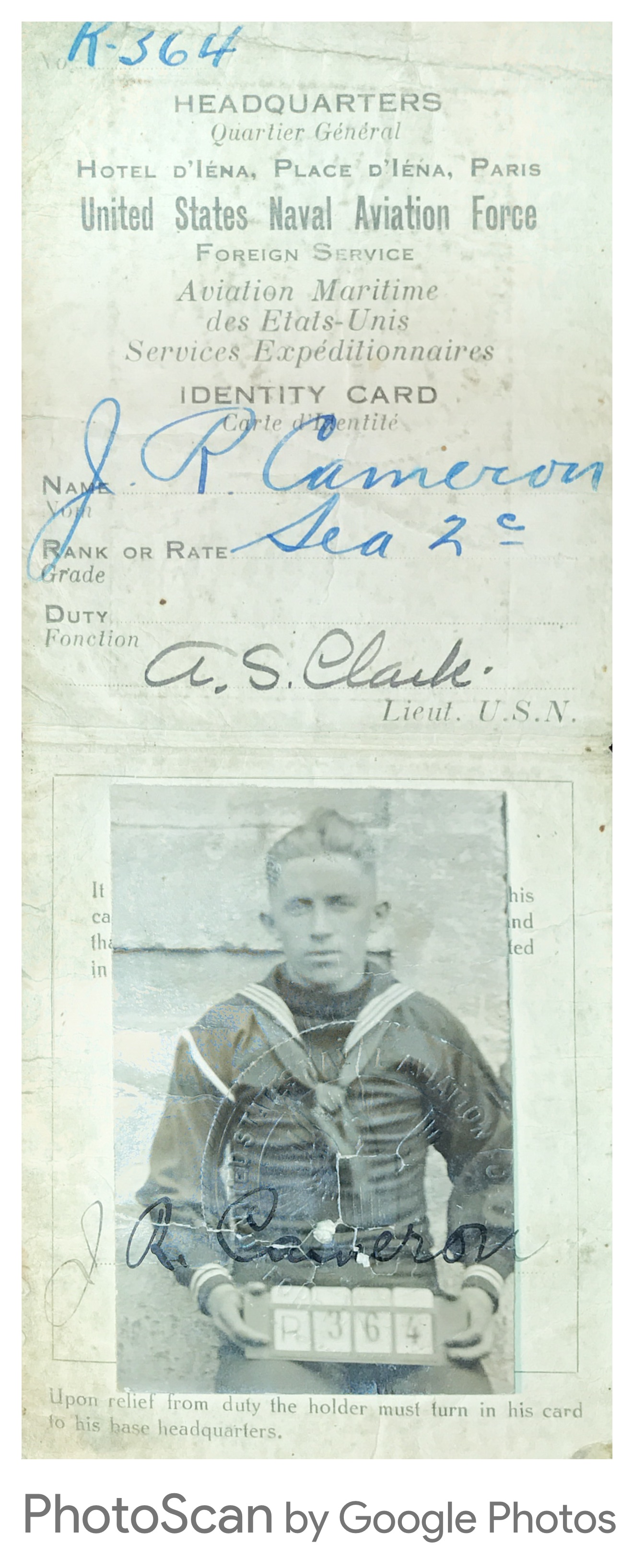 John Reavie Cameron was born on October 8, 1899, in Calumet on the Keweenaw Peninsula in Michigan’s Upper Peninsula. His parents were born in Canada: father Hugh worked as an engineer for the Calumet & Hecla; mother Barbara raised “Jack” and five other children. One of Jack’s classmates was George Gipp, later of Notre Dame. On December 5, 1917, just after turning eighteen years of age, Jack Cameron enlisted in the U.S. Navy in order to participate in the First World War. He held ranks as an Apprentice Seaman, Seaman 2nd Class, and Electrician 3rd Class. He received a “good” discharge on February 5, 1919.
During the war between the United States of America and the Central Powers of Europe, one of his duty posts was the Lafayette Radio Station, the U.S. Navy High Power Radio Detachment located at Croix d’Hin near Bordeaux, France. He was in overseas service from April 1918 to January 1919. Thus, he served “in the War Zone, East of 37° West, for a period of time that more than entitle[d him] to wear a war service chevron on [his] uniform.” He was fiercely independent, an engaging storyteller, a beloved grandfather who talked to kids on their level, a hunter who enjoyed the camaraderie of the hunt, a devoted NHL hockey fan, and a proud member of the American Legion. He rose to become national sales manager for Norge, and in that job flew tens of thousands of miles on primitive commercial propeller planes in an era long before the advent of frequent flyer miles. He lived and worked in Detroit, Boston, Los Angeles, Marion, Ohio, and Muskegon, Michigan. He was uncomplaining about life’s challenges, as strong as the rocky soils from which he rose. Jack married Ann E. Mitty in Detroit on February 23, 1924, and they had one child, Barbara Ann, born in 1926. He had three grandchildren, all boys
. He died on December 30, 1975, and is buried in Grand Lawn Cemetery in Detroit. His grave stone denotes “US Navy, World War I.”