




























Practice of Medicine
Mobilization of American Medicine in World War I
 Base Hospital 20, Châtelguyon
The Army was not well-prepared for the Great War. Less than 20 years earlier, the Spanish-American war was a medical wake-up call. Poor organization and lack of preparation resulted in inadequate casualty care and very high rates of disease. Five times as many soldiers died from disease as were killed by enemy action. The resulting public outcry had prompted reform of the military medical services, chiefly the Army. As a result, the Army Medical Department had done a great deal to prepare for war. The Medical Corps had been formalized, the Army Nurse Corps formed, and training had been greatly improved. A Medical Reserve Corps had been established to provide doctors to the active services in the event of war. Later in 1917, this became the Officers Reserve Corps, and would eventually grow into today’s Army Reserve. An Army Medical School was established in Washington, DC. But even with all these preparations, the Army was still not ready for a war of million-man armies, and huge battles.
When the United States declared war, the entire US Army was 120,000 men. The Medical Corps was proportionally small. There were 491 active duty Army doctors, including reservists. By war’s end, 30,500 physicians were supporting the troops. The Army Nurse Corps was 403 officers, with a sizeable reserve of 8,000 Red Cross nurses. Before the war ended, over 20,000 nurses would be serving on active duty. Dentists were in the Dental Section of the Personnel Division. It went from 86 officers, mostly contract dentists at examining stations, to 5,000. A separate Dental Corps was established after the war. All of these were professionals, commissioned officers. They were supported by far larger numbers of enlisted men: orderlies, technicians, stretcher bearers, ambulance drivers, and many others. These numbered 6600 at war’s outbreak, but rose to over 250,000 by war’s end.
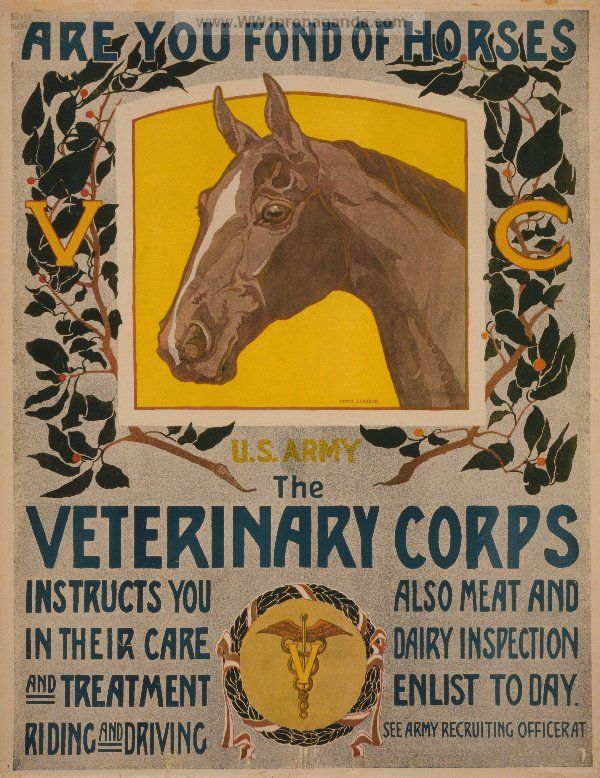 Veterinary Corps PosterAnd then, there was the Veterinary Corps, which was newly created, and contained 62 officers at the start of the war. They were responsible for food inspection and for animal care. Like all other armies of the day, the US went to war with horses and mules in large numbers. Motor vehicles, even heavy tractors, were simply not up to the demands of the battlefield, particularly pulling artillery and other heavy equipment. Horses and mules were used for all those things. Officers rode horses, to be able to get around the battlefield. The large number of animals required a significant amount of veterinary care. Besides veterinarians, who were officers, there were enlisted veterinary specialists, as well as blacksmiths, farriers, and an array of others.
A new Ambulance Service and a Sanitary Corps were created. Besides providing organizational structure for both of these essential functions, they also provided a way to supplement the limited supply of physicians with other professionals who could carry out non-medical duties. Engineers, public health administrators, bacteriologists, chemists, and other experts could be brought into the Sanitary Corps.
Facilities and supply were limited. In 1917, the Medical Department could staff seven field hospitals and nine ambulance companies. There were 38 field hospitals and 26 ambulance companies in the National Guard. At this time, the Guard was under the control of the governors of the individual states. Supply was equally limited. There was some expansion capability, but planning had envisioned an Army of 300,000 men, not more than 3 million.
The recruiting and training of civilian physicians and surgeons was the most obvious and pressing need. The American Medical Association, which included about two-thirds of practicing physicians, was indispensable in this effort. Screening its list of members, some 69,000 letters were sent out to physicians under fifty, asking for volunteers. Some 10,000 joined in the first three months alone. Four training camps were set up just for medical officers, at Fort Riley, Kansas, Fort Oglethorpe, Georgia, Fort Benjamin Harrison, Indiana, and Fort Ethan Allen, Vermont. Other camps trained enlisted specialists, including stretcher bearers, the predecessors of today's medical corpsmen, nursing assistants, operating room technicians, ambulance drivers, and many others.
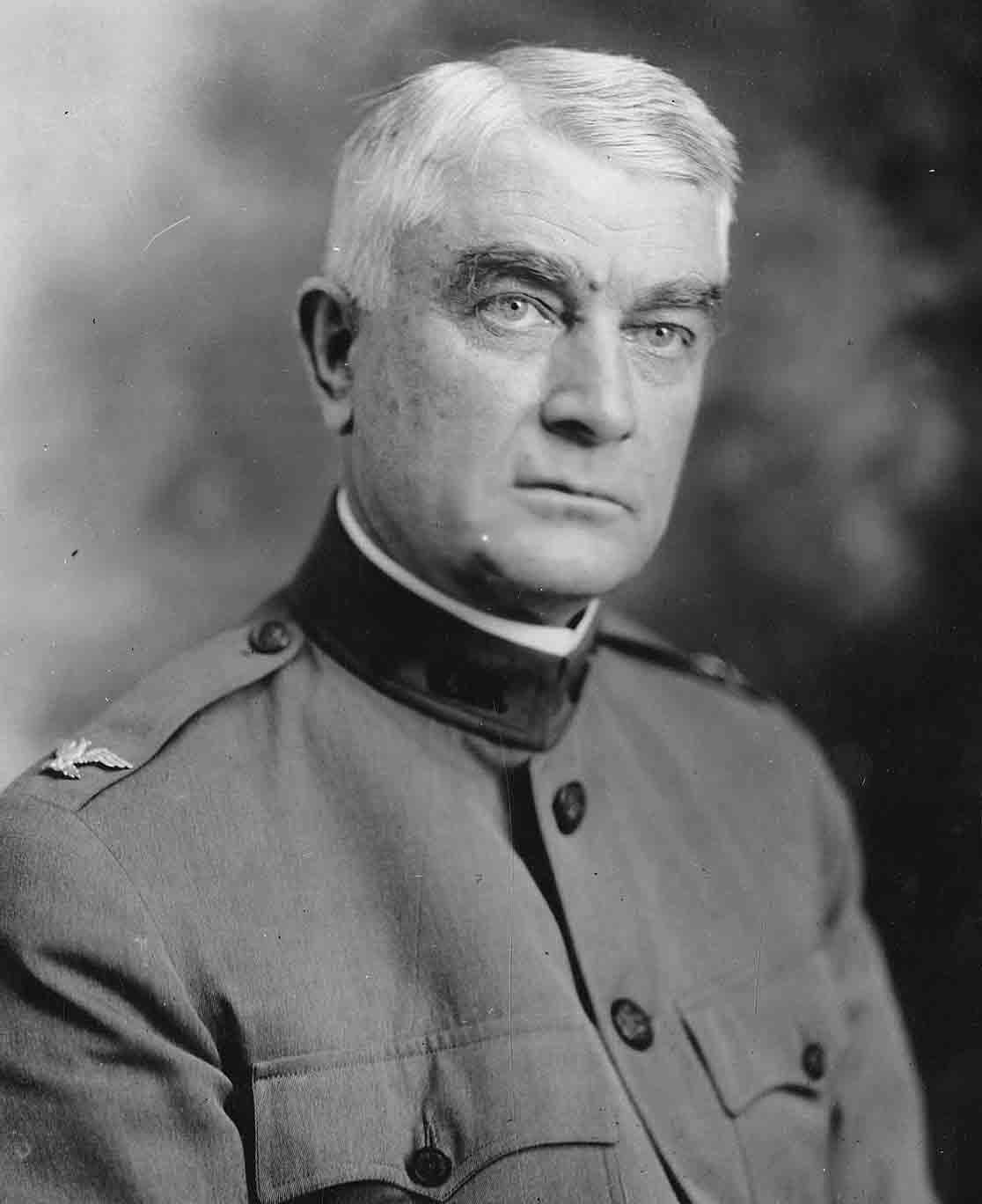 William Mayo 1917The famous Mayo brothers, Charles and William, were in the Reserve. They were instrumental in mobilizing the American Medical Association to support the war effort. Both were promoted to Brigadier Generals after the war, and continued to support the Army Reserve efforts.
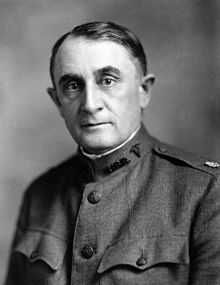 Charles Mayo, 1917
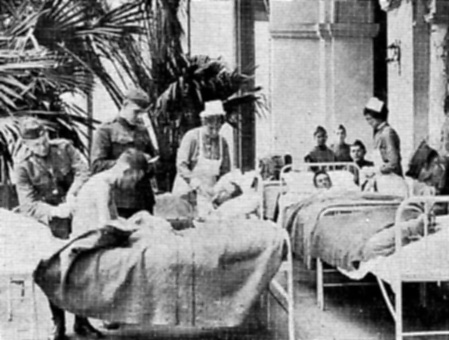
Establishing base hospitals was an early priority. These were mobilized, staffed, and equipped with the support of the Red Cross. Six hospital units, consisting of personnel from major teaching hospitals, went overseas in May, 1917. They were assigned to support the British army, as no American units were yet in combat. The first of these was Base Hospital Number 4, from Cleveland, leaving for England on May 8. It was headed by Dr. George Crile, one of the leaders of the surgical profession, a professor of surgery at Western Reserve University. Dr. Crile had previously served in Europe as part of a hospital from Western Reserve supporting the allies, and it was he who originated the concept of base hospitals drawn from individual communities. Harvard University’s Base Hospital Number 5, shipped out a few days later. It was led by Dr. Harvey Cushing, a world-famous brain surgeon, who had also served in Europe previously. Eventually, many hospital units were sent from communities and teaching hospitals, including the University of Kansas, Duke University, Bellevue Hospital, Washington University, Johns Hopkins, and many others.
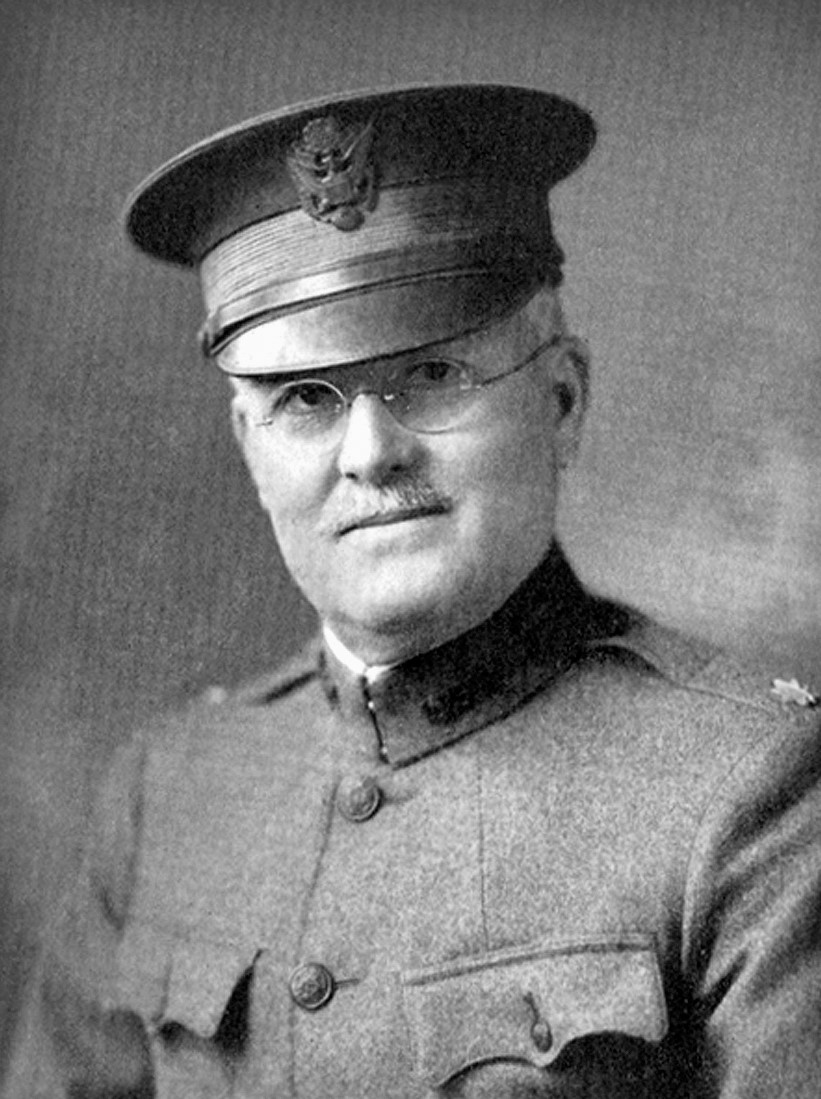
George Crile
Drs. Crile and Cushing were Majors (later Colonels) in the Reserve Medical Corps. The two of them were instrumental in mobilizing the American College of Surgeons to support the war effort. Once in England, Crile was detached from his hospital, and moved to Paris as the US representative to the Interallied Surgical Congress. He actually arrived in Paris before the AEF headquarters arrived in France. He had to issue his own orders. As he put it, for a brief time, “I was the US Army!”
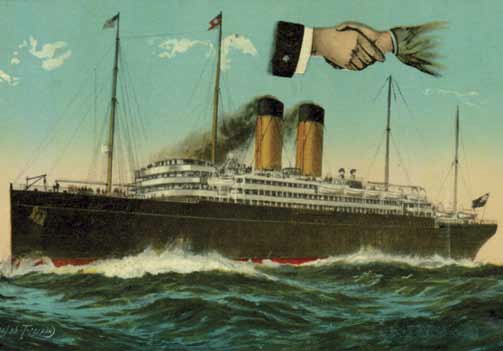 SS BalticPershing and his headquarters arrived in early June. On the same ship, the SS Baltic, came Base Hospital Number 19, the Johns Hopkins unit, which was to set up the first base hospital for American troops in France. With Pershing was his nominee for chief surgeon, Col. Merritte Ireland. In the event, however, Col. Alfred Bradley, who had served as an observer with the British, was named chief surgeon of the AEF. Ireland eventually replaced him.
The Red Cross hospitals in Europe, established in support of the allied armies, were an invaluable resource. Hospital units at all levels above field and evacuation hospitals were consolidated under the Services of Supply. This system worked well enough, but there was considerable organizational confusion. Camp hospitals, for example, were local, and under the control of the local or divisional commanding general. Hospital centers and base hospitals, on the other hand, were controlled through the chief surgeon of the AEF. The total number of hospital beds grew from 30,000 in May, 1918, to 260,000 by the end of October, with the Meuse-Argonne offensive in full swing. Too, by the end of the war, the influenza epidemic was claiming an ever-increasing number of victims, and requiring increasing numbers of hospital beds.
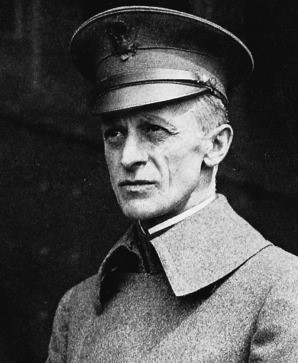 Harvey Cushing 1917Surgeons were in short supply even among the allied armies, and the influx of American civilian surgeons was extremely helpful to the allied armies. Orthopedic surgeons were in particularly short supply. A group of 20 orthopedic surgeons tasked with supplementing British hospitals was sent with Base Hospital Number 21, from Washington University in St. Louis, Missouri, in May, 1917.
Medical supply came under the General Munitions Board, a branch of the Council of National Defense, established on April 8, 1917. Congress authorized $1 million for supplies and equipment but this was completely inadequate. By June, $30 million was authorized. The medical supply system was hampered by this initial lack of funds, and also by a very rigid procurement system. Supplies were short throughout the American involvement in the war. After the war, there was significant back-biting over the alleged deficiencies of the medical supply system.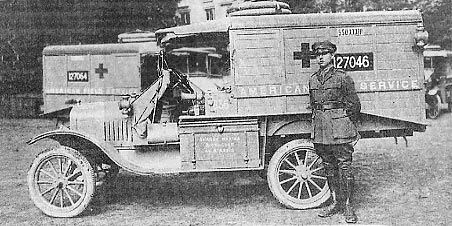 Ford Ambulance
Ambulances were a priority. The Red Cross had a number of ambulance units in France, and many of these were simply transferred to the control of the US Army. To provide the numbers needed, General Motors was contracted to supply 2300 ambulance bodies, to replace the lighter and more fragile Ford ambulances. Both types continued in service until the end of the war.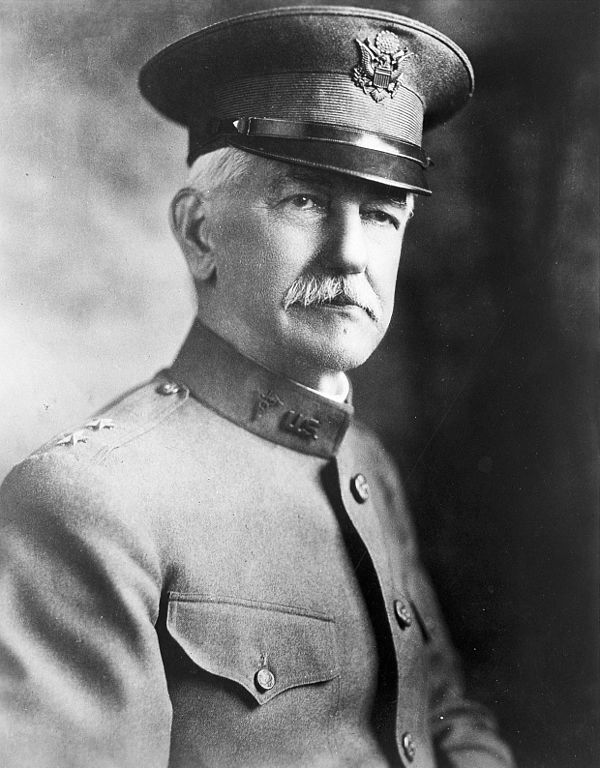 William Crawford Gorgas
The Surgeon General at this time was William C. Gorgas. He was famous for his work on typhoid fever and tropical diseases in general, and his influence with Congress was critical in moving up the priorities for medical recruitment and supply. Without him, the medical effort would have received a much lower priority, and might well have proved a national scandal. But he was old, and ready to retire. When he resigned in October, 1918, he was replaced by Merritte Ireland, now a major general. Ireland subsequently proved to be perhaps the best surgeon general in the history of the Medical Department.
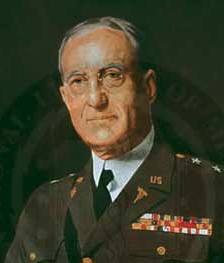
Merritte Ireland These two strong leaders, Ireland in Europe and Gorgas at home, greatly facilitated the medical support of US forces in Europe. The effort was hurried, over-stretched, and hampered by obstacles both large and small. But medical support of the American Expeditionary Force was a real success, and became a model for medical care during the next, far larger, World War II.