



























Family Ties
Documenting the stories and family relationships of those who served in World War One
"The centennial of World War One offers an opportunity for people in the United States to learn about and commemorate the sacrifices of their predecessors."
from The World War One Centennial Commission Act, January 14, 2013
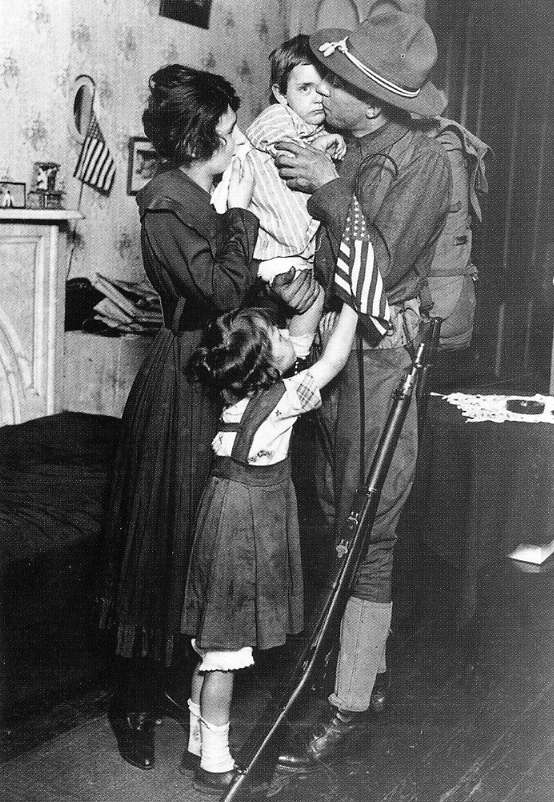 Some four million American families sent their fathers, mothers, sons or daughters to serve in the Armed Forces during World War One. Countless other families had members who served the war effort in industry, farming, shipping, and many other fields. All those who served then are gone now, but the Commemoration of the Centennial of World War One is the nation's opportunity last to make a permanent and comprehensive record how and where those family members served, and what they did for the country, before the succeeding generations' memories of that service are lost forever.
 The U.S. World War One Centennial Commission calls on the families of those who served to help tell the Stories of Service of their forbearers and relatives one hundred years ago. Many Americans are still alive who listened to their fathers, grandfathers and great-grandfathers, or mothers, grandmothers and great-grandmothers, tell the story of their service in World War One. This first-person knowledge will vanish with the passing of those individuals who heard those stories, so the time is now for family members to capture that precious but endangered information. Other family members will have knowledge of their forbearers' service from letters, diaries, or other records, or from family stories regarding artifacts from the war. Use our Stories of Service function to add this family history to the permanent record of the World War One Centennial Commission.
For many men and women who served in World War One, there are no surviving family members to report their Stories of Service. So that their stories are not lost through this circumstance, the Commission asks other Americans to help discover those names and record that knowledge in the Commission's permanent record. School classes, scout troops, veterans groups, genealogical organizations, and other groups can research the names found on their community World War One memorials, or in their own records, discover what they can about those individuals, and use our Stories of Service function to add that information to the permanent record. Organizations and institutions providing care for the elderly can be extremely important in this effort. Many retirement facilities and homes will have residents who have no families to record their memories of their forbearers who served in the Great War. Interviewing such residents and entering that information in our Stories of Service function will help rescue that soon-to-be-lost first-person data, and makes a great community project.
 The National World War I Museum and Memorial in Kansas City, MO. has partnered with the fold3 division of Ancestry.com to provide a place for the creation of online memorials to those who served in the Great War, as well as research tools and access to the Museum's collection of period photographs.
 Families and others with detailed and voluminous information and images of their predecessors' service in the Great War can put that story of service on the map by creating a Tour of Duty presentation on Google Tour Builder, and link the tour to the World War One Stories of Service. Tour Builder was created by Google to give veterans a way to record all the places that military service had taken them, and preserve their stories and memories as a legacy for their families, and provide a way to show people the places they visited and the experiences they had along the way. Family members and researchers can do the same for those who served in World War One, putting those experiences of 100 years ago into motion and on the map again.
 Those who served in World War One have left behind many artifacts and souvenirs of their experiences a century ago. Americans who no longer have a place to store or display these artifacts from their predecessors, but who want to preserve them as part of the historical record and the nation's public memory, will find a broad range of opportunities for and resources about finding new homes for old memories in our "Donate an Artifact" function.
 Families and others who need help or want information on how to get started on researching family history and World War One service can find links to extensive genealogical research resources, and "how to" information on our "Genealogical Resources" page.