
































Searching for North Dakota’s WWI Memorials
As part of the centennial remembrance of World War I, two North Dakotans are busy combing the state for monuments, parks, memorial buildings, and plaques that honor those who served in World War I. Susan Wefald of Bismarck is searching for those memorials dedicated between 1918 and 1941 and Robert Greene of Arvilla is participating as he works to locate all veterans’ memorials in the state.
In 2015, Wefald started hunting for World War One Memorials. In January of that year, she read a magazine article about Mark Levitch of Washington, DC, who was conducting a nationwide search for World War monuments. Levitch is project director of the national World War I Memorial Inventory Project. The article reported that he was hoping to find a person or organization in each state willing to help him locate the monuments and memorials. Wefald contacted Levitch and volunteered for the work in North Dakota.
Two years later, Wefald has identified 45 buildings, parks, monuments, memorials, and plaques in North Dakota built between 1918 and 1941 and dedicated to WWI veterans. As she continues her search, she welcomes tips from the public. “I have had a wonderful time learning the stories of these memorials by reading old newspaper articles, interviewing community citizens, and reading old guidebooks to the state,” she commented. “I have also enjoyed traveling across the state to visit these important monuments.”
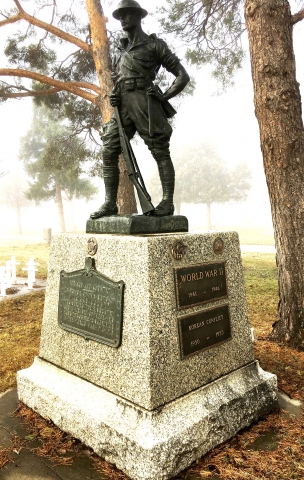
During her search she realized that North Dakota had a World War I monument that dates to May of 1918 located in Minot’s Rose Hill Memorial Park. That was unusual because most monuments were dedicated after Armistice Day on November 11, 1918. In the case of this monument, the Girls Military Squad of Minot had raised funds and erected it on Memorial Day 1918. Levitch believes that this monument appears to be the first permanent memorial in the nation dedicated to local soldiers who died in the war. “I was thrilled to know that this beautiful 1918 marble monument erected by Minot women was so important,” said Wefald.
Wefald turns over all information she finds to both the North Dakota Historical Society and the national World War I Inventory Project. Information about the World War I memorials and monuments is located at the State Historical Society of North Dakota’s website.
Although Wefald’s emphasis has been to locate only memorials dedicated exclusively to World War I veterans, Robert Greene has been touring the state identifying monuments dedicated to North Dakota veterans who have died in any war. Greene has taken on this project on behalf of the American Legion.
“Almost every town and city in the state has a veteran’s monument of some kind,” said Greene. “I have found monuments dedicated to Civil War soldiers as well as those dedicated to the War on Terror.” He has collected information on more than 200 veterans’ monuments in North Dakota.
Greene and Wefald share information with each other, as both serve on the North Dakota World War One Centennial Committee. “We are both committed,” said Wefald, “to preserving these public monuments which celebrate the contributions made by men and women in service of our country.”
Among the WWI monuments and memorials that the two have identified are courthouses and public halls in Belfield, Bismarck, Bottineau, Cando, Devils Lake, Dickinson, Flaxton, Kenmare, Linton, Mandan, Minnewaukan, Minot, Mohall, Mott, New England, Noonan, Rolette, Rugby, Stanley, and Towner.
Monuments and plaques exist at Williston, Wahpeton, Pembina, Steele, Minot, Northwood, Leeds, Lisbon, Hankinson, Drayton, Drake, Carrington, Amidon, and at the bridge between Bismarck-Mandan. Other memorials include parks at Grand Rapids and Spiritwood Lake, the 1927 University of North Dakota memorial football stadium, the Jamestown College gymnasium, and the Liberty Memorial Building and its nearby French boxcar on the capitol grounds at Bismarck.
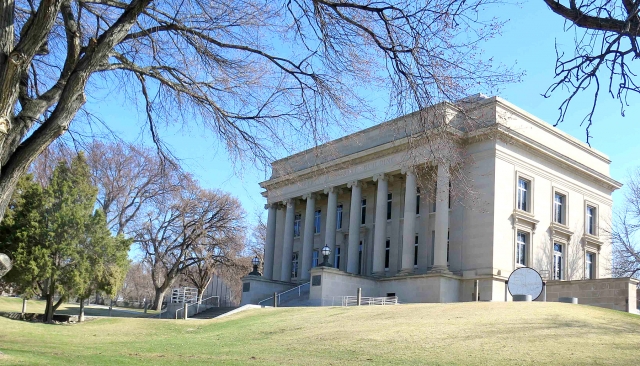
Liberty Memorial Building