































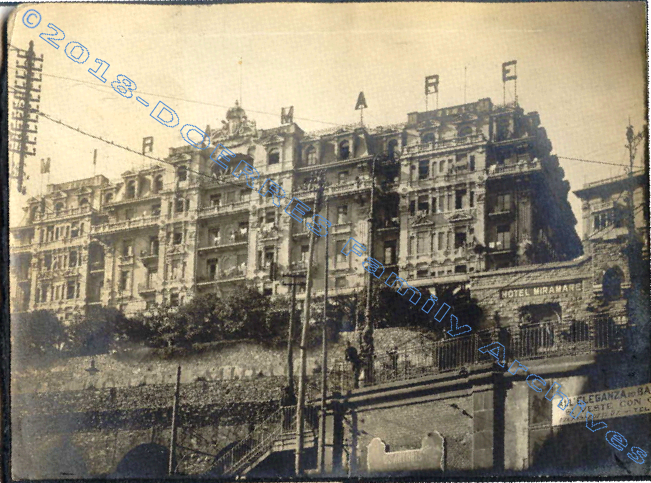
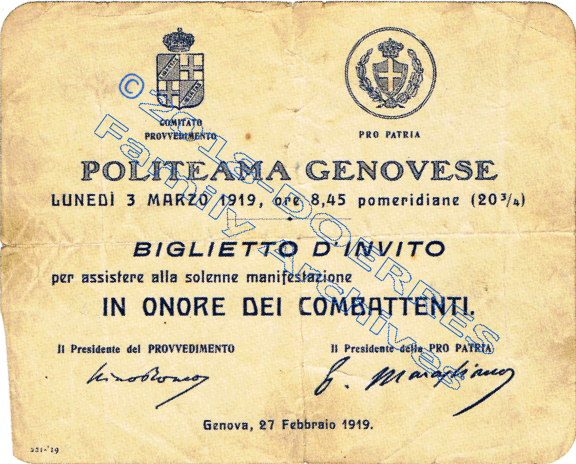
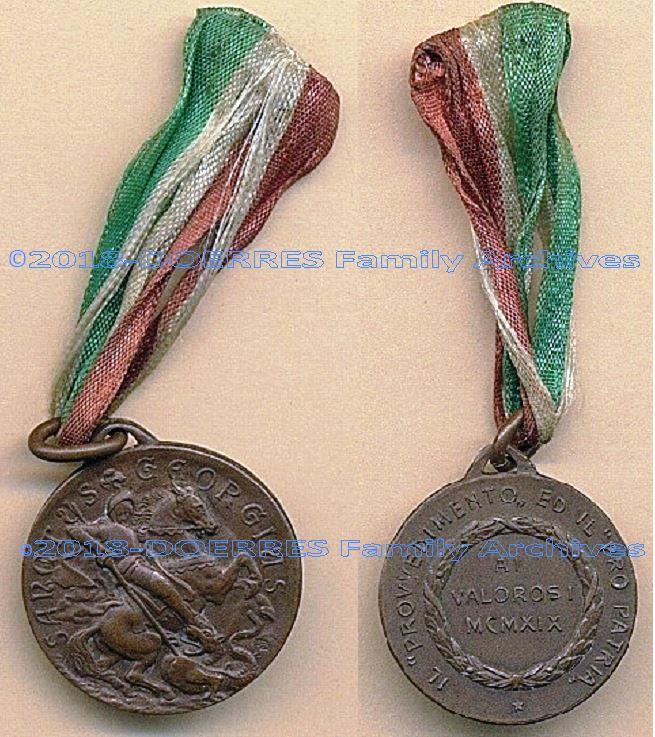
 Day-to-day life became better for Ralph and the other men of the 332nd when the regiment was reunited at Genova in February, 1919. He was billeted in the Hotel Miramare along with most of the regiment, was granted a few days leave along the Riviera, he received his beautiful Lion of St Mark shoulder patches and was one of about a hundred of the 332nd Infantry’s men who were awarded with St. George medals by the Genovese.
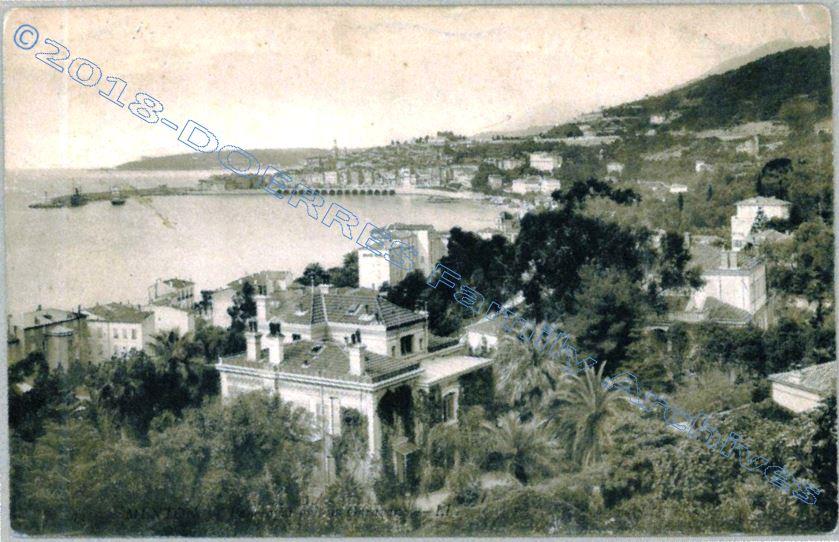
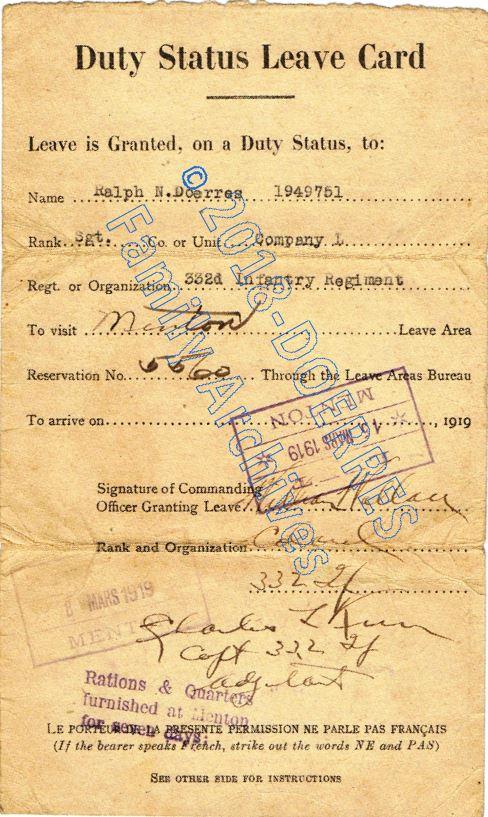 While on leave in Menton, France, he sent a brief note to his father on a postcard:
“3-11-19 Dear Father Am here on leave. Reg’t now at Genoa waiting to leave for the States. Am having a great time here. Perhaps we may leave later part of the month. Regards to all, Ralph”
Most of the 332nd Infantry did, in fact, sail for the States at the end of March, 1919 but Company “L” remained in Genoa for a few more days to wrap up business and pick up men returning from leave.
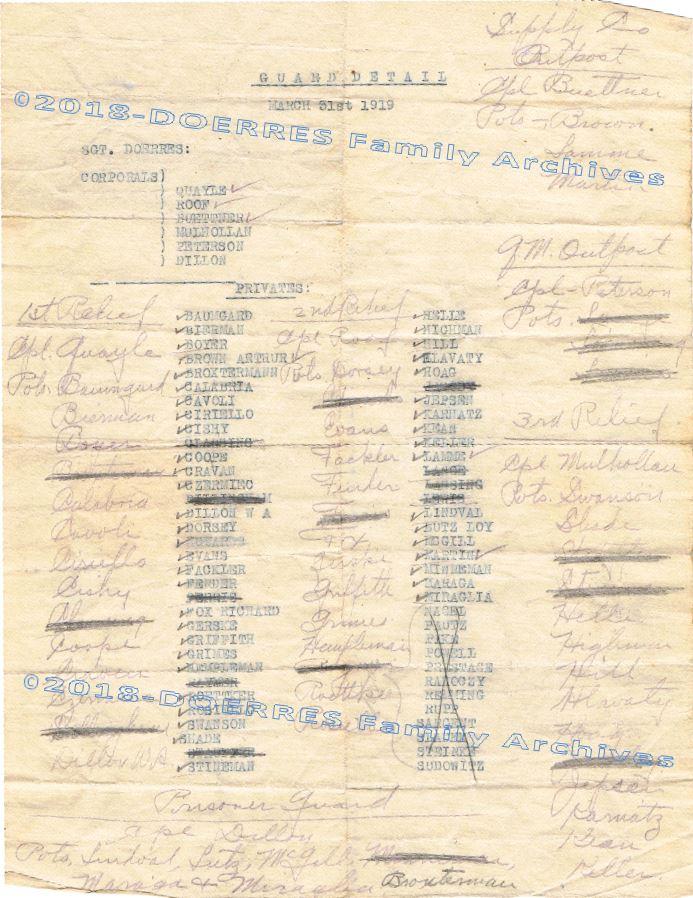
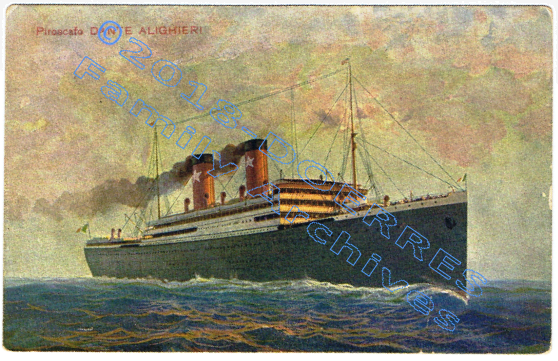 At last, in the afternoon of Thursday, April 3, 1919 Ralph set sail from Genoa aboard the steamship Dante Alighieri and arrived in New York harbor in the morning of Friday, the 18th of April—nearly a year after he and the 332nd Infantry left Camp Sherman.
Ralph paraded up 5th Ave. in NYC and along Euclid Ave. in Cleveland with his 332nd Infanty comrades. Back at Camp Sherman received his final pay, $60.00 bonus, travel pay and honorable discharge on May 5, 1919.
* * *
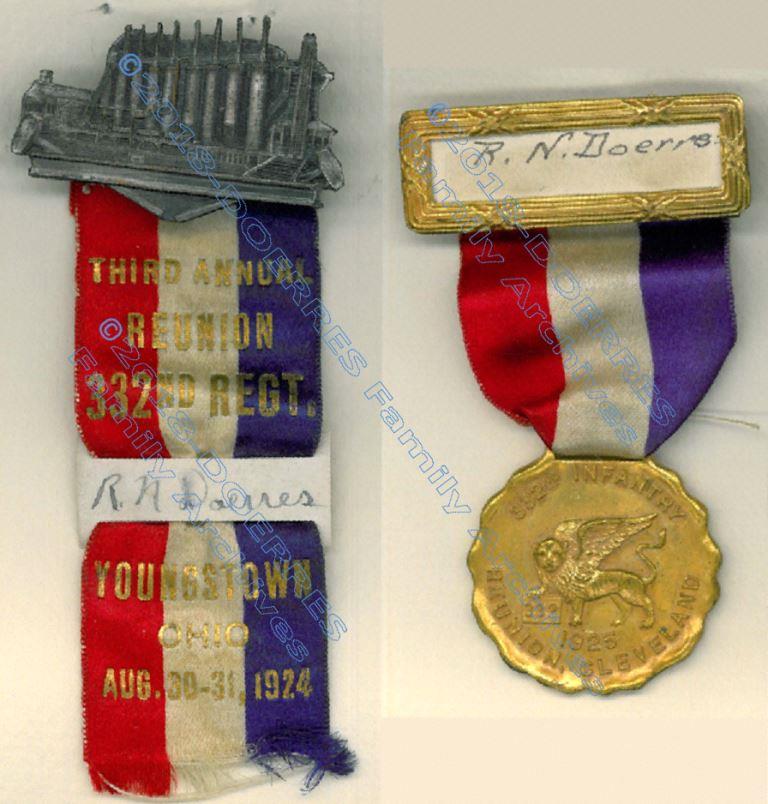 Upon returning to civilian life in Chillicothe, he kept busy in the decade following the war by: obtaining a patent for an anti-skid tire-chain system he designed; running for a Councilman-at-Large seat; quarterbacking a regional professional football team; attending 332nd Infantry reunions; working for a local construction company; becoming a partner in a retail paint, glass and wallpaper store; etc. In the early 1930s Ralph and our mother, Mabel, were married and began the task of raising our family. Ralph, along with his new title, responsibilities and duties as Daddy, became the owner of the paint store and continued being active community affairs serving as an officer in the local Elks and American Legion, a neighborhood Civil Defense air-raid warden during WWII, a precinct election official and a Deacon of the 1st Presbyterian Church.
Over the years, he would often talk with his friends Austin Story and Colonel Wallace, both residents of Chillicothe, and, among other topics, reminisce about their experiences in Italy in WWI. When Mr. Story took a trip to Europe in the mid-1950s he sent our father postcards from Villafranca and Rijeka (formerly Fiume).


"Sept 12 – Dear Ralph – Remember this old tower? And the trench mortar accident across the river Mincio? Have seen it all today – including our camp site in the mulberry trees. Have enjoyed it. The memory of old times & old friends. Austin"
——
Rijeka — Fiume Sept 1[?] Dear Ralph – Does this landscape look familiar? This AM saw your old school house barracks and the palace – Have been thru Treviso – over the Piave & Tagliamento for the second time — Very interesting trip – A. P. Story
* * *
At home, though, Daddy seldom spoke much about his army life with the 332nd Infantry but we fondly remember a few of his stories about his time with “Wallace’s Circus”:
A situation at Camp Sherman when they had to take the pistols away from some of the young, new officers who were “playing cowboy” – hiding behind desks and tables pretending to shoot at each other with their side arms.
The outdoor public toilet stalls (pissoirs) in France and/or Italy where one could see the man’s hat and shoes but everything in between was hidden.
While he was out on one of the long training/propaganda hikes in the country near Treviso [ before the offensive drive against the Austrians ] they came upon a Scotch soldier, who happened to be on a white horse, who remarked something to the effect that “…you should have seen the bunch of Americans that came through here yesterday! ” – in fact, it was the very same 332nd Infantry soldiers, but in a different uniform combination — [ members of the Allied forces were fooled as well as the enemy ]
There was a lot of mud and the going was difficult
Being so far ahead of their food supplies that they didn’t have enough to eat – they had to forage for food and could only find cabbage [during the advance against the Austrians: Battle of Vittorio-Veneto] – he didn’t like cooked cabbage for many years afterwards.
Taking a row boat out to a ship in a harbor [Fiume] to get “beans” because they were hungry [November, 1918—February, 1919]
* * *
Not long after retiring from the paint store at the age of 66, he died of a heart attack while attending a holiday dance at the Elks Club in December, 1958.
_____ ♦ _____
Return to "332nd Inf. Soldier Profiles" main page